Reviewed · TICKETS
Bruges: Frietmuseum Entry Ticket
Bruges has museums for art, beer, lace, and chocolate. It also has the world’s only museum devoted to fries. The Frietmuseum answers the big questions: where potatoes came from, how fries developed, and why Belgium claims such a strong place in fry culture.
I like the clear two-part route, with potato history on the ground floor and fries on the first floor. I also like the interactive games, multilingual audio guide, and the chance to order fries in a medieval cellar at the end. The main drawback is simple: the tasting costs extra, and the museum itself can take less than an hour if you move quickly.
Key points to know before you go
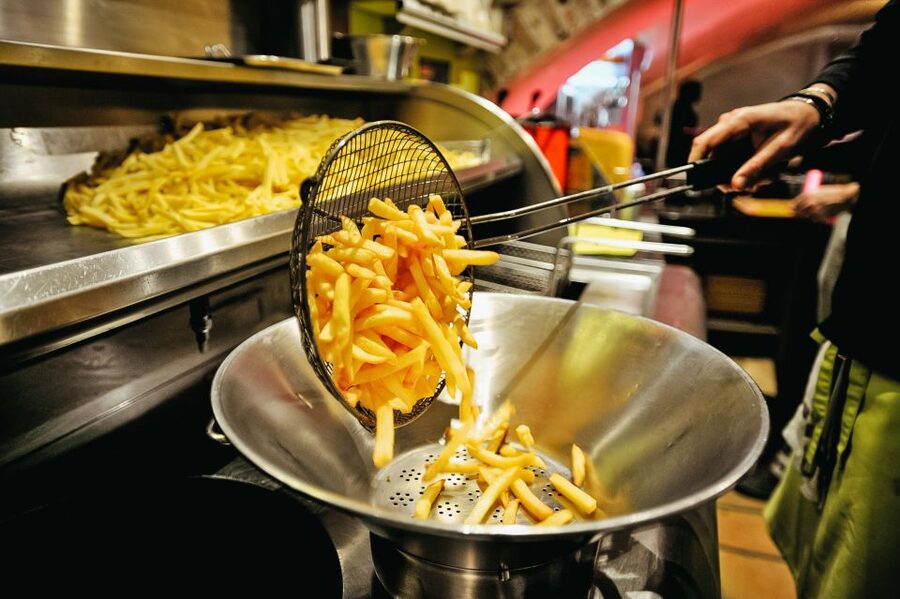
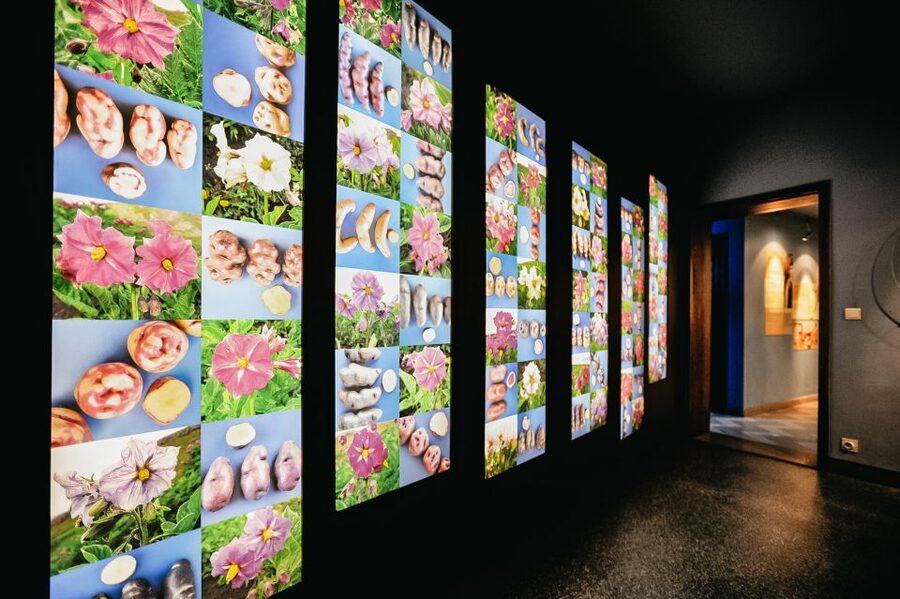
- The story begins in Peru: Learn how potatoes were cultivated there more than 10,000 years ago before spreading around the world.
- The museum occupies the Saaihalle: The historic building is part of the attraction, not just a container for exhibits.
- Fries are not included: You pay separately for food and drinks in the cellar café.
- Interactive features help children: Games, activities, and audio commentary make this more than a room full of panels.
- The visit is self-guided: Audio is available in English, French, Spanish, German, and Dutch.
- Plan around an hour: Some people finish in about 30 minutes, while families who stop for the activities will take longer.
Entering the Saaihalle in central Bruges
The Frietmuseum is housed in the Saaihalle, one of Bruges’ notable historic buildings. Go to the main entrance, present your admission, and begin on the ground floor.
That setting gives the visit a useful sense of place. You are not entering a modern science center built only for a novelty subject. You are walking into an old Bruges building, then following a small but carefully focused story through its floors.
The museum is compact. That matters in a city where you may already be fitting in canals, churches, art collections, and a great deal of walking. You do not need to set aside half a day. For most people, an hour is a sensible plan, with extra time if you want to play the games and eat afterward.
A quick visit can be over in roughly 30 minutes. I would not treat that as a fault by itself, but it does affect the price. At about $14 per person, the ticket makes the most sense if you use the audio guide, read the displays, try the interactive features, and stay for fries or another meal nearby.
A few more Belgium half-days to weigh up
- Brussels: Atomium Entry Ticket with Design Museum Ticket
★ 4.4 · 9,254 reviews - Brussels: Entry Ticket to Mini-Europe
★ 4.5 · 2,870 reviews - Brussels: Autoworld Museum Ticket
★ 4.7 · 1,301 reviews
Ground floor: the potato’s long journey from Peru
The first section is about the potato, not Belgian fries. That may surprise you if you arrive expecting an instant lesson in frites.
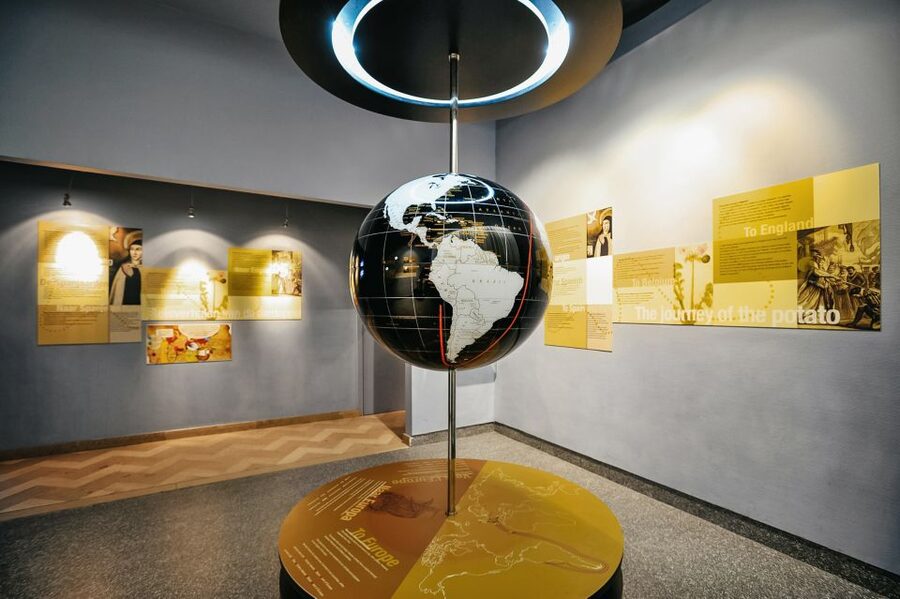
The museum traces the potato back to Peru, where it originated more than 10,000 years ago. The ground floor puts the familiar food in a much wider setting and shows how an everyday ingredient became important far beyond its original home.
This part is useful because it corrects the usual shortcut. Fries did not begin with a paper cone in Belgium. They depend on the potato, and the potato has a much older story involving cultivation, movement, and changing food habits.
You will see historical artifacts and art connected with potatoes and fries. The displays are designed for a general audience, so you do not need specialist knowledge. The audio guide adds structure, especially if you find that museum panels become hard to follow when you are moving through several rooms.
For children, this floor gives the visit a useful beginning. They may arrive focused only on eating chips, but the potato section gives them something to look at and discuss before the food arrives. It also makes the museum more educational than its playful subject might suggest.
The main weakness is pacing. The potato material can feel less immediately exciting than the fry section above. If you are traveling with impatient children, use the audio guide selectively and point out the objects and pictures that connect most clearly to food.
First floor: how potatoes became fries in Belgium
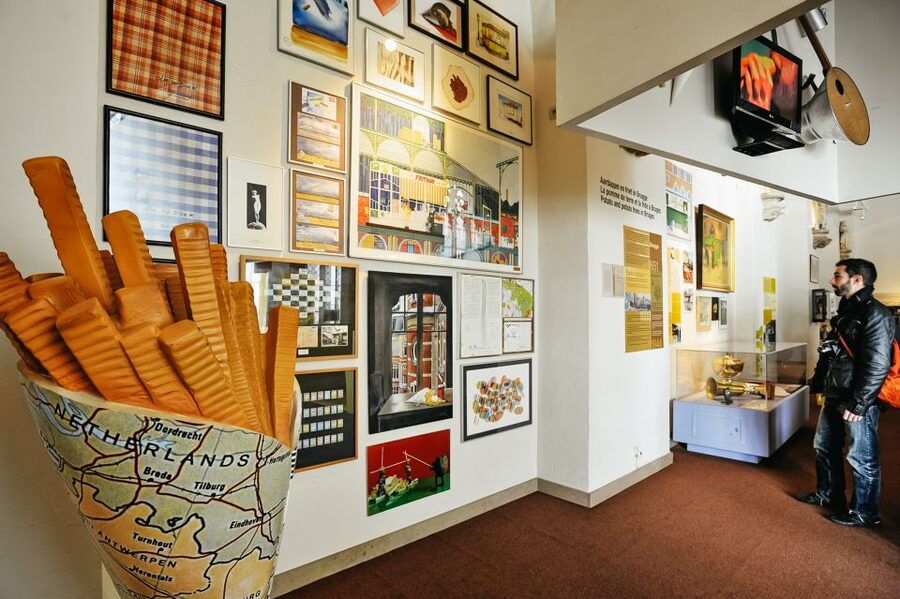
As you go upstairs, the story moves from the potato to fries. This is where the visit becomes more focused on Belgium and the development of frites.
The museum explores where fries were invented and how they came to Belgium. Expect an accessible account rather than a university lecture. The appeal is in seeing how a basic food changed form, gained a place in Belgian culture, and became known around the world.
You will also find displays about the way fries are prepared and the secrets behind making good fries. The museum does not simply tell you that Belgian fries matter. It explains the steps and traditions that help give them their identity.
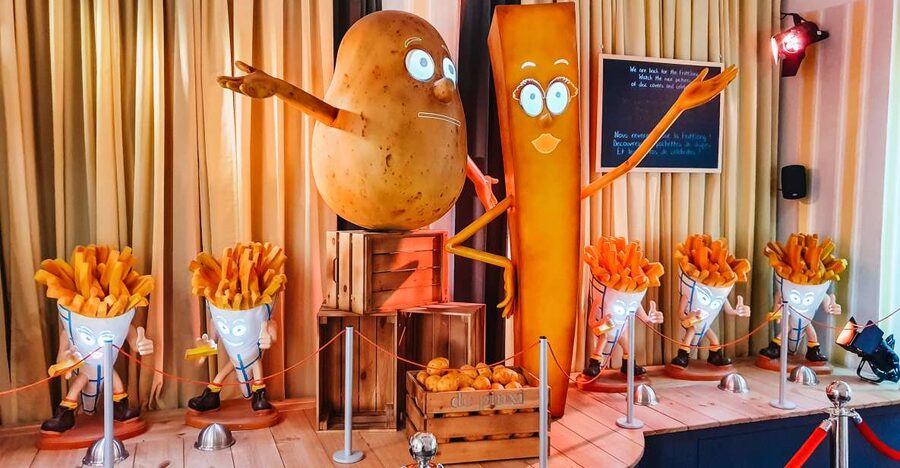
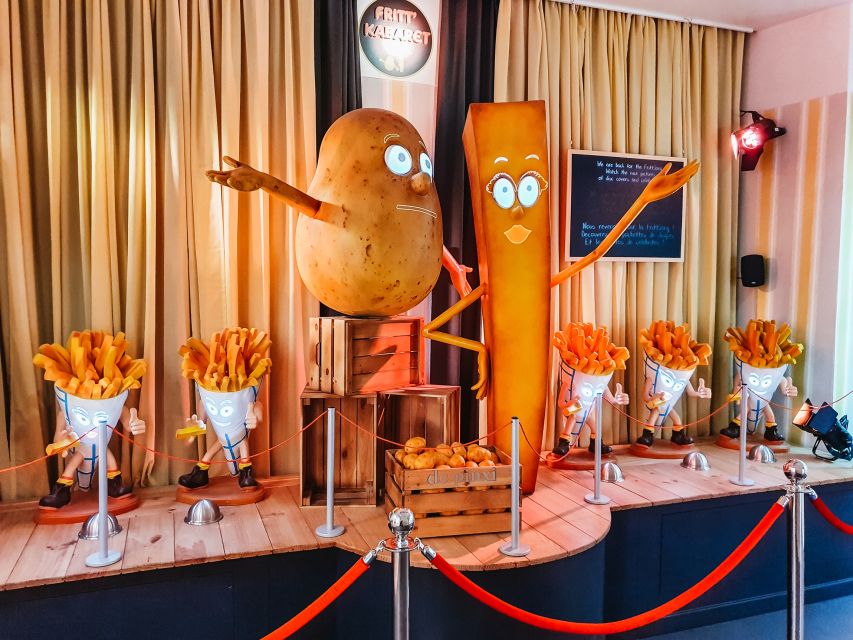
The first-floor route is also where the interactive elements become especially helpful. You might find games, photo opportunities, and small activities that break up the reading. The singing fries feature mentioned by one family is exactly the sort of odd, cheerful touch that gives this museum its personality.
I would call the tone playful rather than solemn. That is a good fit for the subject. You are here to learn, but you are also here because fries are fun. The museum does not ask you to choose between the two.
If you are visiting alone, the activities still work, though families with children aged roughly 3 to 12 will get the most from them. Older children and adults may prefer the historical material and audio commentary, while younger children can focus on the games and visual displays.
The audio guide keeps the route easy to follow
An audio guide is included with admission in English, French, Spanish, German, and Dutch. That is important because the subject covers several stages, and the displays can feel slightly disjointed if you only skim the text.
I recommend using the audio from the start, particularly on the ground floor. It gives the potato section a clearer shape and helps explain why the museum begins there instead of going straight to fries.
The guide also lets you control your pace. You can listen carefully to the parts that interest you and move faster through sections that feel less relevant. That flexibility helps if your group includes both serious food fans and people who mainly want a quick stop.
The museum is wheelchair accessible, which makes the visit easier to include in a wider Bruges day. The information provided does not give detailed access instructions for each display, so if your needs are specific, confirm the current arrangements before arrival.
Same city, a completely different way to spend a day:
- From Brussels: Guided Day Trip to Bruges and Ghent
★ 4.6 · 8,353 reviews - From Brussels: Bruges & Ghent Day Tour – 2 Fairytale Cities
★ 4.7 · 8,242 reviews - Ghent: 50-Minute Medieval Center Guided Boat Trip
★ 4.5 · 5,637 reviews - Choco-Story Brussels: Chocolate Museum Entrance with Tasting
★ 4.3 · 4,883 reviews
Historical objects, art, and photo stops
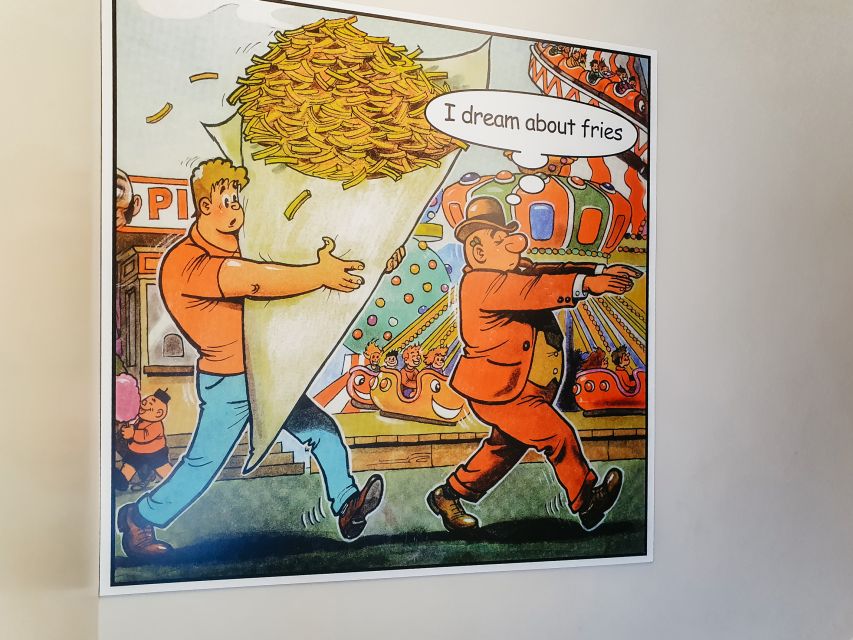
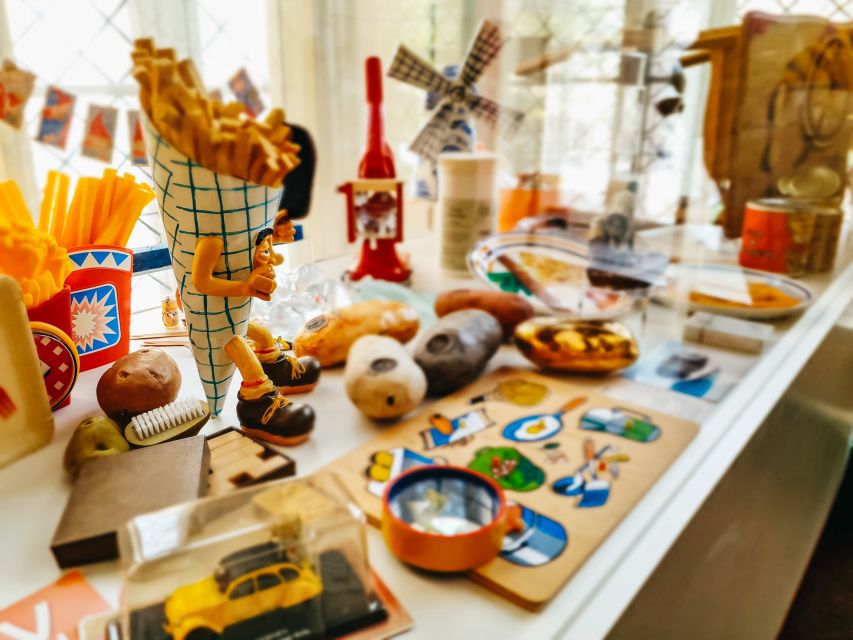
The Frietmuseum is not only a line of written facts. Its collection includes historical artifacts and art about potatoes and fries, giving the story a physical side.
That variety matters. Food history can become a series of dates and claims, but objects, pictures, and playful displays make it easier to remember. You may also find plenty of photo opportunities, which adds a light touch to a visit built around a very familiar snack.
The displays are not enormous in number, so do not expect the scale of a major Bruges museum. This is a specialist museum with one subject and a compact route. Its strength is focus, not size.
The best approach is to let the museum answer a few practical questions for you. How did the potato spread? How did fries become associated with Belgium? What preparation methods are linked with good frites? The visit works when you follow that chain rather than expecting a huge collection.
The medieval cellar and the extra cost of fries
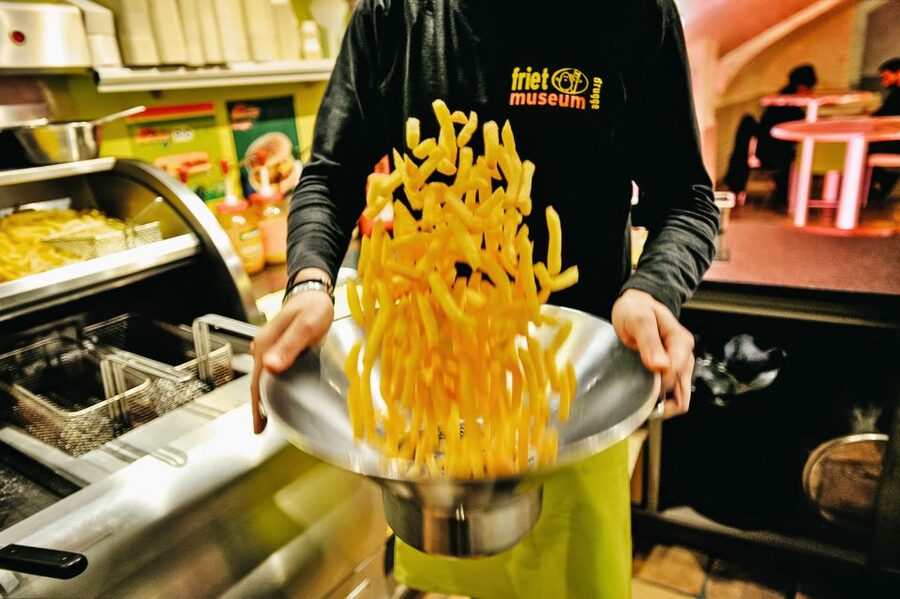
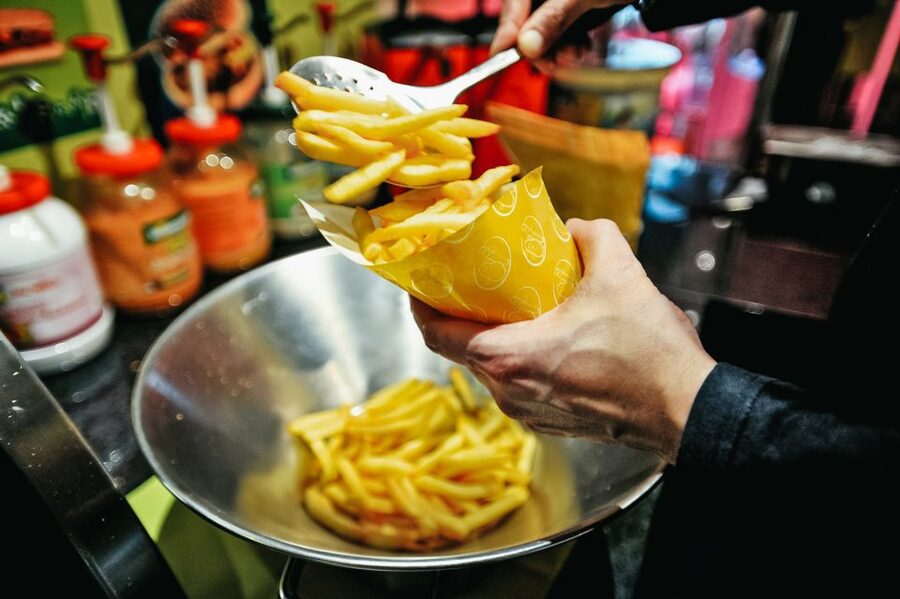
The museum’s most obvious finale is below ground, in the medieval cellars. This is where you can order fries, along with other food and drinks.
The cellar is a memorable place to finish. It connects the museum’s historical setting with the food itself, and it gives you a chance to test the claims you have just heard. After looking at the story of fries, you can sit down and eat them in the same building.
The important practical point is that food is not included in the museum ticket. The admission covers the museum only. Fries, sauces, drinks, and other food cost extra.
Some ticket holders receive a small discount on fries when they keep their receipt, so keep yours with you and ask at the cellar counter. One reported price was about €3 per portion after a 50-cent reduction, though prices and discounts can change.
Portions may be large, which is useful if you want a quick meal rather than a small sample. You can also choose sauces to try a wider range of Belgian-style accompaniments. If you are visiting with a group, ordering different options for the table may be more interesting than everyone choosing the same portion.
Taste is personal, and the cellar will not please every member of every group. One child or adult may love the fries, while another may prefer the meal elsewhere. I would treat the food as an optional ending, not as the sole reason to buy admission.
If you want the tasting, budget for it from the start. The ticket price alone does not promise a free cone at the end, and that misunderstanding is the clearest way for the visit to feel poor value.
How long the visit takes and how to fit it into Bruges
The ticket is valid for one day, so you have room to plan around the rest of your time in Bruges. Availability and starting times should be checked when booking, even though the museum itself is a self-guided visit.
For a fast look, allow about 30 minutes. For a fuller visit with audio, games, photos, and food, allow closer to an hour or a little more.
I would place the Frietmuseum between other central Bruges sights rather than build an entire day around it. The compact format makes it a good rainy-day stop, a family break, or a change of pace after churches and paintings.
It also works well before lunch. You can learn about fries, then eat in the cellar if the setting and menu suit you. If the food does not appeal, the museum’s central location makes it easy to continue into Bruges for another meal.
A prepaid booking can help you keep plans flexible. The ticket allows cancellation up to 24 hours in advance for a full refund, and reserve-now, pay-later booking is available. Those terms are useful when your Bruges schedule depends on weather, train times, or a cruise stop.
Is $14 good value?
At $14 per person, the Frietmuseum is not the cheapest quick attraction in Bruges. It is also not simply a food stop, since the fries cost extra and the visit is relatively short.
The value improves if you enjoy unusual museums, use the audio guide, or travel with children who will take part in the games. The museum gives you a focused story, a historic building, visual displays, and a memorable cellar setting in one ticket.
The value drops if you only want to eat fries. You can find fries elsewhere in Bruges without paying museum admission, and the tasting is not part of the entry price.
For families, the ticket can work well because the subject is familiar and the activities help younger children stay involved. For solo visitors, couples, and food enthusiasts, the museum offers a quirky cultural stop that is easy to fit into a walking day.
I would also compare the ticket with your own interest level. If you enjoy learning how ordinary foods develop into national symbols, you will likely find enough here to justify the cost. If you want a large collection or a long guided tour, the Frietmuseum may feel small.
Who will enjoy this most?
The strongest match is a family with children who like interactive activities and do not want every museum to be serious. The audio guide, games, photo spots, and food finish give the visit several ways to hold attention.
It also suits anyone curious about food origins. The route reaches beyond Belgian fries and begins with the potato’s early story in Peru, giving you more context than a simple explanation of how to cut and fry potatoes.
I would recommend it to visitors who have already seen some of Bruges’ major art and religious sights and want something different. The subject is unusual enough to make the stop memorable.
It may be less suitable if your Bruges schedule is extremely tight. The museum is short, but even a short attraction requires time to find, enter, and explore. It is also not ideal for someone expecting a complimentary tasting or a full meal included with admission.
Practical tips for a better visit
- Keep your receipt: Ask about any available discount on fries before ordering in the cellar.
- Use the audio guide early: The potato section makes more sense when you follow the explanation instead of only scanning the signs.
- Allow extra time for children: Games and activities can lengthen the visit beyond the quick 30-minute route.
- Budget for food separately: Admission does not include fries, sauces, drinks, or other menu items.
- Do not rush the building: The Saaihalle adds atmosphere and is part of what makes this more than a novelty food display.
- Check availability before booking: The activity is valid for one day, with starting times shown when you check dates.
Should you book the Frietmuseum?
Book it if you want a short, cheerful, educational stop with a clear theme. I especially recommend it for families, curious food lovers, and anyone who enjoys museums that do not take themselves too seriously.
Skip it if your only goal is to eat fries, since the food costs extra and the museum can be completed quickly. For most visitors, the best plan is to see the exhibits, use the audio guide, try the interactive features, then decide if the cellar fries are worth adding.
At $14, the Frietmuseum works best as a compact Bruges experience, not an all-day attraction. Its unusual subject, historic setting, and easy family appeal make it a sensible choice when you want something different from the city’s grander sights.
FAQ
Where is the Frietmuseum located?
The museum is in Bruges, Flanders, Belgium, inside the historic Saaihalle building. Go to the main entrance of the museum.
What does the admission ticket include?
The ticket includes entrance to the museum. Fries, other food, and drinks are not included.
Are fries served at the museum?
Yes. You can order fries in the medieval cellars after visiting the museum, but the food is charged separately.
How much does the experience cost?
The listed price is $14 per person. Food and drinks require an additional payment.
How long is the ticket valid?
The ticket is valid for one day. Check availability for the starting times offered on your chosen date.
Is an audio guide included?
Yes. An audio guide is included in English, French, Spanish, German, and Dutch.
Is the Frietmuseum wheelchair accessible?
Yes. The museum is listed as wheelchair accessible.
Can I cancel my booking?
Yes. You can cancel up to 24 hours in advance for a full refund. Reserve-now, pay-later booking is also available.
Just added around Belgium
- Ghent Running and Sightseeing Tour★ 5.0 · 3 reviews
- From Amsterdam: Private Sightseeing Tour to Bruges★ 5.0 · 3 reviews
- Private Tour – Bruges and Ghent, our fairytale cities★ 5.0 · 3 reviews
- Ghent Walking Tour – City Highlights and Beyond Tradition★ 4.5 · 3 reviews
- Bruxelles: Photoshoot Experience★ 4.4 · 3 reviews
- Private Day Trip from Brussels to Bruges★ 4.5 · 3 reviews
- Leuven: City Walk with Audio Guide in 7 Languages on your Phone★ 3.0 · 3 reviews
- Private Arrival Transfer from Brussels Airport to Bruges with Business car★ 5.0 · 3 reviews
Tickets, compared.
Atomium Entry Ticket with Design Museum Ticket
Read our review →