
Reviewed · GHENT TOURS
Ghent Walking Tour – City Highlights and Beyond Tradition
Ghent reveals itself best on foot, and this tour gives you a tidy route through its medieval core, lively squares, street art, and quieter local corners. You start at Friday Market and work toward Gravensteen, the medieval towers, and the famous Graslei and Korenlei quays.
I like the small group of up to 10 people, since a guide can adjust the pace and answer questions without turning the walk into a lecture. I also like the personal touch shown by Sophie, who contacted a family before the tour to ask about the children and adapt to the group.
The main consideration is the length and pace. You need to walk at least 5 kilometers in roughly 90 to 105 minutes, with only short stops, so this is not the right pick if you want a slow stroll or long visits inside landmarks.
Key points to know before booking
- Friday Market begins the walk: You get an introduction to Ghent from one of its historic public squares.
- Gravensteen and Patershol add atmosphere: The route moves beyond the main postcard views into one of the city’s older quarters.
- Three medieval towers appear together: Saint Nicholas Church, the Belfry, and Saint Bavo Cathedral create one of Ghent’s defining views.
- Graslei and Korenlei show old trade Ghent: The quays now fill with cafés and restaurants, but their medieval commercial role remains clear.
- The route can respond to your interests: A small group gives the guide room to adjust what you see and discuss.
- Good shoes matter: The walk covers at least 5 kilometers, and children must keep up with the slowest adult.
Why this Ghent walk works well for a first visit
Ghent can feel confusing at first. Its center folds around canals, old lanes, large squares, churches, and monuments that seem to appear one behind another. A guide helps you connect those pieces instead of simply photographing them one at a time.
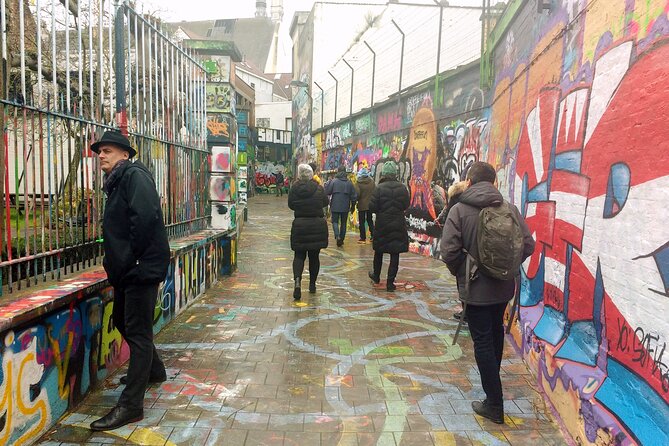
This walk is built for that first orientation. You see major sights, but the route also includes street art and places that are easy to miss when you follow only a standard city map. That mix is useful. You get the familiar Ghent landmarks, then a sense of how the city extends beyond its most photographed views.
The tour lasts about 1 hour 30 minutes to 1 hour 45 minutes. That makes it easy to fit into a morning or afternoon, and you still have most of the day for a castle visit, a museum, a meal, or more independent exploring.
I would think of this as a guided introduction rather than a full historical tour. The route checks off key places and gives you stories and context, but the short duration leaves little time for long explanations or extended stops.
More Walking Tours in Ghent
- Historical Walking Tour: Legends of Gent
★ 5.0 · 1,761 reviews - Ghent: Belgian Chocolate Walking Tour with Tastings
★ 4.9 · 259 reviews - Gastronomic Walking Tour of Gent – Tasters included
★ 5.0 · 199 reviews
Starting at Friday Market
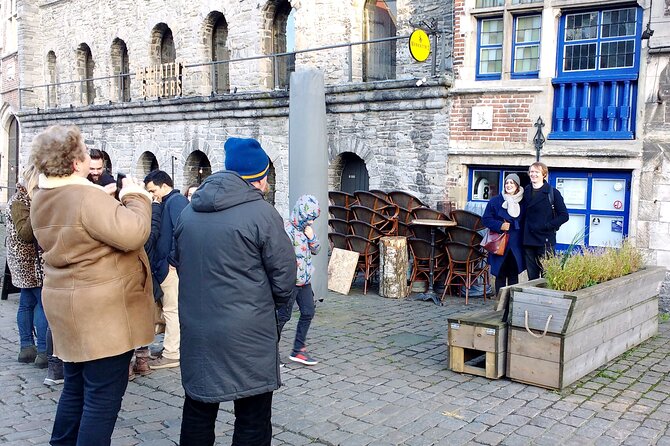
The meeting point is the Artevelde statue at Vrijdagmarkt, also called Friday Market. This broad square is a smart place to begin because it gives you room to get oriented before the walking starts.
Your guide begins with a short introduction and explains what to expect. From there, you look at the square, its historic houses, and the nearby streets. The stop lasts about 10 minutes, so expect a concise overview rather than a long architectural study.
Friday Market also sets up an important theme of the tour: Ghent is not just a collection of old buildings. Its squares and streets tell you how people gathered, traded, argued, and moved through the city. A guide can point out details you might pass without noticing.
The tour information describes this as a walking food tour in one section, but the included features focus on sightseeing and historical landmarks. Do not book it expecting a meal or a series of food tastings. The supplied details mention no food or drinks as part of the price.
Gravensteen and the Patershol quarter
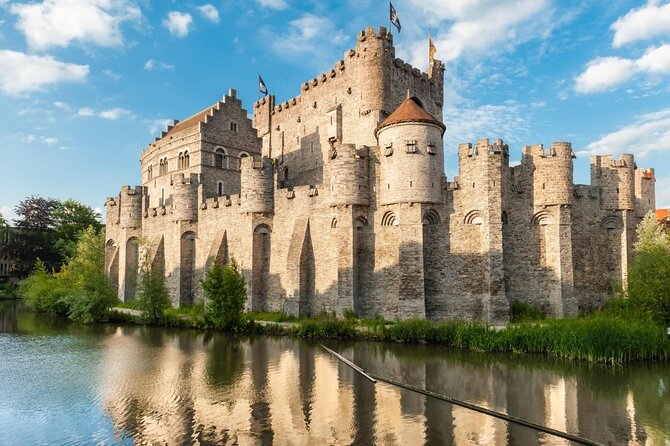
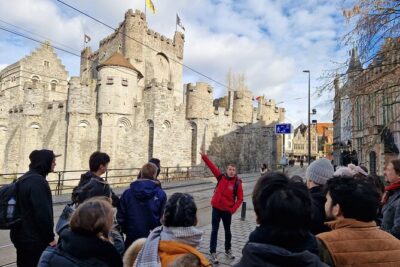
From Friday Market, the route heads toward the Castle of the Counts, known in Dutch as Gravensteen. This medieval fortress is one of Ghent’s clearest visual reminders of its past, with a strong presence even before you know the stories behind it.
The walk takes you around the castle area. That matters because the experience is not limited to a quick look at the exterior. Your guide can use the castle and its surroundings to explain how this part of Ghent developed and why the fortress remains such a central landmark.
You should note that the tour does not list admission to Gravensteen. The included elements are city sightseeing, historical landmarks, and a local guide. So the visit here is an exterior and surrounding-area stop, not a scheduled castle interior tour.
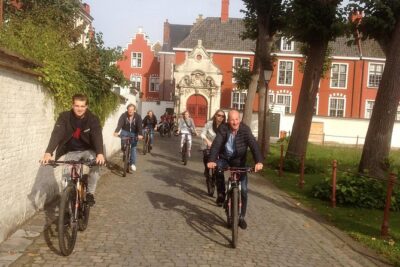
The route also includes Patershol, an older quarter near the castle. This is one of the tour’s better choices. Many people make for the castle, take a photograph, and move on. Patershol gives you a different view of the city, with smaller streets and a more local feel.
This section is where the guide’s flexibility can be useful. If your group wants more background on medieval Ghent, the castle offers an obvious starting point. If you are more interested in the character of the streets and neighborhoods, Patershol gives the guide another direction.
The three towers of medieval Ghent
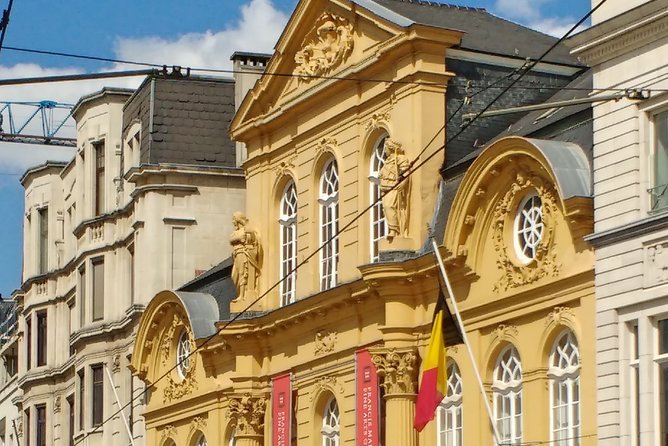
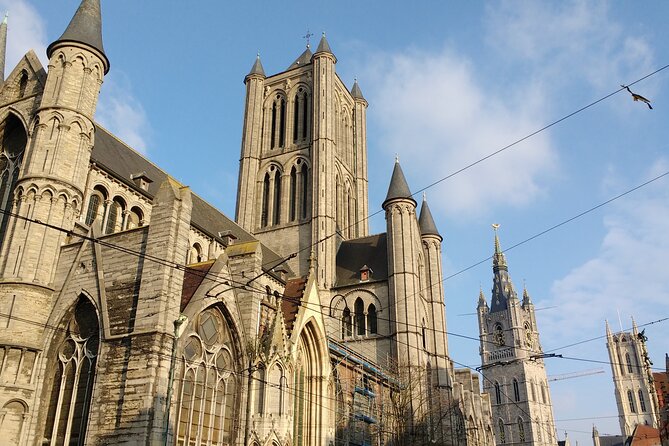
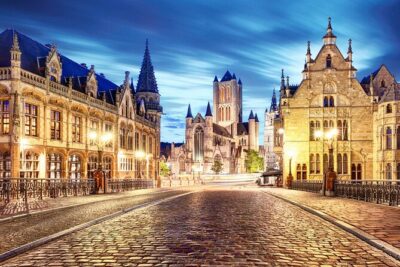
Next comes one of Ghent’s best-known views: Saint Nicholas Church, the Ghent Belfry, and Saint Bavo Cathedral seen in relation to one another. These are the three medieval towers that define the city skyline.
The Belfry is one of the oldest in Belgium, and it remains one of the key landmarks on the route. The value here is not only seeing the tower itself. You get a chance to understand how the three buildings work together as a single city view.
Saint Nicholas Church, the Belfry, and Saint Bavo Cathedral each have their own character, but a short walking tour cannot cover every detail of all three. I would treat this stop as a clear orientation point. It helps you decide which building deserves a longer visit later.
The route does not include admission to the Belfry or the churches. That keeps the tour moving, but it also means you should plan a separate visit if you want to go inside or spend serious time on the architecture.
For photographers, this section offers strong opportunities because the buildings are close enough to compare in one outing. Your guide also makes photo stops along the way, so you are not expected to walk continuously without pausing.
Same city, a completely different way to spend a day:
- Ghent: 50-Minute Medieval Center Guided Boat Trip
★ 4.5 · 5,637 reviews - Ghent: 40 Minute Medieval Center Guided Boat Tour
★ 4.4 · 884 reviews - Evening Tour of the Dark Side of Gent
★ 5.0 · 646 reviews - Ghent Bike Tour Off-the-beaten-track
★ 5.0 · 505 reviews
Graslei and Korenlei beside the water
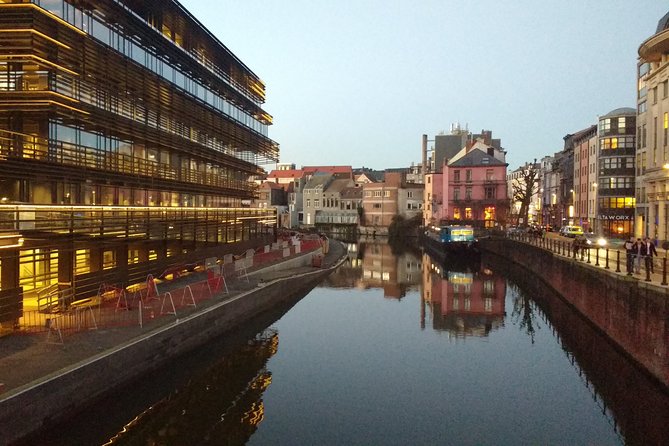
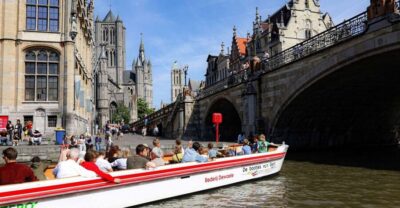
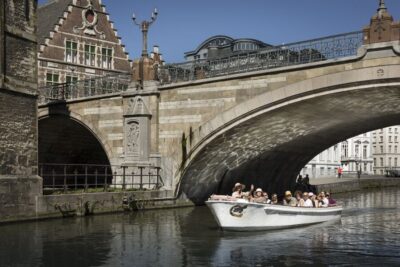
The tour then reaches Graslei and Korenlei, Ghent’s most popular quays. These waterfront streets once formed a center of medieval trade. Today, cafés and restaurants line the area, making it one of the easiest places to pause after the walk.
This is a good example of how the tour links past and present. You are not only looking at old façades. You are standing in a place where commerce once shaped the city, while modern Ghent uses the same waterfront for eating, meeting, and relaxing.
The stop lasts about 10 minutes according to the supplied route. That is enough for an explanation and some photographs, but not enough for a long café break. If you want to sit beside the water, plan to do so after the tour.
Graslei and Korenlei are popular, so this section may feel more central and public than Patershol. That contrast is useful. Within one short walk, you see a quieter old quarter, major religious buildings, a fortress, and Ghent’s best-known canal-side setting.
A small group makes the route more useful
The experience is advertised as a small-group walk, with a maximum of 10 people in the additional information. Another description lists groups of 1 to 12, so the stated limit is not perfectly consistent. I would confirm the expected group size when booking, especially if a very small group is important to you.
Even with that small discrepancy, the format is appealing. A group of this size is easier to keep together on city streets, and you can ask questions without interrupting a crowd. The guide can also react to what interests the people in front of them.
Sophie is the guide named in the available feedback. One family appreciated that she contacted them after booking to ask if children would join. That small step suggests a guide who thinks about the actual people on the walk rather than delivering one fixed speech.
You should still keep your expectations practical. The route may be adapted to group interests, but it remains a timed walking tour. A request for a different focus does not turn it into a private custom itinerary.
Walking demands, children, and timing
You need to be able to walk at least 5 kilometers. The route includes photo stops, but the overall pace is steady because the tour covers several parts of central Ghent in less than two hours.
Wear comfortable walking shoes. Ghent’s historic center is best explored on foot, but old city routes can be tiring when you combine distance with frequent stops and pavement. The operator asks for a moderate level of physical fitness, which is a fair description.
Children can join, but they need to keep up with the slowest adult in the group. If that will be difficult, the operator advises asking about private options. This is important for families with young children, since the tour is not described as a slow, child-paced walk.
The tour is near public transportation, but transport is not included. The end point is listed simply as Ghent, and the walk may finish on a different side of the city. You may need to walk back or use a bus or tram afterward.
That flexible ending is not a major problem in central Ghent, but it is worth remembering if you have a timed reservation after the tour. Leave yourself some breathing room rather than booking the next activity immediately.
What the $67.10 price gets you
At $67.10 per person, this is not the cheapest way to see Ghent. You can walk through the center on your own for free, and the main landmarks are easy to photograph without admission.
The value comes from the guide’s route and local context. You are paying to avoid map reading, connect the major sights in an efficient order, and see streets that you might otherwise skip. For a first visit, that can save time and help you make better choices for the rest of your day.
The small group also matters at this price. A guide handling 10 people can offer a more personal experience than a large city group, and the route can respond to interests. If you prefer independent sightseeing and already know Ghent well, the price may feel harder to justify.
No transport, food, or entrance tickets are included. That keeps the experience focused, but you should budget separately if you want to visit Gravensteen, the Belfry, or another attraction inside.
The tour is often booked about 20 days ahead. That does not guarantee that every date sells out, but it does suggest that advance planning is sensible, especially if you want a particular day or need the operator to consider children in your group.
The best fit for this experience
I would recommend this walk to you if you are visiting Ghent for the first time and want a quick, guided framework. It is especially useful if you enjoy hearing local stories but do not want a long formal lecture.
It also suits people who like a mixture of famous sights and less obvious streets. The route includes the castle, Belfry, three towers, and Graslei, but it also moves through Patershol and includes street art and local corners.
Families may find the personal contact helpful, particularly if Sophie leads the tour and children are part of the group. Still, you need to judge your child’s walking ability honestly. The group moves at the slowest adult’s pace, not necessarily at a young child’s pace.
I would be less likely to choose it if you want interior visits, a food-focused outing, or a very slow architectural walk. I would also hesitate if you have limited mobility or need a tightly controlled end point, since the route covers at least 5 kilometers and may finish away from the start.
Booking and cancellation details
Confirmation is sent within 48 hours, subject to availability. The tour uses a mobile ticket, so you do not need a printed voucher based on the information provided.
The cancellation policy is strict. The experience is non-refundable and cannot be changed for any reason. If your plans may shift, read that condition carefully before paying.
Guests who are ill, including those who are coughing or sneezing, are not accepted. The experience is near public transportation, but you must arrange your own bus, tram, or other transport.
Should you book the Ghent Walking Tour?
Book this tour if you want efficient first-day orientation, a small group, and a local guide who can connect Ghent’s major sights with quieter streets. The combination of Friday Market, Gravensteen, Patershol, the three towers, and Graslei gives you a solid introduction in under two hours.
Skip it if you mainly want castle or church interiors, a food tasting, or a leisurely walk with plenty of time at each stop. At $67.10, the tour earns its price through guidance and route planning, not through included admissions or meals.
For most first-time visitors who can comfortably walk 5 kilometers, I see this as a practical way to get your bearings fast. Wear good shoes, keep the rest of your schedule loose, and plan to continue exploring after the guide says goodbye.
FAQ
Where does the tour start?
The tour starts at the Artevelde statue at Vrijdagmarkt, or Friday Market, in Ghent.
Where does the tour end?
The end point is listed as Ghent, and the tour may finish on a different side of the city from the starting point. You can walk back or use a bus or tram.
How long does the walking tour last?
The tour lasts approximately 1 hour 30 minutes to 1 hour 45 minutes.
How far do I need to walk?
You need to be able to walk at least 5 kilometers.
What landmarks are included?
The route includes Friday Market, the Castle of the Counts, the surrounding Patershol area, the Ghent Belfry, Saint Nicholas Church, Saint Bavo Cathedral, Graslei, and Korenlei.
Does the tour enter Gravensteen or the Belfry?
The supplied details do not include admission to these landmarks. The experience includes city sightseeing and historical landmarks, but entrance tickets are not listed.
Is transportation included?
No. Transport is not included, though the tour is near public transportation.
How large is the group?
The additional information gives a maximum of 10 travelers. Another description says groups may include 1 to 12 people, so you may want to confirm the group limit when booking.
Can children join the tour?
Yes, children can join, but they must keep up with the walking pace of the slowest adult. Private options may be available if that is not possible.
Can I cancel or change my booking?
No. The experience is non-refundable and cannot be changed for any reason.
Just added around Ghent
- Ghent Running and Sightseeing Tour★ 5.0 · 3 reviews
- Ghent: Walking Tour from Friday Market to the Cathedral★ 4.8 · 3 reviews
- Ghent: City Walk with Audio Guide in 7 Languages on your Phone★ 4.5 · 3 reviews
- Children’s escape game in the city of Ghent Marsupilami★ 5.0 · 3 reviews
- Discover Ghent while playing! Escape game – The Walter case★ 4.5 · 4 reviews
- Discover Ghent while playing! Escape game – The alchemist★ 4.0 · 4 reviews
- e-Scavenger hunt Mons: Explore the city at your own pace★ 5.0 · 4 reviews
- Ghent: Guided City Highlights Walking Tour with Light Meal★ 4.6 · 5 reviews
Ghent Tours, compared.
Browse the lists this tour appears in