
Reviewed · BRUSSELS TOURS
Choco-Story Brussels: Chocolate Museum Entrance with Tasting
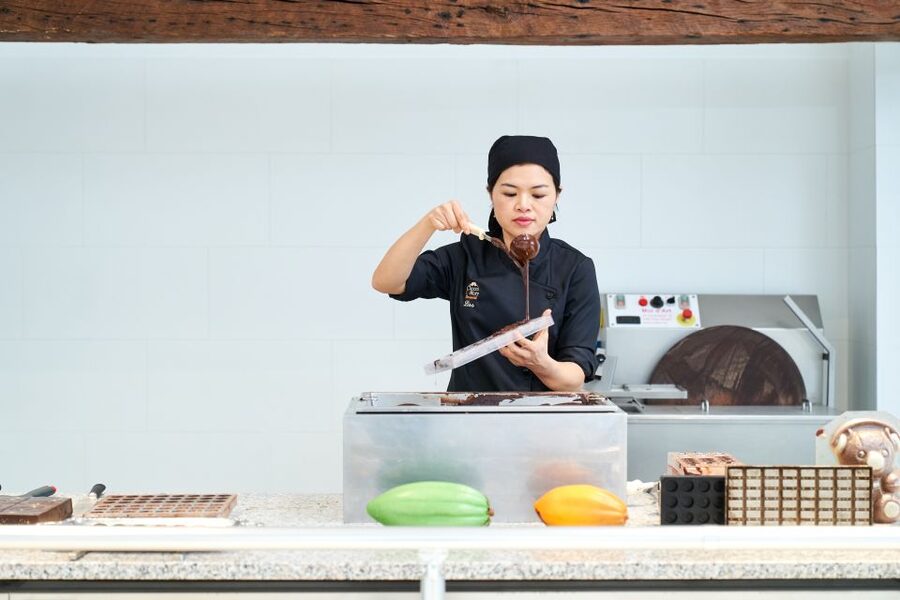
The best part of Choco-Story Brussels comes near the end: you watch a chocolatier turn liquid chocolate into a Belgian praline, then taste the very piece just made. The demonstration, sometimes led by lively presenters such as Gregory or Luisa, gives this small museum a proper theatrical finish.
I like the self-paced audio guide, which lets you linger over the displays or move along when younger children lose interest. I also like the amount of tasting included, from the welcome sample to the praline demonstration and other chocolate stations.
The main thing to know is that this is not a traditional guided tour. The audio device is clear and easy to use, but you cannot stop a live guide to ask questions. The demonstration room can also become crowded, making it hard to hear or see from the back.
Key points to know before you book
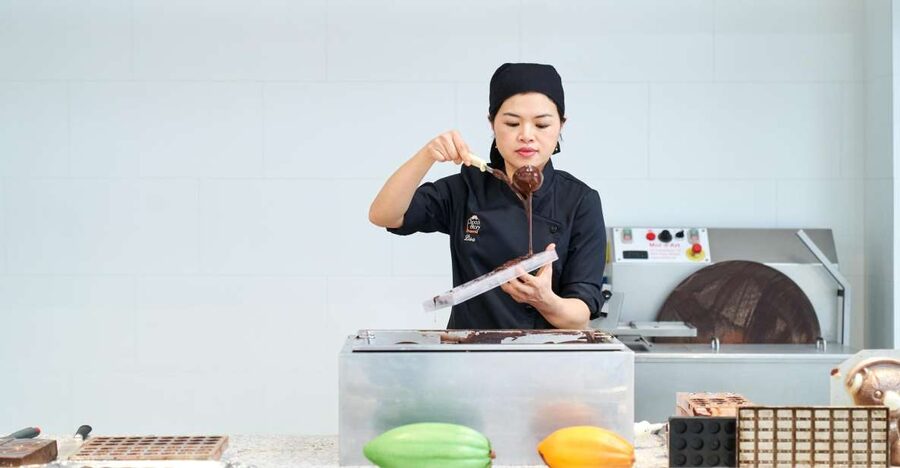
- A praline demonstration closes the visit: Watch chocolate being made by hand and taste the finished praline.
- The visit is self-guided: An audio device leads you through the museum at your own pace.
- The tasting is more than a single sample: You receive a welcome tasting, additional samples, and the praline made during the demonstration.
- It works well for families: Interactive games and short films give children something to do beyond listening.
- Allow about one to two hours: You can move quickly, but the displays reward a slower visit.
- The museum is central: The address is Rue de l’étuve 41, close to Brussels’ main historic sights and shopping streets.
Starting with cocoa, not candy
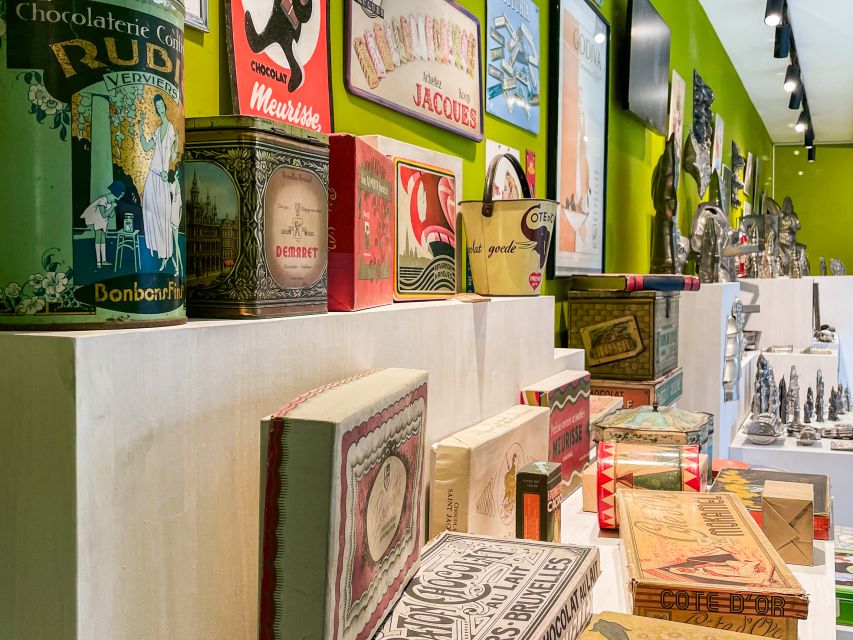
Choco-Story Brussels is easy to treat as a simple chocolate stop, but the museum begins with a broader question: how did cocoa travel from a sacred ingredient in the Americas to a Belgian specialty sold around the world?
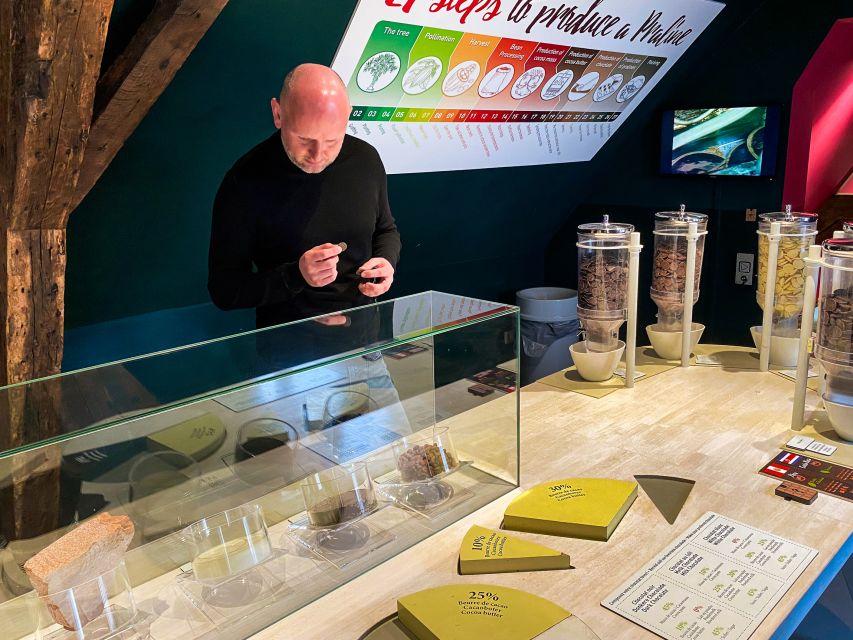
Your visit starts with a welcome tasting and an audioguide. You then enter the first exhibition room and follow the story in sequence. The displays explain cocoa’s ancient roots, including its importance to the Aztecs, before tracing its journey across the Atlantic and its gradual transformation into the chocolate enjoyed today.
I found this opening useful because it gives context to the tastings that follow. You are not simply eating different kinds of chocolate. You are learning why cocoa beans matter, how cultivation and harvesting affect the raw ingredient, and how processing changes its texture and flavor.
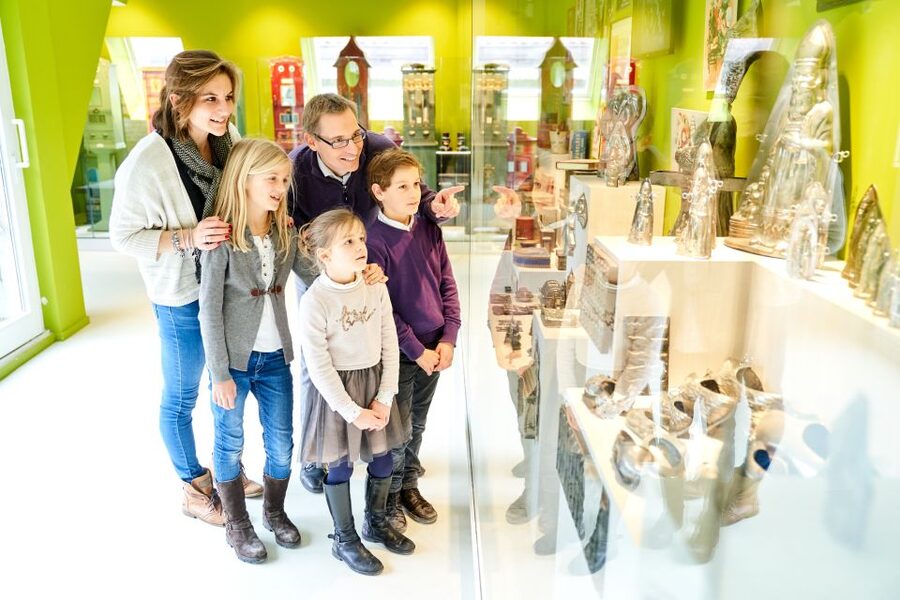
The museum uses historical objects, short films, interactive displays, and games. The mix keeps the visit from becoming a wall of written panels. Adults can listen to the more detailed commentary, while children can focus on the hands-on elements and visual material.
More Food Tours in Brussels
- Hungry Mary’s Famous Beer and Chocolate Tour in Brussels
★ 5.0 · 2,258 reviews - Belgian Beer Tasting in Brussels
★ 5.0 · 1,280 reviews - Brussels: Historical Walking Tour with Chocolate & Waffle Tasting
★ 5.0 · 1,165 reviews
Following chocolate from bean to praline
The central story is the transformation from cocoa bean to finished chocolate. The displays cover cultivation, harvesting, and the steps involved in turning cocoa into a smooth product suitable for bars, fillings, and pralines.
The audio guide helps here. Instead of reading every panel, you can listen while looking at the objects and displays. The commentary is available in several languages, and English, French, Dutch, German, Spanish, Italian, Russian, and Chinese are specifically listed. The activity also advertises 11 language options, and Arabic has been noted as available, so check the current language list when booking if that matters to you.
The device is designed for independent use. You select the relevant commentary as you move through the rooms, so you are not tied to the pace of a group. That is handy if you are visiting with a child, if one person in your party wants to hear every detail, or if you prefer to skim the historical sections.
The trade-off is silence. An audio guide can explain a subject clearly, but it cannot respond to a question about cocoa farming, Belgian chocolate, or the display in front of you. If you prefer conversation and spontaneous discussion, this format may feel less personal than a live museum tour.
Interactive displays that help children keep going
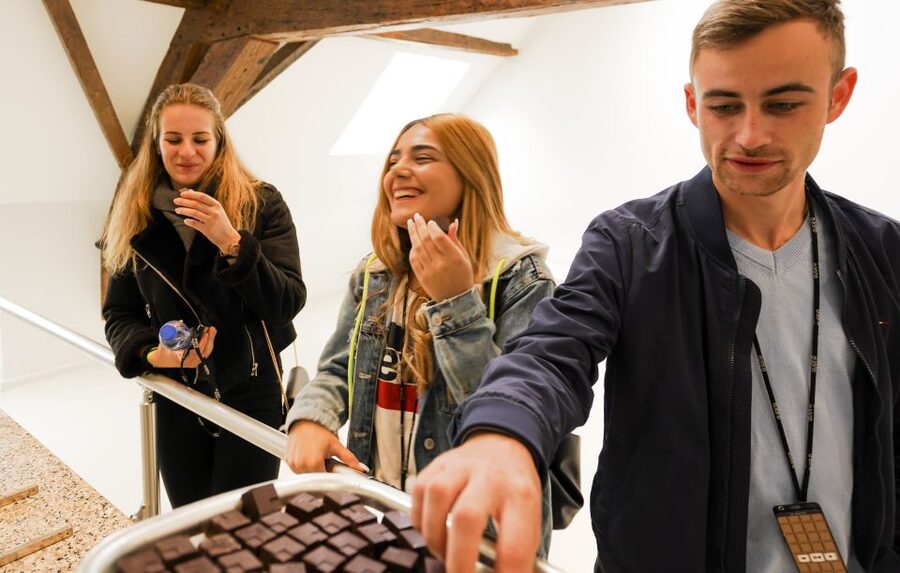
The museum makes a clear effort to include children. Interactive games break up the listening, and the short films give the story some movement. That matters in a chocolate museum, where the subject is tempting but the historical material may otherwise feel too serious for younger visitors.
A two-year-old can manage the visit with adult help, and older children can use the interactive sections more independently. A 10-year-old should find plenty to hold attention, especially once the demonstration and tasting begin.
I would still set expectations before arriving. This is an educational museum with a lot of information, not a hands-on workshop where you make your own chocolate. The tasting is hands-on in the best possible way, but the main exhibits are for looking, listening, and playing rather than cooking.
For adults, the games are a pleasant change of pace. They also make the museum a useful rainy-day or very hot-day activity, since the experience takes place indoors and does not depend on the weather.
The live praline demonstration
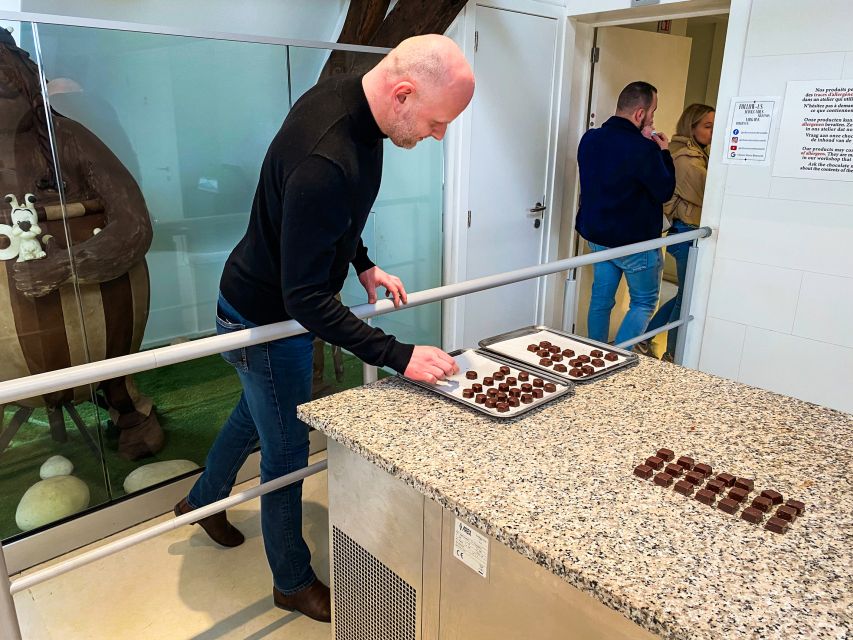
The live demonstration is the museum’s main event. A master chocolatier works in front of the group, showing how smooth chocolate becomes an artisanal praline through traditional techniques.
Presenters such as Gregory and Luisa have been praised for making the demonstration lively as well as informative. The best presenters use humor and keep the audience involved, so the session feels more like a small show than a technical lecture.
You see the process at close range, then receive a taste of the praline made during the demonstration. That final sample is particularly satisfying because it connects the explanation to something in your hand. You can notice the texture and flavor in a way that a display case cannot provide.
The demonstration is not always perfect from every position. The room may fill up, and people near the back can have trouble seeing the work surface or the screen. Conversation in the room can also make the presenter difficult to hear. If the timing suits you, arriving early for the demonstration is sensible, and standing where you have a clear line of sight is worth the effort.
The level of detail can also vary with the presenter. Some sessions are funny and thorough, while others feel shorter and less detailed. Even so, the chocolate-making segment gives the museum its strongest sense of craft.
More Museums in Brussels
- Brussels: Atomium Entry Ticket with Design Museum Ticket
★ 4.4 · 9,254 reviews - Brussels: Autoworld Museum Ticket
★ 4.7 · 1,301 reviews - Brussels: 2.5-Hour Chocolate Museum Visit with Workshop
★ 4.6 · 1,263 reviews - Brussels: Museum of Illusions Entry Ticket
★ 4.4 · 815 reviews
How much chocolate do you actually taste?
The tasting is a real part of the experience, not a token piece at the exit. You begin with a welcome sample, then encounter additional chocolate samples as you move through the visit. The demonstration ends with the praline you have just watched being made.
The selection gives you a chance to notice differences in flavor, texture, and style. It also makes the museum better value for anyone who would otherwise spend money sampling Belgian chocolate at several shops.
The exact number and selection of samples can vary, so do not arrive expecting a fixed tasting menu. One useful point is that the tastings are spread through the experience rather than saved entirely for the final room. That keeps the visit engaging and gives children a small reward as they move through the displays.
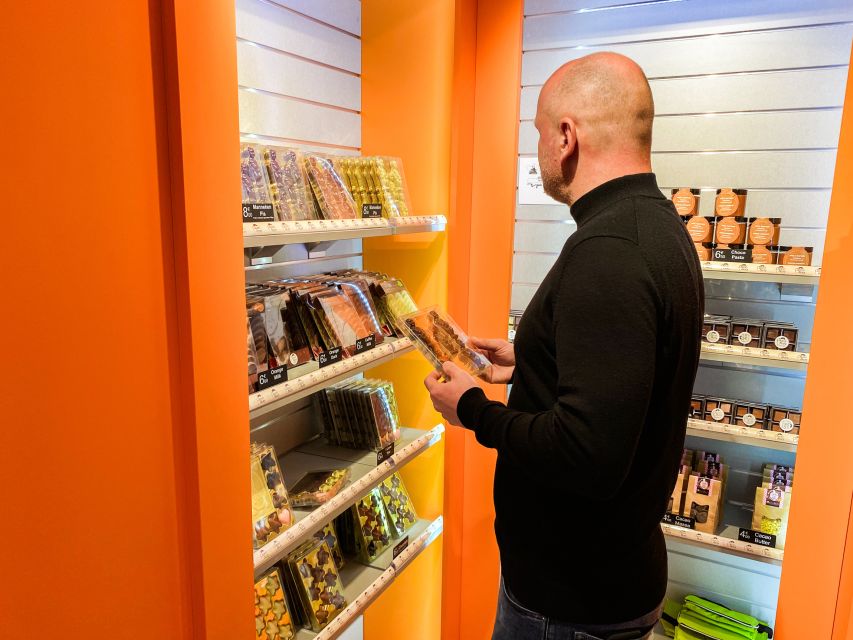
The shop offers more polished chocolate creations to take home. It is an easy place to buy gifts, though you should treat the shop as an optional extra. The $18 admission covers the museum, tastings, demonstration, and audioguide, but purchases in the shop are not included.
Is $18 good value in Brussels?
At $18 per person, Choco-Story Brussels offers fair value if you make use of the full visit. You receive museum admission, a multilingual audio guide, several tastings, and a live praline demonstration. For a chocolate lover, the tasting alone makes the price easier to accept, while the historical material gives the visit more substance than a chocolate shop stop.
Value depends on your expectations. If you want a polished, large-scale museum with a long technical demonstration, this is a modest attraction in a relatively small space. If you want an entertaining indoor activity lasting around an hour to two hours, with something to eat along the way, the price is reasonable.
The central location helps. You can combine the museum with other sights, shops, and cafés in central Brussels rather than setting aside a full day for the attraction itself. The booking allows cancellation up to 24 hours before the visit for a full refund, and a reserve-now, pay-later option is available, which is useful when your schedule is still changing.
The stated group size is limited to 10 participants, but that should not be confused with a guarantee of an empty museum or demonstration room. The exhibition is open to the visiting public, and the demonstration can still feel crowded at busy times.
Planning your visit at Rue de l’étuve 41
The meeting point is Choco-Story Brussels at Rue de l’étuve 41, 1000 Brussels. The museum is in the heart of the city, so it fits neatly into a walking day around central Brussels.
Check available starting times when you book. The activity is described as lasting one day for scheduling purposes, but the actual museum visit is much shorter. I would plan on roughly 90 minutes if you want to hear much of the audio commentary, explore the interactive displays, watch the demonstration, and take the tastings without rushing.
A morning visit can be a smart choice. At 10:30, the museum may be quieter, while later periods can become busier. This matters most for the demonstration, where a clear view makes a real difference.
The museum is wheelchair accessible. The included instructor languages are French, Dutch, and English, but remember that the main tour format is an audio guide rather than a live guided walk.
Who will enjoy Choco-Story Brussels most?

I would recommend this for families, couples, solo visitors, and anyone who wants a pleasant indoor stop in Brussels. The self-paced format is especially good for mixed groups because you do not all need to move at exactly the same speed.
It suits chocolate fans who want to understand Belgian pralines, but you do not need specialist knowledge to enjoy it. The story starts with basic cocoa facts and gradually moves toward chocolate production and Belgian craftsmanship.
It is also a good choice if you are traveling alone. You can use the audio guide at your own pace, pause at the displays, and spend as long as you like in the shop afterward.
I would be more cautious if your main goal is a detailed, question-and-answer lesson with a chocolatier. The instructors speak French, Dutch, or English during the live presentation, but there is no regular live guide leading the whole visit. You should also reconsider if crowded demonstration rooms are likely to frustrate you.
Small details that improve the experience
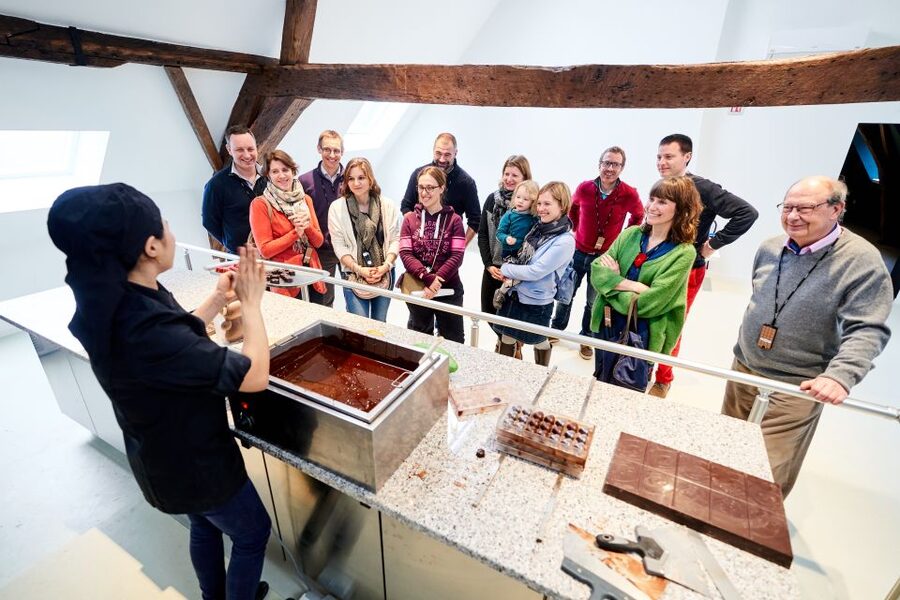
Take the tasting seriously. Instead of eating each sample quickly, notice how the texture changes between plain chocolate, filled chocolate, and the freshly made praline.
Use the audio guide selectively if you are short on time. You can focus on the sections that interest you most, then spend your remaining time on the demonstration and tasting.
If you are short, position yourself carefully before the live session begins. Taller people arriving later can block the view, and the screen may not be easy to see from every angle.
Bring patience for noise. Some visitors use the museum’s supplied device without headphones, which can add sound to the rooms. If you are sensitive to background noise, ask staff what listening options are available.
Leave time for the shop, but do not feel obliged to buy. The museum already includes enough tasting to make the visit worthwhile, and the shop is best seen as a convenient place for gifts rather than a required final stop.
Should you book it?
Book Choco-Story Brussels if you want a friendly, informative chocolate museum with a self-guided format, several tastings, and a live praline demonstration. At $18, it is a sensible central Brussels activity, especially for families and chocolate lovers who want more than a quick confectionery purchase.
Go early if possible, and arrive at the demonstration room with enough time to find a good position. Skip it only if you need a full live tour with plenty of questions or a large, highly technical museum. For most visitors, the mix of cocoa history, interactive exhibits, chocolate samples, and a freshly made praline makes this a tasty and worthwhile stop.
FAQ
Where is Choco-Story Brussels located?
Choco-Story Brussels is at Rue de l’étuve 41, 1000 Brussels, in the Brussels Capital Region.
How much does the experience cost?
The listed price is $18 per person.
How long should I allow for the visit?
Plan on about one to two hours, depending on how much of the audio commentary and interactive material you use.
Is this a guided tour with a person?
No. The museum visit is self-guided with an audioguide. A chocolatier leads the live praline-making demonstration.
What languages are available on the audioguide?
The listed audioguide languages include Dutch, French, English, German, Spanish, Italian, Russian, and Chinese. The activity also advertises 11 languages, so check the current options when booking.
What languages are used by the instructors?
The instructor languages are French, Dutch, and English.
Are tastings included in the admission price?
Yes. The admission includes tastings, including a welcome sample and a praline sample following the demonstration.
Can children enjoy the museum?
Yes. The museum includes interactive games, short films, and tastings, making it suitable for children and adults.
Is the museum wheelchair accessible?
Yes, the activity is listed as wheelchair accessible.
Can I cancel the booking?
You can cancel up to 24 hours in advance for a full refund. A reserve-now, pay-later option is also available.
More Dessert Tours in Brussels
- Brussels: Belgian Chocolate Making Workshop with Tastings
★ 4.7 · 1,629 reviews - Brussels: 2.5-Hour Belgian Chocolate Making Workshop
★ 4.8 · 933 reviews - Brussels Chocolate Walking Tour and Workshop
★ 4.5 · 885 reviews - Brussels: Historical Tour with Chocolate & Waffle Tasting
★ 4.8 · 642 reviews
Just added around Brussels
- Private Tour – Bruges and Ghent, our fairytale cities★ 5.0 · 3 reviews
- Bruxelles: Photoshoot Experience★ 4.4 · 3 reviews
- Private Day Trip from Brussels to Bruges★ 4.5 · 3 reviews
- Private Arrival Transfer from Brussels Airport to Bruges with Business car★ 5.0 · 3 reviews
- Leuven: City Walk with Audio Guide in 7 Languages on your Phone★ 3.0 · 3 reviews
- Brussels: Express Walk with a Local in 60 minutes★ 5.0 · 3 reviews
- 2 Hour Beer Tasting with Local Beer Sommelier in Brussels★ 5.0 · 3 reviews
- Floating in the clouds★ 5.0 · 3 reviews
Brussels Tours, compared.
Atomium Entry Ticket with Design Museum Ticket
Read our review →
From Brussels: Guided Day Trip to Bruges and Ghent
Read our review →
From Brussels: Bruges & Ghent Day Tour – 2 Fairytale Cities
Read our review →
Bruges and Ghent – Belgium’s Fairytale Cities – from Brussels
Read our review →
From Brussels: Luxembourg Tour with Dinant Visit
Read our review →
Hungry Mary’s Famous Beer and Chocolate Tour in Brussels
Read our review →
From Brussels: Guided Day Trip to Dinant and Luxembourg
Read our review →Browse the lists this tour appears in