
Reviewed · YPRES TOURS
In Flanders Fields and Passchendaele Grand Tour
The most powerful part of this Ypres battlefield tour is its range. In one day, you move from the polished white stones of Tyne Cot Cemetery to muddy trench lines, German fortifications, mine craters, and the dressing station linked to John McCrae’s In Flanders Fields. Roger guides the day, adding the human story behind each site rather than leaving you to read plaques on your own.
I like the small group of no more than eight and the useful mix of memorials, museums, and preserved battlefield remains. I also like that a light sandwich lunch, soft drink, and bottled water are included, so the day keeps moving without sending you off to find food.
The main consideration is the price, listed at $344, which is a serious spend for a day tour. The schedule is also full, with eight stops in about seven to eight hours. This is best for you if World War I is a major reason for visiting Ypres, not simply a side trip between Belgian cities.
Key points to know before booking
- Roger is the main draw: He has written two books about the subject and explains battles, places, and personal stories in clear detail.
- The tour reaches sites a walking tour cannot: You visit Passchendaele, Hill 60, Bayernwald, the Caterpillar crater, and cemeteries spread across the Ypres Salient.
- The group is capped at eight: That gives you a better chance to ask questions and follow the guide closely.
- The day balances Allied and German viewpoints: Tyne Cot and Essex Farm are paired with Langemark, a German command post, and Bayernwald trenches.
- Lunch is included: Expect a light sandwich and soft drink, plus bottled water. Alcohol is not included.
- Check the museum admission details: The tour information says Sanctuary Wood admission is included in the highlights, but the stop description also marks its admission ticket as not included.
Why this is a serious Ypres history day
Ypres is not a battlefield you can understand from one monument or one cemetery. The fighting around the town spread across a broad area, and the remains are scattered between villages, farm roads, cemeteries, woods, and open ground.
That is why a vehicle-based tour makes sense here. You start at Ieper railway station, at Colaertplein 35, at 10:00 am, and return there at the end. Instead of spending your day working out connections between distant sites, you can focus on the story.
The small group matters. With eight people or fewer, the day should feel more like a guided conversation than a bus excursion. You can ask why one position mattered, how the mine warfare worked, or what a cemetery’s design tells you about the army it commemorates.
Roger’s role is especially important because this subject can become a blur of dates and place names. He has written two books on the area, and the strongest praise for the tour centers on his detailed explanations, humor, and care with difficult material. That combination is useful here. The subject includes mass death, shattered towns, and long periods of appalling trench warfare, so a guide needs to provide both facts and proportion.
The tour does not treat the sites as a parade of photo stops. You will see memorials and cemeteries, but you will also walk through preserved trenches, enter bunkers, and visit the ground where underground explosions changed the course of battles. Those contrasts make the day easier to grasp.
More Flanders Fields memorial tours:
- From IEPER Private 4-hour Tour of the Ypres Battlefield
★ 5.0 · 154 reviews - In Flanders Fields and Passchendaele Half Day Morning Tour
★ 5.0 · 117 reviews - Ypres: An exploration of the deadly salient battlefields
★ 5.0 · 76 reviews
Sanctuary Wood: trenches and objects you can see
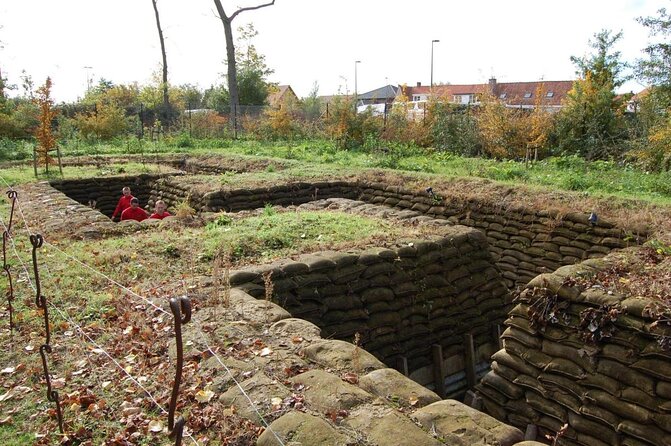
Sanctuary Wood Museum opens the day with a strong sense of place. The museum holds a large collection of World War I artifacts and includes an extensive preserved British trench system.
This is valuable because trenches can be hard to picture from a flat cemetery or a polished memorial. Here, you get a physical idea of the cramped defensive lines and the rough conditions in which soldiers lived and fought. The museum also gives you objects to connect with the wider story.
The planned visit lasts about 40 minutes. That is enough time for a focused introduction, though it is not a leisurely museum morning. You will need to keep moving because the day includes seven more stops.
There is a small but important detail to check before paying. The tour highlights say admission to Sanctuary Wood is included, while the stop information says the admission ticket is not included. Ask Ypres Battlefield Tours to confirm the current policy, since this affects the real cost.
Tyne Cot Cemetery and the scale of Passchendaele
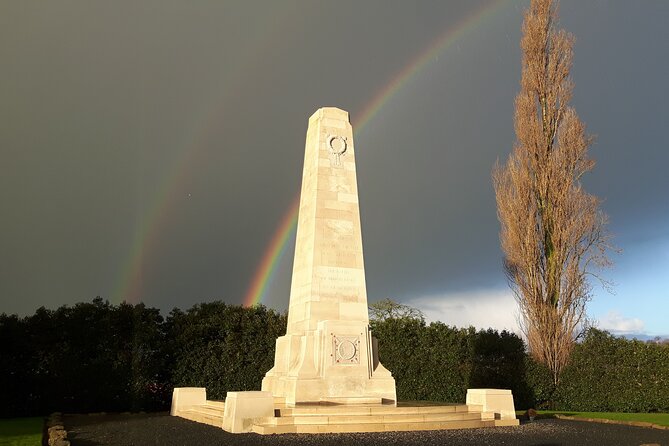
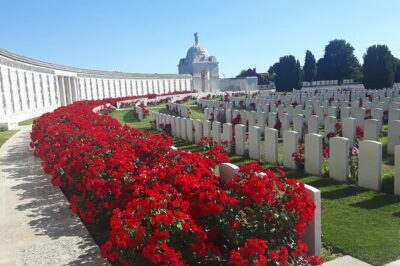
After driving through the Passchendaele battle area, you reach Tyne Cot Cemetery. Its rows of white Commonwealth headstones make this one of the most solemn places on the route.
Tyne Cot is described as the largest British and Commonwealth war grave cemetery in the world. That scale gives the Passchendaele fighting a human measure. Military names and battle dates can feel abstract, but a cemetery of this size makes clear how many individual lives were lost.
The stop is scheduled for 20 minutes. I would treat that as a quiet pause rather than a full visit. You can take in the design, read some inscriptions, and listen to Roger explain what happened in the surrounding area. Do not expect enough time to search for a particular grave unless you already know exactly where to go.
The setting also shows why the vehicle is useful. Tyne Cot is not just another stop in central Ypres. It belongs to a wider network of battle sites, and the drive between locations helps link the cemetery to the ground where the fighting occurred.
Langemark: a different memorial tradition

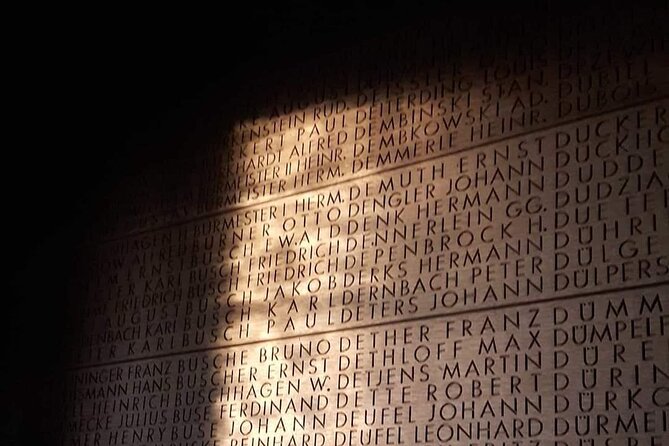
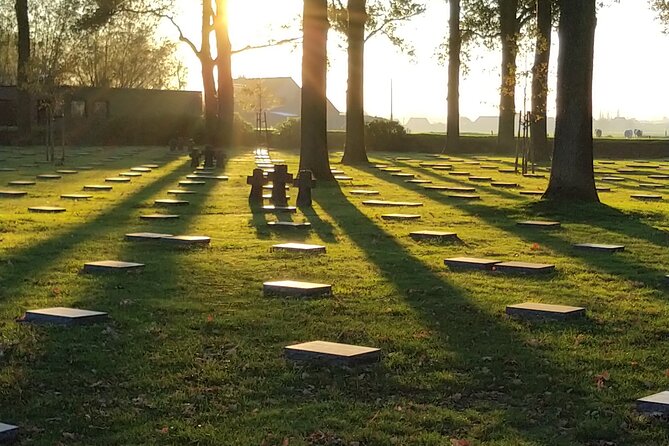
Langemark German Cemetery brings a different tone. It includes a mass grave and has links to later Nazi-era memory, making it more complicated than a simple cemetery visit.
That complexity is part of its value. The Ypres Salient was fought over by several armies, and visiting only Allied memorials would leave out an important part of the story. Langemark lets you consider how Germany remembered its dead and how war memorials can be shaped by politics long after the guns fall silent.
The stop lasts about 40 minutes. That gives Roger time to explain the site’s background and answer questions. You may find this one of the more thought-provoking visits because it asks you to separate the original wartime losses from later attempts to use those losses for political purposes.
The tour does not hide the difficult links to Nazism. That is a reason to go with a guide who can provide context instead of leaving you with a partial impression.
A few more Ypres half-days to weigh up
- From Brussels: Flanders Fields Remembrance Full-Day Trip
★ 4.4 · 65 reviews - From Ypres, The Christmas Truce to Passchendaele Ypres Based WW1 private tour
★ 5.0 · 29 reviews - From Ypres: WWI Battlefields Private Tour
★ 5.0 · 25 reviews - e-Scavenger hunt Ypres: Explore the city at your own pace
★ 4.5 · 6 reviews
Essex Farm and the story behind In Flanders Fields
At Essex Farm Cemetery, the focus shifts to a preserved dressing station and the bunkers connected with it. You also learn about Lieutenant Colonel John McCrae and the poem In Flanders Fields.
This is one of the most accessible stops for anyone who knows the poem but has never connected it to a real place. The preserved bunkers help you understand the medical side of the war. Behind every front-line attack was a system of aid stations, urgent treatment, and difficult choices about who could be saved.
The 40-minute visit gives the subject room to breathe. Roger can explain McCrae’s connection to the site while also placing the poem in the setting of wartime medical work and battlefield death.
I like this stop because it joins literature with physical evidence. You are not simply hearing a famous poem recited. You are standing beside the bunkers and cemetery that give its imagery a sharper meaning.
The German command bunker and underground warfare
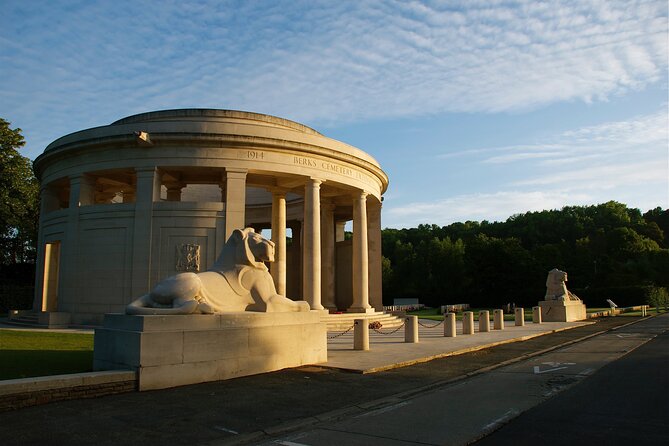
The preserved German command post is a short, 15-minute stop. It is described as the largest preserved German command bunker in the Ypres Salient.
The brief visit does not mean the site is unimportant. A command bunker helps you think about how armies tried to control artillery, troop movements, and defensive positions from protected underground rooms. It also adds another German perspective after Langemark.
You should expect this to be a compact explanation rather than an extended exploration. The stop works well in the middle of the day because it breaks up the cemetery visits and prepares you for the next section, which focuses on mine warfare.
The Caterpillar crater and the Battle of Messines Ridge

The Caterpillar Mine Crater, also called Hill 60 B, is one of the day’s most striking physical remains. The stop focuses on the Battle of Messines Ridge and the underground war that produced the crater.
Mine warfare required soldiers to dig beneath enemy positions, place explosives, and wait for the right moment. At Caterpillar, the resulting crater gives you a visible sense of the force involved. It is not just a mark on a map. It shows how the ground itself became part of the battle.
The visit lasts 30 minutes. That should give you time to understand the basic sequence of events and see why the site mattered. Roger’s explanation is especially useful here because underground operations can be difficult to follow without a clear account of who dug where and why.
This is also a good example of the tour’s strength. You are not only visiting places of remembrance. You are seeing the scars left by military engineering and learning how commanders tried to break the deadlock of trench warfare.
Hill 60: bunkers, craters, and brutal fighting
Hill 60 includes preserved battlefield remains, bunkers, and mine craters. The tour uses the site to explain the terrible fighting that took place there.
The name can make the position sound small or simple, but a height on this front could control visibility and artillery observation. The preserved remains help show why soldiers fought so hard for ground that may look modest today.
You have about 30 minutes here. Wear practical shoes and expect the outdoor sections to feel less polished than the cemeteries. The tour information does not promise particular weather conditions or terrain access, so sensible clothing is the safest choice.
This is one of the places where Roger’s storytelling can make the largest difference. The bunkers and craters are physical clues, but they do not explain themselves. You need the sequence of attacks, defenses, and mine explosions to understand the suffering tied to the site.
Bayernwald: the German trenches
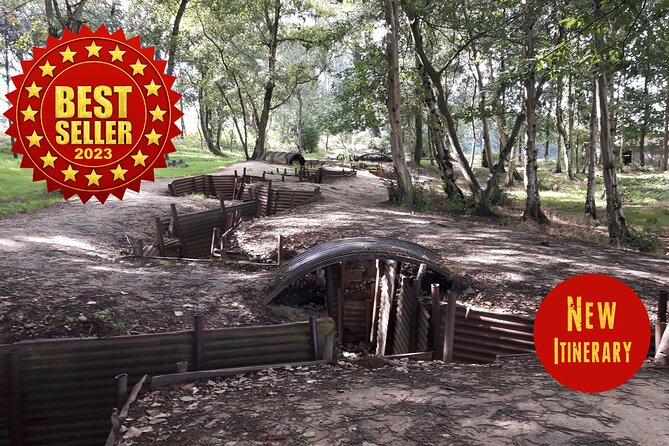
Bayernwald is the final major stop and lasts about 45 minutes. It contains the only preserved German trenches in the Ypres Salient.
That makes it an important counterpart to the British trenches at Sanctuary Wood. You can compare how each side built and occupied defensive positions, while remembering that trenches were not merely static ditches. They were places of shelter, observation, supply, command, and danger.
The stop is long enough for a proper visit rather than a quick photograph. It also closes the day on a useful note by returning to the physical remains of trench warfare after the cemeteries and crater sites.
Admission to Bayernwald is listed as included. As with Sanctuary Wood, check the current entry arrangement when booking if keeping your budget exact matters.
The $344 price and what you receive
At $344, this is not a budget excursion. The value depends on how much you want to understand the Ypres Salient in one day.
The price covers roughly seven to eight hours, transport from Ypres and back, a group of no more than eight, bottled water, a light sandwich lunch, and a soft drink. It also includes the chance to reach sites that would be difficult to combine independently in a single day.
You are paying mainly for access to the guide’s time and interpretation. The cemeteries themselves are free, but getting between them takes planning, and the meaning of each place is much clearer when the battle story is connected from stop to stop.
I would not choose this tour simply because it includes many sights. Eight stops can feel demanding, and the day is focused almost entirely on World War I. If you have only a passing interest in military history, the cost may not feel worthwhile.
For a serious student of the war, a family researching a relative, or someone who wants one concentrated day around Ypres, the calculation changes. Roger’s subject knowledge, the small group, lunch, and transport make the price easier to justify.
Who should book this Ypres battlefield tour?
I would recommend it most strongly to you if you want more than a quick look at the Menin Gate or a central Ypres museum. The route reaches the wider Salient and gives you several kinds of evidence: trenches, command posts, cemeteries, bunkers, craters, and literary remembrance.
It also suits first-time visitors who do not have a car. The meeting point is at Ieper railway station, near public transportation, and the tour returns to the same place. That makes it practical for a day based in Ypres.
The day can also work well for someone arriving from Brussels, but allow care with your train planning. One person was helped after a late arrival caused by a missed train, yet you should not rely on exceptions. The advertised start time is 10:00 am.
Service animals are allowed, and most people can take part. Still, this is an outdoor history day with several battlefield locations, so comfortable footwear and clothing suited to the weather are sensible.
Should you book the In Flanders Fields and Passchendaele Grand Tour?
Book it if the Ypres Salient is a main reason for your visit and you want a guide-led day with serious historical context. The strongest reasons are Roger, the eight-person limit, the mix of Allied and German sites, and access to preserved trenches and bunkers across the area.
Think twice if you prefer slow museum visits, dislike a tightly packed schedule, or have little interest in World War I. The $344 price is high, and the day asks you to absorb a lot.
For the right audience, this is a focused and moving way to understand Ypres. Just confirm the Sanctuary Wood admission detail before booking, then arrive at Ieper station ready for a long, thoughtful day.
FAQ
Where does the tour begin?
The tour begins at Station Ieper, Colaertplein 35, 8900 Ieper, Belgium.
What time does the tour start?
The scheduled start time is 10:00 am.
Where does the tour end?
The tour returns to the meeting point at Station Ieper.
How long does the experience last?
The tour lasts approximately 7 to 8 hours.
How many people can join the group?
The maximum group size is eight travelers.
Is lunch included?
Yes. A light sandwich lunch, a soft drink, and bottled water are included. Alcoholic beverages are not included.
Can I cancel for a full refund?
Yes. You can cancel at least 24 hours before the local start time for a full refund. Cancellations or changes made within 24 hours are not refunded or accepted.
Just added around Ypres
- Discover Tournai while playing! Escape game – The alchemist★ 4.0 · 3 reviews
- PRIVATE Australian Western Front Battlefields 3-Day Tour Ypres to Amiens★ 5.0 · 3 reviews
- From LIlle or Bruges, Christmas Truce to Passchendaele Ypres 1 day WW1 private★ 5.0 · 5 reviews
- From Ypres 4hr Christmas Truce and Monster Mines of Messines PRIVATE Tour★ 5.0 · 5 reviews
- e-Scavenger hunt Ypres: Explore the city at your own pace★ 4.5 · 6 reviews
- Full Day Canadian WW1 Vimy and Somme Battlefield Tour from Ypres★ 5.0 · 6 reviews
- From Ypres: WWI Battlefields Private Tour★ 5.0 · 25 reviews
- From Ypres, The Christmas Truce to Passchendaele Ypres Based WW1 private tour★ 5.0 · 29 reviews
Ypres Tours, compared.

In Flanders Fields and Passchendaele Half Day Morning Tour
Read our review →
An exploration of the deadly salient battlefields
Read our review →
From Brussels: Flanders Fields Remembrance Full-Day Trip
Read our review →
From Ypres, The Christmas Truce to Passchendaele Ypres Based WW1 private tour
Read our review →
Full Day Canadian WW1 Vimy and Somme Battlefield Tour from Ypres
Read our review →
Browse the lists this tour appears in