
Reviewed · YPRES TOURS
Ypres: An exploration of the deadly salient battlefields
The most moving part of this Ypres tour is the way it connects huge wartime events with individual lives. You move from the casualty system and John McCrae memorial at Essex Farm to the mud and cramped quarters of Yorkshire Trench, then on to cemeteries on both sides of the conflict. Tyne Cot Cemetery provides the grand, solemn finale.
I like two things in particular: the small group, capped at seven, and the guide’s use of photographs, maps, and personal stories to explain what you are seeing. Kim is the main guide, with Lucas and Roger also leading some departures, and the tour can sometimes be adapted around family connections. The clean, warm Mercedes minivan and hotel pickup add real ease.
The main consideration is pace. Three and a half hours gives you a strong overview, but not enough time for long walks or every battlefield site around Ypres. Comfortable shoes are still important, and short-notice bookings may not always be possible.
Key points at a glance
- Essex Farm Cemetery: Learn about the casualty system and visit the John McCrae memorial, linked to the poem In Flanders Fields.
- Yorkshire Trench: See one of the rare surviving trench sites and gain a feel for the tight, exposed conditions of trench warfare.
- Two sides of the war: Langemark German Cemetery gives the tour a broader view than a route focused only on Commonwealth memorials.
- Passendale by minivan: The drive helps you understand how the battlefields fit together geographically.
- Tyne Cot Cemetery: Visit the largest Commonwealth War Graves Commission cemetery in the world.
- Small-group attention: With no more than seven people, the guide can answer questions and adjust the discussion more easily.
Why this short Ypres tour works so well
Ypres is filled with wartime sites, but they are spread across the surrounding countryside. You can visit a cemetery or memorial on your own, yet it is harder to understand how each place fits into the fighting, the medical system, the failed offensives, and the years of remembrance that followed.
This tour solves that problem in a practical way. You are picked up in Ypres and driven between six major stops in a dark blue Mercedes van marked with the Kim’s Battlefield Tours logo. The total time is 210 minutes, so you spend less energy finding roads and more time listening, looking, and asking questions.
I especially like the scale of the group. A maximum of seven people is small enough for the guide to speak clearly and respond to individual interests. Several departures have included relatives researching a great-grandfather, great-uncle, or another family member who served in the war. On one occasion, Kim made a detour to Bard’s Cottage Cemetery so a passenger could visit a great-uncle’s grave.
That sort of flexibility cannot be promised on every departure, but it shows why a small group can matter. If you have a family name, regiment, or cemetery connection, share it before the tour. The guide may be able to make the history more personal.
More Flanders Fields memorial tours:
- From IEPER Private 4-hour Tour of the Ypres Battlefield
★ 5.0 · 154 reviews - In Flanders Fields and Passchendaele Half Day Morning Tour
★ 5.0 · 117 reviews - From Brussels: Flanders Fields Remembrance Full-Day Trip
★ 4.4 · 65 reviews
Essex Farm and the casualty system
The first major stop is Essex Farm Cemetery, about ten minutes from Ypres. The visit lasts roughly an hour, making it the longest stop on the route and a useful place to set the tone for the morning.
Here, the focus includes the casualty system, the Commonwealth War Graves Commission, medical care, and the way the war’s dead were recorded and commemorated. Instead of treating the First World War as a list of battles, the guide explains how death, injury, burial, and remembrance were handled.
You also visit the John McCrae memorial. McCrae was a Canadian military doctor associated with In Flanders Fields, and the site gives you a direct link between the medical side of the war and the words that shaped public memory. The setting is quiet, and the stop allows time to take in the cemetery rather than rushing through it for a photograph.
This is where the tour begins to show its balance. You hear about soldiers, but also about medical workers, burial arrangements, families, and the institutions that continued caring for the dead long after the guns fell silent.
If you prefer battlefield tours with maps, dates, and military movements only, this opening may feel slower than expected. I see that as a strength for most people. It gives you the human framework needed for the later battle sites.
Yorkshire Trench and Dug-out: close to the ground
A short drive brings you to Yorkshire Trench and Dug-out. The guided visit lasts about 25 minutes, but the site makes a strong impression because it offers a physical sense of trench warfare.
Photographs and explanations can tell you that troops lived in narrow, wet, dangerous spaces. Standing beside a surviving trench feature helps you picture the basic problem more clearly: soldiers were confined to a limited strip of ground, with little comfort and constant exposure to danger.
The name Yorkshire Trench reflects the British connection to the site, while the dug-out points to the underground spaces used for shelter and work. The tour does not simply point at earthworks and move on. The guide explains what the site tells you about daily conditions and the military use of the ground.
The visit is not a long hike. That matters if you are building the tour into a busy Ypres day, or if you want a useful battlefield introduction without spending hours on foot. Still, wear shoes that can handle uneven outdoor ground. The advice to bring comfortable footwear is sensible.
I would not book this tour expecting every stop to be a large museum with extensive indoor displays. Much of the experience happens outdoors, and its power comes from the relationship between the site, the explanation, and the surrounding area.
Langemark German Cemetery and the other side
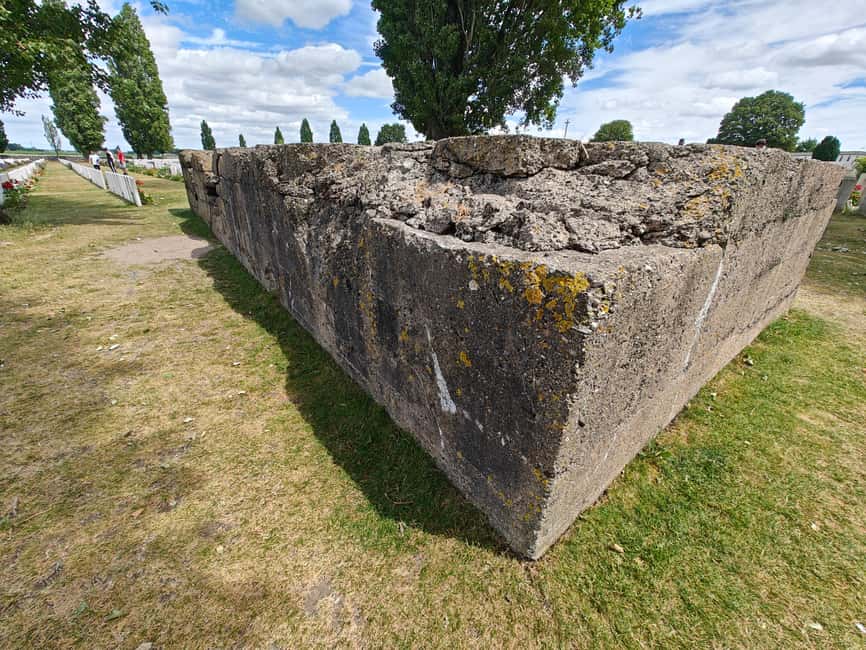
Langemark German Military Cemetery gives the tour a point of view that is often missing from quick visits to the Ypres area. The route does not present the war only through Commonwealth remembrance. It also considers the German dead and the impact of the conflict on Germany.
The guided visit lasts around 45 minutes. That is enough time to look at the cemetery, hear how German commemoration differs from the Commonwealth approach, and place the site within the wider story of the Great War.
This stop is useful because it encourages you to think beyond a simple division between heroes and villains. The tour explains the causes and outcomes of the war in clear language, while also addressing the strengths and failures of the campaign. The presentation is described as accurate and unsentimental, which suits a subject where easy conclusions can become misleading.
Several guides have been praised for adjusting their explanations to the group. Kim has tailored parts of tours to British, Australian, and New Zealand participants, while one guide helped connect the information to a family background. That does not change the history, but it can change how easily you connect with it.
Langemark also gives the route a necessary pause. After the physical association with trenches, you enter a place shaped by mourning and national memory. I find that contrast valuable. It shows that cemeteries are not just places to count graves. They also reflect the political and cultural choices made after the war.
A few more Ypres half-days to weigh up
- From Ypres, The Christmas Truce to Passchendaele Ypres Based WW1 private tour
★ 5.0 · 29 reviews - From Ypres: WWI Battlefields Private Tour
★ 5.0 · 25 reviews - In Flanders Fields and Passchendaele Grand Tour
★ 5.0 · 25 reviews - e-Scavenger hunt Ypres: Explore the city at your own pace
★ 4.5 · 6 reviews
The Brooding Soldier at Vancouver Corner
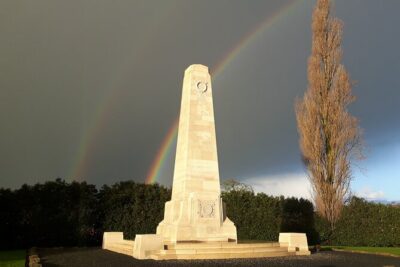
The next part of the route takes you to the St Julien Canadian War Memorial, commonly known as the Brooding Soldier at Vancouver Corner. The guided stop lasts about 25 minutes.
The memorial is an important Canadian marker in the Ypres area. Its design invites quiet attention rather than spectacle, and the guide uses the stop to explain the Canadian experience of the fighting and the significance of the position.
This is also where the tour links the battlefield to the human cost of the campaign. You are not simply given a date and a monument name. The guide uses photographs and personal accounts to make the events easier to picture, while keeping the tone respectful rather than theatrical.
The stop is short, so listen closely at the beginning. You will have time to look around, but this is not designed as a long independent visit. The benefit is that you receive the essential context without losing too much time from the later cemetery visits.
Crossing the Passendale battlefields
Between the memorials, the van crosses the Passendale battlefields. This drive is more than a transfer from one stop to the next. It helps you see how the sites relate to one another and how much ground the fighting covered.
In a vehicle, you can cover the area in a practical amount of time. The guide points out the locations and uses the view from the road to explain the terrain, movement, and conditions connected with the campaign. You may find the modern farmland peaceful, but the commentary reminds you that this same region was once a place of intense destruction and suffering.
The drive also protects the tour from becoming an exhausting march. You get out at selected points, hear the explanation, then return to the minivan for the next section. For a first visit to Ypres, I think this is a good tradeoff between range and depth.
The limitation is simple: you will not walk every stretch of the Passendale area. If you already have a strong background in the battles and want detailed battlefield archaeology, a longer specialist tour may suit you better. For a visitor seeking a concentrated introduction, the drive gives useful geographic order to a complicated subject.
Tyne Cot Cemetery, the solemn final stop
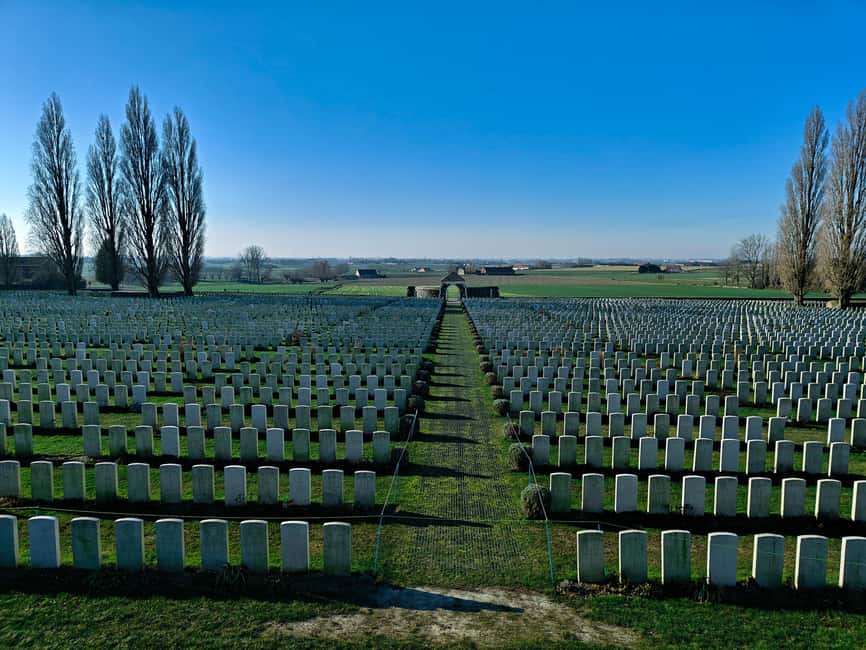
Tyne Cot Cemetery is the final major visit, with about 45 minutes of guided time. It is the largest Commonwealth War Graves Commission cemetery in the world, and the scale changes the feeling of the tour.
The cemetery can be overwhelming at first. A guide helps you read it as a place with structure and meaning rather than as an endless field of names and headstones. You learn more about the Commonwealth War Graves Commission, the burial system, and the post-war work that shaped these memorial sites.
The guide leaves enough time for the atmosphere to register. One of the strongest features of this tour is the balance between explanation and silence. The history is clear, but the stops are not packed so tightly that you are hurried from one graveyard to the next.
The setting also brings together several themes from earlier in the day: the scale of casualties, the national identities involved, the challenge of identifying and recording the dead, and the way memory was built into the countryside after 1918.
A 45-minute visit is enough for a guided introduction, but you may want additional time if Tyne Cot is a personal priority. The tour returns to Ypres afterward, so ask about the timing if you want to plan a separate visit. The supplied schedule allows for the guided stop but does not promise extra free time there.
The guides and their teaching style
Kimberley Wright is the named experience provider and the guide most often associated with the tour. Lucas and Roger also lead some departures. The central strength across the guiding team is clear explanation rather than a flood of specialist terms.
Kim uses photographs, maps, and personal stories to connect the present-day locations with wartime events. She has also been described as warm, friendly, cheerful, and willing to adjust the tour around the group. That personal manner matters on a subject this heavy. The tone remains serious without becoming cold.
You should also expect the possibility of a guide adapting the content to national or family connections. Australian, New Zealand, British, and other backgrounds have all been accommodated in past tours. Again, this is not a guaranteed custom itinerary, but the small group makes questions and personal interests easier to include.
The guide quality is the main reason I would choose this tour over simply hiring a vehicle or following a printed map. The sites themselves are important, but the value comes from understanding why each one matters.
Price, comfort, and practical value
At $88 per person, the tour is fairly priced for 210 minutes of transport, guiding, and access to a carefully connected group of sites. You are not paying only for a ride. You are paying for someone to explain the casualty system, compare memorial traditions, show you trench remains, and place the Passendale area in context.
The maximum group size of seven improves that value. A large coach can be cheaper, but it usually gives you less room for questions and less chance of a guide responding to your interests.
Pickup and drop-off at an agreed location in Ypres are included. The dark blue Mercedes minivan is clean, warm, and comfortable according to the information available, which is especially useful in the cooler months. Transport also saves you from navigating unfamiliar roads between cemeteries.
The tour is conducted in English. Bring comfortable shoes, since several stops involve outdoor walking. Free cancellation up to 24 hours before departure and the reserve-now, pay-later option make planning easier, but short-notice reservations may not be possible. If you are booking close to the date, contact the provider first at [email protected].
Who should book this Ypres battlefield tour?
I would recommend it most strongly if you are visiting Ypres for the first time, have limited time, or want the major sites explained in a logical order. It is also a strong choice for people with a family connection to the First World War, especially if you have a name or cemetery to research before arrival.
The tour suits history beginners because the guide builds the story from the events leading up to the war and explains difficult subjects in plain language. It also suits history enthusiasts who want a careful route, personal stories, and a look at both Commonwealth and German remembrance.
It may be less suitable if you want a full-day walk, extensive museum time, or a highly technical military study of every operation around Ypres. The 210-minute format is an overview, even though it is a detailed one.
I also would not treat the tour as light entertainment. The subject is death, injury, failed campaigns, and long-term grief. Kim’s warmth and occasional humor make the experience easier to follow, but the memorials remain solemn places.
Should you book it?
Book this tour if you want to understand Ypres rather than simply collect photographs of cemeteries. The route covers Essex Farm, Yorkshire Trench, Langemark, the Brooding Soldier, Passendale, and Tyne Cot in a manageable morning or afternoon, with transport between each site.
I particularly value the combination of clear historical teaching and personal attention. The small group, flexible approach, and family-history help can make the day feel far more meaningful than a standard sightseeing circuit.
If you have only one battlefield outing in Ypres, this is a sensible choice. Bring good shoes, allow yourself time to think, and contact the provider early if your booking is short notice or tied to a particular relative. At $88, it offers a strong blend of range, comfort, and human context.
FAQ
Where does the tour begin and end?
The tour begins in Ypres and returns to Ypres after the final stop at Tyne Cot Cemetery.
How long does the experience last?
The tour lasts 210 minutes, or three and a half hours.
What places are included?
The route includes Essex Farm Cemetery, Yorkshire Trench and Dug-out, Langemark German Military Cemetery, the St Julien Canadian War Memorial known as the Brooding Soldier, the Passendale battlefields, and Tyne Cot Cemetery.
Is transport included?
Yes. Pickup and drop-off at an agreed location are included, with travel between sites in a minivan.
How many people can join?
The tour is limited to seven participants.
What language is the tour conducted in?
The live tour is conducted in English.
Who may guide the tour?
Kimberley Wright is the named experience provider. Lucas and Roger also guide some departures.
What should I bring?
Bring comfortable shoes for the outdoor cemetery and battlefield visits.
Can I cancel or pay later?
You can cancel up to 24 hours before the tour for a full refund. The reserve-now, pay-later option lets you book without paying immediately.
Just added around Ypres
- Discover Tournai while playing! Escape game – The alchemist★ 4.0 · 3 reviews
- PRIVATE Australian Western Front Battlefields 3-Day Tour Ypres to Amiens★ 5.0 · 3 reviews
- From LIlle or Bruges, Christmas Truce to Passchendaele Ypres 1 day WW1 private★ 5.0 · 5 reviews
- From Ypres 4hr Christmas Truce and Monster Mines of Messines PRIVATE Tour★ 5.0 · 5 reviews
- e-Scavenger hunt Ypres: Explore the city at your own pace★ 4.5 · 6 reviews
- Full Day Canadian WW1 Vimy and Somme Battlefield Tour from Ypres★ 5.0 · 6 reviews
- From Ypres: WWI Battlefields Private Tour★ 5.0 · 25 reviews
- In Flanders Fields and Passchendaele Grand Tour★ 5.0 · 25 reviews
Ypres Tours, compared.

In Flanders Fields and Passchendaele Half Day Morning Tour
Read our review →
From Brussels: Flanders Fields Remembrance Full-Day Trip
Read our review →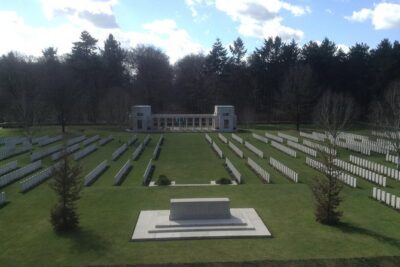
From Ypres, The Christmas Truce to Passchendaele Ypres Based WW1 private tour
Read our review →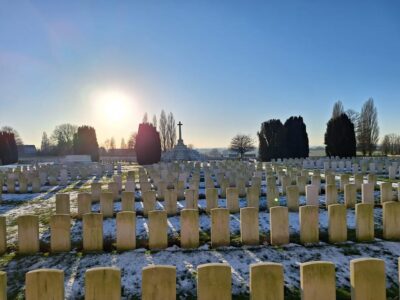
In Flanders Fields and Passchendaele Grand Tour
Read our review →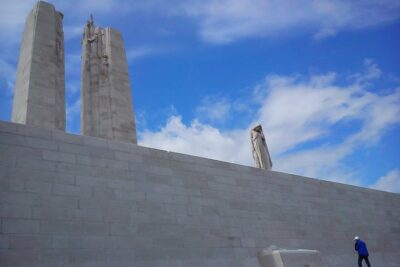
Full Day Canadian WW1 Vimy and Somme Battlefield Tour from Ypres
Read our review →
Browse the lists this tour appears in