

Reviewed · YPRES TOURS
From IEPER Private 4-hour Tour of the Ypres Battlefield
The most moving part of this private Ypres battlefield tour is the way huge military events become personal. At Hill 60, Tyne Cot, and Essex Farm, you are not just hearing dates. You are standing where men fought, died, were treated, and were remembered.
I like the thoughtful use of maps, photographs, and family research, especially if you have an ancestor connected with the Ypres Salient. I also like the small-group format: your guide can adjust the pace, answer questions, and focus on Canadian, Australian, British, or other family connections. The main consideration is time. Four hours gives you a strong introduction, but the Ypres battlefields cover a wide area and you will leave wishing you had longer.
Key points at a glance
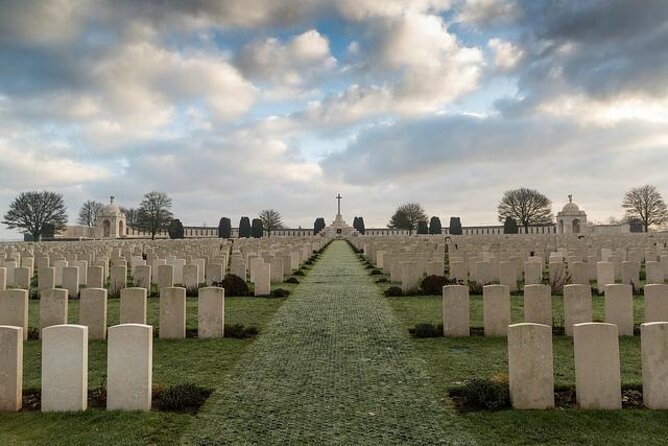
- Hill 60 puts the mine explosions of 7 June 1917 into context, with time to hear how underground warfare shaped the battle.
- Sanctuary Wood combines original trenches with a small wartime museum, making it one of the most tangible stops.
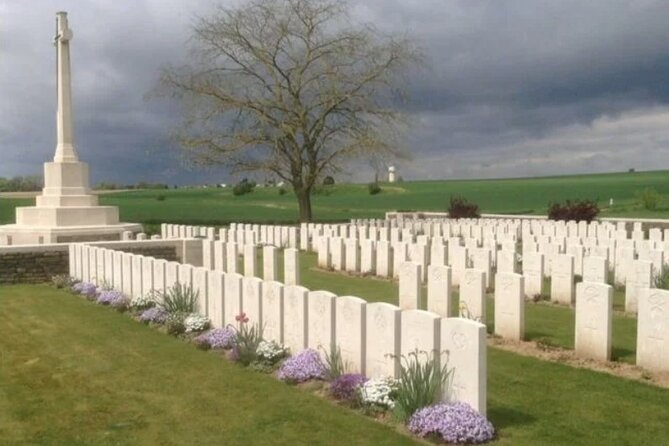
- Tyne Cot Cemetery brings the scale of loss into view, with about 12,000 Commonwealth soldiers buried there.
- Saint Julien explains the first German chlorine-gas attack, including the Canadian troops who held the line.
- Essex Farm connects the battlefield to In Flanders Fields, written by Lieutenant Colonel John McCrae at a nearby hospital site.
- Pickup from Ypres hotels, bed-and-breakfasts, and the train station keeps the half-day simple, with private transport for up to four people.
Why this four-hour Ypres tour works
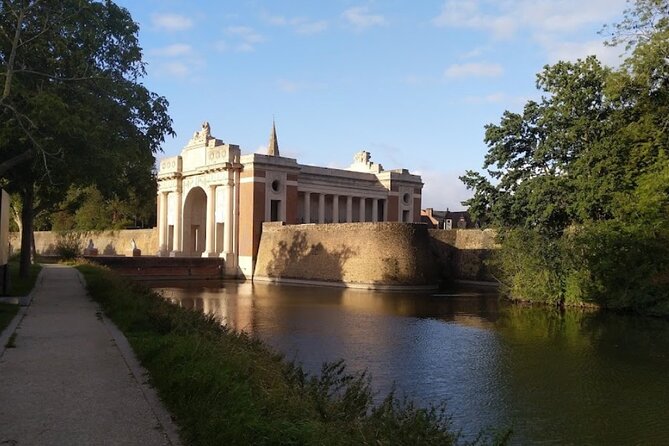
Ypres, called Ieper in Dutch, is a good base for exploring the First World War sites around Flanders. The city itself is easy to reach by train, but the battlefield sites are spread across the countryside. Seeing them without a car can be awkward, and trying to connect them by yourself requires careful planning and a firm grasp of the geography.
This tour solves that problem with pickup at Ieper train station or at your hotel or bed-and-breakfast. You travel in a private vehicle, reported by several customers as a comfortable hybrid SUV, and only your group takes part. For a family of four, the $399.25 group price works out to about $100 per person. That is not a budget outing, but it is reasonable if you value private transport, a guide focused on your interests, and the time saved by not navigating between distant sites.
The guides associated with the tour include Soren, also written as Søren, and Sabine. Soren is repeatedly described as warm, funny, and deeply familiar with the military story of the Ypres area. Sabine is described as a native of Ypres with strong local knowledge. Your guide may research an ancestor before the tour if you provide a service record or useful family details in advance.
That last point can change the entire day. Instead of hearing only about units and battle dates, you may learn where a particular relative served, which actions took place nearby, or how his regiment fitted into the wider fighting. The guide has even supplied military-document information to a family following one soldier’s service.
More Flanders Fields memorial tours:
- In Flanders Fields and Passchendaele Half Day Morning Tour
★ 5.0 · 117 reviews - Ypres: An exploration of the deadly salient battlefields
★ 5.0 · 76 reviews - From Brussels: Flanders Fields Remembrance Full-Day Trip
★ 4.4 · 65 reviews
Hill 60 and the mines beneath the battlefield
The first stop is Hill 60, with about 40 minutes set aside for the visit. The name sounds modest, but this position mattered because even a small rise offered a useful military advantage in the otherwise exposed area around Ypres.
Your guide explains the massive mines detonated here on 7 June 1917. The explosions formed part of the opening of the Battle of Messines, when British forces set off charges placed in tunnels beneath the German positions. This is a good place to begin because it shows how the war was fought both above and below ground.
I appreciate that Hill 60 is treated as more than a quick photo stop. The point is not simply to see a patch of earth. It is to understand why this ground mattered and how much labor, planning, and risk went into underground warfare.
The terrain may be uneven, and this is one of the places where you should mention mobility concerns before booking. The guide has adjusted the route for people recovering from surgery or dealing with walking restrictions, but the tour still visits outdoor battlefield locations. Ask about your needs when arranging pickup and timing.
Sanctuary Wood, original trenches, and a small museum
Sanctuary Wood Museum receives about 45 minutes. It is one of the most tactile parts of the tour because you can see original First World War trenches rather than only cemetery walls or memorial inscriptions.
The museum is described as quaint rather than grand. That is part of its appeal. You get a compact collection and the chance to walk through a trench and tunnel area, then connect those physical remains with the maps and photographs your guide has been using.
For many people, this is the moment when the subject becomes real. Trenches make the war feel cramped, wet, and laborious in a way that broad battlefield views cannot. They also help explain why movement was so difficult and why a few hundred yards could carry enormous importance.
The museum has an admission fee, and it is included in the tour. With only 45 minutes here, you will not have unlimited time to examine every display. Still, the scheduled visit is long enough to see the original trench remains and get the main story without turning the entire half-day into a museum visit.
Families with children can benefit from the guide’s flexibility. A guide such as Soren has been praised for keeping younger children involved with facts and a lighter touch, while still handling the subject respectfully. The topic is serious, so parents should prepare children for cemeteries, casualties, and wartime suffering.
Tyne Cot Cemetery and the scale of loss
Tyne Cot Cemetery is allotted about 45 minutes and is likely to be the tour’s most sobering stop. It is the world’s largest Commonwealth War Graves Commission cemetery, with roughly 12,000 soldiers buried there. Only about 3,000 have identified names, which gives the site a stark sense of how many men were never identified.
The numbers can be hard to grasp in a book. At Tyne Cot, the rows of graves and the surrounding memorial inscriptions give those figures a physical presence. Your guide can explain the cemetery’s place in the fighting and point out that two Australian recipients and one Canadian recipient of the Victoria Cross are buried there.
Give yourself permission to be quiet here. A good guide will provide context, but this is not a place that needs constant commentary. The strength of the visit comes from combining a few clear explanations with time to look, read, and think.
The stop is also especially useful for visitors with family connections to Commonwealth forces. If you know a relative’s regiment, service number, or approximate date of death, send that information before the tour. It may allow the guide to shape the discussion around the person you came to remember.
A few more Ypres half-days to weigh up
- From Ypres, The Christmas Truce to Passchendaele Ypres Based WW1 private tour
★ 5.0 · 29 reviews - From Ypres: WWI Battlefields Private Tour
★ 5.0 · 25 reviews - In Flanders Fields and Passchendaele Grand Tour
★ 5.0 · 25 reviews - e-Scavenger hunt Ypres: Explore the city at your own pace
★ 4.5 · 6 reviews
Saint Julien and the first chlorine-gas attack
Saint Julien Memorial is a shorter stop, lasting about 15 minutes. Here you hear about the first German gas attack of the First World War, launched on 22 April 1915 against French soldiers.
The guide also explains how Canadian troops held the line as the chlorine cloud moved across the front. This is an important part of the Ypres story because it shows the shock of a new weapon and the confusion faced by soldiers who had little warning and limited protection.
Fifteen minutes is enough for an introduction, not a full treatment of chemical warfare. That is a fair trade in a four-hour tour, since the stop helps connect the separate battles into a wider account of how the Ypres Salient changed during the war.
Canadian visitors may find this part particularly meaningful. The guide can keep Canada’s role in focus throughout the route, rather than treating the Canadian contribution as a brief footnote. Australian, British, New Zealand, and other Commonwealth connections can also be brought into the day when relevant.
Essex Farm and the story behind In Flanders Fields
The final listed stop is Essex Farm Cemetery, with about 30 minutes. This was a wartime hospital site where Lieutenant Colonel John McCrae composed the poem In Flanders Fields. The poem helped make the poppy a lasting symbol of remembrance.
This stop adds a human and literary layer to the military story. You have already considered mines, trenches, gas, and mass burial. At Essex Farm, the focus shifts to medical work, grief, and the words people used to make sense of the dead.
The site is particularly effective if you know the poem but have never connected it to a real place. Your guide can explain how McCrae’s experience at the hospital site shaped the poem and why its poppy image became so closely tied to remembrance of the First World War.
The 30-minute visit gives you time to take in the cemetery and hear the story without rushing. It also provides a quieter ending than Hill 60 or the larger Tyne Cot cemetery. Depending on your pickup and drop-off arrangements, your guide may be able to leave you near a lunch spot or another convenient location afterward.
A guide who adapts the day to your family
The strongest feature here is not simply the route. It is the chance to shape the route around your group. A private tour means you do not have to wait for strangers, follow someone else’s pace, or save your questions for the end.
The guides use visual aids such as maps and historic photographs. That matters at Ypres because the modern countryside can look peaceful and ordinary. Without help, it may be difficult to see how the trench lines, roads, villages, and defensive positions fitted together.
Soren has also been praised for researching individual ancestors before the tour. In one case, a family provided details about a grandfather, and the guide used that information to identify relevant battlefield locations. Another family received help tracing a soldier who fought in several actions around Ypres. Sabine similarly researched a soldier’s service and located additional military-document information for his family.
Send details early if this personal element matters to you. A name, regiment, service number, dates, and a copy of a service record can give the guide something useful to work with. Do not assume every family mystery can be solved in four hours, but the effort to connect your relative to the ground is one of the tour’s greatest strengths.
The flexible approach also helps with practical needs. The guide has changed pickup and drop-off points, carried bags during the tour, recommended restaurants, and suggested a supermarket for freshly made sandwiches before a train journey to Paris. These are small touches, but they can make a half-day in transit much easier.
Timing, pickup, and what the price buys you
You can choose a morning or afternoon start. The tour lasts about four hours, with roughly 175 minutes assigned to the five main stops. The remaining time is needed for driving between sites and for pickup and drop-off.
Pickup is offered at Ieper train station and at local hotels and bed-and-breakfasts. If your accommodation is not on the standard list, you can message the provider with its name. For train arrivals, send your arrival time so the guide can meet you at the station.
The $399.25 price covers a private group of up to four people. If you fill all four places, you pay about $100 per person. For two people, the per-person cost is much higher, but you are paying for a private vehicle, a dedicated guide, and a route that can respond to your interests.
I would choose this format over a self-drive visit if you are new to the Ypres area or want military context rather than just a series of memorials. Driving yourself may cost less, but you must manage directions, parking, opening times, and the order of the sites. You also lose the guide’s maps, photographs, and personal research.
The tour is offered in English. Confirmation is sent within 48 hours of booking, subject to availability. Service animals are allowed, and the activity is near public transportation. Most people can participate, but tell the provider about walking limitations before the day.
What the four hours cannot cover
Ypres was a major First World War sector, and no half-day route can explain every battle, cemetery, unit, and memorial. You will get the main stops listed here, but you should not expect a full survey of the entire Ypres Salient.
The itinerary also leaves little spare time for long personal searches. If your main purpose is to locate a specific grave or follow an ancestor’s full wartime path, provide the information in advance and ask how much can be added. Some customization is possible, but the standard four-hour schedule still has to cover five locations.
The subject matter is emotionally heavy. Tyne Cot and Essex Farm can be particularly affecting, while the gas attack and casualty figures require a respectful approach. Soren has been praised for using occasional humor without making light of the subject, but the tone remains serious.
That balance suits many people. You receive clear explanations and the chance to ask questions, but the guide does not treat the battlefield as a theme-park attraction. I would not book this expecting entertainment first. Book it if you want help understanding a difficult place.
Who should book this private battlefield tour?
I recommend it most strongly for:
- Families tracing a First World War ancestor
- Canadians, Australians, New Zealanders, British visitors, and others with Commonwealth connections
- First-time visitors who want historical context at each stop
- Couples or small groups who prefer a private vehicle
- Families with older children who can engage with a serious subject
- Visitors arriving by train who want pickup from Ieper station
- People with limited time in Ypres who want several major sites in one outing
It is less suitable if you want a relaxed sightseeing drive with little walking or discussion. It is also not the best choice if you want to spend a full day at one cemetery or museum. For that, ask about a longer or more specialized option.
Should you book it?
Book this tour if you want the Ypres battlefields explained by a guide who can connect military events with personal stories. The strongest reasons are the private format, the clear visual explanations, the included Sanctuary Wood admission, and the possibility of family-history research before you arrive.
The price is easiest to justify for four people. Solo visitors and couples will pay more per person, but they gain a private route, direct access to the guide, and simple pickup from their accommodation or the station.
Four hours is a useful introduction, not the final word on Ypres. If your time is limited, this tour gives you a thoughtful and efficient first look at Hill 60, Sanctuary Wood, Tyne Cot, Saint Julien, and Essex Farm. If those places connect to your family, send the guide your records early and let the tour become more than a general lesson in military history.
FAQ
How long does the Ypres battlefield tour last?
The tour lasts approximately four hours.
How many people can join the private tour?
The price covers one private group of up to four people. Only your group participates.
Where can pickup take place?
Pickup is available at Ieper train station and at hotels and bed-and-breakfasts in Ieper. If your accommodation is not listed, you can message the provider with its name.
Which sites are included?
The route includes Hill 60, Sanctuary Wood Museum, Tyne Cot Cemetery, Saint Julien Memorial, and Essex Farm Cemetery.
Is entrance to Sanctuary Wood Museum included?
Yes. Admission to Sanctuary Wood Museum is included. The other listed stops have no admission ticket charge.
Can I cancel for a refund?
You can cancel at least 24 hours before the experience start time for a full refund. Cancellations or changes made less than 24 hours before the start time are not accepted for a refund.
Just added around Ypres
- Discover Tournai while playing! Escape game – The alchemist★ 4.0 · 3 reviews
- PRIVATE Australian Western Front Battlefields 3-Day Tour Ypres to Amiens★ 5.0 · 3 reviews
- From LIlle or Bruges, Christmas Truce to Passchendaele Ypres 1 day WW1 private★ 5.0 · 5 reviews
- From Ypres 4hr Christmas Truce and Monster Mines of Messines PRIVATE Tour★ 5.0 · 5 reviews
- e-Scavenger hunt Ypres: Explore the city at your own pace★ 4.5 · 6 reviews
- Full Day Canadian WW1 Vimy and Somme Battlefield Tour from Ypres★ 5.0 · 6 reviews
- From Ypres: WWI Battlefields Private Tour★ 5.0 · 25 reviews
- In Flanders Fields and Passchendaele Grand Tour★ 5.0 · 25 reviews
Ypres Tours, compared.
In Flanders Fields and Passchendaele Half Day Morning Tour
Read our review →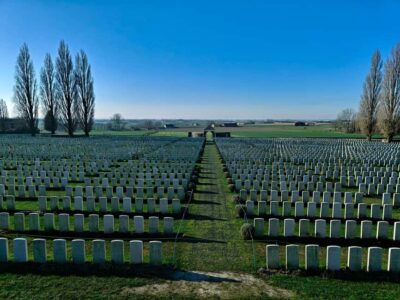
An exploration of the deadly salient battlefields
Read our review →
From Brussels: Flanders Fields Remembrance Full-Day Trip
Read our review →
From Ypres, The Christmas Truce to Passchendaele Ypres Based WW1 private tour
Read our review →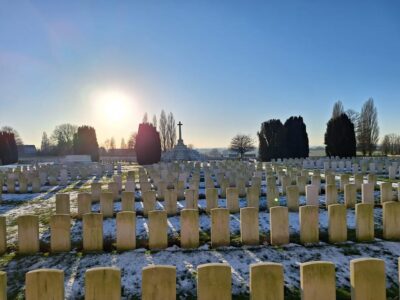
In Flanders Fields and Passchendaele Grand Tour
Read our review →
Full Day Canadian WW1 Vimy and Somme Battlefield Tour from Ypres
Read our review →
Browse the lists this tour appears in