
Reviewed · YPRES TOURS
From Ypres 4hr Christmas Truce and Monster Mines of Messines PRIVATE Tour
The most striking part of this private Ypres tour is the ground beneath your feet. At Hill 60 and Spanbroekmolen, the First World War was fought not only with rifles and artillery, but with tunnels and enormous underground mines. You will hear how thousands of men were left inside the earth, then move on to the human stories behind the Christmas Truce and the memorials at Messines.
I like the private format, since Soren can shape the outing around your questions, family research, or a particular regiment. I also like the short driving distances between several important sites, which lets you see a wide stretch of the Ypres area without spending four hours trying to navigate scattered country roads.
The main consideration is time. Four hours is enough for a sharp introduction, but not a full survey of the Ypres Salient. Several stops are brief, and the tour can run longer when a family connection or a major point of interest deserves more attention.
Key points to know before booking
- Hill 60 and the Caterpillar Crater: Hear how underground warfare left about 8,000 soldiers encased in the earth, with no headstones to mark them.
- The 91,000-pound Spanbroekmolen mine: See one of the most powerful mine craters in the Messines area and learn about the tunnelers who worked below the front.
- A route built around your interests: Soren can adjust the visit for family history, ancestry research, or a memorial you especially want to find.
- New Zealand and Irish contributions: The Messines Ridge Memorial and Island of Ireland Peace Park give two national perspectives on the 1917 battle.
- The Christmas Truce site: Visit the ground linked with the remarkable Christmas 1914 meetings between opposing soldiers.
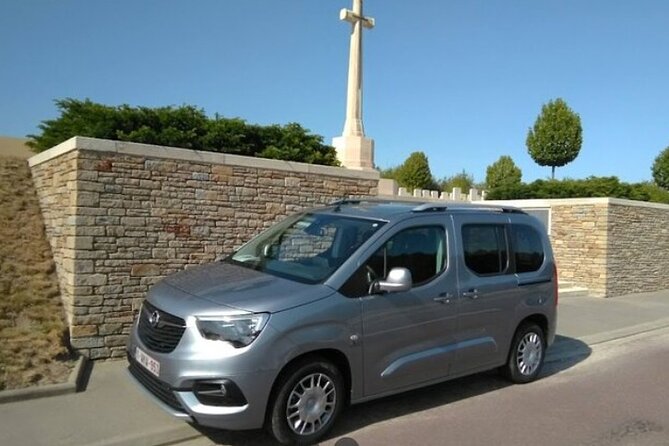
- Private pickup in Ypres: Meet at Ieper train station or at your hotel and travel between the spread-out sites as a passenger.
Why this private Ypres battlefield tour works
The Ypres battlefields are not arranged like a single museum complex. Important locations are scattered around roads, farms, villages, cemeteries, and open fields. A private vehicle makes a real difference here. You can watch the countryside pass by while Soren explains how the front moved, rather than spending your limited time figuring out connections between sites.
That arrangement also makes the tour feel personal. If your family member served with a Canadian, British, Irish, New Zealand, or other Allied unit, tell Soren before the tour or at the start. One group arrived with a specific memorial in mind, along with a few possible additions, and Soren built a useful route from those limited details. The outing lasted well beyond the planned four hours because the extra time was used to follow the family story rather than rush to the next stop.
That flexibility is the strongest reason to choose this experience instead of a fixed group outing. You are not simply being moved from one photo stop to another. You can ask why a position mattered, how tunneling changed the battle, or where a particular unit fought. Soren has also been praised for explaining the siege of Ypres in detail and for giving people space when a memorial visit calls for quiet reflection.
The tour is offered in English and is for your group only, with a maximum of four people. At $532.32 per group, the cost may look high beside a shared excursion, but it works out to about $133 per person for four people. For two people, it is about $266 each. The value depends on your priorities: this is a good buy if you want a focused guide, private transport, and a route shaped around your interests. It is less compelling if you only want a quick general introduction at the lowest possible price.
A few more Ypres half-days to weigh up
Hill 60 and the Caterpillar Crater
Hill 60 is the emotional and historical anchor of the tour. The stop lasts about 35 minutes, longer than any other scheduled location, and that extra time is useful. Here, Soren explains the fighting for the hill and the Caterpillar Crater, while placing the site within the larger story of underground warfare.
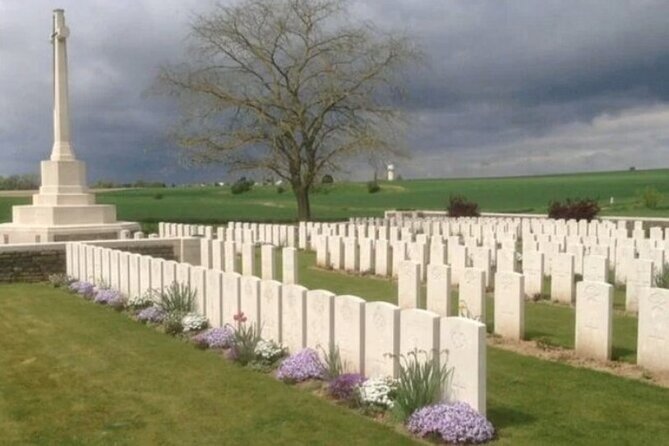
The phrase a cemetery without headstones captures what makes this location so sobering. About 8,000 soldiers are said to remain encased in the earth here. There are no individual graves to visit for those men, only the cratered ground and the knowledge of what happened below it.
This is not a polished attraction with a neat narrative path. Its power comes from the physical remains and the guide’s explanation. You will need to listen closely, because the meaning of the ground is not always obvious at first glance. Soren’s role matters here: he connects the visible crater to the men who dug, fought, and died beneath it.
If you have mobility concerns, ask about the exact walking conditions before booking. The information provided confirms that most people can participate, but it does not give a detailed surface or terrain description. Sensible footwear is a practical choice for any battlefield visit.
Spanbroekmolen and the tunneling war
The Spanbroekmolen Mine Crater is a short stop, listed at about 10 minutes, but the number attached to it is hard to forget: 91,000 pounds of explosive power. The crater gives you a direct sense of the scale of the mines used in the Battle of Messines.
This is where the tour shifts from the broad story of soldiers holding trenches to the specialized work carried out underground. Tunneling was slow, dangerous, and intensely physical. Soren explains the men who worked below the front and the role their efforts played in the attack.
Do not expect a long walk or an extended cemetery visit here. The stop is designed as a compact explanation and viewing point. Its value comes from linking it to Hill 60. Seen together, the two locations show that the war was fought on several levels, above ground and below it.
For anyone interested in military engineering, this may be one of the most memorable parts of the morning. For someone mainly interested in personal stories or memorial architecture, it may feel brief. The private format helps because you can use your time to ask for more detail if the tunneling story catches your attention.
Messines Ridge and the New Zealand memorial
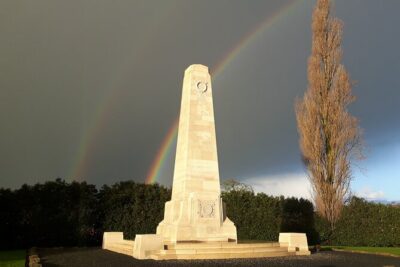
The Messines Ridge Memorial introduces the New Zealand contribution to the battle. The stop lasts about 15 minutes, enough for a focused explanation and time to look around, but not enough for a long period of private research.
This is a useful reminder that the Ypres Salient was an international battlefield. National memorials can sometimes make a campaign feel divided into separate stories. A guide can help you see how those contributions fitted into the same battle and the same patch of Belgian ground.
I would treat this as a strong orientation stop rather than a complete New Zealand military history lesson. If you have a New Zealand ancestor or unit connection, mention it early. The route can be tailored, and this is exactly the sort of place where a name, battalion, or date may change how much time you need.
Same city, a completely different way to spend a day:
- From IEPER Private 4-hour Tour of the Ypres Battlefield
★ 5.0 · 154 reviews - In Flanders Fields and Passchendaele Half Day Morning Tour
★ 5.0 · 117 reviews - Ypres: An exploration of the deadly salient battlefields
★ 5.0 · 76 reviews - From Brussels: Flanders Fields Remembrance Full-Day Trip
★ 4.4 · 65 reviews
The Island of Ireland Peace Park
The Island of Ireland Peace Park adds the Irish story to the Messines visit. Its 15-minute stop focuses on the Irish contribution to the battle and gives the tour a wider human frame.
This is especially valuable because the First World War does not fit neatly into modern political categories. An Irish memorial at a battlefield in Belgium invites questions about identity, service, and how different communities were represented during the war. Soren can provide the historical setting while you take in the memorial itself.
Again, the timing is concise. You will get the essential explanation, but anyone researching an Irish relative may want to ask for more time or additional stops. The tour’s private structure makes that conversation possible, though the advertised four-hour length still places limits on how far the route can expand.
The Christmas Truce memorial and the ground of 1914

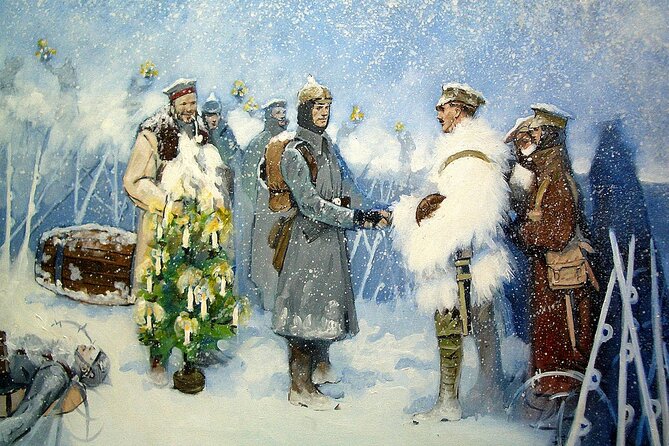
The Christmas Truce Memorial is the tour’s most unexpected change of mood. After stories of mines, craters, and mass death, you hear about the moment in December 1914 when opposing soldiers met in No Man’s Land and briefly set aside their differences.
The important point is not to turn the truce into a simple feel-good tale. The men returned to a brutal war, and the meeting did not end the conflict. Yet the site remains moving because it shows individuals acting outside the logic imposed on them by military command.
The stop is planned for about 15 minutes. That is enough to hear the story and see the ground associated with it, but you may want to linger. A private tour gives you room to say so, although an extension is not guaranteed and may depend on the day’s schedule.
This is also a good stop for people who do not have a family connection to the war. The personal story makes the wider battlefield easier to understand. You are not only studying troop movements and dates. You are considering what happened when ordinary soldiers briefly recognized one another as people.
Hyde Park Corner Cemetery and individual stories
The final stop is Hyde Park Corner Commonwealth War Graves Commission Cemetery. Here, the focus turns from large operations to individual names and graves.
Soren points out the Hyde Park Corner Memorial, the resting place of an England rugby captain, and twin brothers buried side by side. Those details give you specific human stories to hold onto after the larger accounts of armies and explosions.
Cemeteries are often where a battlefield tour becomes most personal. The graves are orderly, but the lives behind them were not abstract. A sports captain, two brothers, and the other men named here represent the many different reasons families still come to Ypres.
The scheduled visit is about 15 minutes. That may be enough for a guided introduction, but not for a long search through every row. If you already know a grave reference or family name, share it ahead of time. The private format is best used for precise requests rather than hoping to cover the entire cemetery in one short stop.
What Soren adds to the route
The guide is a major part of the value. Soren has been described as an engaging, encyclopedic source on the siege and battles of Ypres, but the more useful point is how he applies that knowledge. He does not seem limited to a fixed speech. He answers questions, adjusts the focus, and can specialize the route around ancestry.
That matters because battlefield interpretation can easily become a string of dates and place names. A good guide connects the two. At Hill 60, the ground tells only part of the story. At the memorials, the architecture cannot explain every political and military question. Soren’s explanations fill those gaps.
The private setting also changes the pace. You can ask a basic question without holding up a bus full of strangers. You can spend more time at a particular memorial, or move on if a stop is less relevant to your family story. That freedom is particularly helpful for Canadian, Irish, New Zealand, British, and other Commonwealth connections.
Still, keep your expectations realistic. Four hours cannot cover every major cemetery, museum, and battlefield around Ypres. The tour is best understood as a carefully chosen sample, not a complete course in the Ypres Salient.
Pickup, timing, and practical planning
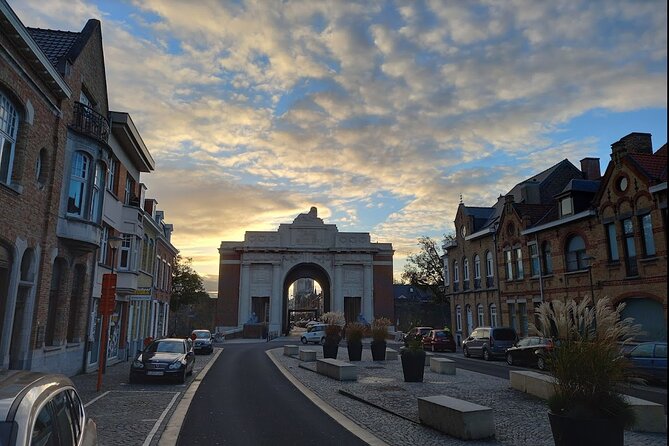
Pickup is available at Ieper train station, where Soren will meet you if you send your arrival time. Hotel and bed-and-breakfast pickup in Ypres is also offered. If your accommodation is not already listed, you can provide its name and arrange the meeting point.
The operating window shown for this experience is 9:00 a.m. to 1:30 p.m., Monday through Sunday, for the stated booking period. Confirmation is sent within 48 hours of booking, subject to availability, so do not treat the reservation as final until that confirmation arrives.
The tour is in English. Service animals are allowed, the meeting area is near public transportation, and most people can participate. The details do not promise full wheelchair access or describe every surface, so ask before booking if you need specific mobility arrangements.
The cancellation policy is practical: cancel at least 24 hours before the local start time for a full refund. Cancellations or changes made less than 24 hours ahead are not accepted for a refund.
Who should book this experience?
I would choose this tour if you have a family name, regiment, nationality, or memorial that you want to understand in context. It is also a good choice if you are staying in Ypres without a car and want to reach scattered sites efficiently.
History-minded couples and small families will get the most from the format. Four people sharing the $532.32 group price receive the best per-person value, while two people may still find the private attention worthwhile if the subject matters deeply to them.
The tour may be less suitable if you want extensive time at every location, a museum-heavy day, or a full-day battlefield survey. The six stops are well chosen, but several last only 10 to 15 minutes. You will see more places than on a slow walking visit, but you will not study each one at length.
Should you book the Ypres Christmas Truce and Messines tour?
Book it if you want the battlefield explained by a guide who can adapt the route to your questions. Hill 60, the massive Messines mine crater, the New Zealand and Irish memorials, the Christmas Truce site, and Hyde Park Corner Cemetery create a strong four-hour arc from underground warfare to individual remembrance.
I especially recommend it for anyone researching an ancestor. Send Soren your names and target memorials before the tour, then use the private vehicle to make the route fit your story. If your main goal is the cheapest possible overview, compare shared options first. But if you value personal attention, efficient transport, and a guide who can follow a family thread beyond the planned schedule, this is a worthwhile way to see the Ypres area.
FAQ
Where does the tour begin?
You can meet the guide at Ieper train station if you are arriving by train. Pickup is also available from hotels and bed-and-breakfasts in Ypres.
Can the tour be tailored to family history?
Yes. The private format allows the route to focus on relevant family history, memorials, ancestry, and personal interests. You should share specific names or sites when arranging the tour.
How long does the tour last?
The tour is planned for approximately four hours. A previous customized visit lasted substantially longer because additional time was given to personal interests.
How many people can join the private tour?
The price covers one private group of up to four people. Only your group participates.
What language is offered?
The experience is offered in English.
What sites are included?
The route visits Hill 60, Spanbroekmolen Mine Crater, Messines Ridge New Zealand Memorial, Island of Ireland Peace Park, the Christmas Truce Memorial, and Hyde Park Corner Commonwealth War Graves Commission Cemetery.
Is pickup from Ypres train station available?
Yes. The guide will meet you at Ieper train station if you send your arrival time.
Are service animals allowed?
Yes, service animals are allowed.
What is the cancellation policy?
You can cancel up to 24 hours before the local start time for a full refund. Changes or cancellations made less than 24 hours before the start are not accepted for a refund.
Just added around Ypres
- Discover Tournai while playing! Escape game – The alchemist★ 4.0 · 3 reviews
- PRIVATE Australian Western Front Battlefields 3-Day Tour Ypres to Amiens★ 5.0 · 3 reviews
- From LIlle or Bruges, Christmas Truce to Passchendaele Ypres 1 day WW1 private★ 5.0 · 5 reviews
- e-Scavenger hunt Ypres: Explore the city at your own pace★ 4.5 · 6 reviews
- Full Day Canadian WW1 Vimy and Somme Battlefield Tour from Ypres★ 5.0 · 6 reviews
- From Ypres: WWI Battlefields Private Tour★ 5.0 · 25 reviews
- In Flanders Fields and Passchendaele Grand Tour★ 5.0 · 25 reviews
- From Ypres, The Christmas Truce to Passchendaele Ypres Based WW1 private tour★ 5.0 · 29 reviews
Ypres Tours, compared.

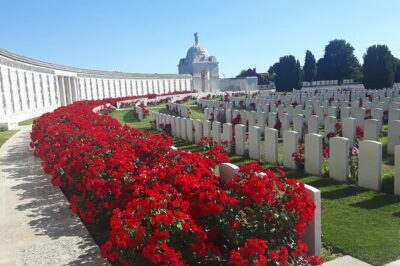
In Flanders Fields and Passchendaele Half Day Morning Tour
Read our review →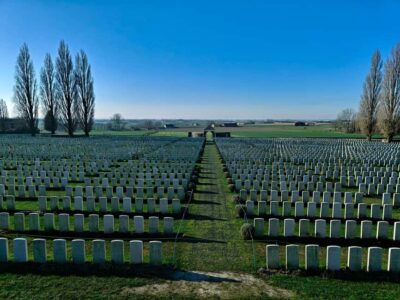
An exploration of the deadly salient battlefields
Read our review →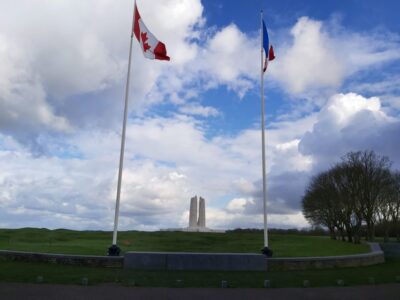
From Brussels: Flanders Fields Remembrance Full-Day Trip
Read our review →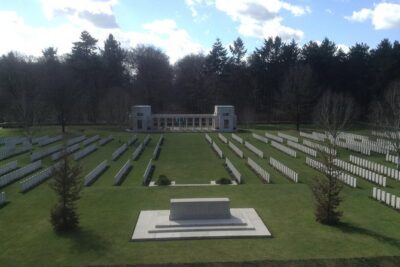
From Ypres, The Christmas Truce to Passchendaele Ypres Based WW1 private tour
Read our review →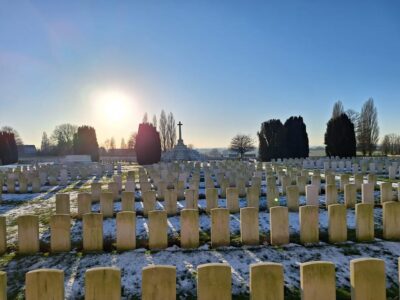
In Flanders Fields and Passchendaele Grand Tour
Read our review →
Full Day Canadian WW1 Vimy and Somme Battlefield Tour from Ypres
Read our review →Browse the lists this tour appears in