
Reviewed · YPRES TOURS
From Ypres: WWI Battlefields Private Tour
The most powerful part of this Ypres tour is the way it links battlefield ground to individual lives. You walk original trenches at Sanctuary Wood, stand beside the huge Caterpillar mine crater, and visit cemeteries where the names and units give the fighting a human scale. Søren Hawkes guides many departures, and he can shape the route around your family history.
I like the private format for two clear reasons: you can pause when a place matters to you, and you can follow Australian, Canadian, New Zealand, South African, or British units instead of sitting through a fixed script. I also like the maps and charts used to explain how the front moved. The main drawback is time. Four hours covers the major stops, but it leaves little room for long reflection or extra sites unless your guide can extend the outing.
Key points to know before booking

- Walk through original trench remains: Sanctuary Wood gives you a rare chance to see surviving battlefield defenses up close.
- Stand beside the Caterpillar mine crater: This enormous crater marks the force of the 1917 underground explosion at Hill 60 B.
- Connect battles with family records: Share an ancestor’s name, unit, diary, or service record in advance so the route can be adjusted where possible.
- See the Commonwealth cemetery at Tyne Cot: Nearly 12,000 war dead are buried or commemorated at this vast site.
- Choose a national focus: The available routes cover Australian 1917 actions, Canadian campaigns from 1915 and 1916 to 1917, or New Zealand fighting in 1917.
- Ride in a private vehicle: Hotel pickup, return transport, mineral water, and museum admission are included in the $530 group price for up to four people.
Why a private Ypres battlefield tour works so well
Ypres is easy to visit on your own, but the battlefields spread across narrow roads, farm lanes, villages, cemeteries, and memorial sites. The meaning of one stop often depends on understanding what happened several miles away. A private guide helps join those pieces.
I like the fact that this is not simply a cemetery circuit. The route follows the soldiers’ advance toward Passchendaele and brings together trenches, mine warfare, field hospitals, memorials, and burial grounds. You get a sense of how the Ypres Salient worked as a military zone rather than seeing isolated monuments.
The private group also matters if you have a family connection. Your guide can research an ancestor’s grave or unit, and one family group had supplied a grandfather’s diary and service record for the guide to study before the tour. That sort of preparation can change the experience from a general history lesson into a personal visit.
The listed price is $530 per group of up to four, not per person. For four people, that works out to $132.50 each before any changes in booking terms. That is a fair value if you want a dedicated guide, door-to-door transport, museum entry, and a route built around your interests. For one or two people, the per-person cost is higher, but you gain privacy and flexibility that a large coach tour cannot offer.
More Flanders Fields memorial tours:
- From IEPER Private 4-hour Tour of the Ypres Battlefield
★ 5.0 · 154 reviews - In Flanders Fields and Passchendaele Half Day Morning Tour
★ 5.0 · 117 reviews - Ypres: An exploration of the deadly salient battlefields
★ 5.0 · 76 reviews
Starting in Ypres with a route built around you
Pickup is available from your Ypres accommodation or Ypres Railway Station, and you can arrange another Ypres pickup point. The tour lasts four hours and returns to Ypres, making it easy to fit into a morning or afternoon plan.
Before setting out, tell the guide what matters most. That might be a particular regiment, a great-grandparent’s grave, the Australian attack toward Passchendaele, Canadian actions, or New Zealand units. The tour offers three broad route themes:
- Australian 1917 Ypres battlefields
- Canadian 1915 and 1916 to 1917 Ypres battlefields
- New Zealand 1917 battlefields
The route can also include British, South African, and other Commonwealth connections where they fit the available time. I would send names, service numbers, units, cemetery details, and family records before arrival. The more precise your information, the more useful the guide’s research can be.
Søren Hawkes receives the strongest praise in the supplied feedback, while Sabine also guides tours. Both are described as prepared, personable, and able to adjust the visit. One especially useful feature is the guide’s willingness to use maps and charts in the field. At Ypres, it is easy to lose your sense of direction, so a visual explanation can make the movements of troops much easier to follow.
Caterpillar Mine Crater at Hill 60 B
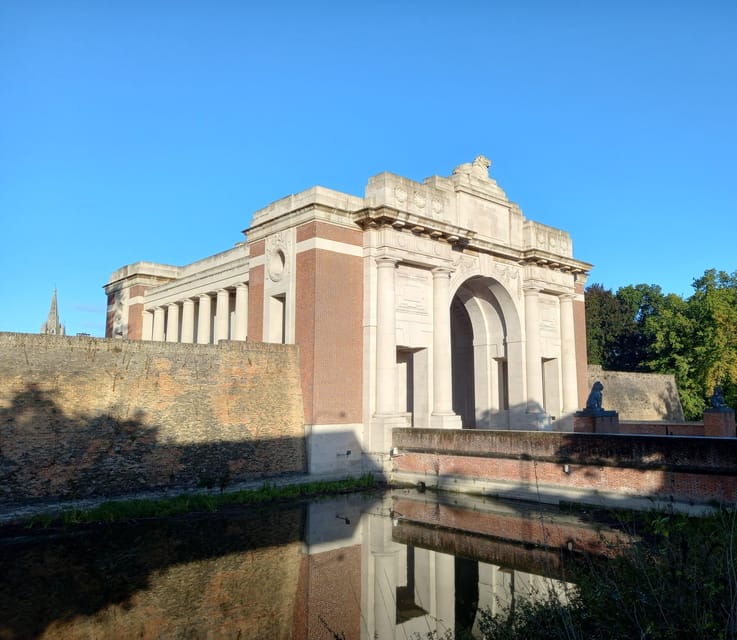
The tour begins with a 30-minute stop at the Caterpillar Mine Crater, also called Hill 60 B. This is one of the clearest places to understand the scale of underground warfare in 1917.
You do not need to be a military specialist to grasp the basic point. Engineers dug beneath the front and packed mines under German positions. When the charges exploded, they tore open the ground and created massive craters. The Caterpillar crater lets you see the physical result rather than hearing about it as an abstract tactic.
Your guide uses the site to explain the fighting around Hill 60 and the route toward Passchendaele. The crater is visually striking, but it is also a useful starting point because it shows how the ground itself became a weapon.
A 30-minute stop gives you time to walk and take photographs, though the terrain may be uneven. Wear shoes with a good grip and bring clothing for wind or rain. This is not a polished urban attraction, so comfort matters more than appearance.
Sanctuary Wood and its surviving trenches
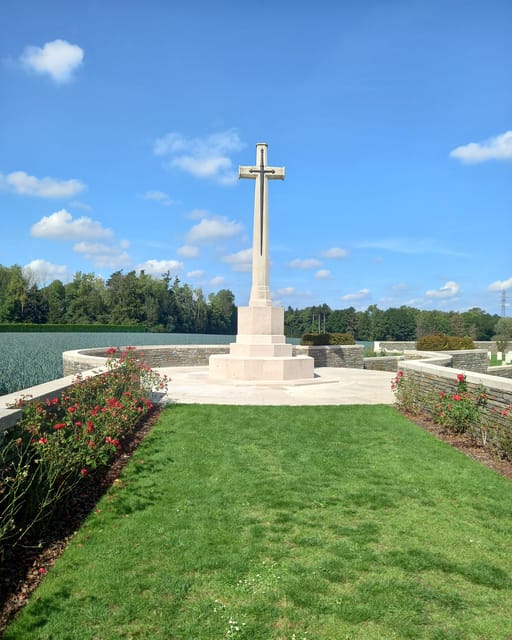
Sanctuary Wood receives about 50 minutes, including a guided visit to the museum and trenches. For many people, this is the most tangible part of the tour.
The surviving trench sections help you picture the cramped defensive system used by soldiers on the Western Front. You can walk beside the timber and earthwork remains, then use the guide’s explanation to connect them to the battles around Ypres. The physical setting does much of the work, but the guide’s context keeps the visit from becoming just a quick photograph.
The museum entrance is included. That is useful because the displays add objects and visual material to the outdoor visit. I would not rush this stop. Sanctuary Wood rewards close attention, and the 50-minute allocation gives you enough time to look around while still keeping the tour moving.
The drawback is that the subject matter is heavy. Trench remains can make the conditions feel immediate, but they cannot show every part of life at the front. Your guide’s maps, stories, and explanations fill in some of that missing context.
A few more Ypres half-days to weigh up
- From Brussels: Flanders Fields Remembrance Full-Day Trip
★ 4.4 · 65 reviews - From Ypres, The Christmas Truce to Passchendaele Ypres Based WW1 private tour
★ 5.0 · 29 reviews - In Flanders Fields and Passchendaele Grand Tour
★ 5.0 · 25 reviews - e-Scavenger hunt Ypres: Explore the city at your own pace
★ 4.5 · 6 reviews
Tyne Cot Cemetery and the scale of Passchendaele
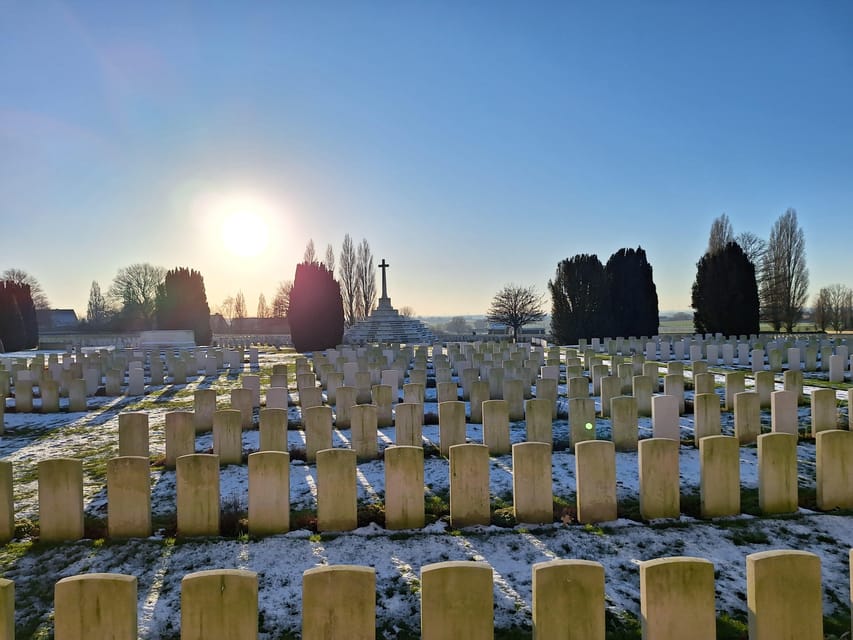
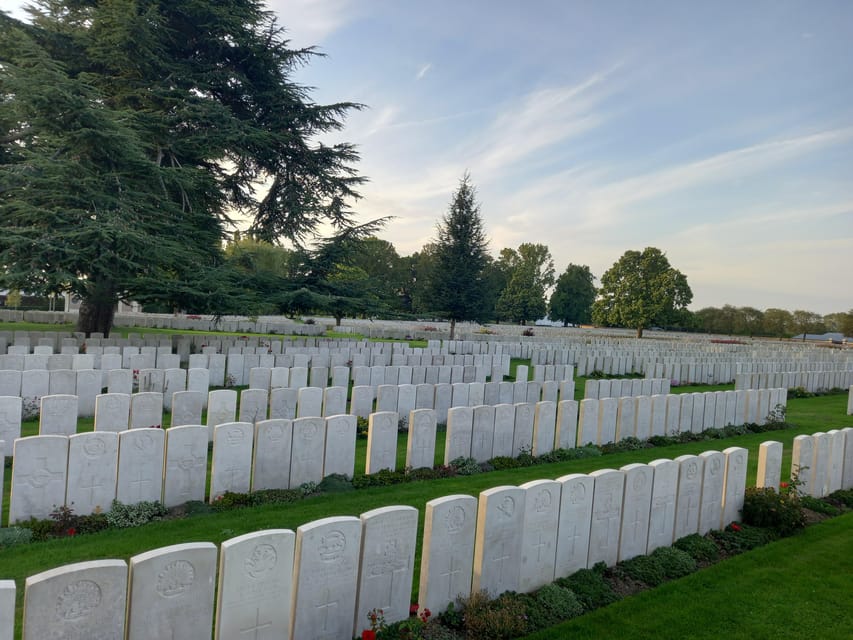
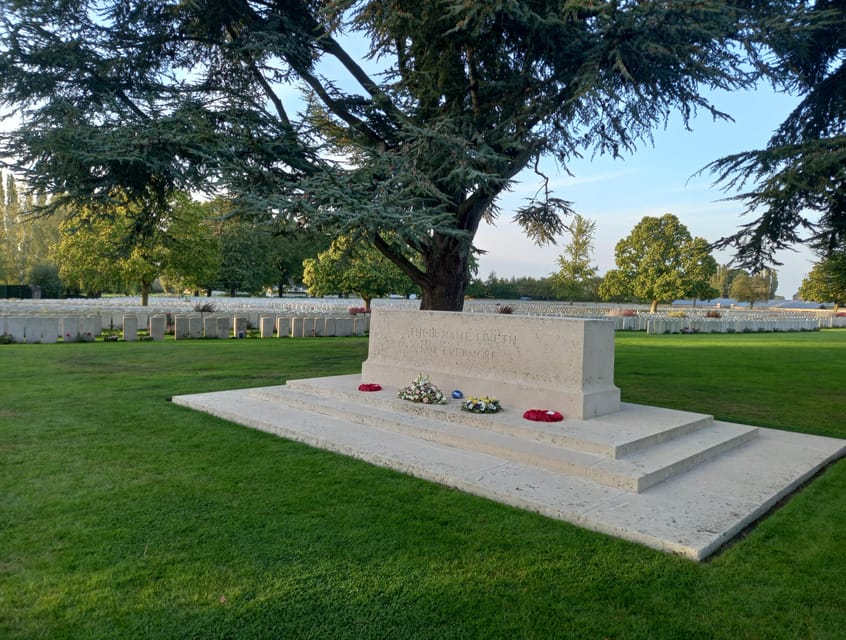
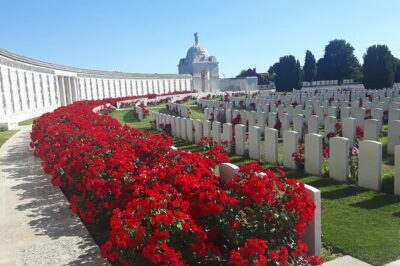
Tyne Cot Cemetery is the largest cemetery on the route and receives roughly 50 minutes. Nearly 12,000 Commonwealth war dead are buried or commemorated here, making it a place where the human cost of the 1917 fighting becomes hard to ignore.
The scale can be overwhelming. Instead of focusing on one crater or trench, you face row after row of graves and names. If your family member is here, tell the guide in advance. A previous group received help locating a Victoria Cross recipient, and other families were taken to graves connected with their ancestors.
The cemetery works best when paired with the battlefield sites visited earlier. At Hill 60 and Sanctuary Wood, you see the ground and defensive works. At Tyne Cot, you confront the number of men who did not return. The combination gives the tour a clear emotional and historical arc.
You will have guided time, but do not expect a long genealogy session for every possible name. The tour has several scheduled stops, and research depends on the information available. If locating one grave is your main reason for booking, make that clear before the day begins.
The Brooding Soldier and the first gas attack
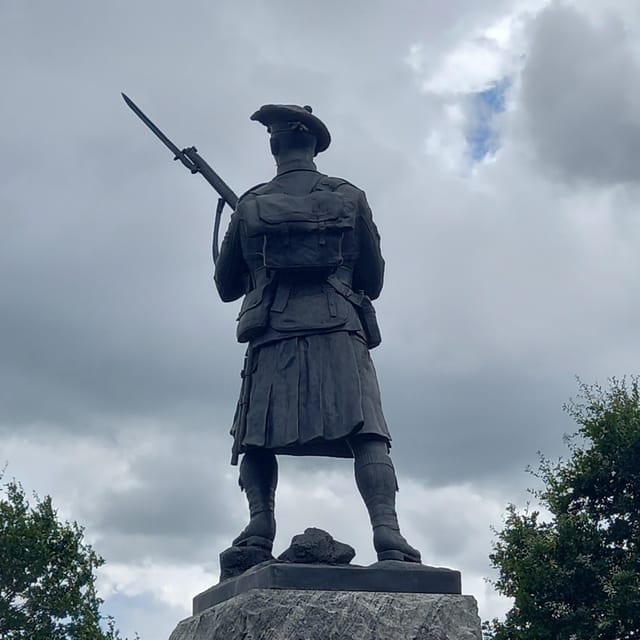
The Brooding Soldier memorial is a 20-minute stop. It commemorates Canadian soldiers and the 1915 German gas attack, described here as the first use of poison gas on this front.
The memorial is more restrained than the huge Tyne Cot cemetery. That makes it a good place for the guide to explain how the Ypres Salient changed during the war and how new weapons altered battlefield conditions.
This stop is especially important for visitors following Canadian history. It adds an earlier chapter to the 1917 Passchendaele story and shows that the fighting around Ypres was not one single battle. The Canadian route can connect the 1915 gas attack with later Canadian operations in 1916 and 1917.
With only 20 minutes, this is an explanation-and-reflection stop rather than a long walk. I like that balance. The tour gives the memorial proper attention without allowing one monument to take time away from the trenches and cemeteries.
John McCrae’s dressing station and Essex Farm
The 35-minute visit to the John McCrae Dressing Station is listed as a photo stop, but it carries more weight than that label suggests. This is the place associated with Canadian physician and officer John McCrae and his poem In Flanders Fields.
Your guide explains the setting and its link to the poem, giving you a better sense of how battlefield medical work and remembrance became connected. It is a useful pause after the larger military story because it brings the focus back to one person observing the consequences of war.
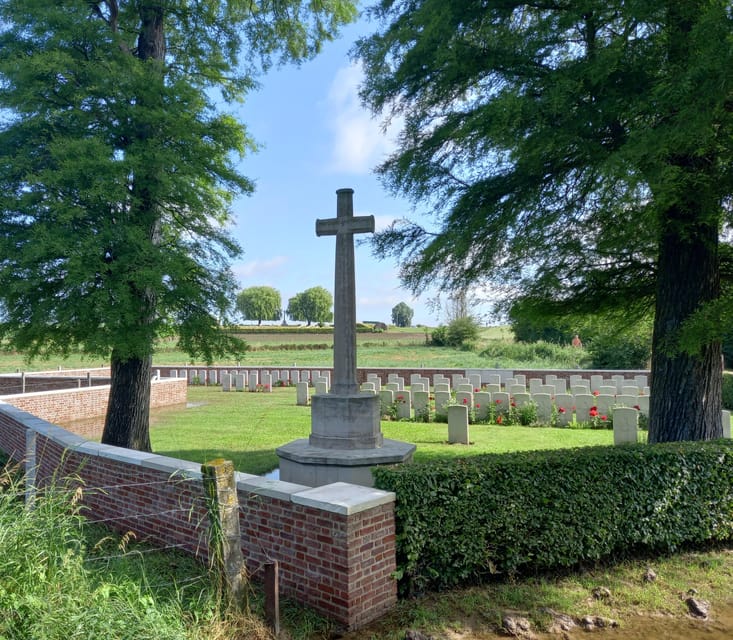
The tour then makes a short, 10-minute guided stop at Essex Farm Cemetery. The timing is brief, so you should not expect an extended cemetery visit. Still, it adds another burial site to the day and reinforces the link between the dressing station and the men treated or buried nearby.
I would consider these two stops together. The dressing station provides the personal and literary connection, while Essex Farm returns you to the practical reality of wartime death and burial.
How the guide handles stories, maps, and family history
The guides’ strongest role is not simply naming dates. It is showing how the sites fit together. Søren is described as using maps and charts to explain troop movements, and that is valuable in a region where roads and farm lanes can make the front difficult to picture.
His style also appears to leave room for questions. Several groups had time to explore at their own pace, and one tour went beyond the planned four hours. You should treat that as a welcome possibility, not a promise. The published duration remains four hours, and the number of stops means the guide must keep an eye on the clock.
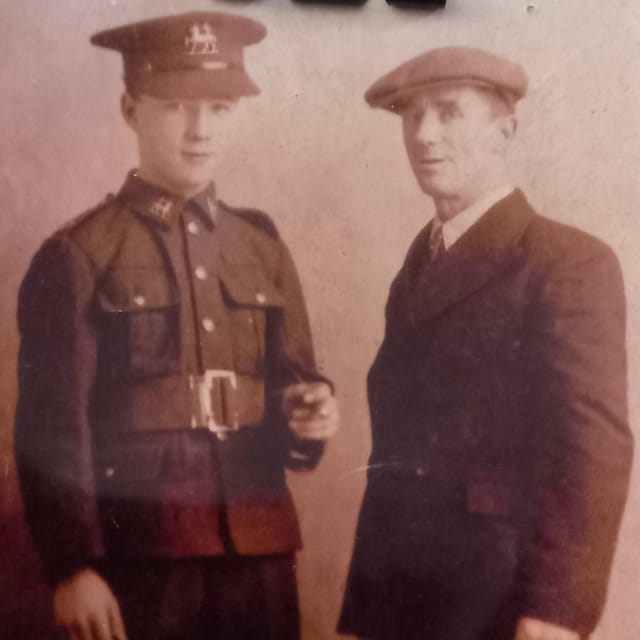
The family-history service is the tour’s most distinctive feature. The guide has researched ancestors, read a grandfather’s diary and service record, and adapted stops for Australian, Canadian, and New Zealand family connections. Send your documents early, then bring copies or photographs if you have them.
I also appreciate the reported balance between explanation and quiet time. Battlefield tourism can become tiring if every minute is filled with narration. Here, you can ask questions, listen to the story, then have a moment to take in a cemetery or memorial without being hurried along.
Comfort, accessibility, and what to bring
Transport is private, air-conditioned, and described as comfortable for groups of four. Hotel pickup and drop-off remove the need to plan complicated connections between rural sites. Mineral water is included, but food is not, so eat before departure or plan around the timing.
The activity is listed as wheelchair accessible. Still, several stops involve walking outdoors, original trenches, cemetery paths, and historical sites with uneven ground. If you use a wheelchair or have limited mobility, contact the provider before booking to discuss the exact route and the amount of walking at each stop.
Bring comfortable shoes, a camera, and weather-appropriate clothing. I would take those instructions seriously. Flanders weather can change quickly, and the open memorial sites may feel cold or wet even when Ypres itself seems pleasant.
English is the stated tour language. The group is private, and the price covers up to four people. One supplied experience included four adults plus the guide with enough room in the vehicle, though group arrangements should be confirmed if your party is larger.
Who will get the most from this tour
I would choose this tour if you have a family link to the First World War, want to follow a national military story, or prefer a guide who can explain rather than simply drive between monuments.
It also suits first-time visitors to the Ypres battlefields. In four hours, you get a strong foundation: mine warfare, trenches, cemeteries, gas warfare, medical service, and remembrance. You can then return to the places that mattered most or plan a longer battlefield visit on another day.
It is less suitable if you want a slow, all-day examination of every site. Four hours is efficient, but the itinerary is full. You will see many important places, yet some stops are necessarily short. Food is not included, and the main tour is in English.
The price makes the most sense for a small group that values personal attention. If four people share the booking, the cost is easier to justify. If you are alone, compare it with any group alternatives available in Ypres, but remember that a shared tour may not include ancestor research or a route built around your unit.
Should you book the Ypres WWI Battlefields Private Tour?
I would book this tour if you want the battlefield to make sense as a connected story, not just a series of memorials. The combination of Hill 60 B, Sanctuary Wood, Tyne Cot, the Brooding Soldier, John McCrae’s dressing station, and Essex Farm covers a lot in half a day.
Book with your family details ready, and ask for the Australian, Canadian, or New Zealand route that fits your interests. Choose another option if you need a full-day visit, extensive walking time at every cemetery, or a language other than English.
For a small group based in Ypres, the private vehicle, flexible route, guide-led explanations, and included museum entry make the $530 group price a solid choice. The greatest value comes when you give the guide a name, unit, or personal connection to work with. That is when these fields become more than historic ground.
FAQ
Where does the tour begin?
The tour begins in Ypres. Pickup is available from your Ypres-based accommodation or Ypres Railway Station, with another Ypres pickup location possible by arrangement.
How long does the tour last?
The scheduled duration is four hours, with return transport to Ypres.
What is the price?
The listed price is $530 per private group of up to four people.
Is the tour private?
Yes. It is offered for a private group rather than as a shared group tour.
Which languages are available?
The tour is conducted in English.
Which battlefields and memorials are included?
The route includes the Caterpillar Mine Crater at Hill 60 B, Sanctuary Wood Museum, Tyne Cot Cemetery, the Brooding Soldier memorial, John McCrae’s Dressing Station, and Essex Farm Cemetery.
Can the tour focus on a specific country’s forces?
Yes. Three route choices are available: Australian 1917 Ypres battlefields, Canadian 1915 and 1916 to 1917 Ypres battlefields, and New Zealand 1917 battlefields.
Can the guide help with an ancestor’s service?
Yes. If you have an ancestor connected with the battles, the guide can tailor the tour to include that person where possible. Providing names and service information before the tour is useful.
Is museum admission included?
Yes. The private tour includes the museum entrance fee at Sanctuary Wood.
What should I bring?
Bring comfortable shoes, a camera, and clothing suited to the weather. Food is not included, but mineral water is provided.
Can I cancel the booking?
You can cancel up to 24 hours before the tour for a full refund. A reserve-now, pay-later option is also available.
Just added around Ypres
- Discover Tournai while playing! Escape game – The alchemist★ 4.0 · 3 reviews
- PRIVATE Australian Western Front Battlefields 3-Day Tour Ypres to Amiens★ 5.0 · 3 reviews
- From LIlle or Bruges, Christmas Truce to Passchendaele Ypres 1 day WW1 private★ 5.0 · 5 reviews
- From Ypres 4hr Christmas Truce and Monster Mines of Messines PRIVATE Tour★ 5.0 · 5 reviews
- e-Scavenger hunt Ypres: Explore the city at your own pace★ 4.5 · 6 reviews
- Full Day Canadian WW1 Vimy and Somme Battlefield Tour from Ypres★ 5.0 · 6 reviews
- In Flanders Fields and Passchendaele Grand Tour★ 5.0 · 25 reviews
- From Ypres, The Christmas Truce to Passchendaele Ypres Based WW1 private tour★ 5.0 · 29 reviews
Ypres Tours, compared.

In Flanders Fields and Passchendaele Half Day Morning Tour
Read our review →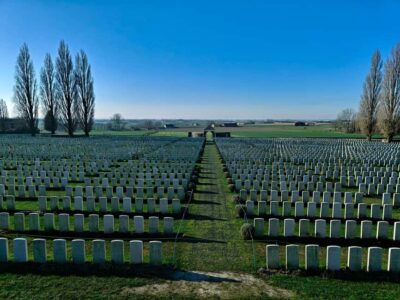
An exploration of the deadly salient battlefields
Read our review →
From Brussels: Flanders Fields Remembrance Full-Day Trip
Read our review →
From Ypres, The Christmas Truce to Passchendaele Ypres Based WW1 private tour
Read our review →
In Flanders Fields and Passchendaele Grand Tour
Read our review →
Full Day Canadian WW1 Vimy and Somme Battlefield Tour from Ypres
Read our review →
Browse the lists this tour appears in