
Reviewed · BELGIUM
Mons : The Van Gogh House
Van Gogh’s story begins here, not in a grand museum but in a modest house in Cuesmes, where he lived from 1879 to 1880. I like the authentic setting and the way the visit connects his early work to the workers, villages, and fields of the Borinage. At $5, it is an easy addition to a Mons outing.
I also like the garden, the renovated pavilion, and the final audio presentation, which gives the visit useful historical context. The catch is simple: this is a small house with limited displays, not a large Van Gogh museum, and the film or audio section may feel too long if you already know the story.
Key points before you go
- Van Gogh lived here from 1879 to 1880, during the crucial period when he shifted from preacher to artist.
- The garden starts the visit, leading into a renovated pavilion and the compact house.
- The Borinage setting matters, since its rural and working-class life shaped themes Van Gogh carried into later work.
- This is a self-guided visit, with no standard guided tour included.
- The final audio installation adds context, but some visitors may find the film or presentation longer than needed.
- Bring your ticket by email, arrive in your chosen time slot, and check bus times before setting out.
Why Cuesmes matters in Van Gogh’s story
Cuesmes is part of the Mons region, in Wallonia’s Borinage. This was a coal-mining area marked by hard work, modest homes, and close ties between people and place. Van Gogh came here as a preacher, but his experience among local workers helped push him toward art.
That change is the real reason to visit. You are not looking at the finished Van Gogh, the famous painter of sunflowers and swirling skies. You are looking at the young man before fame, when he was still testing his purpose and learning how to look.
The house helps put his later work in perspective. Van Gogh kept returning to working people, simple interiors, fields, village roads, and the dignity of ordinary labor. The Borinage gave him an early setting for those ideas. Even if you know his paintings well, this place can make that early development feel more grounded.
I would not come expecting a large collection of original paintings. The value is in the setting and the story. The house is a place of remembrance, designed to suggest the atmosphere of Van Gogh’s stay rather than display a full museum collection.
Other Belgium outings people book alongside this one:
- Brussels: Atomium Entry Ticket with Design Museum Ticket
★ 4.4 · 9,254 reviews - From Brussels: Guided Day Trip to Bruges and Ghent
★ 4.6 · 8,353 reviews - From Brussels: Bruges & Ghent Day Tour – 2 Fairytale Cities
★ 4.7 · 8,242 reviews
Starting in the garden
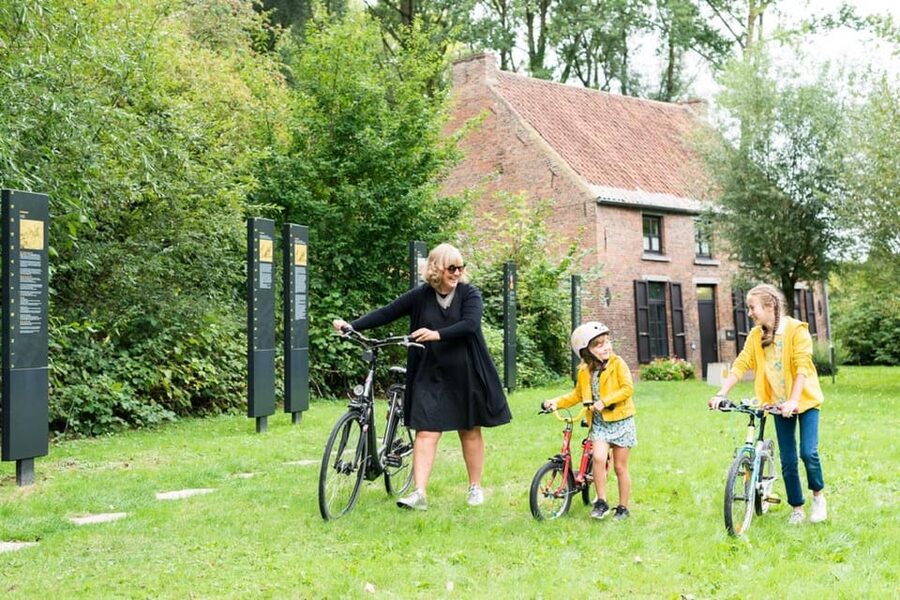
The visit begins outside, in the garden. This is a good choice because it lets you get a sense of the setting before entering the exhibits. The garden provides a pause between modern Cuesmes and the historical story inside.
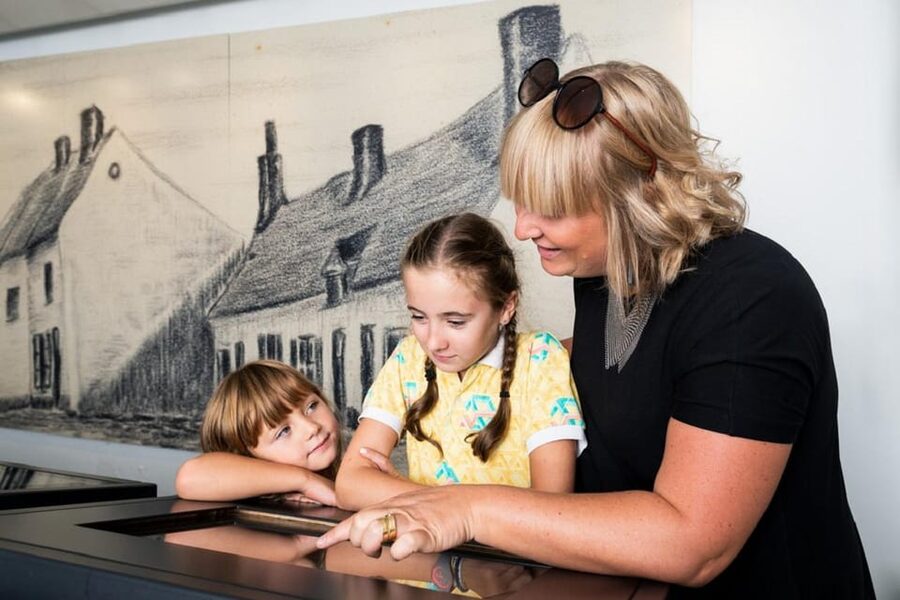
You can then move into a renovated pavilion. This part introduces the visit and helps set up Van Gogh’s time in the Borinage. The presentation is modern, but the subject remains personal: one man living in a particular place and slowly finding his direction.
I like this opening because it avoids rushing straight into a room with labels. The garden gives you a physical connection to the site first. You can think about the modest scale of the property and the kind of surroundings that Van Gogh would have known.
The site is not large, so the garden is also useful as a breathing space. If you arrive with family or students, it gives the visit a more relaxed beginning. One highly praised account of the experience also noted the greenery around the house and the care taken by a staff member who was patient and clear with pupils. The setting can work well for a school visit, provided the group is prepared for a quiet, interpretive stop rather than a large attraction.
Inside the small Van Gogh house
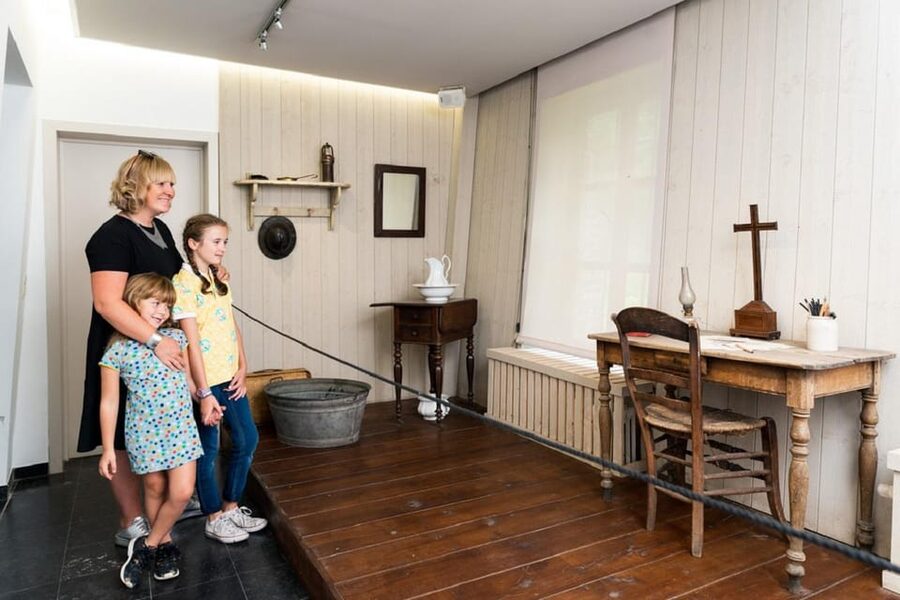
From the pavilion, you continue into the renovated house. This is the heart of the visit, but it is also where expectations matter most. The house is small and the available information is limited compared with a major museum.
That compact size is not necessarily a weakness. A modest home makes Van Gogh’s early life feel more immediate. You can picture the preacher and future artist working within a simple domestic setting rather than moving through an impressive institution built long after his death.
Still, do not expect room after room of paintings or extensive displays. If you have come for a full survey of his career, you will finish quickly and may want to pair this visit with a museum elsewhere in Mons. The house is best understood as a focused historical stop.
The modernized interior allows the spirit of its former inhabitant to come through without pretending that every object is original. The point is not to claim that you are seeing Van Gogh’s entire world exactly as it was. The point is to place you at the beginning of his artistic path.
I find that especially useful for visitors who know Van Gogh only through his later masterpieces. The house reminds you that his art grew out of observation, faith, social concern, and daily contact with ordinary people. His famous style did not appear fully formed.
The Borinage beyond the walls
The strongest part of this experience may be the setting outside the house. The Borinage is not just a backdrop. Its rural and working-class character shaped Van Gogh throughout his life.
The area gave him subjects that would return again and again: workers, humble homes, fields, and people carrying out difficult daily tasks. You can read the later paintings differently after considering this period. The scenes are not simply decorative. They come from a sustained interest in work, poverty, faith, and human endurance.
The information provided at the site places Van Gogh within that local setting rather than treating him as an isolated genius. That is important. It shows how a particular community and region influenced an artist who later became famous around the world.
You may find the surrounding area more meaningful if you take your time before or after the visit. The ticket covers the Van Gogh House only, so food, drinks, and any wider sightseeing are separate. The attraction itself is a short, focused stop, while the wider Mons region gives you more room to think about the historical setting.
Same city, a completely different way to spend a day:
- Ghent: 50-Minute Medieval Center Guided Boat Trip
★ 4.5 · 5,637 reviews - Choco-Story Brussels: Chocolate Museum Entrance with Tasting
★ 4.3 · 4,883 reviews - Bruges and Ghent – Belgium’s Fairytale Cities – from Brussels
★ 4.0 · 4,809 reviews - Bruges: Small Group Boat Cruise and Guided Walking Tour
★ 4.8 · 4,102 reviews
Ending with the audio installation
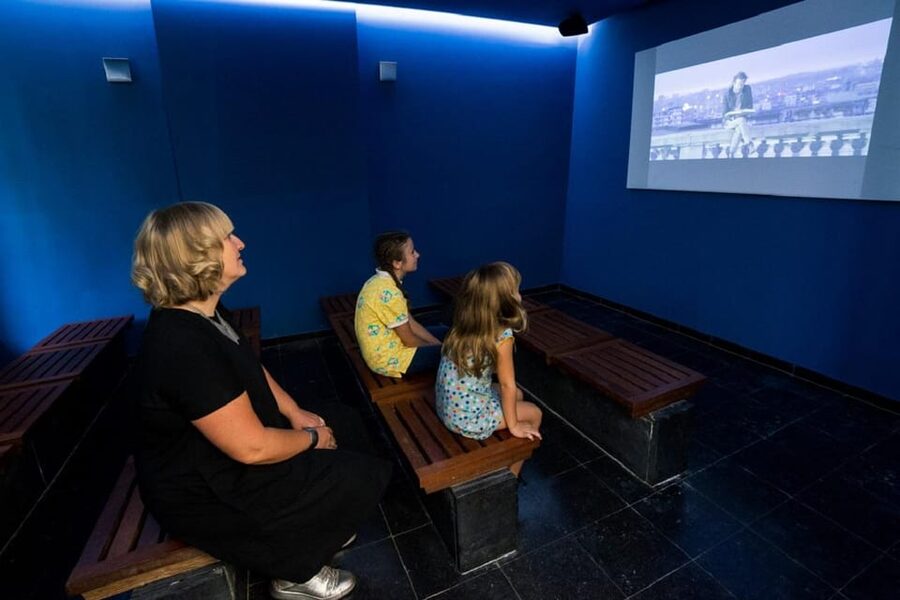
The visit ends with an audio installation that places Van Gogh and his work in the history of the Borinage. This final section is meant to tie the house, the local setting, and Van Gogh’s artistic development together.
It is a useful finish because the house alone cannot explain the full story. The audio presentation gives you the wider frame: Van Gogh arrived as a preacher, encountered the Borinage, and began moving toward art. That shift is the central idea of the visit.
The pacing may not suit everyone. One recent assessment found the film interesting but too long. If you already have a strong background in Van Gogh, you may want to listen selectively rather than expect every minute to add something new. If you are less familiar with his early years, the added context may be worth your time.
The final presentation is also where the experience feels most like an interpretation center rather than a preserved home. That is not a problem, but it helps to know what you are buying: a small historic site with modern storytelling, not a purely atmospheric house tour.
How much time to allow
The booking information describes the ticket as valid for one day, with a chosen time slot. It does not give a fixed tour length, and there is no guided tour included. Plan for a short visit rather than a full day inside the house.
The overall activity is listed as one day because of ticket validity, not because you will spend a whole day at the site. You can fit it into a wider visit to Mons and the Borinage. Give yourself enough time to arrive, find the entrance, see the garden and pavilion, visit the house, and listen to the final presentation without rushing.
A reported visit involved about 45 minutes of delay at reception while staff tried to locate the electronic ticket. That sounds like an unusual ticket problem, but it points to a practical precaution: download or keep the emailed ticket easy to access before you arrive. Present it at the museum reception, and bring the exact ticket for your chosen time slot.
Getting there from Mons
You reach the site by your own transport or by public transport. The attraction advises checking bus schedules in advance, and that is important because the site is in Cuesmes rather than directly in the center of Mons.
Do not assume that a bus will arrive exactly when you need it. Check the return trip as well as the outbound journey, especially if you are building other plans around the visit. The house is a focused stop, so transport timing can have a bigger effect on your day than the visit itself.
The provider is the Office du Tourisme de la ville de Mons. A host or greeter can assist in Dutch, English, or French, and the visit is wheelchair accessible. A guided tour is not included, so language help at reception should not be confused with a personal guide throughout the house.
Is the $5 ticket good value?
At $5 per person, this is a low-cost cultural stop. The price works well if you are already interested in Van Gogh, early artistic development, or the history of the Borinage. You are paying for access to an authentic place connected to a decisive period in his life, along with the modern interpretation inside.
The value is less obvious if you expect a large art collection. There are few displays, the house is restricted in size, and the visit may feel brief. You will not receive food, drinks, or a guided tour for the ticket price.
I would see it as a supplement to Mons rather than the main event of a full day. At this cost, it does not need to fill an afternoon. It only needs to give you a clear sense of where Van Gogh’s early artistic identity took shape.
The experience has received mixed overall ratings, with a current score of 3.9 out of 5 from 22 ratings. That fits the attraction itself: the place can be quite meaningful for someone focused on Van Gogh’s beginnings, while a visitor expecting many objects or a long guided tour may leave disappointed.
Who will enjoy this visit most
This house suits you if you want to understand Van Gogh before his worldwide fame. It is also a good choice if you enjoy small historic sites where the location matters as much as the displays.
You will probably get the most from it if you:
- Already know some of Van Gogh’s later work and want the earlier chapter.
- Care about the connection between art, faith, work, and local communities.
- Prefer a short, affordable visit to a large museum.
- Can handle a self-guided format.
- Are visiting Mons and want to explore a less obvious part of the region.
- Are bringing students who can benefit from a focused story about artistic development.
You may want to skip it if you need a large collection of paintings, a named guide, or a packed schedule of exhibits. The site makes one point well, but it does not try to cover every stage of Van Gogh’s career.
Booking and practical details
The ticket costs $5 per person and includes entry to the Van Gogh House. Food and drinks are not included, and there is no guided tour.
You must arrive during the time slot you select. Your entry ticket is sent by email, so keep it ready to show at the museum reception. Because one arrival involved a long search for a missing ticket record, I would save the ticket to your phone before leaving and allow extra time for check-in.
You can cancel up to 24 hours in advance for a full refund. A reserve now and pay later option is also available, which helps if your Mons plans are still shifting.
The site is wheelchair accessible. Dutch, English, and French are available through the host or greeter arrangements.
Should you book the Van Gogh House?
Book it if the story of Van Gogh before fame interests you and you value an authentic place over a large collection. The garden, compact house, and Borinage context create a direct link to the period when a preacher began becoming an artist.
Skip it if you expect a grand museum, many original works, or a guided tour. The house is small, the information is focused, and the final presentation may feel long to visitors who already know the story.
For $5, I think it is worth adding to a Mons day, especially if you arrive prepared with your digital ticket and check public transport in advance. Keep your expectations modest, and the visit offers a useful, human beginning to the Van Gogh story.
FAQ
Where is the Van Gogh House located?
The Van Gogh House is in Cuesmes, within the Mons region of Wallonia, Belgium.
How much does entry cost?
Entry costs $5 per person.
How long is the experience?
The ticket is valid for one day, but no fixed visit length is provided. The house is small, so it is best treated as a short visit within a wider day in Mons and the Borinage.
Is a guided tour included?
No. The entry ticket includes access to the Van Gogh House, but a guided tour is not included.
What languages are available?
Host or greeter support is available in Dutch, English, and French.
Is the house wheelchair accessible?
Yes. The site is wheelchair accessible.
How do I receive my ticket?
Your entry ticket is sent by email. Show it at the museum reception when you arrive.
Can I cancel my booking?
Yes. You can cancel up to 24 hours in advance for a full refund. Reserve now and pay later is also available.
Just added around Belgium
- Ghent Running and Sightseeing Tour★ 5.0 · 3 reviews
- Ghent Walking Tour – City Highlights and Beyond Tradition★ 4.5 · 3 reviews
- From Amsterdam: Private Sightseeing Tour to Bruges★ 5.0 · 3 reviews
- Private Tour – Bruges and Ghent, our fairytale cities★ 5.0 · 3 reviews
- Bruxelles: Photoshoot Experience★ 4.4 · 3 reviews
- Private Day Trip from Brussels to Bruges★ 4.5 · 3 reviews
- Leuven: City Walk with Audio Guide in 7 Languages on your Phone★ 3.0 · 3 reviews
- Private Arrival Transfer from Brussels Airport to Bruges with Business car★ 5.0 · 3 reviews