

Reviewed · GHENT TOURS
Historic Highlights, by a local guide
Ghent’s past becomes much easier to follow when you walk from its old waterways to its medieval castle, then finish among cafés and restaurants at Vrijdagmarkt. Jürgen, a local history professor, gives the city a personal voice, explaining not just what each building is, but why it mattered.
I like the route’s wide historical sweep, from the city’s earliest origins to the Socialist movement. I also like the small local touches, including lesser-seen streets, stories behind buildings, and food suggestions for after the walk. The main consideration is that several major interiors, including Gravensteen and St. Bavo’s Cathedral, require separate admission, so the $40.33 price covers the walking experience rather than every sight.
Key points
- A local professor leads the walk: Jürgen combines academic knowledge with a clear affection for Ghent.
- The route follows Ghent’s story: You move from the old waterways and abbey area to medieval, aristocratic, industrial, and modern city life.
- Major sights appear from the outside: St. Bavo’s Cathedral, Hotel d’Hane Steenhuyse, and Gravensteen have admission charges if you wish to enter.
- Patershol adds a quieter side of Ghent: This old quarter brings narrow streets and restaurant choices after the grand monuments.
- The tour ends at Vrijdagmarkt: You receive an explanation of the Socialist movement and finish near bars and places to eat.
- Plan for a two-hour outdoor walk: Comfortable shoes and a weather-ready layer will make the experience easier.
Why this Ghent walking tour feels different
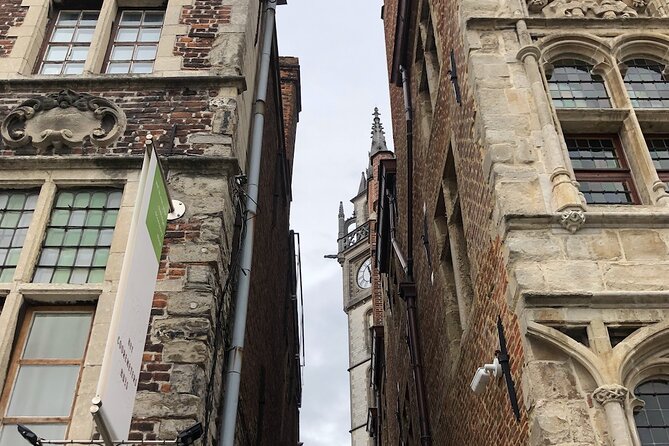
Many city walks rush from one famous building to the next. This one works more like a guided conversation about how Ghent developed. Jürgen links the waterways, churches, palaces, castle, working-class districts, and political history into one story.
That approach suits you if you want context rather than a checklist of photo stops. The city has plenty of striking façades, but their meaning can be hard to grasp on your own. A good guide helps you see how the parts fit together.
Jürgen is described as a professor of history who was born and raised in Ghent. That matters here. He can speak about the city as both a subject of study and a place he calls home. The tone is personal, thoughtful, and sometimes humorous, with room for questions.
The tour has also worked well for small groups. One booking included only three people, while the maximum group size is 20. If having a private walk is important to you, confirm the group setup before booking, since the published capacity allows for a larger party.
More History Tours in Ghent
- Historical Walking Tour: Legends of Gent
★ 5.0 · 1,761 reviews - Ghent: 40-Minute Historical Boat Tour of City Center
★ 4.3 · 430 reviews - Private Historical Tour: The Best of Ghent
★ 5.0 · 115 reviews
Starting beside Ghent’s old waterways
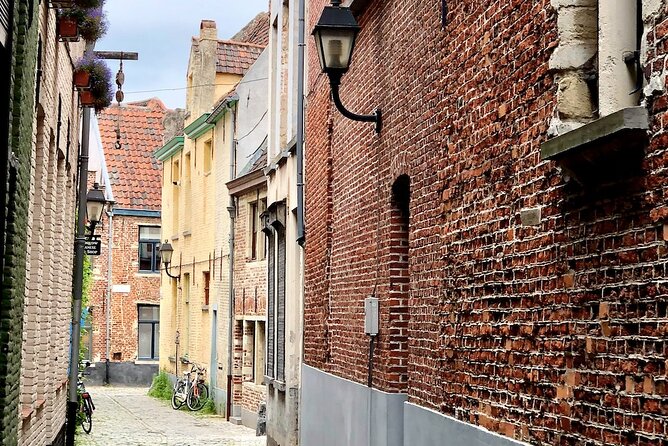
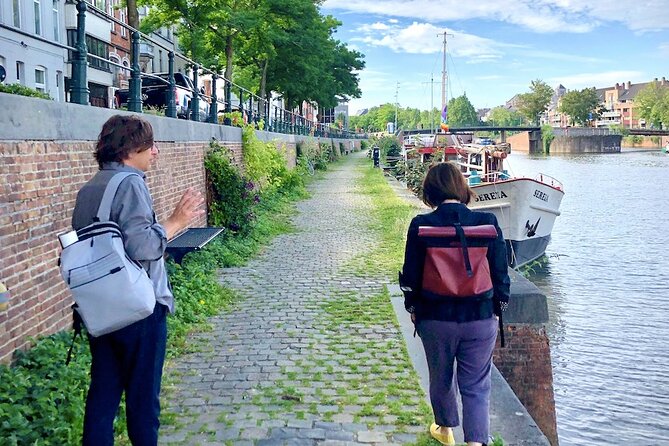
The walk begins at Hagelandkaai 53 in Ghent, near the Napoleon De Pauw lock. The first stop is described as Agelandkaai, so check the exact meeting pin and spelling when you book. This is a small practical point, but it is worth sorting out before a 3 p.m. start.
The opening location gives Jürgen a useful way to explain Ghent’s physical beginnings. The house sits where the moat around the Spanish Castle once ran in the 16th century. You are not simply looking at a lock and a canal. You are being shown how water, defense, trade, and settlement shaped the city.
This opening section lasts about five minutes. It is brief, but it sets the tone for the rest of the walk. Ghent’s story is not limited to handsome medieval buildings. Its waterways helped make the city possible.
Bisdomkaai and the meeting of two rivers
From the starting point, the route passes the old St. Bavo’s Abbey and continues toward the confluence of the Leie and Schelde rivers. This is identified as the place where Ghent began.
At Bisdomkaai, you get a strong sense of the city’s geography. The river meeting is not just a scenic pause. It helps explain why a settlement grew here and why Ghent later became such an important center of commerce and power.
This section takes about ten minutes and is free to visit. Since it is outdoors, the quality of the experience will depend partly on the weather. One group completed the walk in pouring rain and still found the guide able to keep the mood light, but you should bring suitable clothing rather than count on perfect conditions.
St. Bavo’s Cathedral and the Ghent Altarpiece
St. Bavo’s Cathedral is one of the tour’s key stops. Jürgen introduces the cathedral and points out that it houses the Ghent Altarpiece, also known as the Lam Gods, painted by the Van Eyck brothers.
The walk allows about ten minutes here. That is enough for an introduction, but not enough for a full visit to the cathedral and artwork. Admission is not included, and the cathedral offers a virtual tour inside that may be worth adding to your plans.
This is an important value point. The walking tour gives you the setting and the historical frame, but you should budget extra time and money if you want to go inside. I would especially consider this if you have an interest in early Netherlandish art. Seeing the exterior alone will not replace the interior visit.
For a first afternoon in Ghent, the cathedral stop is useful because it gives you a landmark to revisit later. You can listen to the explanation with the group, then return when you have more time to look around at your own pace.
More history walks around Ghent:
- Bicycle tour in historic Ghent
★ 5.0 · 87 reviews - Chocolate history workshop Ghent
★ 5.0 · 34 reviews - Small Group Ypres Remembrance Day Filled With War History
★ 5.0 · 31 reviews - Ghent: Private Tour in Historical Center
★ 4.9 · 22 reviews
Kouter and Ghent’s 18th and 19th centuries
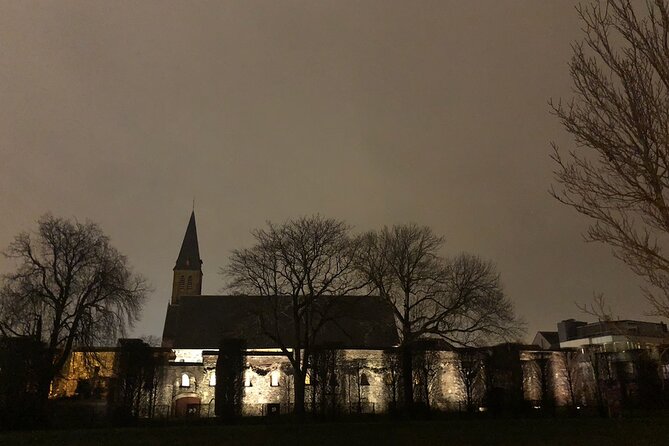
The route then moves to Kouter, a square and surrounding area that reveal a later side of Ghent. Here the focus shifts from medieval origins to the atmosphere of the 18th and 19th centuries.
This change in period is one of the tour’s strengths. You are not kept in a single postcard version of Ghent. The city’s story continues through aristocratic life, civic change, and the growth of modern Ghent.
The stop lasts roughly ten minutes and is free. Listen for how Jürgen connects the square and nearby buildings to changing social life. His approach is to explain the story behind the place, not simply give you a date and move on.
Hotel d’Hane Steenhuyse, an aristocratic pause

Hotel d’Hane Steenhuyse is an 18th-century city palace with ornate ceilings, decorative details, and a garden described as a little-known pleasure. It offers a glimpse of the city’s more formal and wealthy past.
The stop is scheduled for about ten minutes. Admission is not included, so the tour may focus on the exterior unless you make a separate visit. If the palace is open when you return, the interior is likely to reward anyone who enjoys architecture and period decoration.
I like this stop because it breaks up the medieval emphasis. Ghent is often sold through its castle and old streets, yet an 18th-century palace shows how the city’s elite lived in a later period. The garden is also a reminder that interesting spaces can sit just beyond the main route.
Gravensteen, Ghent’s castle of the counts
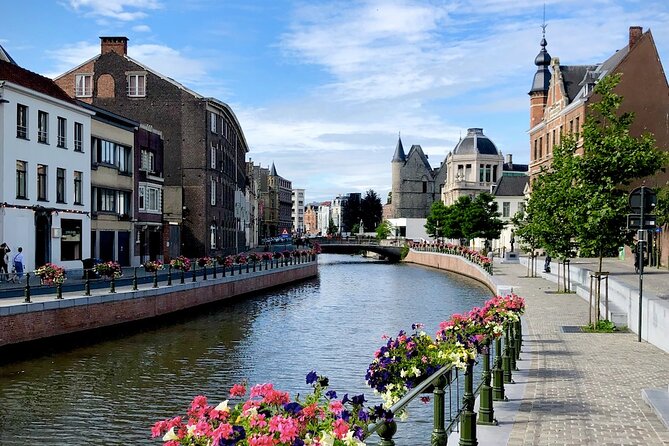
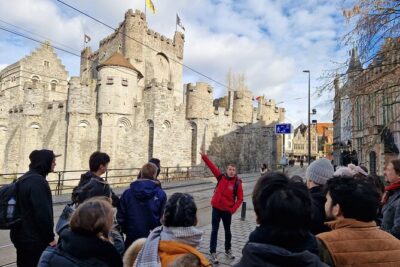
After several less-publicized sights, the walk reaches Gravensteen, the Castle of the Counts. This is the most instantly recognizable medieval stop on the route.
Jürgen explains the castle as part of Ghent’s political and defensive story. The schedule allows about ten minutes, which is enough to see the exterior, hear the background, and decide if you want a longer visit.
Admission is separate. That is important because Gravensteen can easily take more time than the walking tour allows. If you plan to enter, consider returning later or arranging your day so you are not trying to squeeze the full castle visit into the group walk.
The guide’s role here is especially useful. A castle can look dramatic without making its purpose clear. With some context, the stone walls become part of the city’s struggle for power rather than just a medieval backdrop.
Patershol and the older residential quarter
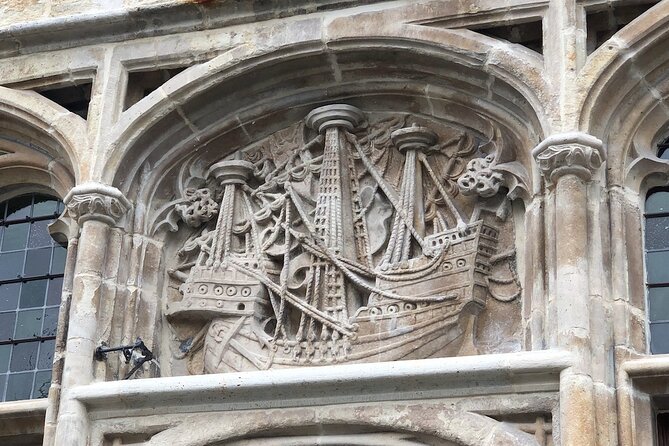
The walk continues into Patershol, one of Ghent’s oldest districts. This is a good counterpoint to the formal cathedral, palace, and castle stops.
Patershol is made up of old streets and smaller-scale buildings. The atmosphere is more intimate, and the route gives you a chance to see a side of Ghent that can be missed if you follow only the main sights.
The scheduled time is about 15 minutes, and there is no admission charge. You will also find many small restaurants in this area. One local suggestion is Enzo at pizzeria Neapolis, where showing one of the provider’s business cards may bring a 10 percent food discount.
Treat that offer as a useful tip, not a reason by itself to choose the tour. The more important benefit is that Jürgen can point you toward places to eat and explain how to use the neighborhood after the walk. Those practical suggestions can be more useful than a long restaurant list gathered before your trip.
Vrijdagmarkt and the Socialist movement
The tour ends at Vrijdagmarkt, with an explanation of Ghent’s Socialist movement. This gives the route a final shift in tone. You begin with rivers and medieval power, pass through aristocratic architecture, and finish with modern political and social change.
Vrijdagmarkt also works well as an ending point because it has restaurants and bars nearby. You can stop for a drink, continue exploring, or use the square as a base for the rest of your evening.
The final section lasts about 15 minutes. It may appeal most to you if you like city history that includes ordinary people, labor, and politics, not only rulers and grand buildings.
The end point is listed as Oudburg 17. Since the tour begins east of the central sights and ends in the old center, the route feels like a gradual move into Ghent’s most familiar historic quarters.
What the $40.33 price includes in practice
At $40.33 per person, this is not the cheapest way to see Ghent from the outside. You can walk through the center on your own for free. The question is what you want your money to buy.
Here, you are paying for about two hours with a local guide who can answer questions and connect places across several centuries. That is good value if you want a clear introduction on your first day, especially if you prefer conversation to an audio guide.
The price does not include admission to St. Bavo’s Cathedral, Hotel d’Hane Steenhuyse, or Gravensteen. You should add those costs only if you choose to enter. The tour itself remains useful even if you visit none of the interiors, but the schedule gives only short looks at each major sight.
The mobile ticket keeps the booking simple, and confirmation is sent at the time of booking. The tour can accommodate up to 20 people, though smaller groups are possible. Ask about the expected group size if personal attention is a major part of your decision.
Who will get the most from this walk
I would choose this tour for a first visit to Ghent when I wanted a strong sense of place in a short time. The route covers the major landmarks but does not stop there. It also introduces local streets, food options, and less obvious chapters of the city’s past.
It suits people who enjoy history, architecture, urban development, and local conversation. Jürgen is noted for answering questions and adjusting to the needs of different people in the group. That flexibility should help if your party has mixed interests.
It is also a good fit for newcomers to Ghent who want practical help after moving to the city. The route includes suggestions about Sunday markets and places to eat, making it useful beyond a single afternoon.
You may prefer another format if you want long interior visits, a fast sightseeing schedule, or a tour devoted only to art. Ten minutes at a major monument is an introduction, not a full museum visit.
Practical details before you book
The start time is 3 p.m., and the walk lasts about two hours. That makes it easy to fit around a morning arrival, a museum visit, or a later dinner.
Wear comfortable shoes. The tour is on foot, and the route includes several districts rather than one compact square. Ghent’s weather can change, so bring a rain layer if the forecast looks uncertain.
Most people can take part, and service animals are allowed. The meeting point is near public transportation. Free cancellation is available up to 24 hours before the start time, but changes or cancellations inside that window are not accepted for a refund.
The experience requires a minimum number of participants. If that minimum is not reached and the tour is canceled, you are offered another date or experience, or a full refund.
Should you book Historic Highlights?
Book it if you want Ghent explained by someone who knows the city personally and academically. Jürgen’s strongest asset is his ability to connect the city’s waterways, monuments, neighborhoods, and political past into one readable story.
The tour earns its price through interpretation and local advice, not through included admissions or elaborate transport. I would book it early in a Ghent stay, then use the guide’s suggestions to decide which interiors, restaurants, and neighborhoods deserve more of your time.
Skip it if you only want to enter the main sights or prefer to explore alone with no fixed pace. For most first-time visitors who want a personable, history-focused introduction, this is a strong two-hour choice, with a current rating of 5 out of 5 from the available feedback.
FAQ
Where does the Ghent walking tour begin?
The meeting point is Hagelandkaai 53, 9000 Gent, Belgium. The first listed stop is called Agelandkaai, so check the exact map pin and meeting instructions before setting out.
What time does the tour start?
The tour starts at 3 p.m.
How long does the experience last?
The walk lasts approximately two hours.
Is admission to Gravensteen included?
No. Admission to Gravensteen is not included in the tour price.
Is admission to St. Bavo’s Cathedral included?
No. Admission to St. Bavo’s Cathedral is not included. The cathedral houses the Ghent Altarpiece, and a virtual tour is available inside.
What is the cancellation policy?
You can cancel up to 24 hours before the experience for a full refund. Cancellations or changes made less than 24 hours before the start time are not accepted for a refund.
Just added around Ghent
- Ghent Running and Sightseeing Tour★ 5.0 · 3 reviews
- Ghent Walking Tour – City Highlights and Beyond Tradition★ 4.5 · 3 reviews
- Ghent: Walking Tour from Friday Market to the Cathedral★ 4.8 · 3 reviews
- Ghent: City Walk with Audio Guide in 7 Languages on your Phone★ 4.5 · 3 reviews
- Children’s escape game in the city of Ghent Marsupilami★ 5.0 · 3 reviews
- Discover Ghent while playing! Escape game – The Walter case★ 4.5 · 4 reviews
- Discover Ghent while playing! Escape game – The alchemist★ 4.0 · 4 reviews
- e-Scavenger hunt Mons: Explore the city at your own pace★ 5.0 · 4 reviews
Ghent Tours, compared.



Browse the lists this tour appears in