
Reviewed · GHENT TOURS
Private Historical Tour: The Best of Ghent
Ghent’s medieval center packs an astonishing amount into a short walk. This private tour links the city’s three towers, old port, castle, cathedral, town hall, market squares, and graffiti alley, while explaining how trade, religion, war, and stubborn civic pride shaped the city.
I like the private format, since you can ask questions, slow down, or focus on architecture and local stories without waiting for a large group. I also like the guides’ personal touch. Arn, Camila, Hans, Sonia, Kenny, and others are praised for humor, local pride, useful restaurant advice, and the ability to adjust the route.
The main drawback is value. At $105.82 per person, you pay for a guide and a carefully planned introduction, but admission to the major interiors is not included. The two-hour route is also ambitious, so this works best as an orientation walk rather than a full museum visit.
Key points to know before booking
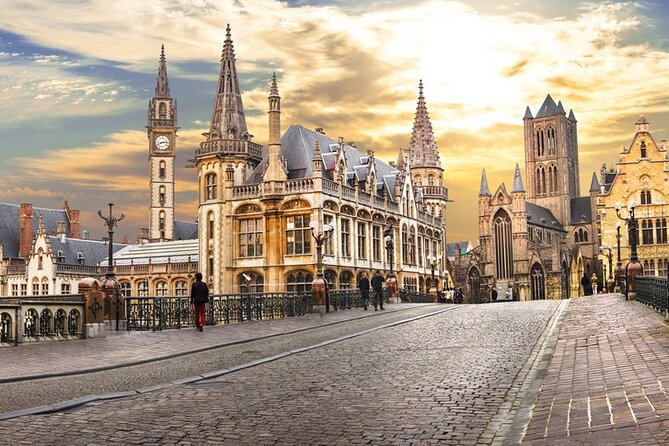
- Three towers from St Michael’s Bridge: Begin with Ghent’s classic skyline view and a quick explanation of the city’s medieval power.
- A castle in the city center: Gravensteen is unusually well preserved and sits directly among Ghent’s canals, shops, and streets.
- Private questions are welcome: Your group can discuss local food, architecture, history, or practical plans without being held up by strangers.
- A smart first-day tour: The route gives you a useful map of central Ghent before you return to explore the cathedral, Belfry, or museums.
- Mostly exterior sightseeing: The tour explains the main buildings from outside, so budget separately if you want to enter them.
- Flexible guide quality matters: Guides including Arn, Camila, Hans, Sonia, and Kenny receive especially warm praise for storytelling and local advice.
Ghent’s best first view from St Michael’s Bridge
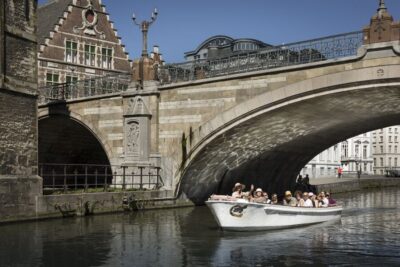
The tour begins at Hostel Uppelink on St Michielsplein, beside St Michael’s Bridge. This is one of the finest places to get your bearings because the bridge frames the old center and gives you a clear look toward Ghent’s famous three towers.
Your guide starts with the city’s medieval role as a trading center. That opening matters. Ghent can initially feel like a handsome collection of canals, churches, and old stone buildings, but the city makes more sense once you understand how commerce gave it wealth and political weight.
The first stop lasts about 15 minutes and is free to enter. It is also a good place to ask your guide to point out the landmarks you will see later. If you have only one day in Ghent, this quick orientation helps you recognize the Belfry, St Bavo’s Cathedral, and St Nicholas’ Church as you move through town.
More History Tours in Ghent
- Historical Walking Tour: Legends of Gent
★ 5.0 · 1,761 reviews - Ghent: 40-Minute Historical Boat Tour of City Center
★ 4.3 · 430 reviews - Bicycle tour in historic Ghent
★ 5.0 · 87 reviews
Graslei and Korenlei, Ghent’s old waterfront
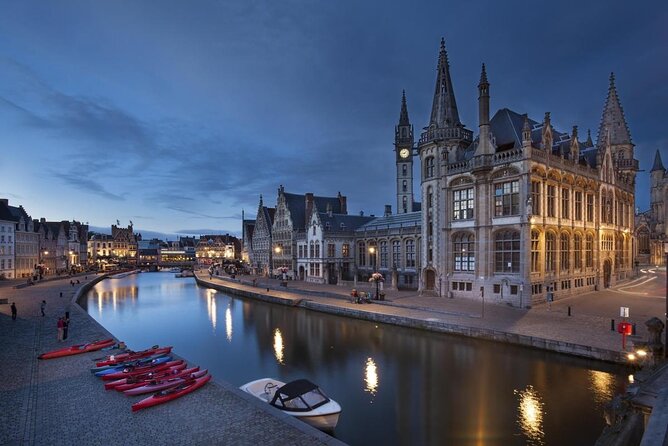
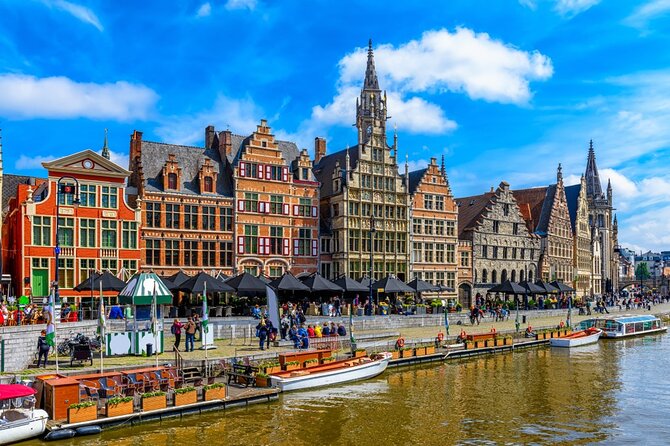
From the bridge, you walk to Graslei and Korenlei, the historic waterfront that once served as the city’s port. The guide explains which buildings were tied to trade and how the canal-side façades reflect Ghent’s commercial past.
This is one of the most photogenic parts of the route, but the useful part is not just the view. You learn to read the buildings as working structures rather than a pretty backdrop. The waterfront was connected to the movement of goods, money, and people, which helps explain why Ghent grew so influential.
The planned stop is about 10 minutes. You will likely want extra time for photographs, but the tour keeps moving. That is a recurring theme here: the guide gives you the story and the visual cue, then leaves you to return later if you want a closer look.
A brief stop near the Design Museum adds a distinctly local note. Your guide explains how one feature of the museum reflects the stubborn, rebellious character associated with the people of Ghent. The description does not promise a museum visit, so think of this as an outside explanation rather than a design exhibition.
The Great Butchers’ Hall and the less-polished side of medieval Ghent
At Het Groot Vleeshuis, you look across the water toward the medieval covered Great Butchers’ Hall. The building is grand, but your guide also shares darker details about its past.
That balance is welcome. Ghent’s old center is easy to romanticize, especially when the weather is kind and the canals are reflected in the water. A good city walk should also explain the hard, unpleasant parts of medieval life, and this stop does that without requiring an interior visit.
The visit is listed at about 10 minutes. It is a compact history lesson, not a food tasting. Food and drinks are not included, so save your appetite for a separate stop later in the day.
Gravensteen, a fortress among city streets
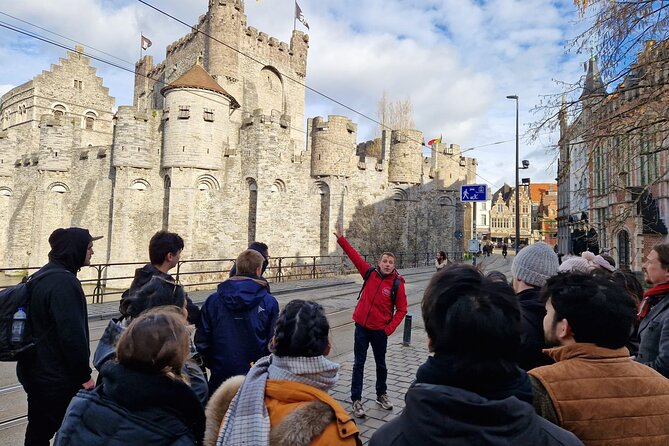
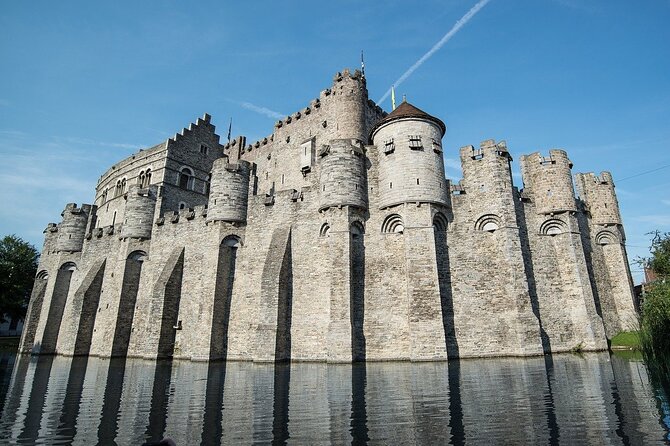
Gravensteen, the Castle of the Counts, is one of Ghent’s most memorable sights. Unlike a remote hilltop fortress, it sits in the middle of the city, surrounded by canals, streets, and everyday urban life.
The castle is well preserved, and your guide explains its impressive past from outside. You get the setting, the political background, and the reason the building matters before deciding if you want to pay for entry separately.
The planned stop lasts around 10 minutes. That is enough to understand the role of the castle and admire its exterior, but not enough for a full interior visit. If you want to see rooms, defenses, or displays inside, schedule that for another part of your day.
This is also where the private format can pay off. You can ask how the castle fit into Ghent’s power struggles, or shift the conversation toward architecture and daily life. Guides such as Arn and Onur are praised for using humor and questions to keep the story lively, which can work well with teenagers and adults alike.
More history walks around Ghent:
- Chocolate history workshop Ghent
★ 5.0 · 34 reviews - Small Group Ypres Remembrance Day Filled With War History
★ 5.0 · 31 reviews - Ghent: Private Tour in Historical Center
★ 4.9 · 22 reviews - Ghent: Private Historical Highlights Walking Tour
★ 4.5 · 17 reviews
St. Veerleplein, the square of death and life
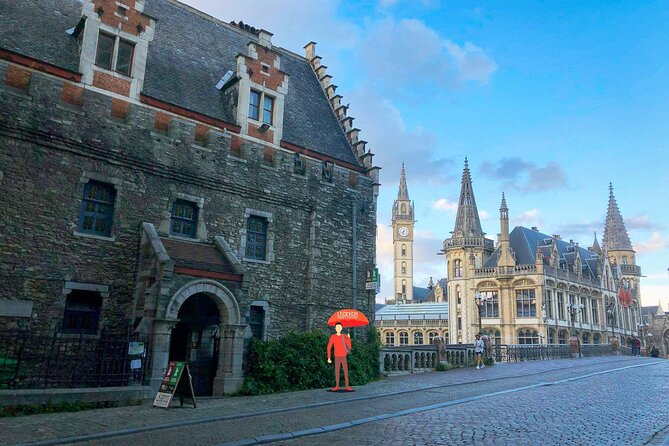
The square in front of Gravensteen is St. Veerleplein. Your guide explains why it has been known both as the square of death and the square of life.
The short stop, about 10 minutes, is built around a local contrast: a public space can carry memories of punishment, fear, celebration, and ordinary city life at the same time. This kind of story gives the square emotional weight without asking you to visit another attraction.
It is also a good point to pause and absorb the unusual sight of a medieval castle in the center of a living city. Ghent does not place its past behind glass. Old monuments sit beside cafés, homes, and modern streets.
Huis van Alijn and the story of Ghent’s god houses
The House of Alijn occupies a former hospital and is the only remaining god house in Ghent. Your guide explains the unfortunate story behind its transformation into a hospital.
The stop lasts about 10 minutes and focuses on the building’s social role. This adds something that grand churches and castles cannot: a look at care, illness, and the people who depended on charitable institutions.
Again, the emphasis is on explanation from outside. If the museum itself interests you, note its name and return later. The walking tour gives you the reason to care about the building, but it does not include a museum admission.
Vrijdagmarkt and the man in the middle
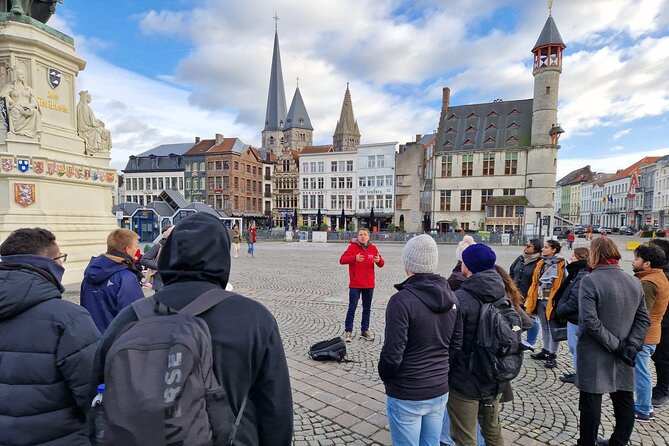
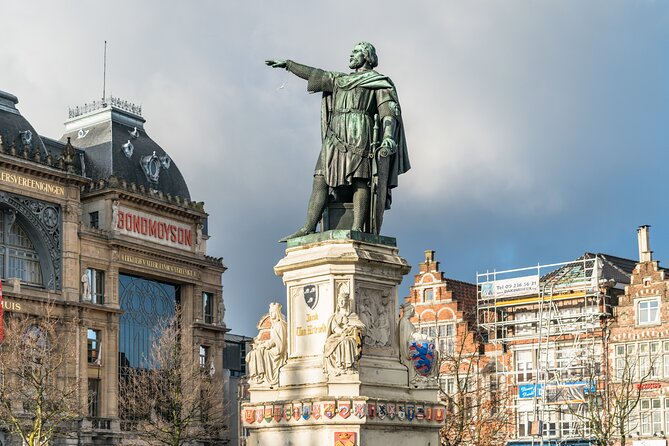
Vrijdagmarkt is one of Ghent’s important public squares. The guide covers its role in the city’s past and explains the story of the man whose statue stands at its center.
This is a useful stop for understanding how Ghent’s public spaces carried political meaning. Markets were not simply places to buy goods. They were also settings for meetings, announcements, conflict, and civic display.
The route allows about 10 minutes here. Your guide may connect the square to the wider struggles that shaped Ghent, which helps prepare you for the later explanation at the town hall.
Werregarenstraat, where graffiti has a place
Werregarenstraat is Ghent’s designated graffiti alley. The city set aside this area so street artists could work without spraying the city’s historic monuments.
This stop changes the mood. After castles, churches, and medieval trade, you get a quick look at a modern solution to an old urban problem: how can a city protect historic buildings while allowing public art and rebellious expression?
You walk through the alley for about 10 minutes. The artwork changes, so the experience is less about one permanent collection and more about seeing the city’s informal creative outlet. It also ties neatly to the earlier point about Ghent’s independent local character.
The Town Hall and a city divided by conflict
At Ghent Town Hall, your guide explains why the building looks architecturally confused. The answer is tied to one of the most important conflicts in Ghent’s history.
The exterior combines different styles and periods, and the contrast becomes easier to understand once you know the political story behind it. This is a good example of the tour’s main strength: it connects what you see to why it looks that way.
The stop is short, about five minutes. Do not expect an architectural lecture or an interior tour. Instead, you get a concise explanation that turns an odd-looking façade into a clue about the city’s past.
St. Bavo’s Cathedral and the Ghent Altarpiece
St. Bavo’s Cathedral is one of the major highlights. Your guide introduces its long history and the art treasures inside, especially the world-famous Ghent Altarpiece by Jan and Hubert van Eyck.
The cathedral stop lasts about 10 minutes. That gives you context, but it may not allow time to properly see every interior feature or spend long with the altarpiece. If the Van Eyck painting is a main reason for your visit, treat this tour as preparation and make a separate plan for the cathedral.
This is an important value point. The guide helps you understand why St. Bavo’s matters, but the price does not include the attraction admissions listed here. One person specifically found the private tour expensive because a historical pass was not included. That is a fair concern, particularly if you want to enter several sites.
The Belfry, Ghent’s people’s tower
The Belfry of Ghent is the people’s tower, a symbol of the city’s independence, power, and stubborn spirit. Your guide also explains its past as a prison and shares the strange legend represented by details on the façade.
The stop takes about five minutes, and the tour ends in front of the Belfry on Sint-Baafsplein. That ending is practical. You finish beside one of Ghent’s central landmarks, close to St. Bavo’s Cathedral and St Nicholas’ Church, with an easy choice between more sightseeing, lunch, or a return visit to the tower.
The Belfry is also a natural place to ask for advice about the rest of your day. Guides have helped people choose restaurants, shopping areas, and a suitable place to continue after the walk. One guide even rearranged the ending to suit a lunch plan, though you should confirm any special request in advance.
St. Nicholas’ Church and a fitting final legend
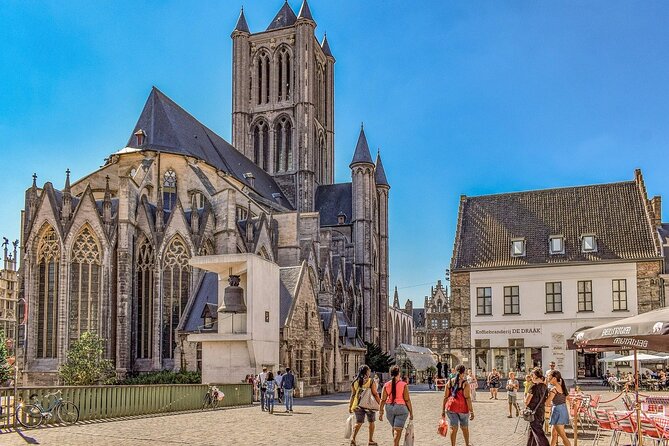
The last stop is St. Nicholas’ Church, facing Korenmarkt. It dates to the early 12th century and is dedicated to St Nicholas, the protector of merchants and sailors.
The church’s façade illustrates a legend connected with its patron saint. That makes a good ending because the story ties together Ghent’s waterfront, trade, religious buildings, and old local tales.
The stop is listed at about 10 minutes. The tour does not promise entry, so you should check separately if you want to explore the church inside. From here, you are still in the center and can easily continue on foot.
What the private format is really worth
A private walking tour is most useful when you value conversation. You can ask why Ghent’s town hall has mixed styles, how the castle functioned, or where to eat afterward. You are not held back by other people, and the guide can adjust the pace for your group.
Several guides receive especially strong praise for warmth and storytelling. Camila is described as energetic, funny, and good at making each stop feel personal. Arn is praised for his pride in Ghent, strong communication before the tour, and helpful restaurant suggestions. Hans is noted for answering questions patiently and adapting to a slower walking pace. Kenny is described as fun and informative, while Sonia is praised for putting centuries of European history into context.
That range matters because the guide is the main product. The monuments are free to view, and you can walk between them yourself. You are paying for interpretation, organization, and access to a local person who can connect the pieces.
There are a few warning signs in the feedback. One booking reportedly ended after only about 1 hour and 20 minutes instead of two hours, and the start time changed more than once. Another person described a guide distracted by personal problems and phone use. A separate complaint involved the guide not arriving at all. These reports are not the usual pattern given the overall 4.8 rating and 94 percent recommendation rate, but they are reasons to keep your booking messages and confirm the meeting details.
Price, pace, and what you do not get
The listed price is $105.82 per person, with group discounts available. For a private tour, that can make sense for a family or small group that wants direct access to a guide. The price is harder to justify for a solo visitor or a couple who mainly want entrance tickets.
All fees and taxes, a local professional guide, and the private format are included. Hotel pickup and drop-off are also listed as included, while the stated meeting point is Hostel Uppelink and the ending is the Belfry. Because those details can sound inconsistent, confirm the pickup arrangement when booking rather than assuming a door-to-door service.
Food and drinks are not included. Service animals are allowed, public transportation is nearby, and most people can participate. The tour is offered in English in the booking details, while the highlights refer to multiple languages, so confirm your preferred language before paying.
The walk covers a lot in about two hours. The listed stop times add up to nearly the full duration before you count the walking between sites, which tells you to expect a brisk overview. Wear comfortable shoes, leave room for questions, and do not plan a museum admission during the tour itself.
Who should book this Ghent tour?
I would recommend it to first-time visitors with limited time, families who want a private pace, and small groups that enjoy asking questions. It is especially useful if Ghent is a day trip and you need the city’s main story before choosing what to revisit.
It also suits people who prefer history with anecdotes rather than a dry list of dates. The route includes legends, darker tales, political conflicts, architecture, street art, and practical food advice, so it is not limited to grand monuments.
I would think twice if your top priority is entering every major attraction. The walk gives you exterior views and context, but the cathedral, Belfry, castle, and museums require more time and may require separate admission. A small group tour may offer better value if you do not need a guide dedicated only to your party.
Should you book Private Historical Tour: The Best of Ghent?
Book this tour if you want a sharp introduction to Ghent, personal attention, and a guide who can explain why the city looks and feels the way it does. The route is well chosen, ending near the Belfry after covering the castle, cathedral, old port, town hall, churches, market squares, and graffiti alley.
Skip it if $105.82 per person feels high for an exterior-focused walk, or if you want long visits inside the monuments. For the best value, use it early in your stay, ask your guide for restaurant and museum advice, and return afterward to the places that caught your interest.
FAQ
How long is the Private Historical Tour: The Best of Ghent?
The tour lasts approximately two hours.
How much does the tour cost?
The listed price is $105.82 per person. Group discounts are available.
Is the tour private?
Yes. Only your group participates in the private activity.
What language is the tour offered in?
The booking information lists English. The tour details also indicate that the experience is available in multiple languages, so confirm your preferred language before booking.
Where does the tour start?
The stated meeting point is Hostel Uppelink, Sint-Michielsplein 21, 9000 Gent, Belgium.
Where does the tour end?
The tour ends in front of the Belfry of Ghent on Sint-Baafsplein.
Are attraction admission tickets included?
The listed stops have free admission for the tour, but the tour does not include entry to the interiors of the castle, cathedral, Belfry, museums, or other attractions. All fees and taxes for the tour itself are included.
Is hotel pickup and drop-off included?
Hotel pickup and drop-off are listed as included. Since the stated meeting point is Hostel Uppelink and the ending is the Belfry, confirm the exact pickup arrangement when booking.
Can I cancel for a full refund?
Yes. You can cancel at least 24 hours before the local start time for a full refund. Cancellations or changes made less than 24 hours before the start time are not accepted for a refund.
Just added around Ghent
- Ghent Running and Sightseeing Tour★ 5.0 · 3 reviews
- Ghent Walking Tour – City Highlights and Beyond Tradition★ 4.5 · 3 reviews
- Ghent: Walking Tour from Friday Market to the Cathedral★ 4.8 · 3 reviews
- Ghent: City Walk with Audio Guide in 7 Languages on your Phone★ 4.5 · 3 reviews
- Children’s escape game in the city of Ghent Marsupilami★ 5.0 · 3 reviews
- Discover Ghent while playing! Escape game – The Walter case★ 4.5 · 4 reviews
- Discover Ghent while playing! Escape game – The alchemist★ 4.0 · 4 reviews
- e-Scavenger hunt Mons: Explore the city at your own pace★ 5.0 · 4 reviews
Ghent Tours, compared.



Browse the lists this tour appears in