
Reviewed · GHENT TOURS
Discover authentic Ghent with historian & taste the best chocolate
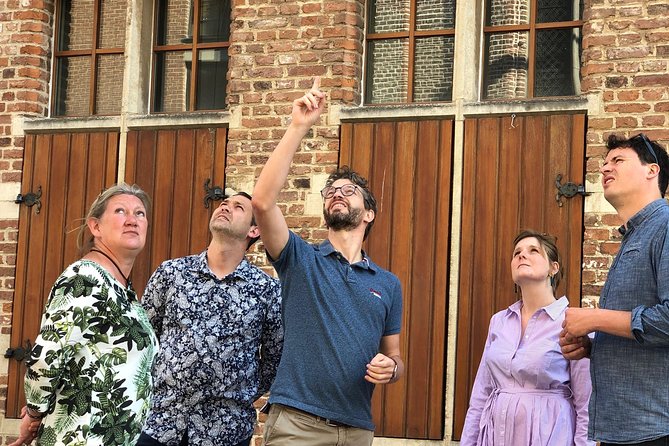
Ghent’s story comes alive on foot, especially when a local historian connects its grand buildings to revolt, trade, religion, and a famously stubborn emperor. This two-hour walk with Wim moves from Sint-Baafsplein to Saint Michael’s Bridge, passing cathedrals, castles, old guild buildings, and Ghent’s photogenic medieval waterfront.
I like the small group limit of 15, which should make it easier to hear the guide and ask questions. I also like the clear focus on the city’s past, from the Van Eyck brothers to the rebellious citizens nicknamed noose bearers. The chocolate stop adds a sweet local touch.
The main thing to understand is that this is a history walk with chocolate, not a chocolate tasting with a little history attached. One tasting stop is included, and some people wished they had more time with the chocolatier or more chocolate.
Key points to know before you book
- Historian and teacher Wim leads the walk: His approach centers on stories, context, and the reasons Ghent looks the way it does today.
- Twelve central Ghent stops fit into about two hours: The route covers Sint-Baafsplein, St. Bavo’s Cathedral, Gravensteen, the old harbor, and more.
- Chocolate is a short part of the experience: Expect a small chocolate refresher, not an extended tasting session.
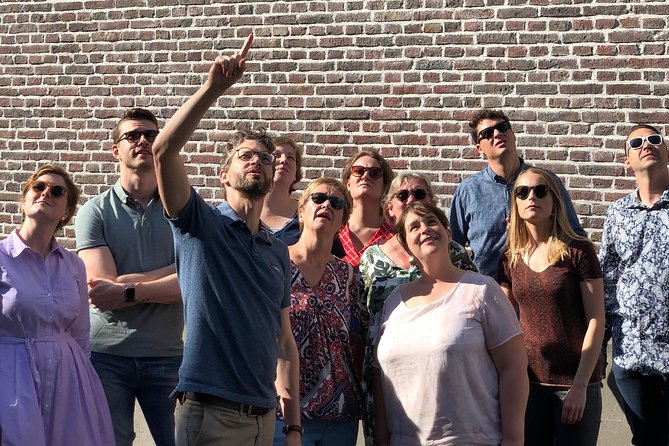
- The group is capped at 15 people: This is a useful size for a walking tour in busy central streets.
- The tour begins at Sint-Baafsplein and ends at Saint Michael’s Bridge: You finish near Graslei and Korenlei, one of Ghent’s prettiest areas.
- The price is about $42.05 per person: That is fair if you want orientation and historical explanation, less so if your main goal is eating chocolate.
Why this walk gives Ghent a clear shape
Ghent can feel confusing at first. Its medieval center contains churches, canals, castle walls, former guildhalls, civic buildings, and layers of architecture from different centuries. A guide who links those pieces together can save you from seeing a handsome facade without understanding why it matters.
Wim’s route is built around that connection. At Sint-Baafsplein, he introduces Ghent through four forces: economic, political, cultural, and religious life. That is a smart beginning because the square is not just a place to meet. It gives you a way to read the entire city.
You do not simply hear that Ghent was important. You begin with the reasons it became important, how its commerce shaped the streets, how power was displayed, and how religion influenced its public buildings and art. This is the kind of opening that helps the rest of the walk make sense.
The pace is brisk but not rushed. Most stops last five minutes, while Sint-Baafsplein, St. Bavo’s Cathedral, and Ghent Town Hall receive more time. You will see many highlights without spending the whole day on one monument.
A few more Ghent half-days to weigh up
- Ghent: Belgian Chocolate Walking Tour with Tastings
★ 4.9 · 259 reviews - Ghent: Famous Belgian Chocolate Walking Tour with Tastings
★ 5.0 · 131 reviews - A Taste of Ghent: Beer & Chocolate with storytelling by a local
★ 5.0 · 77 reviews
Sint-Baafsplein and the cathedral’s art
Meet Wim in front of the white statue in the middle of Sint-Baafsplein. Be precise here, since the square has several prominent buildings and meeting points. The tour begins with a broad introduction before narrowing its attention to Ghent’s economic, political, cultural, and religious past.
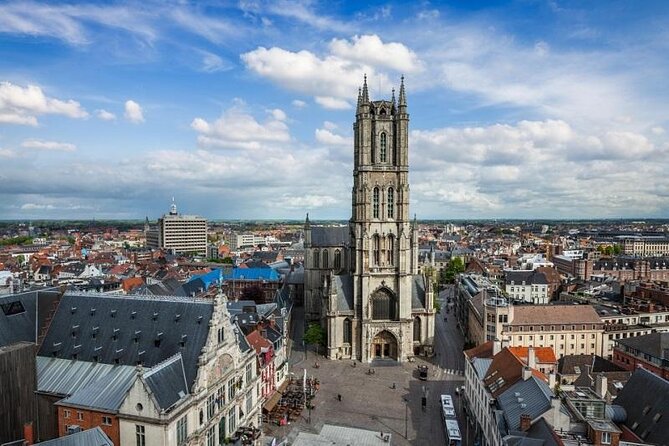
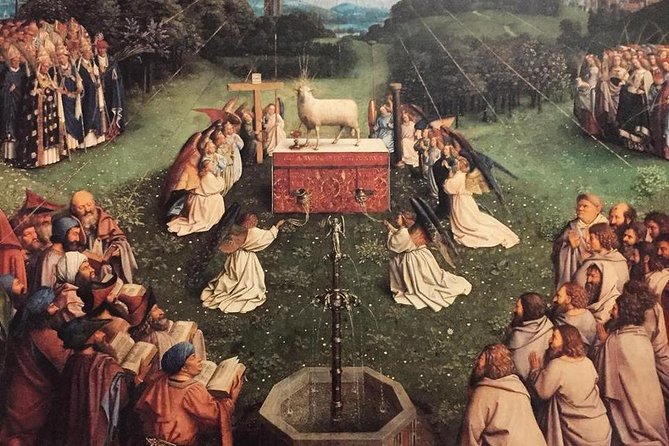
From there, you walk around St. Bavo’s Cathedral. The stop lasts about ten minutes and covers the building’s development as well as its major art treasure. The supplied details do not promise entry inside, so you should think of this part as an exterior and historical introduction rather than a cathedral visit.
That distinction matters. If you want a long look at the interior or a dedicated art viewing, you may need separate time. If you want to understand why the cathedral matters within Ghent’s story, the short stop gives you a useful first look.
The tour then reaches Maaseikplein, where the focus turns to the Van Eyck brothers. The guide asks whether the image of the brothers looks like them, a small detail that adds a human angle to a major artistic subject. It is only a five-minute stop, but it breaks up the architectural explanations with a question about the people behind the art.
Medieval villains beside the Scheldt
At Geeraard de Duivelsteen, also called the Castle of Gerald the Devil, the story takes a darker turn. Here the route brings in Vikings and Geeraard De Duivel, a figure whose name alone gives the stop a little drama.
This is a good example of the tour’s method. Instead of treating Ghent as a row of pretty old buildings, Wim uses the structures as prompts for stories about danger, power, and reputation. The stop is brief, so expect a sharp anecdote rather than a full castle visit.
At Hoogpoort, the focus shifts to buildings dating from the 13th century. You pause to consider what old structures can reveal about the city that built them. This is one of the shorter stops, but it helps you look upward and pay attention to age, purpose, and surviving details.
The walk then reaches Ghent Town Hall. Its construction took place over centuries, and the explanation connects that slow building process to Emperor Charles V. The story also introduces Ghent’s revolt against him and the city’s nickname, noose bearers.
That nickname is one of the tour’s memorable details because it links local pride to political resistance. Ghent’s past was not only about wealthy merchants and impressive buildings. Its citizens could challenge authority, and those conflicts left a lasting mark on the city’s identity.
Modern Ghent meets medieval Ghent at Stadshal
The next stop is Stadshal, the controversial modern hall in the historic center. The guide asks if you know its nickname, turning a potentially awkward building into a conversation about how cities handle new architecture among old landmarks.
You should expect only about five minutes here. It is not a full architecture lecture, but it gives you a useful contrast between Ghent’s medieval core and its more recent additions. If you have wondered why a modern structure appears among centuries-old buildings, this is the moment to raise the question.
That contrast is one reason a guided walk can be more useful than a simple sightseeing loop. You see the same building either way, but the explanation gives it a place in the city’s continuing story.
Same city, a completely different way to spend a day:
- Ghent: 50-Minute Medieval Center Guided Boat Trip
★ 4.5 · 5,637 reviews - Historical Walking Tour: Legends of Gent
★ 5.0 · 1,761 reviews - Ghent: 40 Minute Medieval Center Guided Boat Tour
★ 4.4 · 884 reviews - Evening Tour of the Dark Side of Gent
★ 5.0 · 646 reviews
Korenmarkt and the old meat hall
Korenmarkt brings you back to the commercial life of Ghent. The houses here represent roughly 800 years of history, and some carry a mysterious inscription. Wim uses those details to show that even a busy central square can preserve clues from several periods.
You will not spend long at Korenmarkt, so this is a stop for orientation and observation. Look closely at the houses while the guide explains what you are seeing. The value is less about entering a building and more about learning to notice the signs of age and purpose along the street.
At Het Groot Vleeshuis, the old meat hall, the subject becomes practical. Before refrigeration, how could a city help guarantee the quality of meat? The answer involved bringing butchers together in one building.
This stop gives the tour a welcome everyday angle. Cathedrals and castles can dominate a city walk, but food systems reveal how ordinary urban life worked. The meat hall connects commerce, regulation, and public trust in a way that is easy to understand.
Gravensteen, the count of Flanders, and public power
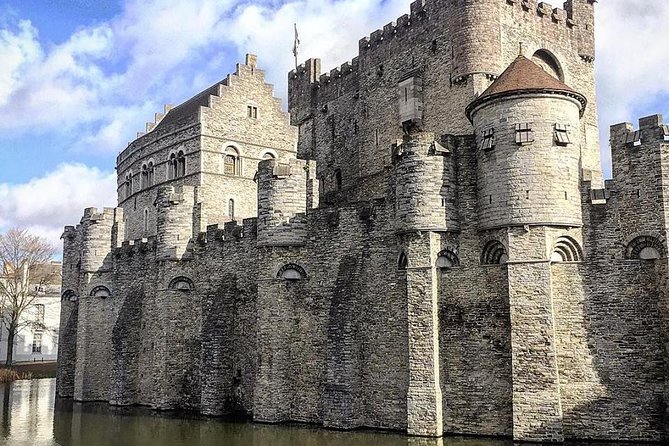
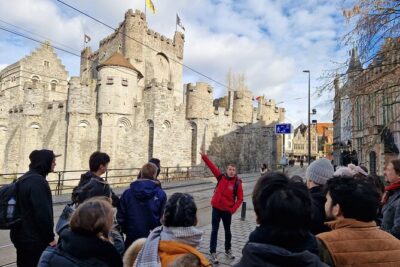
Gravensteen is one of Ghent’s major visual highlights. The route explains that the count of Flanders built the castle to show a fist to the people of Ghent. In plain terms, this was architecture used as a warning and a display of control.
The stop lasts about five minutes, so it is not designed as a complete castle tour. You should plan a separate visit if you want to explore the interior in detail. On this walk, Gravensteen works as a powerful piece of the city’s political story.
That brief explanation can change the way you see the fortress. It is not just a dramatic medieval building beside the water. It also represents the tension between the ruling count and a wealthy, independent city.
At nearby St. Veerleplein, the guide points out Neptune, seahorses, and strange dolphins. This is another short visual stop, built around sculpture and symbols rather than a long historical explanation. It gives the route a lighter moment before the final stretch.
Graslei and Korenlei: the best finish
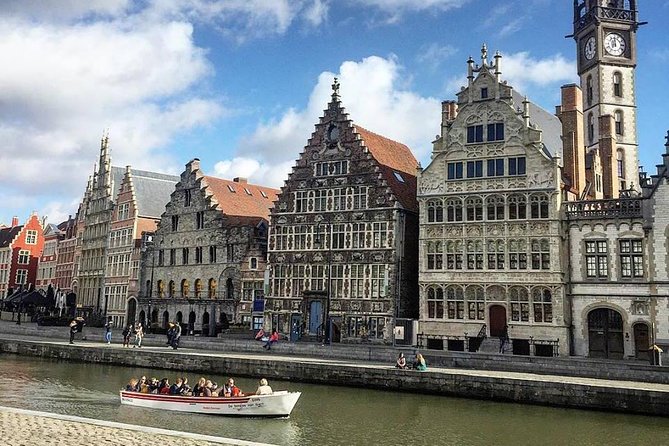
The walk ends at Saint Michael’s Bridge, after passing Graslei and Korenlei. For many people, this is the visual high point of the route. The old harbor shows where skippers worked for centuries and where they sought entertainment after work.
The two quays are also an ideal place to pause after the tour. You can look back at the water, old facades, and bridges with more context than you had at the start. Because the route finishes here, you are well placed to continue exploring the center on your own.
This ending works particularly well for first-time visitors. You begin with Ghent’s broad story and finish at a scene that brings trade, architecture, and daily life together. The harbor is beautiful, but the explanation of its working past keeps it from becoming just a photo stop.
How much chocolate do you actually get?
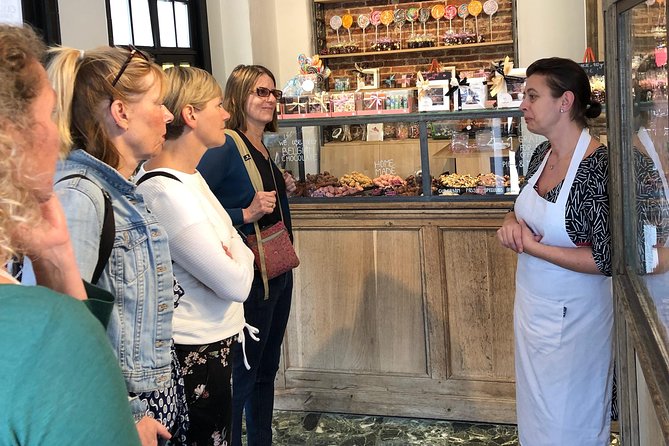
The chocolate element is best treated as a pleasant extra. The walk includes a visit or stop with a chocolatier, but the experience is not built around multiple tastings or a long demonstration.
One review specifically described it as a small chocolate refresher, while another wished there had been more chocolate. A separate comment suggested that the chocolatier portion could have lasted longer. Those remarks point to the same practical truth: book this for Ghent’s history first.
That does not make the tasting unimportant. Belgian chocolate gives the walk a local food connection and a welcome break during two hours on foot. If you enjoy combining sightseeing with a small bite, you will likely appreciate it.
If your priority is comparing chocolates, learning about production, or eating several samples, choose a dedicated chocolate tour instead. At $42.05 per person, the price makes more sense when you count the guide’s historical interpretation as the main service.
Price, group size, and timing
The tour lasts approximately two hours and costs $42.05 per person. For that price, you are paying for a focused English-language walk led by a guide who presents himself as a historian and teacher, along with the chocolate component.
I consider the price reasonable for visitors who want a strong introduction to central Ghent without committing half a day. The route covers a lot: cathedral, art, medieval buildings, town hall, modern architecture, meat hall, castle, sculpture, and harbor.
The value is less convincing if you already know Ghent well or want substantial time inside each landmark. Most stops last only five minutes, so the format favors breadth. You will see the key places and learn why they matter, then return later to the ones you want to explore at length.
The maximum group size is 15. That is small enough to keep the walk personal while still allowing the experience to operate as a shared city tour. Most people can participate, and service animals are allowed. The starting area is near public transportation.
The experience is offered in English. Confirmation arrives when you book, and free cancellation is available up to 24 hours before the local start time. If the minimum number is not reached and the experience is canceled, you are offered another date or experience, or a full refund.
Who will get the most from Wim’s approach?
I would choose this walk if you want stories and structure rather than a simple list of sights. Wim’s strength is his enthusiasm for Ghent and his ability to explain how buildings connect to political, religious, economic, and cultural change.
It suits first-time visitors especially well. The route covers the central sights in a compact period, giving you a useful map of the old city. You can then decide where to return, perhaps Gravensteen, St. Bavo’s Cathedral, or the Graslei and Korenlei waterfront.
It also suits people who enjoy local detail. The noose bearer nickname, the Van Eyck question, the old meat hall, the medieval Hoogpoort buildings, and the strange creatures at St. Veerleplein are the sort of details that make a walk memorable.
You may want another option if chocolate is your main reason for booking. The tasting is limited, and the guide’s historical talk takes up most of the two hours. People seeking an extended chocolatier visit should not expect that here.
The pace may also feel full for anyone who prefers long stops. The route includes 12 places in approximately two hours, with only a few locations receiving ten or twenty minutes. That is efficient, but it leaves little room for lingering.
Practical tips for a smoother walk
Arrive at the white statue in the middle of Sint-Baafsplein and allow enough time to identify the exact meeting spot. The operator has stressed the meeting location, so reading your confirmation carefully is wise.
Wear comfortable shoes. The route is a walking tour through central Ghent, and the schedule keeps moving from one short stop to the next. You will get more from the experience if you can listen while walking and still have energy at the end.
Keep your expectations balanced. You are not booking a full-day historical course, a cathedral interior tour, or a major chocolate tasting. You are booking a compact introduction led by Wim, with a single chocolate-focused pause woven into the route.
The 97 percent recommendation rate and 4.8 rating from 30 reviews point to a consistently strong experience, especially for the guiding. One sharply negative account involved a meeting-point dispute, while the operator states that the people did not arrive and were contacted. The practical lesson is simple: confirm the meeting place and communicate promptly if you cannot find the guide.
Should you book this Ghent walk?
Book it if you want to understand Ghent quickly and enjoy hearing a local historian explain the city in person. The route gives you a useful first look at the cathedral, Van Eyck connection, town hall, Gravensteen, medieval streets, and Graslei and Korenlei, while the small chocolate stop adds flavor without taking over.
Skip it if you want a chocolate-heavy activity, long interior visits, or plenty of free time at each monument. For most first visits, though, the two-hour format is a sensible introduction, and the final view from Saint Michael’s Bridge gives you a strong place to continue your own exploration.
FAQ
Where does the tour begin?
It begins at Sint-Baafsplein in Ghent, in front of the white statue in the middle of the square.
Where does the tour end?
The tour ends at Saint Michael’s Bridge on Sint-Michielshelling.
How long does the experience last?
The walking tour lasts approximately two hours.
What language is the tour offered in?
The tour is offered in English.
Who leads the experience?
The guide is Wim, a historian and teacher who has lived in Ghent for many years.
How many people can join the tour?
The group has a maximum of 15 travelers.
Is chocolate included?
Yes. The experience includes a chocolate stop with a chocolatier, but it is a small part of the historical walking tour rather than an extended tasting.
Does the tour enter St. Bavo’s Cathedral or Gravensteen?
The provided details describe walking around St. Bavo’s Cathedral and stopping at Gravensteen. They do not state that admission inside either site is included.
Is the tour accessible by public transportation?
The meeting area is near public transportation.
What is the cancellation policy?
You can cancel up to 24 hours before the local start time for a full refund. Cancellations or changes made less than 24 hours before the start are not accepted for a refund.
Just added around Ghent
- Ghent Running and Sightseeing Tour★ 5.0 · 3 reviews
- Ghent Walking Tour – City Highlights and Beyond Tradition★ 4.5 · 3 reviews
- Ghent: Walking Tour from Friday Market to the Cathedral★ 4.8 · 3 reviews
- Ghent: City Walk with Audio Guide in 7 Languages on your Phone★ 4.5 · 3 reviews
- Children’s escape game in the city of Ghent Marsupilami★ 5.0 · 3 reviews
- Discover Ghent while playing! Escape game – The Walter case★ 4.5 · 4 reviews
- Discover Ghent while playing! Escape game – The alchemist★ 4.0 · 4 reviews
- e-Scavenger hunt Mons: Explore the city at your own pace★ 5.0 · 4 reviews
Ghent Tours, compared.


Browse the lists this tour appears in