
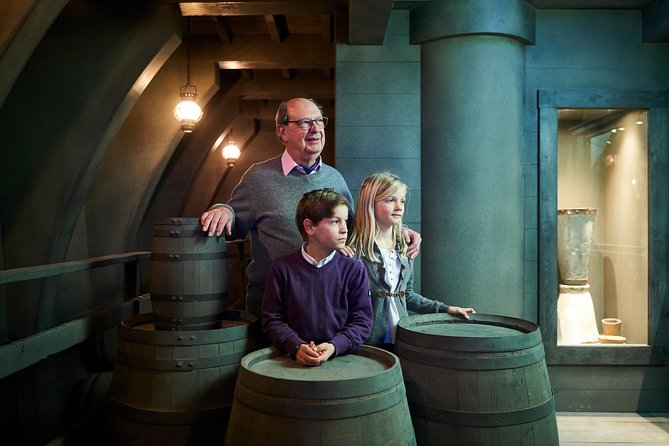
Reviewed · BRUSSELS TOURS
Choco-Story: The Chocolate Museum in Brussels
Chocolate takes center stage at Choco-Story Brussels, where you follow cocoa from its origins to the finished Belgian praline. The best part is the live demonstration, when a master chocolate-maker prepares pralines and gives you a taste.
I like the freedom to move at your own pace, and I like the mix of history, objects, short films, audio commentary, and interactive stations. The chocolate tasting gives the visit a pleasant finish, though the museum is compact and some displays or activity scanners may not work perfectly.
The museum works best as a one-hour stop near Grand Place, not as an all-day attraction. If you want a serious look at chocolate production or a hands-on workshop where you make sweets yourself, this is not that. If you want an easy, affordable Brussels activity with chocolate at the end, it makes good sense.
Key points to know before you go
- The praline demonstration is the main event: It is short, often around 10 to 20 minutes, so check its start time when you arrive.
- The visit is self-guided: An audio device helps explain the displays, but no personal guide is included.
- You get chocolate to taste: The exact selection can vary, with dark or milk chocolate pieces and an extra sample connected to the demonstration.
- Allow about 60 to 90 minutes: A fast walk can take less than an hour, while a careful visit with the audio guide takes longer.
- Grand Place is nearby: This is easy to pair with central Brussels sightseeing and public transportation.
- The museum suits families: Children can participate, but anyone under 18 must be accompanied by an adult.
A small museum with a big subject
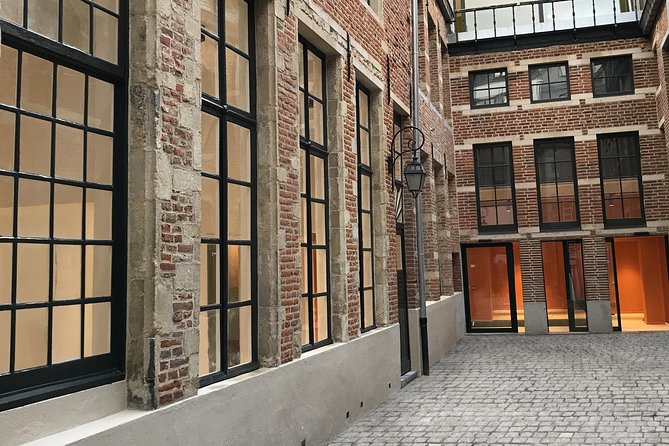
Choco-Story Brussels opened in 2014 through the work of the Van Belle and Van Lierde families, who wanted to promote quality Belgian chocolate while explaining how it is made. The museum is educational, but it never forgets the important practical matter: you are here to taste chocolate too.
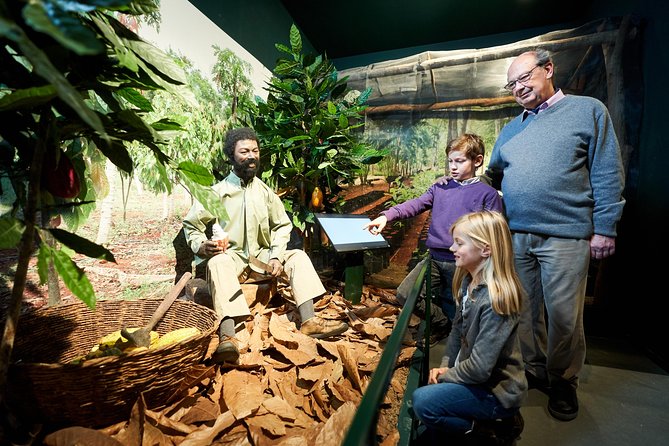
The visit leads you through several exhibition rooms. You learn about cocoa, its origins, the arrival of chocolate in Europe, and the ways Belgium made chocolate part of its food culture. The displays also look at the social meaning of chocolate, including the fact that it was once a refined and expensive drink rather than an everyday snack.
That background adds useful context to the pralines in the tasting room. Chocolate was not always available to everyone. Its movement from a luxury enjoyed by a small group to a widely sold product helps explain why Belgian chocolate developed such a strong reputation.
I would not call the museum large. That is both its strength and its limit. You can fit it into a busy day without giving up half an afternoon, but anyone expecting a huge collection or a major industrial museum may finish sooner than expected.
More Museums in Brussels
- Brussels: Atomium Entry Ticket with Design Museum Ticket
★ 4.4 · 9,254 reviews - Choco-Story Brussels: Chocolate Museum Entrance with Tasting
★ 4.3 · 4,883 reviews - Brussels: Autoworld Museum Ticket
★ 4.7 · 1,301 reviews
Following cocoa from bean to Belgian praline
The central story is simple: cocoa begins as a plant, becomes a raw ingredient, and then goes through several steps before it reaches the chocolate counter. The displays explain that process and show how chocolate changed as different cultures and producers worked with it.
You can take in the information through written material, audio commentary, films, artifacts, and interactive stations. The audio guide is especially useful if you want more detail than the placards provide. It lets you choose your own pace, pause between rooms, and decide how much history you want to absorb.
Some of the information is quite technical. If you enjoy learning how cocoa becomes chocolate, that detail is a benefit. If you came mainly for a quick sweet treat, sections of the audio tour may feel long. You do not have to listen to every explanation, which makes the self-guided format helpful.
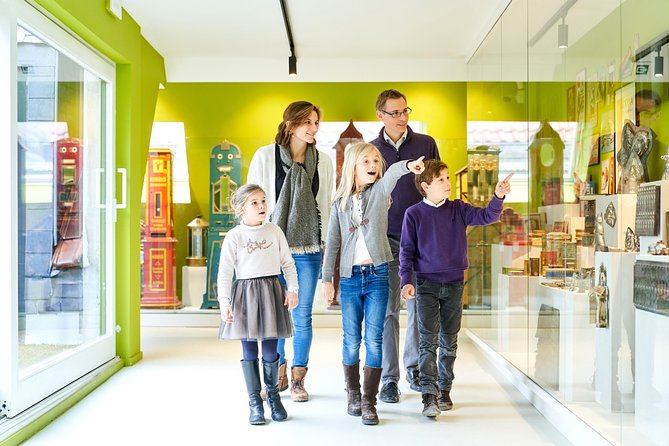
The historical objects and advertising material give the museum some character. You are not simply walking past shelves of chocolate products. You are seeing how chocolate was presented, sold, and woven into Belgian food traditions.
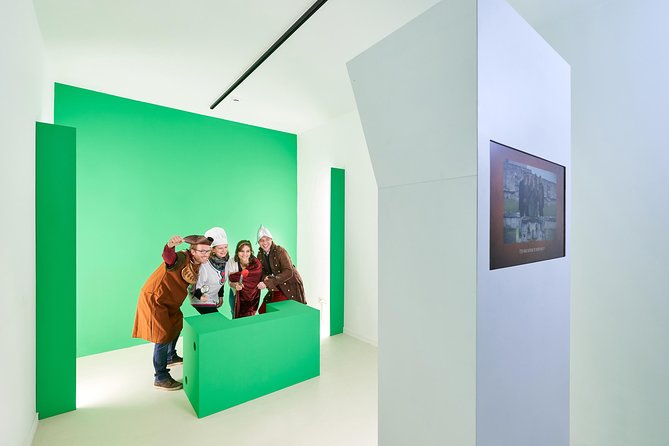
The interactive features add variety, especially for children. Still, you should keep expectations sensible. A few activity centers and scanners have been reported as unreliable, and crowded rooms can make some of the code readers hard to reach. The museum is interactive enough to break up the reading, but it is not built around a large number of working games.
The audio guide sets your pace
No guide is included with admission, so this is mainly an independent visit. You move through the rooms on your own, using an audio device and the information stations as you go.
That arrangement suits me better than a group forced to follow a fixed route. You can slow down for a display about cocoa, move quickly through a section that feels too technical, or spend extra time at the tasting area. It also makes the museum easier to fit around other plans in central Brussels.
The audio equipment has received mixed practical feedback. It can offer useful background and make the artifacts easier to understand, but some devices have not worked properly at every activity center. Treat it as a helpful extra, not the only way to enjoy the museum.
The experience is offered in English according to the booking information. Some audio devices may provide translation options, but you should not assume that a personal English-speaking guide will lead you through the rooms. If you prefer a live explanation with questions answered as you go, this format may feel limited.
The praline demonstration is worth timing carefully
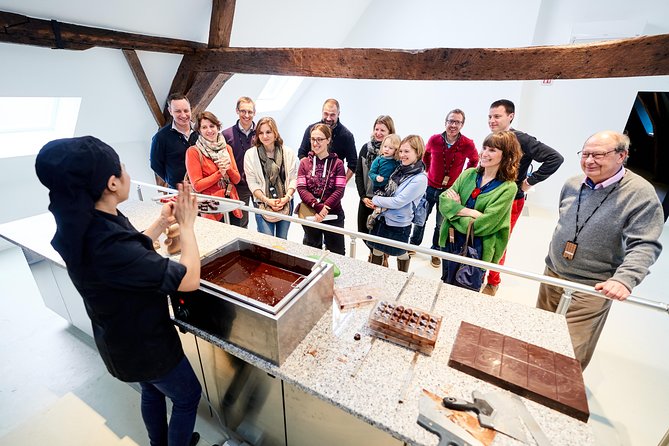
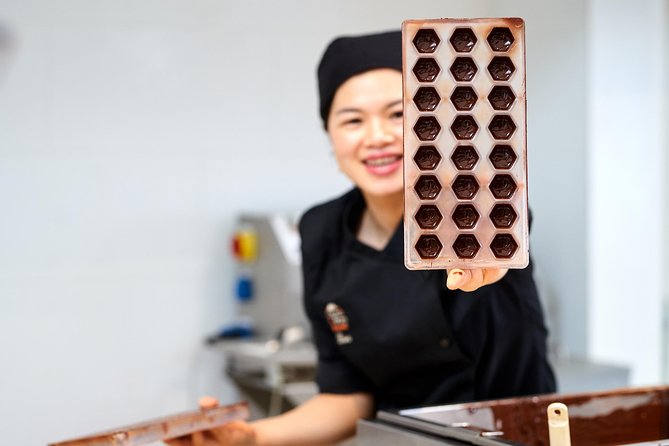
The master chocolate-maker demonstration is the part I would plan around. You watch a chocolatier prepare pralines in front of you, using molds and fillings to show how these Belgian sweets come together.
The demonstration is not a full workshop. You do not make your own chocolate, and the presentation can be as short as 10 minutes. One description of the process included prepared molds and fillings rather than a long, from-scratch production. Still, seeing the technique in real time gives the museum a welcome practical moment after the historical displays.
Timing matters. The demonstration does not necessarily begin at the moment you enter. A morning entry slot may come before the first presentation, leaving you with a choice between seeing only the final minutes or waiting for the next session. Ask at the entrance when the next demonstration starts, then decide whether to explore the museum first or wait.
The presentation may be delivered in English, but the chocolatier’s comfort with English can vary. Do not expect a polished stage show every time. The value is in watching the process and tasting the result, not in a long performance.
For many people, this short demonstration is the strongest reason to choose Choco-Story instead of simply visiting a chocolate shop. It connects the history to a real finished product.
A few more Brussels half-days to weigh up
- Hungry Mary’s Famous Beer and Chocolate Tour in Brussels
★ 5.0 · 2,258 reviews - Brussels: Belgian Chocolate Making Workshop with Tastings
★ 4.7 · 1,629 reviews - Brussels: 2.5-Hour Chocolate Museum Visit with Workshop
★ 4.6 · 1,263 reviews - Brussels: Historical Walking Tour with Chocolate & Waffle Tasting
★ 5.0 · 1,165 reviews
Tasting chocolate, not just looking at it
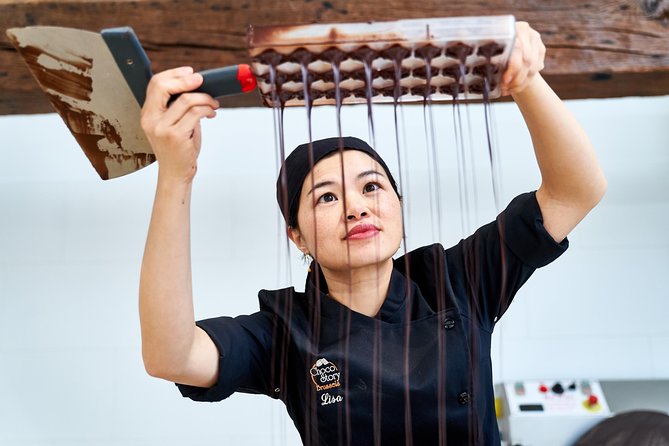
Chocolate tasting is included, and it gives the visit a clear payoff. Depending on the tasting setup, you might try dark or milk chocolate pieces, including small chocolate barrels, with another sample offered after the demonstration.
The number of samples can vary. Some descriptions refer to two main tastes, while others describe around five types to compare. The safe expectation is several samples rather than a full tasting menu. This is a museum tasting, not a professional chocolate class.
That distinction matters when you compare the price. At about $19.17 per person, the tasting alone would not justify the ticket. You are paying for the historical displays, the audio material, the demonstration, and the samples together. For a central Brussels activity lasting roughly an hour to an hour and a half, the price is fair if you are interested in chocolate beyond simply eating it.
The tasting room itself is fairly simple. You will not find an elaborate sit-down dessert service. Instead, the samples help you notice differences in chocolate and give you a pleasant break from the exhibits.
The shop is the place to continue the experience. You can buy more chocolate if the samples leave you wanting another taste, though the selection may not feel as broad as you expect from a specialist chocolate destination.
Planning your visit near Grand Place
Choco-Story is in central Brussels, near Grand Place and public transportation. That location is a major advantage. You can combine the museum with a walk through the historic center, a meal, or other nearby sights without arranging a separate trip across the city.
The museum takes about 90 minutes at a relaxed pace, but I would allow at least an hour so you have time for the audio guide and demonstration. A quick reader who skips some commentary may finish in about 45 minutes. If you arrive when the praline presentation has just ended, your visit could take longer because you may need to wait for the next one.
The last entrance is at 5:00 pm. Keep that cutoff in mind if you are saving the museum for late afternoon. A later visit may be quieter, but only if you arrive early enough to enter before the final admission time.
The activity is limited to a maximum of 15 people, according to the booking details. That sounds manageable, although the rooms can still feel cramped when several groups gather around the interactive displays. If you want more space, an earlier or later visit may be more comfortable than the busiest middle period.
Children must be accompanied by an adult. The museum is suitable for families, and a stroller can fit, though the rooms may feel a little tight. Most people can take part without special physical requirements being listed.
How the museum compares with other Brussels activities
Choco-Story is a good choice when you want a short indoor stop with a clear local connection. Belgian chocolate is one of Brussels’ best-known food traditions, and the museum explains how that reputation developed rather than asking you to accept it without context.
It is less suitable if you are deciding between this and a long, hands-on food workshop. You will watch the chocolatier, but you will not temper chocolate, fill your own molds, or leave with sweets you made yourself.
It is also not the strongest choice for someone who dislikes audio tours. Much of the visit depends on listening and reading. The museum has interactive elements and a demonstration, but it remains a compact educational attraction.
For families, the mix works better. Children can see chocolate being made, try samples, and use the activity stations, while adults can focus on the historical side. The visit is short enough that younger children are less likely to lose patience than they might at a larger museum.
For chocolate enthusiasts, the experience is worthwhile if you enjoy the story behind the product. If your only goal is to buy the best chocolate in Brussels, spend your time comparing chocolate shops instead.
What the $19.17 ticket really buys you
The admission price is reasonable for central Brussels, especially when you count the tasting and live presentation. You are not paying only for a collection of displays. The ticket combines a self-guided museum, an audio tour, several tasting opportunities, and a short demonstration.
Value depends heavily on how you visit. If you rush through in 45 minutes, miss the praline demonstration, and listen to very little of the audio guide, the ticket may feel less worthwhile. If you plan around the demonstration and spend an hour or more with the exhibits, you get a fuller experience.
The included chocolate is another plus, but I would not book this expecting unlimited samples. The descriptions vary, and the most realistic approach is to expect a modest tasting with the chance to buy more in the shop.
A virtual reality cocoa presentation may also be available for an additional €5. That extra cost is not included in the basic ticket. You should treat it as optional rather than part of the standard museum visit.
Free cancellation is available when you cancel at least 24 hours before the start time. Changes or cancellations made less than 24 hours ahead are not accepted for a refund.
Who should book Choco-Story Brussels
I would recommend this museum to you if you want:
- A compact activity close to Grand Place
- A family-friendly indoor stop
- A self-guided visit rather than a fixed group tour
- A basic explanation of cocoa, chocolate, and Belgian pralines
- A chocolate tasting included in the admission
- A short live demonstration with a chocolatier
- An affordable activity that fits into a full Brussels sightseeing day
I would hesitate if you want a large museum, a polished theatrical presentation, or a class where you make your own sweets. The displays can feel dated, the demonstration is brief, and some interactive equipment may not function perfectly.
My best advice is simple: ask about the praline demonstration time as soon as you arrive. Then use the audio guide selectively, save room for the tasting, and allow about 60 to 90 minutes. That approach gives you the useful parts without making the visit feel longer than it needs to be.
Should you book this chocolate museum?
Book Choco-Story Brussels if you are already exploring the center and want a pleasant, low-commitment activity tied closely to Belgian food culture. The strongest features are the chocolate tasting, the clear cocoa-to-praline story, and the chance to watch a chocolatier work.
Skip it if your schedule is packed and you have little interest in chocolate history. The museum is compact, and the experience can feel ordinary if you miss the demonstration or expect a large collection.
For around $19.17, I see it as a fair-value stop rather than a must-see Brussels landmark. Plan it carefully, catch the praline presentation from the beginning, and you will get the best version of this short, sweet museum visit.
FAQ
How long does a visit to Choco-Story Brussels take?
The stated duration is approximately 1 hour and 30 minutes. A quick visit may take about 45 minutes, while listening to more of the audio guide and attending the demonstration can bring the visit closer to 90 minutes.
Is chocolate tasting included?
Yes. Chocolate tasting is included with admission. The samples can include dark or milk chocolate pieces, and an additional sample may be offered after the praline demonstration.
Is a guide included?
No. A personal guide is not included. You can explore independently with an audio guide and the museum displays.
Is the experience offered in English?
Yes. The experience is offered in English. Audio devices may also provide translation options, but a live English-speaking guide is not included.
Can I watch chocolate being made?
Yes. A master chocolate-maker prepares pralines during a live demonstration. The demonstration is short, often around 10 to 20 minutes, and its start time may not match your entry time.
What time is the last entrance?
The last entrance is at 5:00 pm. You should arrive before that cutoff to enter the museum.
Is Choco-Story Brussels suitable for children?
Yes. The museum is family-friendly and includes interactive material and chocolate tasting. Children must be accompanied by an adult.
Can I cancel for a full refund?
Yes, if you cancel at least 24 hours before the experience start time. Cancellations or changes made less than 24 hours before the start time are not eligible for a refund.
Just added around Brussels
- Private Tour – Bruges and Ghent, our fairytale cities★ 5.0 · 3 reviews
- Bruxelles: Photoshoot Experience★ 4.4 · 3 reviews
- Private Day Trip from Brussels to Bruges★ 4.5 · 3 reviews
- Private Arrival Transfer from Brussels Airport to Bruges with Business car★ 5.0 · 3 reviews
- Leuven: City Walk with Audio Guide in 7 Languages on your Phone★ 3.0 · 3 reviews
- Brussels: Express Walk with a Local in 60 minutes★ 5.0 · 3 reviews
- 2 Hour Beer Tasting with Local Beer Sommelier in Brussels★ 5.0 · 3 reviews
- Floating in the clouds★ 5.0 · 3 reviews
Brussels Tours, compared.
Atomium Entry Ticket with Design Museum Ticket
Read our review →
From Brussels: Guided Day Trip to Bruges and Ghent
Read our review →
From Brussels: Bruges & Ghent Day Tour – 2 Fairytale Cities
Read our review →
Choco-Story Brussels: Chocolate Museum Entrance with Tasting
Read our review →
Bruges and Ghent – Belgium’s Fairytale Cities – from Brussels
Read our review →
From Brussels: Luxembourg Tour with Dinant Visit
Read our review →
Hungry Mary’s Famous Beer and Chocolate Tour in Brussels
Read our review →Browse the lists this tour appears in