
Reviewed · BRUSSELS TOURS
Brussels: Private Tour of the Upper and Lower City
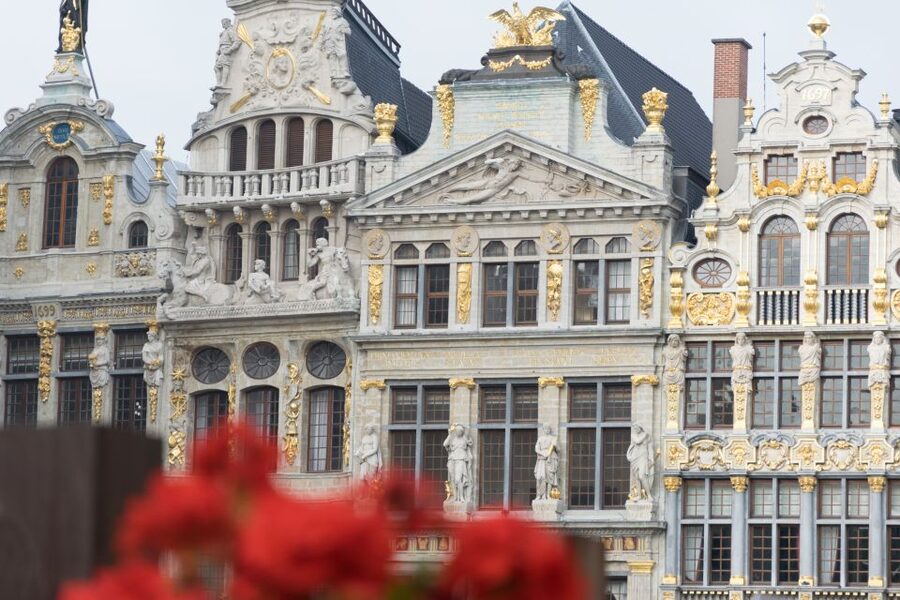
Brussels makes more sense when you see its Lower City and Upper City as two parts of one story. This private walking tour links Grand Place, Manneken Pis, Saint-Catherine, the Royal Galleries, the cathedral, the royal park, and the Sablon, giving you a useful first look at the Belgian capital.
I like the way the route mixes famous sights with less obvious urban details, such as Saint-Géry island and the old Senne river setting. I also like the flexible format: you can ask for an entertaining, academic, or professional approach, and guides such as Emil and Mr. Boeykens have been praised for keeping the history clear and the group engaged.
The main consideration is the cost. At $353 per group, the tour can be good value for a larger party, but it is a serious outlay for one or two people. Museum tickets, food, drinks, and transport are extra, so plan the final price before booking.
Key points to know before you book
- Two city levels in three hours: The route explains Brussels through its Lower City streets and Upper City monuments rather than treating the center as a list of isolated sights.
- Grand Place is both the start and the anchor: You return to this central square before heading uphill, making it easier to understand the city’s layout.
- A private guide can adjust the tone: Ask for an entertaining, academic, or professional style, depending on your group.
- The museum choice affects the pace: You may visit the Musical Instruments Museum or pass by the Magritte Museum and Palace of Fine Arts.
- Hotel pickup is possible: Transport itself is not included, so clarify how pickup and the walking route will work for your group.
- Language choice is unusually broad: Guides are available in Spanish, Dutch, English, French, German, Italian, Russian, and Portuguese.
Starting at Grand Place, Brussels’ grand public room
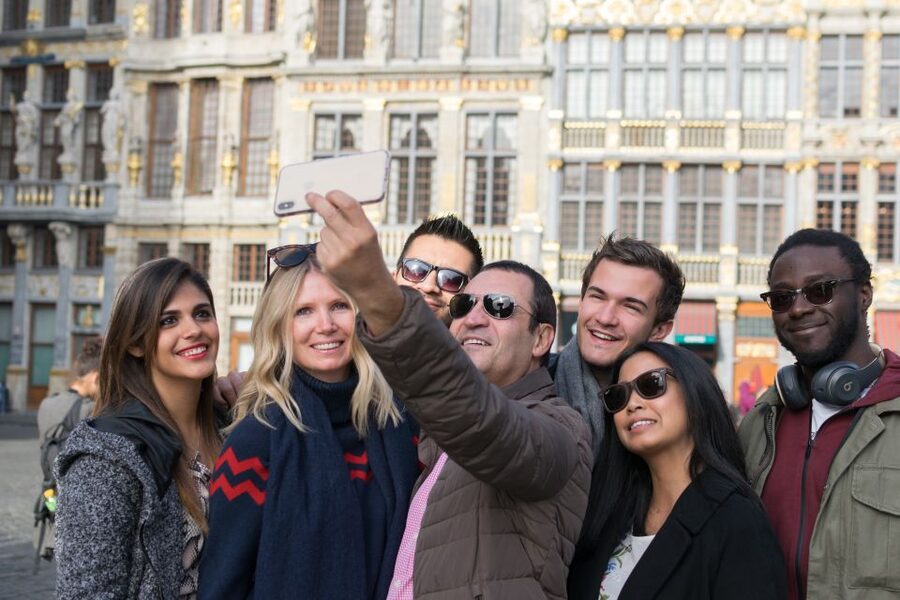
The tour begins at Grand Place, the natural stage of central Brussels. This is the right place to begin because the square helps you understand the city’s scale, political life, and architectural character before the route spreads into surrounding streets.
You will not simply stop for a photograph and move on. Your guide can use Grand Place to explain how the Lower City developed and how the historic center connects to the higher districts. If you have just arrived in Brussels, this orientation is useful. You get a mental map instead of a blur of ornate façades.
From here, the route heads to Manneken Pis. The small bronze figure is one of Brussels’ best-known symbols, and its modest size often surprises people who expect a grand monument. The stop works well as a quick piece of local character, especially when your guide explains why such a small sculpture became so closely linked with the city.
You should keep your expectations sensible. Manneken Pis is a short stop, not a major museum visit. Its value comes from the story and the contrast between its fame and its tiny scale.
A few more Brussels half-days to weigh up
- Brussels: Atomium Entry Ticket with Design Museum Ticket
★ 4.4 · 9,254 reviews - From Brussels: Guided Day Trip to Bruges and Ghent
★ 4.6 · 8,353 reviews - From Brussels: Bruges & Ghent Day Tour – 2 Fairytale Cities
★ 4.7 · 8,242 reviews
Saint-Géry and the old Senne setting
The walk continues toward Saint-Géry island, once the largest island in the Senne river. This part of the route gives the tour a useful change of pace. Grand Place presents the official, ceremonial Brussels. Saint-Géry points toward the city’s older physical setting and the role of the river in its development.
This is one of the details I especially like. A city tour can easily become a parade of buildings, but the reference to the former island helps you think about how Brussels grew before modern streets and squares shaped the center.
The experience remains a walking tour, so comfortable shoes matter. The published duration is three hours, and the route covers a good number of stops. You will get more from it if you treat the walk as an introduction to the city rather than trying to inspect every façade along the way.
Saint-Catherine, De Brouckère, and Monnaie
Next comes Saint-Catherine square, followed by De Brouckère and Monnaie squares. These spaces show how the Lower City moves from older quarters into broader public and cultural areas.
Saint-Catherine adds another layer to the route. After the compact feel of Manneken Pis and Saint-Géry, the square gives your guide room to explain how different parts of Brussels meet. De Brouckère and Monnaie then continue that movement through important urban spaces.
The route is not designed as a specialist architecture seminar, but you can ask for one. Art Nouveau is one of the subjects included in the tour’s themes, along with Belgian beer and chocolate. If architecture matters to you, say so early. The itinerary does not promise a dedicated Art Nouveau building tour, so your guide’s emphasis can make a real difference.
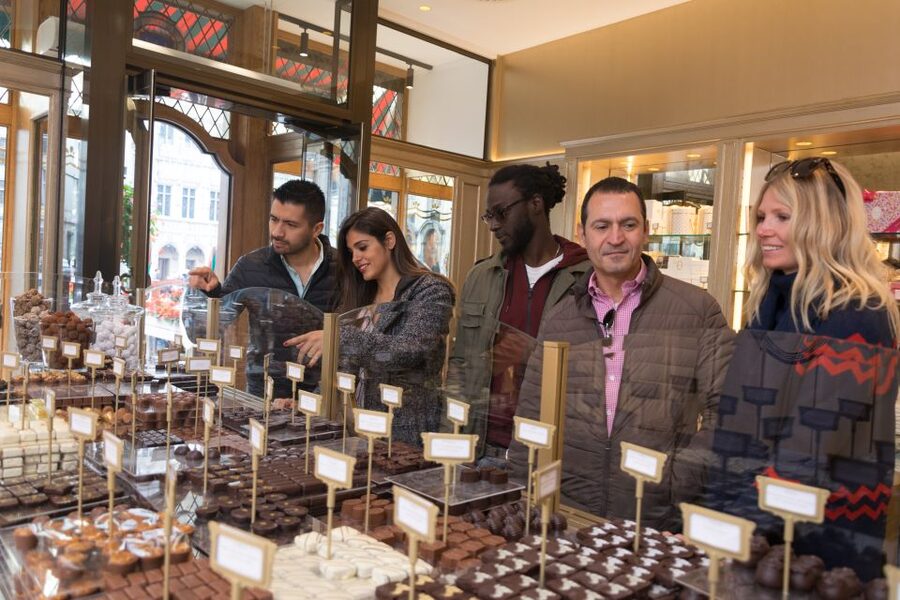
The same applies to food and drink. Belgian beer and chocolate are part of the cultural discussion, but tastings, meals, and drinks are not included. You should see this as a chance to gather recommendations and context, then choose your own café, shop, or tasting stop later.
The federal opera house and the Royal Galleries
The Lower City section passes the federal opera house of Belgium before reaching the Saint-Hubert Royal Galleries. The opera house brings the performing arts into the route, while the galleries shift the mood toward elegant covered shopping arcades.
The Royal Galleries are particularly practical as a stop. They offer shelter if the weather turns poor, and they make a pleasant place to continue looking around after the guided portion. The arcades are also a good reminder that Brussels is not only about medieval-looking squares. Its identity includes shopping, culture, public performance, and formal urban design.
At this point, the first section has covered a lot of ground. If your group includes children, older relatives, or anyone who walks slowly, tell the guide at the start. The experience is listed as wheelchair accessible, but a route through historic streets and several city districts still deserves a conversation about pace and comfort.
Same city, a completely different way to spend a day:
- Choco-Story Brussels: Chocolate Museum Entrance with Tasting
★ 4.3 · 4,883 reviews - Bruges and Ghent – Belgium’s Fairytale Cities – from Brussels
★ 4.0 · 4,809 reviews - Brussels: Hop-On Hop-Off Bus Tour
★ 4.0 · 4,016 reviews - Brussels: Guided Walking Tour
★ 4.6 · 3,560 reviews
Returning to Grand Place and climbing to the Upper City
The Upper City section starts from Grand Place again. That repeat is helpful, not wasteful. You now approach the center from a new direction and begin climbing toward the cathedral, making the difference between the two city levels easier to grasp.
The Cathedral of St. Michael and St. Gudula is the first major Upper City stop. You can go inside to see the stained-glass windows, which gives the tour a quiet interior moment after the open squares and busy streets.
This is also where timing matters. Three hours is enough for an overview, but not for a long visit at every stop. If you want time inside the cathedral, a museum visit, and a relaxed look at the Sablon, tell your guide which matters most. A private tour is most useful when you make those choices in advance.
The royal district, park, and palace
From the cathedral, the route continues toward Place des Palais, the royal park, and the palace. This section shifts from religious architecture to the formal heart of Belgium’s national life.
You may appreciate the contrast. The Lower City route focuses on squares, former river geography, shopping arcades, and public entertainment. The Upper City adds the cathedral, royal surroundings, and major cultural institutions. Together, the two sections give you a broad first picture of Brussels without requiring separate tours.
The royal park also creates a little breathing room in the schedule. You are still in the center, but the setting is more open than the compact streets around Grand Place. Your guide can connect the public spaces, palace area, and cultural buildings in a way that is harder to grasp from a map alone.
Choosing between music, Magritte, and fine arts
The itinerary gives you a choice in the cultural district. You may visit the Musical Instruments Museum, or pass by the Magritte Museum and the Palace of Fine Arts before continuing to the Sablon.
That choice is important because museum tickets are not included. If you enter the Musical Instruments Museum, you will need to pay separately, and the visit will use part of your three-hour schedule. If you prefer a wider walking tour, passing the Magritte Museum and Palace of Fine Arts lets you keep moving toward the Sablon.
I would decide based on your larger Brussels plans. Choose the Musical Instruments Museum if you want an indoor cultural stop and are willing to shorten the walking portion. Choose the pass-by option if this tour is your city orientation and you plan to return to a museum later.
The route also gives you a useful introduction to Brussels’ cultural life without forcing you to buy several admissions. That keeps the basic tour flexible, although it means the final experience depends partly on the option you select.
Finishing at Petit Sablon and Grand Sablon
The walk ends around Petit Sablon and Grand Sablon. These squares provide a fitting finish because they bring together architecture, public space, and the city’s upper district character.
Petit Sablon gives the route a composed final stop, while Grand Sablon completes the movement from the central Lower City toward the Upper City. You can use this area as a base for your own follow-up wandering after the tour, though meals and drinks are not part of the package.
Ending in the Sablon also makes practical sense for first-time visitors. By this stage, you have seen the main center, the cathedral, the royal area, and several cultural landmarks. You can ask your guide where to continue, but keep in mind that recommendations are not the same as included tastings or admissions.
How the private format changes the experience
The private format is the strongest reason to book this tour instead of a standard group walk. Your guide can adjust the tone to suit your party, with options described as entertaining, academic, or professional. That matters if one person wants architecture, another wants politics, and someone else mainly wants Belgian beer and chocolate.
The language list is also generous: Spanish, Dutch, English, French, German, Italian, Russian, and Portuguese. You should choose the language that lets your group ask questions easily. The tour is listed as private, though the booking information also says tours are limited to 25 participants, while the quoted price covers a group of up to 20. Because those figures differ, confirm the exact group size and rate for your booking.
A private group is especially useful for families, colleagues, and friends who want to keep a shared pace. It is less compelling for a solo visitor or couple unless you place a high value on personal attention and flexible explanations.
The guides have received strong marks for their manner as well as their content. Emil is specifically praised for explaining the city’s different periods in a balanced way. Mr. Boeykens is described as friendly, informative, and able to keep people interested despite cold weather. Those details point to a guide-led experience that depends heavily on the individual guide, so it is worth stating your interests clearly.
Price, timing, and what you really receive
The listed price is $353 per group up to 20 people. For a full group, that works out to a modest per-person cost for a three-hour private guide. For two people, the same price is much harder to justify unless you strongly prefer privacy or need a particular language and custom focus.
The professional guide is included. Transport, museum admissions, food, and drinks are not. Hotel pickup is possible from your Brussels hotel, but that does not mean a vehicle is provided. Since transport is excluded, ask how pickup affects the meeting point and walking route before you book.
The activity lasts three hours, with available starting times shown during booking. The description refers to continuing in the afternoon for the Upper City, so confirm the precise timing if you are arranging other plans around the tour.
You can cancel up to 24 hours before the start for a full refund, and the reserve-now, pay-later option keeps your plans flexible. Availability can remain open until two hours before the start, but popular times may fill earlier. I would not wait if you need a certain language, hotel pickup, or a particular guide style.
Who will get the most from this Brussels tour
I would recommend this for a first visit when you want a structured introduction before exploring alone. The two-part layout is useful because it explains how the city’s center fits together, while the private format lets you ask about the subjects that interest you most.
It suits families and mixed-age groups better than a rigid public tour because the route can be adjusted. It also fits business groups or academic parties that want a professional or more detailed presentation.
It may be less suitable if you want long museum visits, a dedicated chocolate tasting, a Belgian beer crawl, or an in-depth Art Nouveau study. Those subjects are available as discussion themes, but the basic price does not include tastings, drinks, or museum tickets.
The route is listed as wheelchair accessible, which is important information for many visitors. Still, ask about the exact route, pace, and any preferred stops when booking, especially if your group needs extra time at the cathedral or museums.
My verdict: a useful private introduction with a high group-value price
Book this tour if you are traveling with a sizable group, want hotel pickup, need one of the eight listed languages, or prefer a guide who can shape the explanation around your interests. The mix of Grand Place, Saint-Géry, the cathedral, royal district, museums, and Sablon gives you a strong overview in a short time.
For a couple or solo visitor, compare the cost with a regular walking tour before committing. The private setting is the real benefit, not included entry or food. If you want personal guidance and a flexible route, the price may be fair. If you mainly want to see Brussels cheaply, you can likely get more value elsewhere and spend your money on a museum, beer, or chocolate stop afterward.
FAQ
How long does the Brussels private tour last?
The tour lasts three hours.
What areas of Brussels does the tour cover?
It covers the Lower City and Upper City, including Grand Place, Manneken Pis, Saint-Géry island, Saint-Catherine square, De Brouckère, Monnaie, the federal opera house, the Royal Galleries, the Cathedral of St. Michael and St. Gudula, Place des Palais, the royal park and palace, and the Petit Sablon and Grand Sablon.
Is the tour private?
Yes. It is offered as a private group experience.
How many people can join?
The listed price is for a group of up to 20 people. The additional information says tours are limited to 25 participants per group, so confirm the exact limit and price for your booking.
Can the tour start at my hotel?
Pickup is possible from your Brussels hotel. Transport is not included, so confirm the pickup arrangements when booking.
Are museum tickets included?
No. Tickets to museums are not included.
Are food and drinks included?
No. Meals and drinks are not included.
Which languages are available?
Guides are available in Spanish, Dutch, English, French, German, Italian, Russian, and Portuguese.
Is the tour wheelchair accessible?
Yes, the activity is listed as wheelchair accessible. You can also discuss your group’s needs and preferred pace because the itinerary can be arranged to suit your preferences.
Just added around Brussels
- Private Tour – Bruges and Ghent, our fairytale cities★ 5.0 · 3 reviews
- Bruxelles: Photoshoot Experience★ 4.4 · 3 reviews
- Private Day Trip from Brussels to Bruges★ 4.5 · 3 reviews
- Leuven: City Walk with Audio Guide in 7 Languages on your Phone★ 3.0 · 3 reviews
- Private Arrival Transfer from Brussels Airport to Bruges with Business car★ 5.0 · 3 reviews
- Brussels: Express Walk with a Local in 60 minutes★ 5.0 · 3 reviews
- 2 Hour Beer Tasting with Local Beer Sommelier in Brussels★ 5.0 · 3 reviews
- Floating in the clouds★ 5.0 · 3 reviews
Brussels Tours, compared.
Atomium Entry Ticket with Design Museum Ticket
Read our review →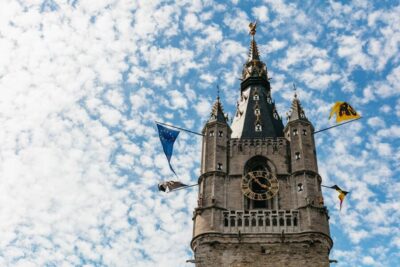
From Brussels: Guided Day Trip to Bruges and Ghent
Read our review →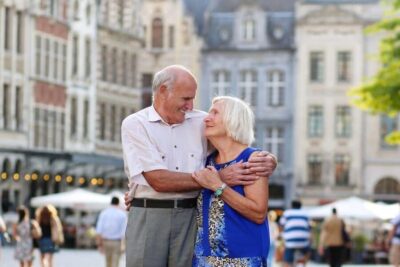
From Brussels: Bruges & Ghent Day Tour – 2 Fairytale Cities
Read our review →
Choco-Story Brussels: Chocolate Museum Entrance with Tasting
Read our review →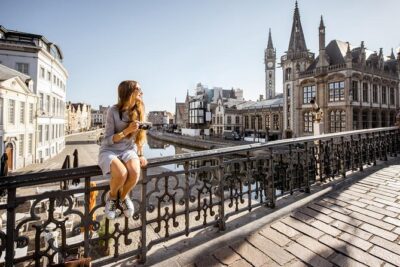
Bruges and Ghent – Belgium’s Fairytale Cities – from Brussels
Read our review →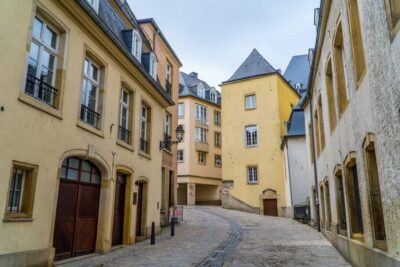
From Brussels: Luxembourg Tour with Dinant Visit
Read our review →
Hungry Mary’s Famous Beer and Chocolate Tour in Brussels
Read our review →Browse the lists this tour appears in