
Reviewed · GHENT TOURS
Small Group Liège to Aachen to Maastricht Border Crossing Tour
Liège-Guillemins station, with its huge steel-and-glass canopy by Santiago Calatrava, is an unusual opening act for a day trip. From there, you cross into Germany and the Netherlands, visit Aachen Cathedral, stroll old Maastricht, and eat in whichever country you choose at the Three-Country Point. I like the three-country format and the small group, which keeps a long day more personal.
I also like the balance between planned sights and open walking time. Joris, the guide, is known for an easygoing manner, local suggestions, coffee for the early start, and a good feel for when to talk and when to let you rest. The main drawback is the schedule: 11 to 13 hours is a very long day, and the $480.71 price is a serious outlay if you only want a quick look at one city.
Key points at a glance
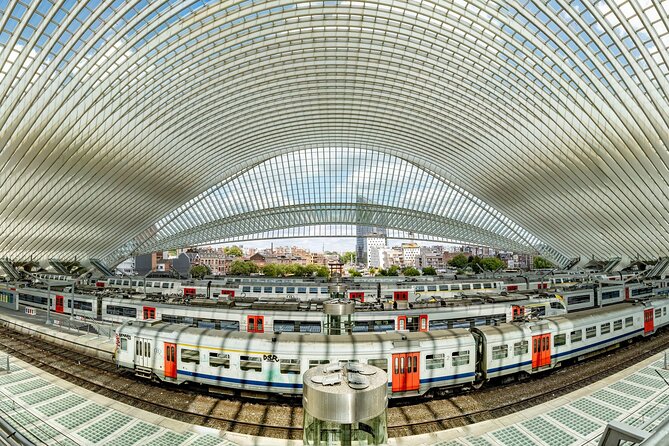
- Liège-Guillemins opens the day with bold modern design, a sharp contrast to the old centers visited later.
- The Three-Country Point lets you have lunch in Belgium, Germany, or the Netherlands, a fun choice that gives the border crossing a real sense of place.
- Aachen Cathedral brings major European history into a compact city stop, with about 30 minutes at the cathedral.
- Maastricht supplies the most relaxed walking time, with the Sint Servaas Bridge, old streets, shops, cafés, and the Basilica of Saint Servatius.
- Joris leads a maximum of eight people, making it easier to ask questions and adjust the pace.
- Hotel pickup and return in Ghent simplify a complicated cross-border day, though the long transport times are part of the trade-off.
Why this border-crossing day is different
Many European day trips focus on one famous city. This one is about changing countries and moods. You begin in Liège, Belgium, move to the Three-Country Point near the borders of Belgium, Germany, and the Netherlands, then continue to Aachen in Germany and Maastricht in the Netherlands.
That gives you a useful snapshot of a corner of Europe where national borders are close but local identities remain distinct. Liège feels Belgian and industrial with a strong contemporary edge. Aachen has a German city-center feel shaped by its cathedral and long political past. Maastricht is Dutch, compact, polished, and easy to explore on foot.
The trip begins around 8:00 a.m. with transport from your Ghent hotel to Liège-Guillemins station. The ride from Ghent to Liège takes about two hours, and the journey back from Maastricht to Ghent takes about two hours. Those transfers are included in the total duration, but they still make this a demanding day.
The group is limited to eight people. That matters here. With three cities, several border crossings, meal stops, and a full return to Ghent, a large coach group could feel rigid. A small group gives Joris more room to answer questions, point out local places, and match the group’s energy.
A few more Ghent half-days to weigh up
- Ghent: 50-Minute Medieval Center Guided Boat Trip
★ 4.5 · 5,637 reviews - Historical Walking Tour: Legends of Gent
★ 5.0 · 1,761 reviews - Ghent: 40 Minute Medieval Center Guided Boat Tour
★ 4.4 · 884 reviews
Liège-Guillemins and Parc de la Boverie
Liège-Guillemins is more than a place to arrive and leave. Calatrava’s design gives the station a wide, airy feeling, with a sweeping canopy of steel and glass over the platforms. Natural light moves through the structure, and the curved lines create a striking first impression.
If you enjoy modern architecture, this is one of the strongest photo stops of the day. The station also helps frame Liège in a useful way. The city is not simply an old Belgian town with medieval buildings. It has a modern transport hub that looks almost futuristic beside its older surroundings.
You have about 30 minutes at the station itself after the longer transfer from Ghent. That is enough for a look around and some photographs, though not enough for a detailed architectural study. The schedule treats the station as an introduction rather than a full museum visit.
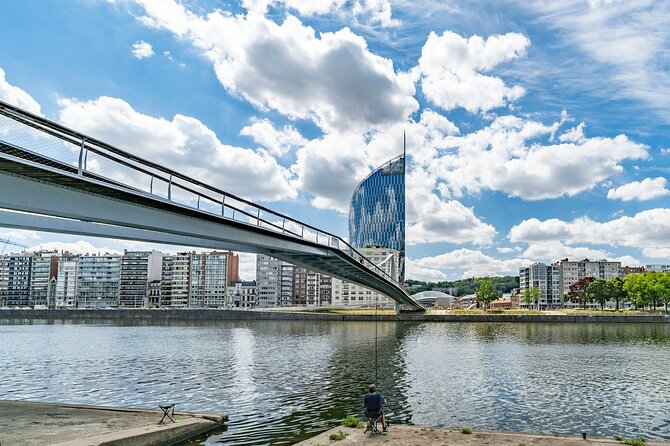
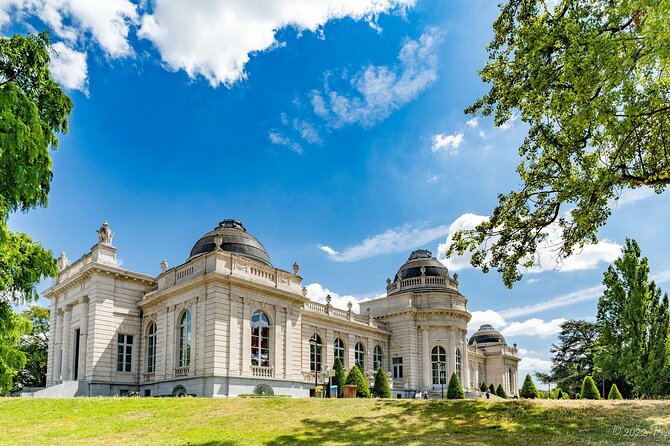
Next comes Parc de la Boverie, a green stretch beside the Meuse River. You get about 30 minutes to walk through the park, take in the river setting, and see the Boverie Palace. The palace houses an art museum with classical and contemporary works, but the tour does not include a museum visit or an admission ticket.
This stop works as a change of pace after the station and transport. You can stroll among lawns, statues, and water features rather than moving from one historic building to another. Still, half an hour passes quickly, so you should expect a brief walk instead of a slow park visit or time inside the museum.
The Three-Country Point and lunch across a real border
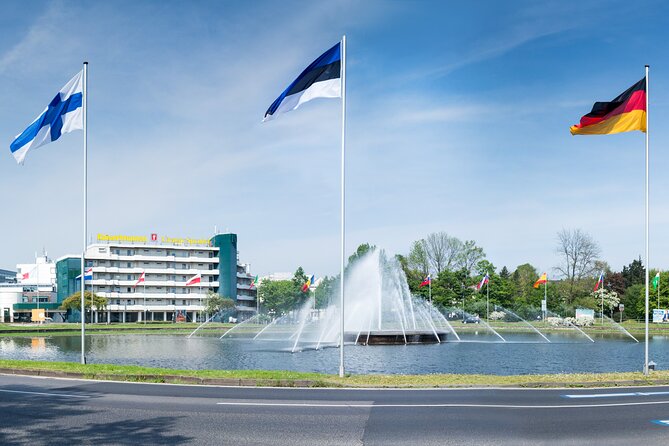
The transport to Drielandenpunt, or the Three-Country Point, takes about an hour. The stop itself lasts another hour, including lunch. This is the most distinctive part of the route because the border is not just a line on a map. You can look across the meeting point of Belgium, Germany, and the Netherlands and choose where to eat.
That lunch choice adds a playful touch to the day. You might decide based on the food, the setting, or simply the satisfaction of saying you had lunch in a different country. The provided plan does not specify a restaurant or fixed menu, so the exact meal and cost arrangements should be confirmed when you book.
The stop is also a good place to pause and take stock. By this point, you have already crossed from Ghent to Liège and are moving toward two other countries. The view makes the geography easy to understand, even if you are not interested in borders as a subject.
The practical limit is time. An hour gives you room for lunch and a look around, but not a long walk in the surrounding area. Keep your meal efficient if you want time for photographs and the border marker. Comfortable shoes will help, since the day includes repeated walks and city-center streets.
Aachen Cathedral and the compact German city center
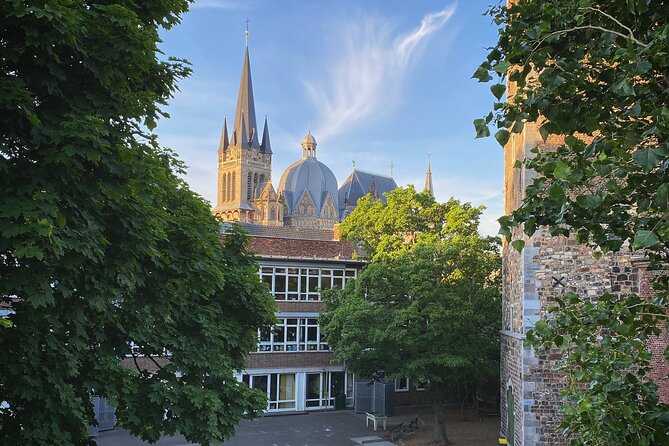
After about 30 minutes of transport, you reach Aachen. The city-center walk lasts roughly 30 minutes, followed by another 30 minutes at Aachen Cathedral. This is a short introduction, not a complete Aachen visit.
Aachen has a pleasant small-city scale. Its center brings together historic buildings, cafés, shops, markets, and academic life without feeling sprawling. You can get a feel for the city quickly, especially with Joris pointing out the key streets and local details.
The cathedral is the main reason Aachen earns a place on this route. Known locally as the Aachener Dom, it is one of Europe’s major religious and architectural sights. The building connects Romanesque and Gothic elements, and the Palatine Chapel is a major part of its importance. The cathedral is also a UNESCO World Heritage site.
The allotted 30 minutes is enough to see the exterior and, depending on the day’s arrangements, look inside. Admission is listed as free for the stop, but the schedule does not promise a guided interior tour or a particular amount of time inside. If the cathedral is your chief reason for booking, ask Joris how the visit is handled on your date.
This short stop is both a strength and a limitation. You get a valuable introduction to a major monument without spending the whole day in Aachen. On the other hand, anyone wanting a detailed architectural visit, museum time, or a leisurely German meal will find the schedule tight.
Same city, a completely different way to spend a day:
- Evening Tour of the Dark Side of Gent
★ 5.0 · 646 reviews - Ghent Bike Tour Off-the-beaten-track
★ 5.0 · 505 reviews - Ghent: 40-Minute Historical Boat Tour of City Center
★ 4.3 · 430 reviews - Ghent: Guided Urban Bike Tour
★ 4.9 · 297 reviews
Maastricht, the Sint Servaas Bridge, and Saint Servatius
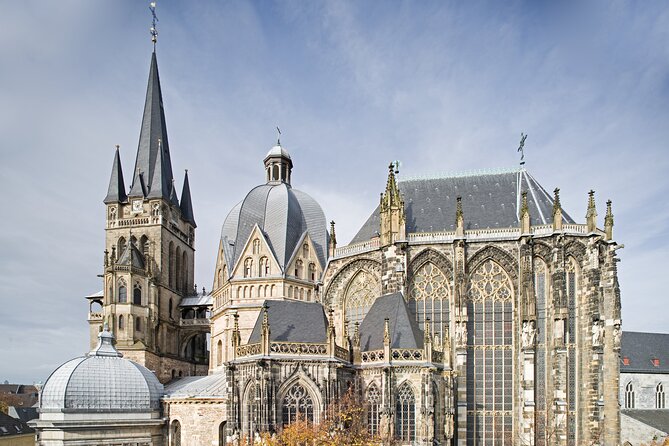
The trip from Aachen to Maastricht takes about 40 minutes. Maastricht then receives the largest portion of city walking time, with a stroll through the center, a visit to the Basilica of Saint Servatius, and dinner.
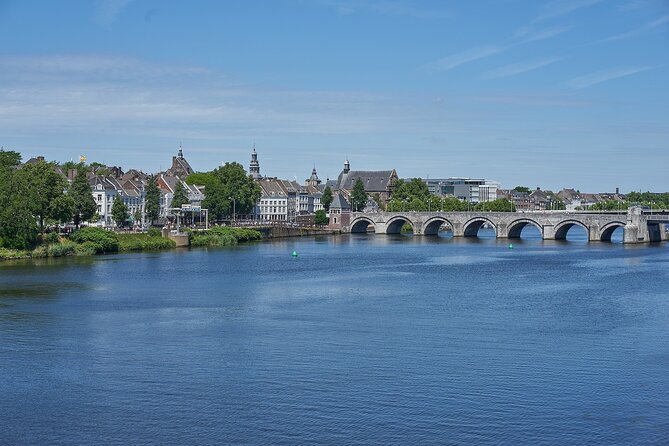
The Sint Servaas Bridge is a natural starting point. The stone bridge crosses the Maas River and links the old town with the newer parts of the city. Its arches and river views provide one of the day’s best photo opportunities, and the bridge gives you an immediate sense of Maastricht’s age and layout.
From there, you walk through the center for about 30 minutes. Maastricht is well suited to this kind of short visit. Cobblestone streets, cafés, boutiques, markets, and old buildings sit close together, so you can see plenty without long transfers between sights.
The Basilica of Saint Servatius receives its own 30-minute stop. Its centuries-old architecture and religious role make it one of Maastricht’s key landmarks. As with the cathedral in Aachen, the published details do not promise a full interior tour, so treat this as a focused visit rather than enough time to study every chapel, artwork, or architectural detail.
Maastricht is also the best place on the route for food. Local specialties include Limburgse vlaai, a fruit-filled pastry, and zoervleis, a sweet-and-sour stew. Regional beers and wines are also part of the local food scene. Dinner lasts about an hour, giving you more breathing room than the lunch stop at the border.
The annual Christmas Market is held near the cathedral, but the tour does not state that the market operates on your date. If you book during the holiday period, it may add a festive layer to the Maastricht stop, but you should not plan the trip around it without checking dates.
What the small group adds
A maximum of eight people is a major advantage on a route this busy. You can usually ask Joris about the cities as you go, and a smaller party makes it easier to stay together during short walks and border transfers.
Joris is the kind of guide who shapes the tone of the day. He brings local suggestions, points out shops and less obvious places, and adjusts his approach to the group. If everyone is talkative, he keeps the conversation going. If people are tired after a long transfer, he gives them quiet time.
The early start is easier with coffee, and Joris is described as having coffee, snacks, and meals available along the way. Still, do not treat that as a substitute for checking what is included in the price. Lunch at the Three-Country Point and dinner in Maastricht are part of the plan, but the exact restaurants and payment details are not specified.
Because the tour is offered in English, you can expect the guiding to be conducted in English. A mobile ticket is provided, and live pickup location details are shared through WhatsApp. You will need a phone able to receive those updates.
Is $480.71 a fair price?
At $480.71 per person, this is not a budget day trip. The value comes from convenience and coverage rather than from a large number of paid admissions. You receive hotel pickup and return in Ghent, transport between four areas, an English-speaking guide, a small group, and a carefully linked route through three countries.
The tour also saves you from piecing together a complicated day with separate train and local transport connections. Liège, the Three-Country Point, Aachen, and Maastricht are close on a map, but arranging them in one day would require careful timing. A missed connection or delayed transfer could quickly spoil the plan.
The price is harder to justify if you are already staying near Liège, Aachen, or Maastricht, or if you prefer to spend a whole day in one place. It is also a poor match for anyone who dislikes long transport periods. About four hours of the day are assigned to the major transfers from Ghent, before counting shorter rides between stops.
I would view this as a premium convenience tour. You are paying for a local escort, door-to-door handling, and the chance to see three distinct places without changing hotels or managing several transport systems yourself.
Who will enjoy this tour most?
I would recommend it to you if you want variety and like the idea of collecting several countries in one day. It suits first-time visitors to this part of Europe, couples, families, and small groups who value a guide and do not want to plan every connection themselves.
It is also a good fit for people who enjoy architecture. Calatrava’s station, the Boverie Palace, Aachen Cathedral, the Sint Servaas Bridge, and the Basilica of Saint Servatius give the day a strong visual and historical thread.
Families can benefit from the changing scenery and short, varied stops. The trip is listed as suitable for everyone, and most people can participate. Still, the long duration and repeated walking mean you should consider your group’s stamina before booking.
I would hesitate if your priority is a slow museum day, long meals, or extensive time inside any one monument. The stops are measured in 30-minute blocks, with one hour for the border point and one hour for dinner. You see a lot, but you do not linger everywhere.
Free cancellation is available if you cancel at least 24 hours before the start time. Changes or cancellations inside that window are not accepted for a refund, and the tour requires a minimum number of participants. Pickup begins at 8:00 a.m., with the live location shared through WhatsApp.
Should you book the Liège, Aachen, and Maastricht tour?
Book it if the appeal is the route itself: three countries, three city centers, one border point, and a guide who handles the transport. I especially like the contrast between Liège’s modern station, Aachen’s cathedral, and Maastricht’s bridges, churches, cafés, and food.
Skip it if $480.71 feels too high for a day with substantial transport, or if you want a deep visit to Aachen Cathedral or Maastricht. For the right person, this is an efficient and memorable way to sample a border region. Just start early, wear comfortable shoes, keep your phone ready for WhatsApp pickup updates, and expect a full day rather than a relaxed outing.
FAQ
Where does the tour start?
The tour starts with pickup from your hotel in Ghent at approximately 8:00 a.m. Live location details are shared through WhatsApp during pickup.
How long does the experience last?
The total duration is approximately 11 to 13 hours. Travel time is included, including the roughly two-hour journey from Ghent to Liège and the roughly two-hour return from Maastricht to Ghent.
How many people can join the tour?
The group has a maximum of eight participants.
Which languages are offered?
The tour is offered in English.
Does the tour include lunch and dinner?
The itinerary includes lunch at the Three-Country Point and dinner in Maastricht. You can choose which of the three countries to use for lunch. Specific restaurant and meal-inclusion details are not provided.
What is the cancellation policy?
You can cancel for a full refund up to 24 hours before the local start time. Cancellations or changes made less than 24 hours before departure are not refunded or accepted. If the minimum group size is not met and the tour is canceled, you are offered another date or experience, or a full refund.
Just added around Ghent
- Ghent Running and Sightseeing Tour★ 5.0 · 3 reviews
- Ghent Walking Tour – City Highlights and Beyond Tradition★ 4.5 · 3 reviews
- Ghent: Walking Tour from Friday Market to the Cathedral★ 4.8 · 3 reviews
- Ghent: City Walk with Audio Guide in 7 Languages on your Phone★ 4.5 · 3 reviews
- Children’s escape game in the city of Ghent Marsupilami★ 5.0 · 3 reviews
- Discover Ghent while playing! Escape game – The Walter case★ 4.5 · 4 reviews
- Discover Ghent while playing! Escape game – The alchemist★ 4.0 · 4 reviews
- e-Scavenger hunt Mons: Explore the city at your own pace★ 5.0 · 4 reviews
Ghent Tours, compared.
Browse the lists this tour appears in