
Reviewed · BRUSSELS TOURS
Flanders Fields Remembrance Tour from Brussels
The most moving part of this full-day trip comes late, at Ypres’ Menin Gate, where the Last Post ceremony honors Commonwealth soldiers who never came home. By then, you have crossed former battlefields, stood among thousands of graves, and seen the bunkers linked with John McCrae’s In Flanders Fields. The ceremony gives the long day a quiet, human ending.
I like the way the route mixes German and Commonwealth cemeteries, rather than telling the story from only one side. I also like having guides such as Diederik, Dietrich, and Stefan explain the battles and places as you go. The main drawback is simple: this is a very long day, usually about 13 hours, with plenty of coach time and several quick stops.
Key points to know before booking
- The Last Post at Menin Gate is the emotional finish, held at 8 pm and lasting about 30 minutes on the schedule.
- Vladslo German War Cemetery offers a different, deeply affecting perspective through Käthe Kollwitz’s Grieving Parents.
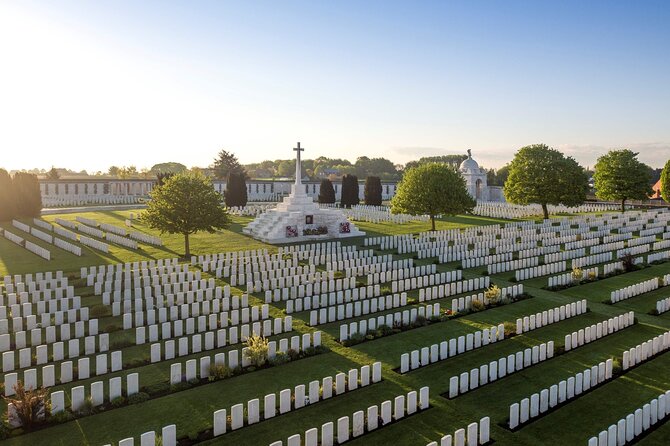
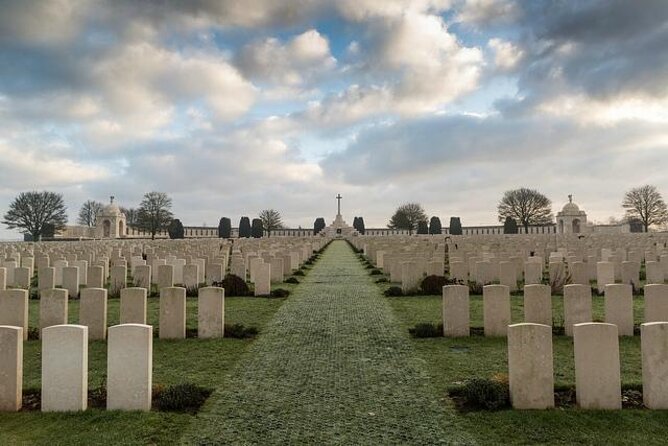
- Tyne Cot Cemetery is the largest Commonwealth war cemetery in the world, with about 35,000 graves and names recorded on its walls.
- The route covers many major Ypres Salient sites, including Passchendaele, Essex Farm, Diksmuide, and Hill 60.
- The coach leaves Brussels at 9:15 am and returns to Brussels-Central late in the evening.
- The price is about $113.72 per person, with transport and a professional multilingual guide included, but not lunch.
Why this is a pilgrimage, not a casual day trip
Flanders Fields is not a sightseeing route in the usual sense. You are visiting cemeteries, memorials, former field hospitals, and places shaped by industrial warfare. The mood is quiet and reflective, and the guide’s job is to connect scattered sites into one understandable story.
That matters because the battlefields are spread across a wide area. Without context, a cemetery can seem like a beautiful but confusing patch of grass and stone. With a good guide, the distances begin to make sense. You learn how the Western Front developed, why Ypres mattered, and how battles such as Passchendaele left a mark far beyond their dates.
The best guides on this route are its great strength. Diederik, also spelled Dietrich in some bookings, is praised for turning military facts into clear stories. Stefan is also noted for strong teaching skills and for setting expectations well. The guide you receive may vary, but the experience depends heavily on who is leading the day.
I like the description offered by one guide: this is more of a pilgrimage than a tour. That is the right mindset. You should come ready to listen, walk, remember, and accept that the day will not feel light or easy.
More Flanders Fields memorial tours:
- Private World War I Battlefield Tour from Brussels to Flanders
★ 5.0 · 8 reviews - Historic Ypres WWI Sites – Tour from Brussels
★ 5.0 · 6 reviews - Flanders World War I Battlefields Private Tour from Brussels
★ 4.5 · 4 reviews
From Brussels to Vladslo German War Cemetery
Meet at Bd de Berlaimont 18 in central Brussels for the 9:15 am departure. There is no hotel pickup, so allow enough time to reach the meeting point. The tour ends at Brussels-Central, at Carr de l’Europe, which is useful if you are staying near the central station or plan to continue by train.
The journey north takes you toward Vladslo, where the first stop sets the tone. The German Military Cemetery is peaceful, restrained, and different in character from the later Commonwealth sites. Its most famous feature is Käthe Kollwitz’s sculpture Grieving Parents.
Kollwitz created the work after losing her son Peter in the war. The kneeling figures do not celebrate victory or military glory. They express the private pain left behind by a single death, which is why the sculpture can feel more personal than a large national monument.
You receive free time to look around, but do not expect a long museum-style visit here. This is a place for quiet attention. Comfortable shoes help, especially if the ground is wet.
Diksmuide and the Brooding Soldier
The coach then continues to Diksmuide, a town associated with Belgium’s part in the Western Front. Here you see the monument known as the Brooding Soldier, dedicated to roughly 2,000 Canadian soldiers who died during the first German gas attack.
The stop adds an important Canadian connection to the day. It also reminds you that chemical warfare changed the nature of combat in 1915. The monument itself is not a large attraction with extensive facilities. Its value comes from the guide’s explanation and from standing at a place tied to a major shift in the war.
This is one reason I would not recommend the trip to someone who wants only grand architecture or long periods in town. Much of the day is about interpretation. You stop, listen, take in the setting, and move on.
The Flanders Fields Museum in Ypres
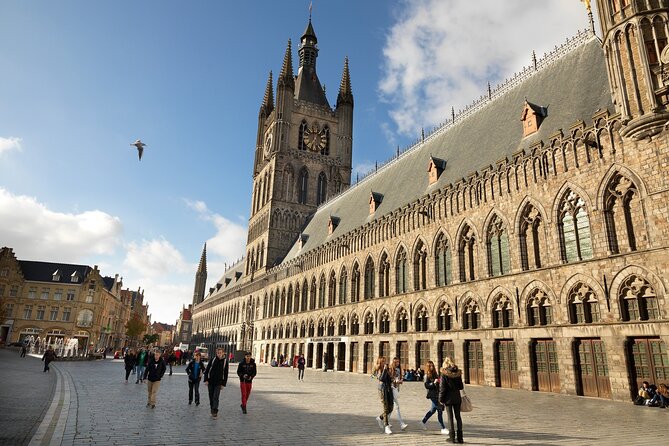
After a short lunch break, the route turns toward the Flanders Fields area and its museum. The schedule lists admission as free, and the guide helps explain the events that led to the First World War and the way the conflict developed.
The museum is one of the most useful parts of the day because it gives structure to what you see outside. The battlefields are now quiet, and the cemeteries are carefully maintained. Inside, the story of occupation, trench warfare, daily hardship, and violent destruction becomes easier to grasp.
You should pay close attention to the time allowed here. The itinerary covers a great deal, and one criticism is that the museum can feel rushed when traffic or extra pickups affect the schedule. If museum displays are your main interest, you may want a separate visit to Ypres on another day.
Still, the museum is a key stop. It helps turn a series of memorials into a connected account of the four-year occupation and the fighting around Ypres. The guides are especially useful here, since they can explain the events in plain language rather than leaving you to piece everything together alone.
A few more Brussels half-days to weigh up
- Brussels: Atomium Entry Ticket with Design Museum Ticket
★ 4.4 · 9,254 reviews - From Brussels: Guided Day Trip to Bruges and Ghent
★ 4.6 · 8,353 reviews - From Brussels: Bruges & Ghent Day Tour – 2 Fairytale Cities
★ 4.7 · 8,242 reviews - Choco-Story Brussels: Chocolate Museum Entrance with Tasting
★ 4.3 · 4,883 reviews
Passchendaele, where a battlefield became a town
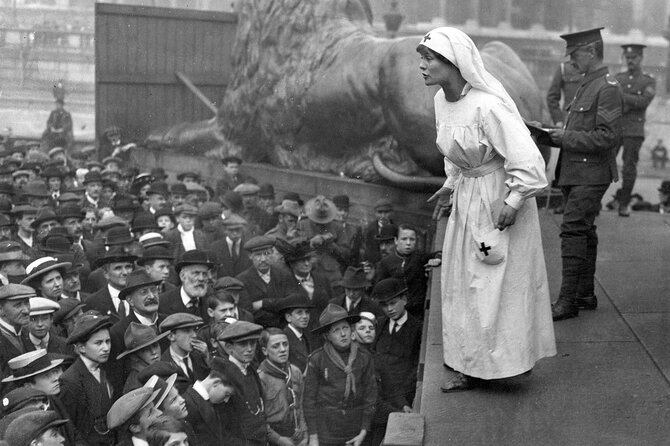
The stop at Passchendaele lasts about 30 minutes. The name is closely tied to one of the war’s bloodiest battles, yet the place you see today is a settled Belgian town rather than an open battlefield frozen in time.
That contrast is the point. The war zone was later rebuilt and reshaped, while the name Passchendaele remained tied to mud, artillery, and enormous casualties. Your guide explains how the battlefield changed into the town around you.
Half an hour is enough for an introduction, not a full study. You will likely spend more time listening and orienting yourself than wandering far. The short stop works well as part of a broad route, but visitors with a strong family connection or specialist interest may want a longer, separate visit.
Tyne Cot and the scale of loss
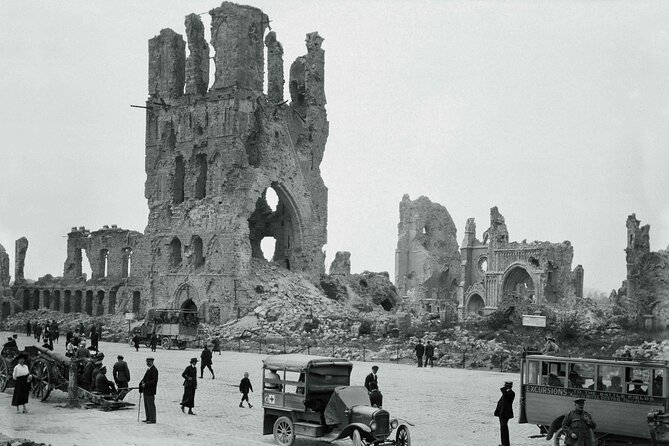
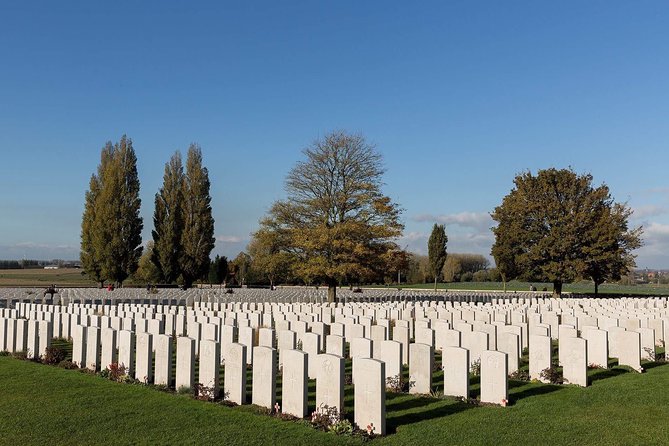
Tyne Cot Commonwealth War Graves Cemetery is one of the most powerful stops. It is described as the largest Commonwealth cemetery in the world, and the scale becomes clear as soon as you enter. Rows of graves cover the grounds, while the memorial walls record the names of soldiers with no known grave.
The cemetery is associated with British, Australian, and Canadian forces. About 35,000 names are connected with the memorial, making this more than a stop for photographs. Give yourself time to read a few names, notice the layout, and let the size of the place register.
The grounds are dignified and carefully kept, but that neatness can create a strange distance from the conditions of the war. The guide helps bridge that gap by explaining how the cemetery relates to the fighting around Passchendaele and the Ypres Salient.
For me, this is one of the strongest reasons to choose the tour. You see several kinds of remembrance in one day: a German cemetery shaped by grief, a Belgian monument, and a vast Commonwealth burial ground. The comparison adds depth without turning the visit into a political argument.
Essex Farm and John McCrae’s poem
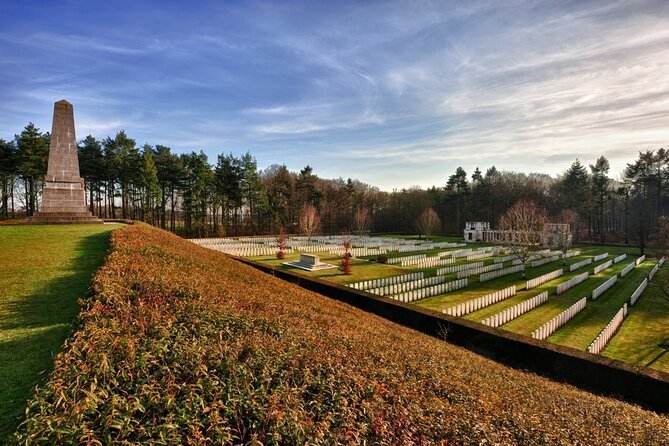
At Essex Farm Cemetery, you visit the dressing station where Dr. John McCrae wrote In Flanders Fields. The stop lasts about 15 minutes and includes the wartime bunkers connected with the field hospital.
The poem is familiar to many people, but seeing the setting gives its words more weight. McCrae wrote amid wounded men and fresh graves, not in a distant study. The bunkers are modest, and the visit is brief, yet the connection between place and poem is strong.
This stop is especially meaningful for Canadians and for anyone who has grown up with Remembrance Day ceremonies. It also gives the day a personal voice after the large scale of Tyne Cot.
Hill 60 and the former front line
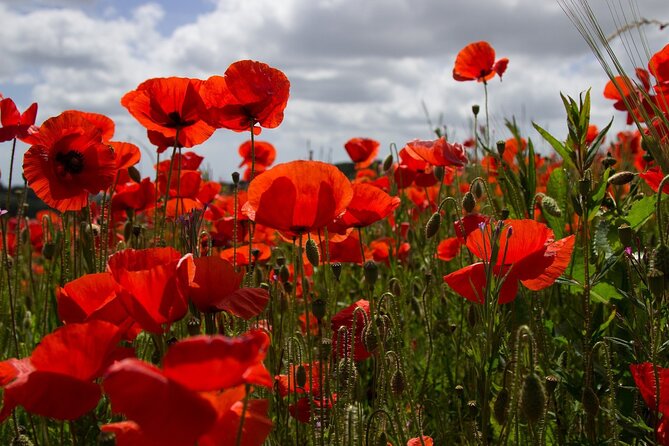
The tour description also includes Hill 60, where you can see strategic tunnels linked with the fighting. This is another reminder that the war was fought below ground as well as across the fields.
Conditions at Hill 60 can vary, and the amount of time available depends on the day’s traffic and schedule. The tour covers many sites before the evening ceremony, so you should expect an overview rather than a slow, detailed exploration of every tunnel and position.
That broad approach is useful if you have limited time in Belgium. It is less suitable if your main goal is to study one battlefield in depth. The route gives you the map in your head, then you can return to the places that matter most to you.
Free time and the Last Post in Ypres
The group reaches Ypres in the late afternoon, giving you time to explore independently and buy dinner at your own expense. The amount of free time can vary, but the tour information says it may range from 45 minutes to three hours depending on the excursion and the day’s timing.
Ypres is a welcome change after the cemeteries and rural memorials. You can walk through the town, find a meal, and prepare for the final ceremony. Bring cash, since it is advised throughout the tour, and do not assume lunch or dinner is covered in the price.
At the pre-arranged time, meet the guide at Menin Gate for the Last Post Ceremony at 8 pm. This daily tribute honors Commonwealth officers and soldiers missing after battle. The ceremony is deliberately simple, which gives it force. There is no need for spectacle. The setting, the names, and the repeated act of remembrance do the work.
The service itself may be shorter than some people expect. One booking describes the formal portion as lasting about seven minutes, while the scheduled time at the site is about 30 minutes. The exact length can vary, and the group may arrive early to secure its place and settle in.
A choir or special musical element may sometimes be present, but it is not something you should count on. What you can count on is a solemn ceremony and a late return to Brussels.
The coach ride, group size, and physical demands
Transport is by air-conditioned tourism coach. The vehicle is comfortable, and luggage can be taken aboard. The maximum group size is listed as 100 people, although the actual number on your date can be smaller.
The route involves repeated boarding, unloading, walking, and waiting. The tour provider recommends a moderate level of fitness and does not recommend the experience for people who have difficulty walking. Wear comfortable shoes and check the forecast the day before. A raincoat, poncho, or umbrella is sensible because the tour runs in ordinary rain, stopping only for extreme weather such as floods or severe storms.
The greatest practical issue is road time. Some departures include a detour to Bruges to collect or return participants, which can add several hours. That arrangement may not happen on every date, but you should ask about it before booking if you dislike long coach journeys.
The late finish is another consideration. The day starts at 9:15 am and may last 11.5 to 13 hours, depending on traffic, pickups, and the timing of the ceremony. Families can manage it, and a 10-year-old and 14-year-old have completed the route, but younger children may find the pace and subject matter demanding.
Is $113.72 good value?
At about $113.72 per person, the price is fair for a full-day excursion that includes transport, a professional multilingual guide, and a wide route through the Ypres Salient. You would cover a lot of ground on your own, and understanding the sites without a car or detailed planning would be difficult.
The value rises if you have limited time in Belgium, care about First World War history, or have a family connection to the region. The guide’s explanations are the part you are really paying for. A strong guide can connect the first gas attack, Passchendaele, the cemeteries, McCrae, and the Menin Gate into one story.
The price does not include lunch. There is a lunch break, and you should budget for food and drinks. Dinner in Ypres is also your responsibility. Cash is recommended, and it is wise to carry a little with you.
Free cancellation is available up to 24 hours before the start time for a full refund. Changes made inside that 24-hour window are not accepted, and the tour requires a minimum number of bookings. If the provider cancels for that reason, you receive another option or a full refund.
Who should book this Flanders Fields tour?
I would choose this trip if you want a guided introduction to the main First World War sites around Ypres and do not have time to arrange separate transport. It is also a strong choice for Canadians, Australians, British visitors, and families tracing relatives who served in the war.
It suits history students, memorial visitors, and anyone who wants more than a quick stop at Menin Gate. The guide-led format is helpful because the places are spread out and their meaning is not always obvious at first glance.
I would hesitate if you want a relaxed day, dislike coach travel, or need a great deal of time at each site. The itinerary is ambitious. Traffic, group pickups, or local events can force changes, and one stop may be shortened or missed if access is blocked.
My verdict on the 13-hour schedule
This is a serious, worthwhile day with a demanding timetable. Its strongest features are the range of memorials, the expert storytelling, Tyne Cot, Vladslo, and the Last Post at Menin Gate. The guides named in the feedback, especially Diederik, Dietrich, and Stefan, are praised for making the military story clear and human.
Book it if you want the big picture and a respectful introduction to Flanders Fields. Skip it if you need a slow, highly focused battlefield visit. For most people with limited time, the long day is justified, but pack for rain, bring food money, wear good shoes, and prepare for a late return.
FAQ
Where does the tour start?
The tour starts at Bd de Berlaimont 18, 1000 Bruxelles, Belgium.
What time does the tour leave Brussels?
The scheduled departure time is 9:15 am.
Where does the tour end?
The tour ends at Brussels-Central, Carr de l’Europe, 1000 Bruxelles, Belgium.
Is hotel pickup included?
No. You must make your own way to the listed central Brussels meeting point.
Is lunch included?
No. Lunch is not included, although the itinerary provides a lunch break.
Is the Last Post Ceremony included?
Yes. The tour includes attendance at the Last Post Ceremony at Menin Gate, scheduled for 8 pm.
Is transportation air-conditioned?
Yes. Transportation is provided in an air-conditioned coach.
What should I bring?
Bring comfortable walking shoes and clothing suitable for the forecast. A raincoat, poncho, or umbrella is advised, and carrying cash is recommended.
Are pets allowed on the coach?
No. Pets are not allowed on board.
Can I cancel for a refund?
Yes. You can cancel at least 24 hours before the start time for a full refund. Cancellations or changes made less than 24 hours before the start time are not accepted for a refund.
Just added around Brussels
- Private Tour – Bruges and Ghent, our fairytale cities★ 5.0 · 3 reviews
- Bruxelles: Photoshoot Experience★ 4.4 · 3 reviews
- Private Day Trip from Brussels to Bruges★ 4.5 · 3 reviews
- Leuven: City Walk with Audio Guide in 7 Languages on your Phone★ 3.0 · 3 reviews
- Private Arrival Transfer from Brussels Airport to Bruges with Business car★ 5.0 · 3 reviews
- Brussels: Express Walk with a Local in 60 minutes★ 5.0 · 3 reviews
- 2 Hour Beer Tasting with Local Beer Sommelier in Brussels★ 5.0 · 3 reviews
- Floating in the clouds★ 5.0 · 3 reviews
Brussels Tours, compared.

Atomium Entry Ticket with Design Museum Ticket
Read our review →
From Brussels: Guided Day Trip to Bruges and Ghent
Read our review →
From Brussels: Bruges & Ghent Day Tour – 2 Fairytale Cities
Read our review →
Choco-Story Brussels: Chocolate Museum Entrance with Tasting
Read our review →
Bruges and Ghent – Belgium’s Fairytale Cities – from Brussels
Read our review →
From Brussels: Luxembourg Tour with Dinant Visit
Read our review →
Hungry Mary’s Famous Beer and Chocolate Tour in Brussels
Read our review →Browse the lists this tour appears in