
Reviewed · BRUSSELS TOURS
Historic Ypres WWI Sites – Tour from Brussels
The most moving part of this long day is the shift between preserved trenches and immaculate cemeteries. Around Ypres, the First World War is not locked away in one museum. It appears in dugouts, memorial walls, reconstructed battle scenes, and the quiet fields around Tyne Cot.
I like the personal format and the historian-led discussion. Your group travels together in an air-conditioned vehicle, and guide István has been praised for shaping the day around a guest’s interests and discussing the political and economic forces behind the war. I also like that lunch, snacks, drinks, museum admissions, and taxes are covered.
The main drawback is the price: $701.35 per person is a serious outlay, even with meals and admissions included. This is best for a small private group that wants a full, guided day, not for someone seeking a quick, inexpensive look at Ypres.
Key points to know before booking
- A full day from Brussels: Allow roughly 7 to 10 hours, with an 8:00 am start.
- Seven major stops: You visit Hooge Crater, Sanctuary Wood, Menin Gate, Ypres, In Flanders Fields Museum, Passchendaele Museum, and Tyne Cot Cemetery.
- Private touring: Only your group takes part, which allows more room for questions and discussion.
- Food is included: Lunch, snacks, and soft drinks are provided. Alcohol is not included.
- A serious history day: The program combines museums with actual trench remains, memorials, and military cemeteries.
- Comfort matters: Bring comfortable hiking shoes and a camera. The minimum age is 16.
Why this Ypres day feels different from a museum visit
Ypres, also written as Ieper, was one of the key locations on the Western Front. The town was heavily damaged during the war and later rebuilt, including its famous Cloth Hall. The surrounding area contains cemeteries, memorials, trench remains, museums, and former battle sites.
That mix gives the tour its shape. You are not spending the whole day indoors, and you are not simply driving past fields while someone lists dates. You move from a private museum with life-size scenes to preserved trench lines, then into the rebuilt center of Ypres and on to larger museums and cemeteries.
I find that order useful. The early stops give you a physical sense of how soldiers lived and fought. The museums then add wider political and military context. By the time you reach Tyne Cot, the names and numbers on the memorial have more weight because you have already seen the cramped conditions and weapons of the war.
This is a private activity, so your group has more freedom to ask questions than it would on a large coach excursion. A recent outing led by István was praised for covering not only battlefield events but also the political and economic conditions around the war. The tour details also refer to the guide as Wolf, so you may want to confirm your guide’s name when booking.
More History Tours in Brussels
- Brussels: Historical Walking Tour with Chocolate & Waffle Tasting
★ 5.0 · 1,165 reviews - Brussels: Historical Tour with Chocolate & Waffle Tasting
★ 4.8 · 642 reviews - Historical Walking Tour: The Story of Brussels – by Legends
★ 5.0 · 164 reviews
Hooge Crater Museum and the first look at battle life
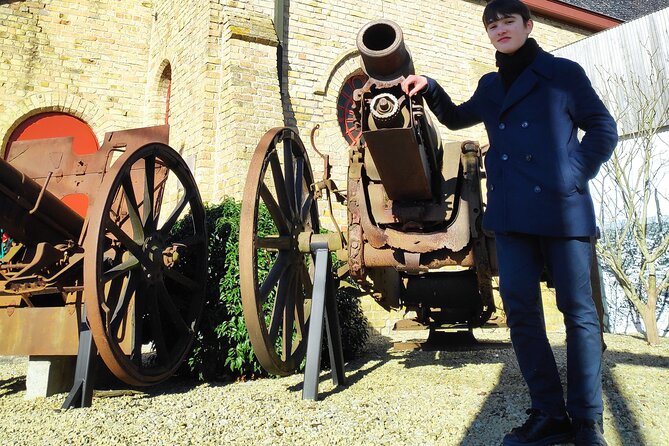
Your first stop is the Hooge Crater Museum, with about 30 minutes inside. Admission is included.
This private museum uses life-size reconstructions of World War I battle scenes. You will also see weapons, equipment, and photographs. That makes it a practical opening stop because the exhibits give you something concrete to look at before you visit the outdoor sites.
The museum is especially useful if you do not already know the basic equipment and conditions of trench warfare. Reconstructed scenes can never replace the original sites, but they help explain how soldiers moved, sheltered, and fought.
Thirty minutes is enough for an introduction, though it is not a long museum visit. If you prefer to read every label or study each photograph, you may find the pace brisk. The advantage is that the tour keeps moving and saves more time for the trenches, museums, and memorials later in the day.
Sanctuary Wood and Hill 62 trench remains
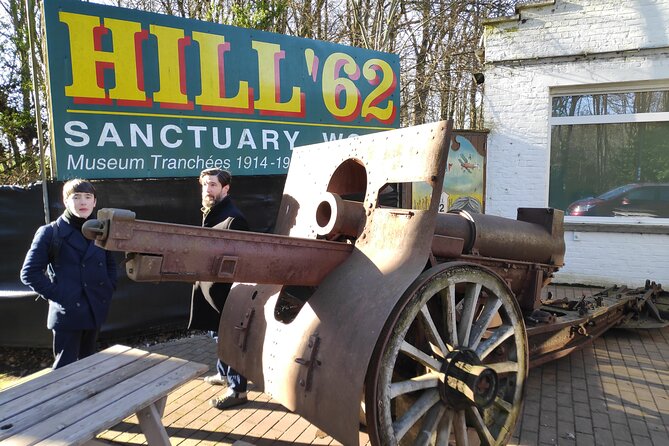
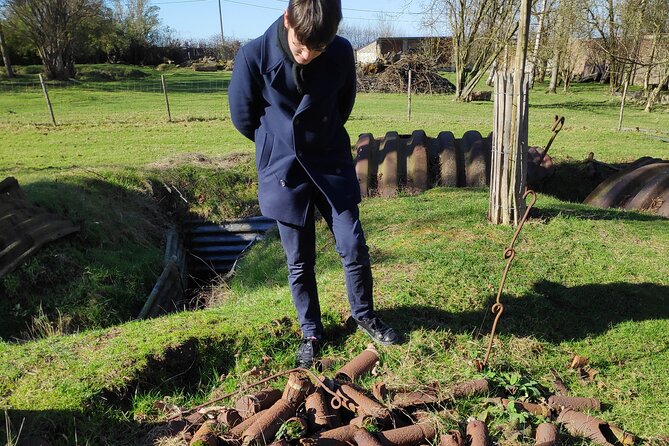
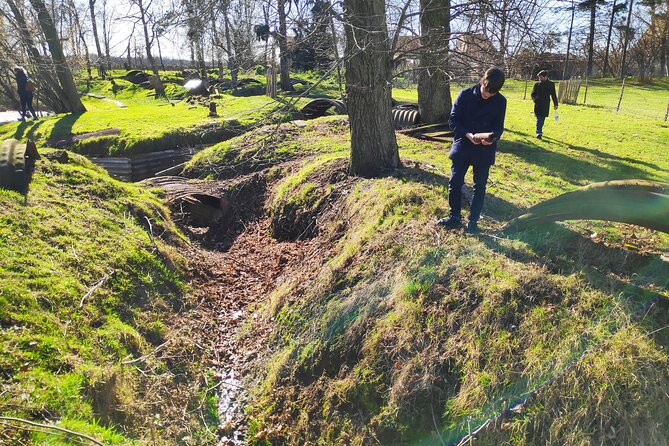
The next stop is Hill 62, also known as Sanctuary Wood, for about 45 minutes. Admission is included.
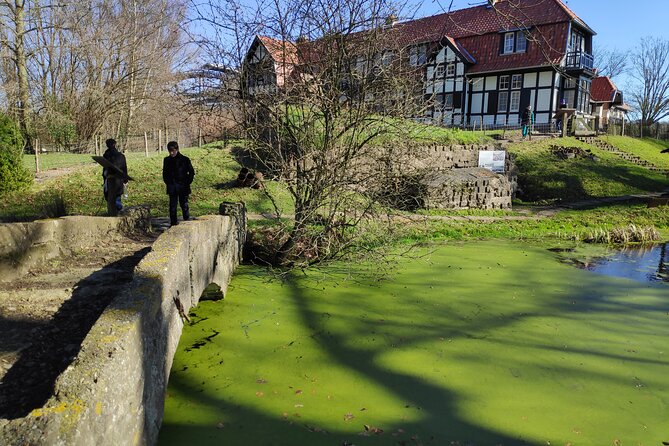
Sanctuary Wood takes you closer to the physical reality of the front. The wood was used as a refuge for soldiers trying to rejoin their units, and the trench lines and dugouts were later enclosed and preserved. The surviving trenches are among the strongest reasons to choose this tour over a city-only visit.
You can expect uneven ground and outdoor walking here, which is why comfortable hiking shoes matter. Bring a camera, but use it with care. The remains are a place of remembrance as much as a historical attraction.
The museum at Sanctuary Wood also contains battlefield artifacts and 3D stereoscopic photographs. Some images are highly graphic. If you are sensitive to wartime injuries or harsh scenes, keep that in mind before entering.
I like this stop because it connects the abstract word trench to an actual place. You can see the narrow lines, the dugouts, and the damaged woodland setting. The visit is not long, but it gives the day an immediate physical anchor.
Menin Gate and the missing soldiers of Ypres
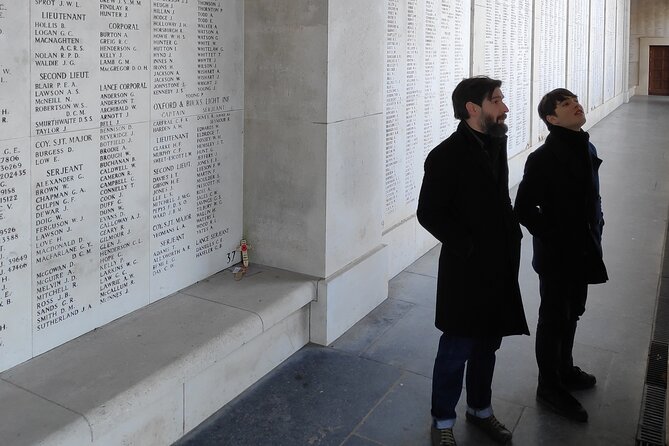
The Menin Gate receives about 30 minutes. Admission is included.
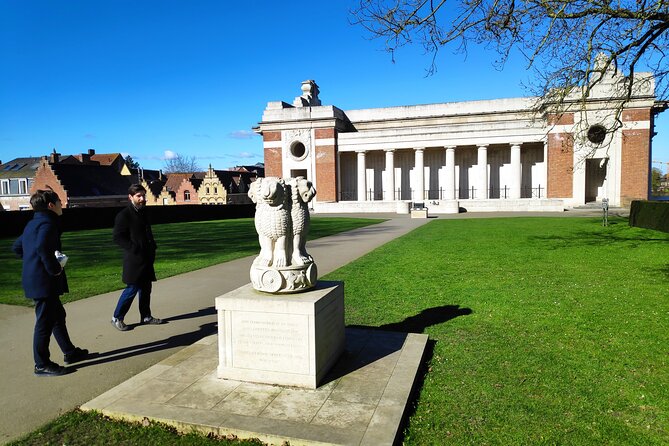
This memorial is one of the central symbols of the Ypres area. Its interior records the names of about 55,000 Commonwealth soldiers who were missing before August 15, 1917. The scale is difficult to grasp in a quick visit, but the walls make the human cost visible.
The famous Last Post is played under the Menin Gate every evening at 8:00 pm. This tour begins at 8:00 am, and the listed stop lasts 30 minutes, so the schedule does not indicate that you will attend the evening ceremony. If hearing it is your main goal, you would need to plan a separate evening in Ypres.
Even without the ceremony, the gate is worth seeing. It is a powerful transition from battlefield remains to a formal memorial. Your guide can help explain why the missing are listed by name and how the memorial fits into the wider story of the Ypres Salient.
More Flanders Fields memorial tours:
- Flanders Fields Remembrance Tour from Brussels
★ 4.5 · 334 reviews - Private World War I Battlefield Tour from Brussels to Flanders
★ 5.0 · 8 reviews - Flanders World War I Battlefields Private Tour from Brussels
★ 4.5 · 4 reviews - From Bruges: Great War Flanders Fields Minibus Tour w/ Lunch
★ 4.9 · 1,257 reviews
A short break in Ypres for lunch and local time
The tour then allows about one hour in Ypres. You can walk around, look for souvenirs, and have lunch.
This is the least structured part of the day, and that is a good thing. After several military sites, you get a little time to see the modern town rather than moving from one exhibit straight to the next. Lunch is included, along with snacks and soft drinks.
The description does not specify the restaurant, menu, or amount of free time for shopping. Treat this as a useful pause, not a major independent exploration of Ypres. One hour passes quickly, especially if you want to eat, browse, and take photographs.
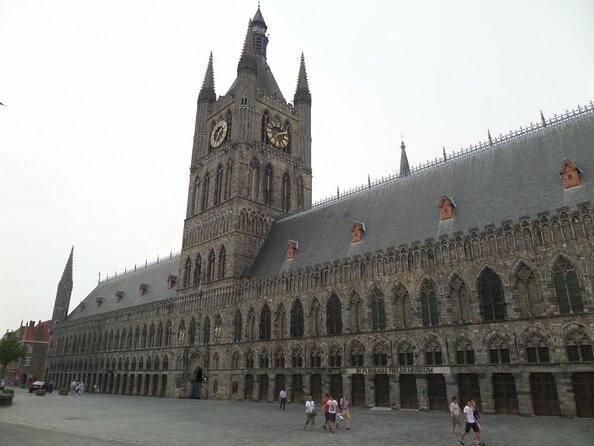
The rebuilt Cloth Hall provides an important link to the next stop. Ypres is a living town, but its center also reflects wartime destruction and later rebuilding. That contrast helps explain why the city matters beyond its memorials.
In Flanders Fields Museum inside the rebuilt Cloth Hall
The In Flanders Fields Museum receives about 1 hour and 30 minutes, with admission included.
The museum focuses on the First World War on the West Flanders front. Its location in the rebuilt Cloth Hall is part of the experience. The building once represented Ypres as a major medieval trading center, then became a symbol of wartime ruin and later recovery.
The museum also looks at the surrounding battlefield area as one of the last visible witnesses to the war. That approach is valuable because it links objects and stories inside the museum to the places you have already visited and will see later.
A highlight is the chance to climb the restored Belfry tower and look over Ypres and the nearby battlefields. The view gives you a better sense of distance and geography. Museums often make battles feel like a series of names on a map. From above, you can begin to understand the relationship between the town and the surrounding front.
Ninety minutes is a useful amount of time here, but the museum has enough material to keep a serious history reader busy longer. You will need to balance the displays with the tower visit and the fixed schedule. Since the tour includes several more stops, you probably should not expect to read every panel in detail.
Passchendaele Museum and its dugouts
The Passchendaele Museum is allotted about 1 hour and 45 minutes, with admission included.
This is the longest museum stop of the day. Its main focus is the life of military personnel during the war, presented through dugouts and trenches. Objects from the Battle of Passchendaele help build a picture of the conditions faced by soldiers.
The longer visit matters here. Passchendaele is often remembered for mud and terrible losses, but a useful visit needs more than a quick label or a single memorial. The combination of objects and reconstructed underground spaces gives you time to consider how soldiers lived between attacks.
I would expect this to be one of the more atmospheric portions of the day. At the same time, reconstructed trenches are not original front-line remains, so it is worth keeping that distinction clear. Their value is in showing scale, shelter, and daily conditions, while nearby preserved sites offer a more direct connection to the original ground.
The schedule gives you enough time to take the museum seriously, but the day is already long by this point. If you enjoy military history, you will appreciate the extra time. If your interest is more general, the sheer amount of information may feel demanding.
Tyne Cot Cemetery and the closing perspective
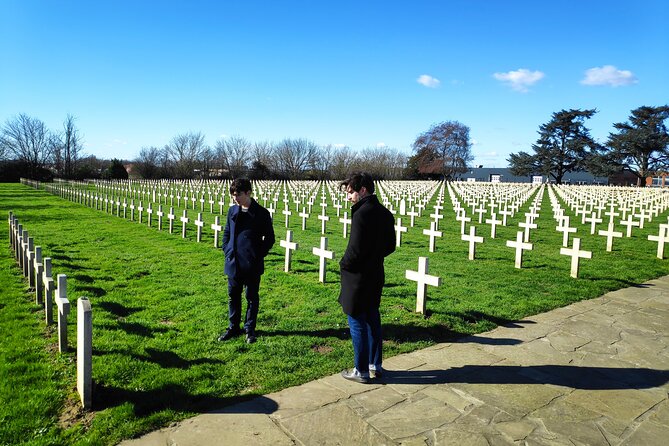
Tyne Cot Cemetery is the final stop and receives about one hour. Admission is included.
It is the largest Commonwealth war cemetery in the world by number of burials. Nearly 12,000 Commonwealth service members are buried or commemorated there, and the Tyne Cot Memorial records nearly 35,000 service members from the United Kingdom and New Zealand who died in the Ypres Salient.
The cemetery’s scale changes the tone of the day. Earlier stops focus on trenches, weapons, photographs, and battles. Here, the focus is on individual names and rows of graves. One hour gives you time to walk, read some inscriptions, and take in the setting without turning the visit into a rushed photo stop.
Tyne Cot works well as the last stop because it brings the day back to the human cost. You have already seen how soldiers lived. Now you see the number of people who never returned.
The tour data does not specify a dedicated cemetery ceremony or a particular memorial talk, so the exact balance between guided explanation and quiet personal time may depend on your group and guide. That flexibility is one benefit of a private tour, but it also means you should tell the guide what matters most to you.
How the private format affects the value
At $701.35 per person, this is not a budget day trip. The price includes transport in an air-conditioned vehicle, all admission fees and taxes, lunch, snacks, and soft drinks. Pickup is offered, and the group is private.
The price makes more sense when you think of the tour as a full day with a historian rather than as simple transportation to Ypres. You are paying for a carefully packed route, museum entry, food, and the chance to ask questions throughout the day. You also avoid arranging several separate admissions and working out how to connect sites spread across the area.
The value is strongest for a group that can share the private experience. It is also stronger if you care about context and discussion, rather than only taking photographs at the memorials.
For a solo visitor or a couple watching costs closely, the price may feel hard to justify. The tour lasts 7 to 10 hours, but that does not make it cheap on a time-per-dollar basis. A self-guided visit could cost less, though it would not provide the same built-in transport, meal, or historian-led interpretation.
No alcoholic beverages are included, and tips or gratuities for staff are separate. Those are small points, but they belong in your budget.
Who should book this Ypres experience
I would choose this tour if you want to understand how the sites fit together. It suits adults and older teenagers with a real interest in the First World War, especially those who want both museum time and outdoor locations.
The minimum age is 16. The tour involves walking at outdoor sites, including preserved trench areas, so comfortable footwear is important. Most people can participate, but the schedule is long and full. It is not designed as a relaxed day with long breaks.
This is also a good choice if you prefer conversation to a recorded audio guide. István has been praised for finding out what a guest wanted to focus on and adjusting the day to suit. That kind of attention can make a major difference when one person wants military detail and another is more interested in politics, memory, or local history.
You should think twice if your main aim is to attend the Menin Gate Last Post. The ceremony is at 8:00 pm, while this tour starts at 8:00 am, and the listed program does not include the evening event.
Practical planning for the long day
Pickup is offered, and the start time is 8:00 am. Because the total duration can range from 7 to 10 hours, keep the rest of your day flexible.
Wear comfortable hiking shoes. Several stops are outdoors, and preserved trenches and historic grounds are not the place for thin-soled city shoes. Bring a camera, but remember that the cemeteries and memorials call for quiet, respectful behavior.
Food planning is simple because lunch, snacks, and soft drinks are included. You will need to arrange your own alcoholic drinks if wanted. A mobile ticket is provided, and booking confirmation is received at the time of booking.
Free cancellation is available up to 24 hours before the start time. Changes or cancellations inside that window are not accepted for a refund, and the cut-off follows local time.
Should you book Historic Ypres WWI Sites from Brussels?
Book it if you want a serious, tightly planned day of First World War history and value a private guide who can respond to your interests. The mix of real trench remains, museums, memorials, lunch, and transport is well suited to a first visit to the Ypres area.
Skip it if the price is too high, you want only a short visit, or your priority is the 8:00 pm Last Post ceremony. For the right group, though, this is a strong choice: focused, personal, and full of places that are difficult to understand from a book alone.
FAQ
Where does the tour start?
The tour is based in Brussels, pickup is offered, and the stated start time is 8:00 am.
How long does the Historic Ypres WWI Sites tour last?
The experience lasts approximately 7 to 10 hours.
Is this a private tour?
Yes. Only your group participates in the activity.
What food and drinks are included?
Lunch, snacks, and soda or other soft drinks are included. Alcoholic beverages are not included.
What sites are visited?
The route includes Hooge Crater Museum, Hill 62 and Sanctuary Wood, Menin Gate Memorial, Ypres, In Flanders Fields Museum, Passchendaele Museum, and Tyne Cot Cemetery.
What is the minimum age?
The minimum age for this tour is 16.
Just added around Brussels
- Private Tour – Bruges and Ghent, our fairytale cities★ 5.0 · 3 reviews
- Bruxelles: Photoshoot Experience★ 4.4 · 3 reviews
- Private Day Trip from Brussels to Bruges★ 4.5 · 3 reviews
- Leuven: City Walk with Audio Guide in 7 Languages on your Phone★ 3.0 · 3 reviews
- Private Arrival Transfer from Brussels Airport to Bruges with Business car★ 5.0 · 3 reviews
- Brussels: Express Walk with a Local in 60 minutes★ 5.0 · 3 reviews
- 2 Hour Beer Tasting with Local Beer Sommelier in Brussels★ 5.0 · 3 reviews
- Floating in the clouds★ 5.0 · 3 reviews
Brussels Tours, compared.

Atomium Entry Ticket with Design Museum Ticket
Read our review →
From Brussels: Guided Day Trip to Bruges and Ghent
Read our review →
From Brussels: Bruges & Ghent Day Tour – 2 Fairytale Cities
Read our review →
Choco-Story Brussels: Chocolate Museum Entrance with Tasting
Read our review →
Bruges and Ghent – Belgium’s Fairytale Cities – from Brussels
Read our review →
From Brussels: Luxembourg Tour with Dinant Visit
Read our review →
Hungry Mary’s Famous Beer and Chocolate Tour in Brussels
Read our review →Browse the lists this tour appears in