

Reviewed · BRUSSELS TOURS
Private Tour: The Dark Side of Brussels
Brussels has a darker side, and this private walk brings it into view through beheadings, old churches, courtrooms, and working-class streets. Instead of stopping at waffles and grand squares, you move through Sablon, the Marolles, and the imposing Palais de Justice, finishing at a Gothic church with medieval roots. I like the mix of grim stories and handsome architecture. I also like that the route uses real neighborhoods rather than treating Brussels as a string of postcard views.
The private format is a major plus. You can ask questions, and guides such as Sebastian and Dan have tailored the walk to individual groups. The main consideration is pace: nine stops in about two hours means roughly ten minutes at most places, with just five minutes at the final church. If you want long interior visits or a slow museum-style tour, this will feel brisk.
Key points to know before booking
- A private English-language walk: Only your group takes part, so the guide can adjust the stories and pace.
- A darker view of Brussels: Expect history involving crime, punishment, religious buildings, courts, and executions.
- Nine central stops: The route connects Grand Place, Sablon, the Justice Palace, and the Marolles.
- Strong guide feedback: Sebastian is praised for his humor and city knowledge, while Dan is noted for adapting the visit.
- A useful neighborhood finish: The tour ends at Kapellekerk in the Marolles, a good area for continued exploring.
- Two hours on foot: Every listed stop is free to enter, and the price covers the professional guide.
What this private Brussels walking tour is really about
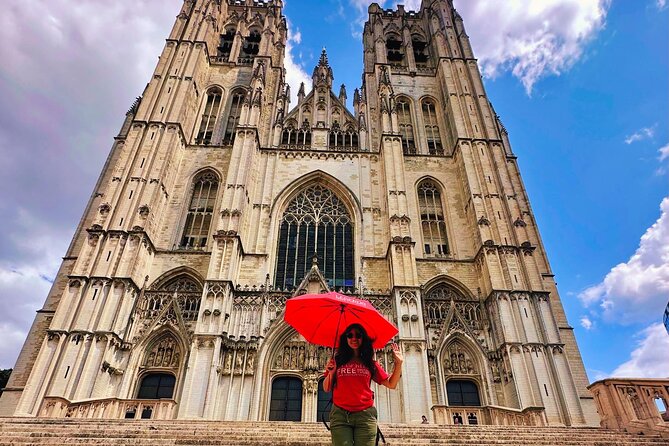
This is not a standard introduction to Brussels. You will not spend the entire time on royal architecture, comic murals, or famous chocolate shops. Instead, the route asks you to look at the city through its less polished stories: public punishment, religious power, social divisions, old courts, guild life, and the working neighborhoods that shaped Brussels.
That gives the walk a useful edge. A city can look tidy and grand today while hiding centuries of hard lives and harsh laws. The title points toward the grim material, but the tour also includes gardens, churches, market life, and attractive lanes. You get contrast, not two straight hours of horror stories.
The walk is private and guided in English, with only your group participating. That matters here because the subject can raise questions. You might want to ask how a church connects to a neighborhood, why the Justice Palace was built on its hill, or how the Marolles changed over time. A shared group tour often has to keep moving. This format gives the guide more room to respond.
The published duration is about two hours, and the price is $105.02 per person. That is not a bargain if you are traveling alone, but it can be fair for a small group that wants a focused walk with a dedicated guide. The value depends on how much you use the private format. If you simply want a list of landmarks, a cheaper general walk may be enough. If you enjoy questions, local context, and stories shaped to your interests, the price makes more sense.
A few more Brussels half-days to weigh up
- Brussels: Atomium Entry Ticket with Design Museum Ticket
★ 4.4 · 9,254 reviews - From Brussels: Guided Day Trip to Bruges and Ghent
★ 4.6 · 8,353 reviews - From Brussels: Bruges & Ghent Day Tour – 2 Fairytale Cities
★ 4.7 · 8,242 reviews
Starting at Grand Place and the Grand Sablon
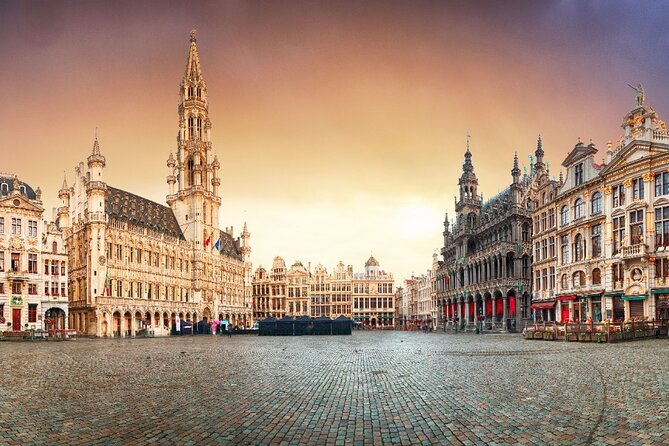
The meeting point is Grand Place, also called Grote Markt, at the center of Brussels. From there, the route heads toward Place du Grand Sablon, a square associated with market life, food, crafts, and local activity.
This first stop helps set the tone. The tour is not only about grim episodes. You also get a sense of the city as a place where people traded goods, bought food, and gathered around daily routines. The Grand Sablon area gives the darker stories a physical setting instead of leaving them as disconnected facts.
You have about ten minutes here. That is enough for an orientation and a short explanation, but not enough to browse a market in detail or linger over every building. If the square is lively when you visit, you might wish you had more time. Treat this as the opening chapter rather than a full market visit.
Place Saint-Jean and the old center
The next stop is Place Saint-Jean, a small historic square with the Church of St. John the Baptist as its focal point. The setting is quieter than the major central squares, with architecture and cafes giving you a pause from the city’s traffic.
This is a good point for the guide to connect religious life with the social fabric of old Brussels. The church is not presented as an isolated monument. It belongs to a square where people passed through, met, worshipped, and went about ordinary business.
Again, the stop lasts about ten minutes. You should expect an explanation outside and perhaps time to take in the setting, not an extended church service or detailed interior tour. The route favors connections between places, so keep your eyes open as you walk rather than waiting for every detail at each stop.
Tour Anneessens and Brussels beyond the postcard
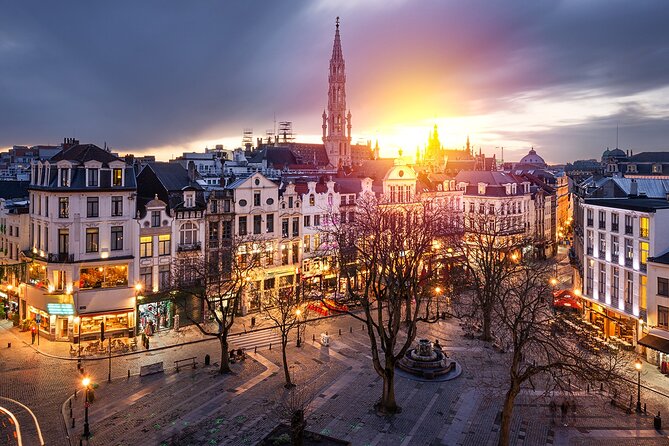
Tour Anneessens brings you into a district known for its mixed architecture, diverse community, and modern city life. This section is useful because it shifts the focus away from ceremonial Brussels and toward a neighborhood with a more everyday feel.
The tour’s darker theme works well here. Social history is rarely found only in palaces and official buildings. It appears in the streets where people lived, worked, argued, traded, and built community. You might find the stop less visually grand than Sablon or the Justice Palace, but it adds needed context.
The available schedule gives this area ten minutes. That makes the guide’s storytelling especially important. A strong guide can turn a short walk through a district into a clear explanation of how Brussels developed. Sebastian is specifically praised for combining information with a fun personality, which suits a stop that depends more on interpretation than on one famous monument.
Same city, a completely different way to spend a day:
- Choco-Story Brussels: Chocolate Museum Entrance with Tasting
★ 4.3 · 4,883 reviews - Bruges and Ghent – Belgium’s Fairytale Cities – from Brussels
★ 4.0 · 4,809 reviews - Brussels: Hop-On Hop-Off Bus Tour
★ 4.0 · 4,016 reviews - Brussels: Guided Walking Tour
★ 4.6 · 3,560 reviews
Rue de Rollebeek and the city’s softer side
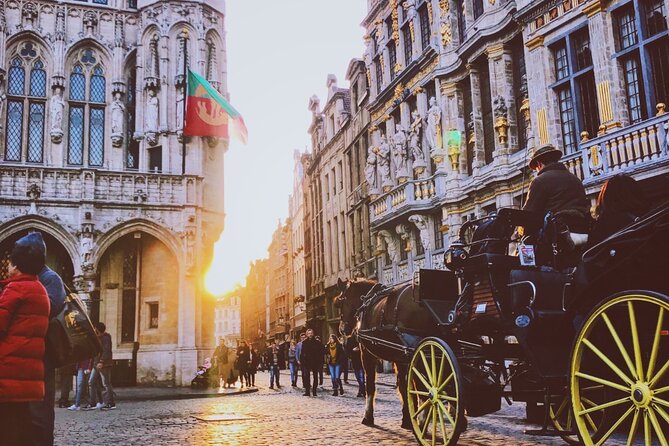
Rue de Rollebeek offers a change in mood. Its cobblestones, cafes, and small shops give the walk a more inviting face, with historic character alongside modern use.
I like this contrast. A tour about Brussels’ darker past could become heavy if every stop pointed toward violence or punishment. This street gives you a visual breather while keeping you in the old city. It also helps show how historic streets remain part of daily life rather than becoming frozen museum pieces.
The stop is scheduled for about ten minutes. You may want to note the street for a later return, especially if you prefer browsing at your own pace. The tour is not designed as a shopping outing, so do not count on time for sitting at a cafe or visiting each boutique.
Notre Dame du Sablon and the power of Gothic architecture
Notre Dame du Sablon is one of the route’s strongest visual stops. This Gothic church is known for its stained glass and detailed design, and it gives the guide a natural way to discuss faith, ceremony, and the place of the church in Brussels life.
The building’s beauty creates an interesting counterweight to the tour’s grim subject. Grand religious architecture can inspire, but it can also reflect the power and resources of institutions that shaped ordinary people’s lives. That tension is part of what makes the stop more than a photo opportunity.
You have about ten minutes here. The supplied details do not promise an interior admission or a long guided visit, so plan for a concise look and explanation. If entering the church matters to you, ask the guide what is possible on the day rather than assuming the tour includes a full interior tour.
The Palais de Justice and Brussels from above
The Justice Palace is the route’s biggest architectural statement. It is a huge neoclassical courthouse on a hill, with broad views across Brussels. Even before hearing its stories, you feel the building’s message: law is meant to look powerful.
This is where the tour’s title makes the clearest sense. Courts, punishment, and public authority belong together, and the guide can use the building to explain Brussels’ legal past. The structure also gives you one of the better viewpoints on the route, so bring your camera and take a moment to look beyond the facade.
The stop lasts roughly ten minutes. That is enough to understand why the building matters and enjoy the view, but not enough for a full courthouse visit. The experience is an outdoor walking tour, and admission tickets are not listed among the inclusions. You should not book it expecting an inside tour of every major building.
The hill also affects the walking experience. The route is manageable for most participants, but you will be moving through central streets and up toward a large monumental site. Wear shoes you can walk in comfortably. Service animals are allowed, the route is near public transportation, and most people can participate, but the tour information does not promise a fully step-free route.
Petit Sablon and the stories cast in bronze
Square du Petit Sablon is a calmer stop, with formal gardens and 48 small bronze statues representing medieval guilds. This compact square rewards a slower look, even though the planned visit is only about ten minutes.
The statues give the guide a way to talk about trades and organized work in medieval Brussels. They also make the city’s past easier to picture. Instead of hearing only about rulers and judges, you get reminders of the craftspeople and occupations that kept the city running.
This stop is one of the prettiest on the route, but the short schedule means you will not have time to study every figure. If the gardens appeal to you, mark the square for a return visit after the tour. It is a good place to pause when you are exploring independently.
Place du Jeu de Balle and the Marolles
The route then moves toward Place du Jeu de Balle, the center of the Marolles neighborhood and the site of a daily flea market. Here you might find old photographs, second-hand clothing, vintage furniture, small objects, and assorted curiosities.
This is one of the most useful stops for understanding present-day Brussels. The market is not a polished attraction built only for sightseeing. It is a working public space with a welcoming local feel, and it gives the tour a direct link to buying, selling, reuse, and neighborhood life.
The market’s presence can vary in atmosphere and appearance, so do not expect a fixed display. You have about ten minutes, which is enough to get a taste but not enough to search every table. If you enjoy flea markets, plan to return on your own with more time and perhaps a little patience.
The Marolles also gives the walk a social dimension that the grand monuments cannot. After churches, guild statues, and the courthouse, you are back among streets shaped by ordinary commerce. That makes the route feel more grounded as it approaches its final stop.
Kapellekerk, the Gothic finish in the Marolles
The tour ends at the Church of Our Lady of the Chapel, commonly called Kapellekerk. The church is Gothic, and its origins reach back to a chapel founded here in 1134.
The final stop is scheduled for only five minutes, so think of it as a closing marker rather than a full visit. The building gives the guide a final chance to connect the old religious city with the Marolles neighborhood around it.
Ending here is practical. You are not returned to Grand Place, so you should be comfortable finding your next destination from the Marolles. The end point is listed as Brux.-Chap or Brus.-Kap on Rue des Ursulines. Since the church is in a popular neighborhood, you can continue exploring after the guide leaves.
How the guides shape the experience
The strongest part of this tour is likely to be the person leading it. Sebastian is praised for knowing the city well, explaining its past clearly, and adding humor to difficult subjects. That combination matters when the material includes Gothic churches and beheadings. The stories need a steady hand so they remain interesting without becoming cheap shock value.
Dan is also noted for tailoring the visit when a group could not take another general city tour. That is a useful clue about the private format. You can tell the guide what you already know, ask for more detail on architecture or crime, or request a stronger focus on neighborhoods and social history.
The tour has a 4.9 rating from 20 reviews, with 100 percent recommending it. That is a small sample, so I would not treat it as a guarantee of a perfect outing. Still, the repeated praise for the guides’ information, friendliness, humor, and interesting stories points to the most important factor in a short private tour: good narration.
Price, timing, and who gets the best value
At $105.02 per person, the experience costs more than a large group walking tour. The difference is the private setup. Only your group participates, and the guide can shape the discussion around your interests.
The value is strongest for couples, families, or small groups who want a custom conversation and do not enjoy being herded through a crowded tour. It is also a good choice if you have already seen the main Brussels sights and want a more unusual angle.
The value is weaker if you want extensive sightseeing time at each location. Nine stops in about two hours requires steady movement. Most stops last ten minutes, and the ending at Kapellekerk lasts only five. You are paying for the route and the guide’s interpretation, not for long visits inside buildings.
The tour is offered in English and includes a professional guide. The listed stops have no admission charge, so there are no stated entry fees to add. Confirmation arrives at booking, and free cancellation is available up to 24 hours before the start time. Changes or cancellations inside that window are not accepted for a refund.
The activity is usually booked 34 days ahead, which suggests you should reserve early if your dates are fixed. That matters most for a private tour, where guide availability can limit the options.
Is The Dark Side of Brussels worth booking?
Book this tour if you like local history with an edge, prefer a private walk, and want to see how Brussels’ churches, courts, markets, and working neighborhoods connect. Sebastian or Dan may give you the kind of flexible, personable explanation that makes a short route feel substantial.
Skip it if your main goal is a slow church tour, extensive interior access, or a broad first look at every famous Brussels sight. For the right reader, though, this is an appealing way to move beyond the usual postcard Brussels. You get the Justice Palace, Gothic architecture, the Marolles flea market, and stories that are unlikely to appear on a standard sightseeing loop.
FAQ
How long does The Dark Side of Brussels tour last?
The tour lasts approximately two hours.
Where does the tour begin?
It begins at Grand Place, also called Grote Markt, at 1000 Brussels, Belgium.
Where does the tour end?
It ends at Kapellekerk, the Church of Our Lady of the Chapel, on Rue des Ursulines in the Marolles neighborhood.
Is this a private tour?
Yes. Only your group participates in the activity.
Is the tour offered in English?
Yes. The tour is offered in English.
What is included in the price?
A professional guide is included. The listed stops have free admission, and no separate admission ticket is listed as part of the experience.
Are service animals allowed?
Yes. Service animals are allowed.
Can I cancel for a full refund?
Yes, if you cancel at least 24 hours before the experience start time. Cancellations or changes made less than 24 hours before the start time are not accepted for a refund.
Just added around Brussels
- Private Tour – Bruges and Ghent, our fairytale cities★ 5.0 · 3 reviews
- Bruxelles: Photoshoot Experience★ 4.4 · 3 reviews
- Private Day Trip from Brussels to Bruges★ 4.5 · 3 reviews
- Private Arrival Transfer from Brussels Airport to Bruges with Business car★ 5.0 · 3 reviews
- Leuven: City Walk with Audio Guide in 7 Languages on your Phone★ 3.0 · 3 reviews
- Brussels: Express Walk with a Local in 60 minutes★ 5.0 · 3 reviews
- 2 Hour Beer Tasting with Local Beer Sommelier in Brussels★ 5.0 · 3 reviews
- Floating in the clouds★ 5.0 · 3 reviews
Brussels Tours, compared.
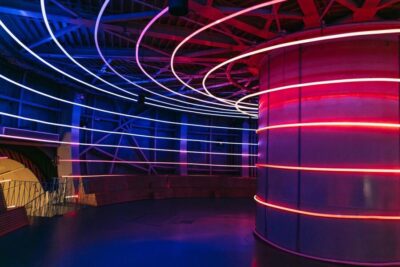
Atomium Entry Ticket with Design Museum Ticket
Read our review →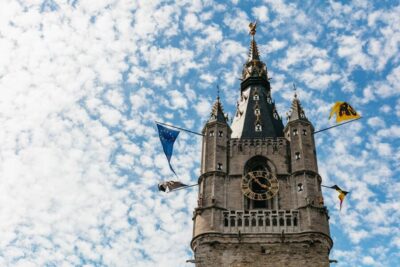
From Brussels: Guided Day Trip to Bruges and Ghent
Read our review →
From Brussels: Bruges & Ghent Day Tour – 2 Fairytale Cities
Read our review →
Choco-Story Brussels: Chocolate Museum Entrance with Tasting
Read our review →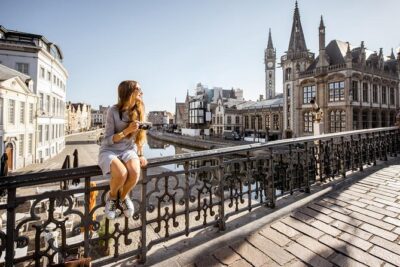
Bruges and Ghent – Belgium’s Fairytale Cities – from Brussels
Read our review →
From Brussels: Luxembourg Tour with Dinant Visit
Read our review →
Hungry Mary’s Famous Beer and Chocolate Tour in Brussels
Read our review →Browse the lists this tour appears in