
Reviewed · BRUGES TOURS
Bruges: Ticket Stadhuis (City Hall)
Bruges City Hall gives you a compact look at the city’s civic story inside one of its finest Gothic buildings. I like the 14th-century polychromed vault and the life-sized portraits of rulers, from local mayors to Napoleon. The adjoining maritime room adds a useful second angle, showing how closely Bruges was tied to the sea.
I also like the chance to see a working civic building, not just a preserved shell. The main drawback is the fairly brief visit. At about $10, it is good value for architecture and history, but you may want to pair it with another Bruges sight rather than plan your whole day around it.
Key points to know before you go
- Gothic Hall: Climb the grand staircase to the first-floor room where murals tell Bruges’ story beneath an original 14th-century vault.
- Rulers in full size: See portraits of mayors, kings, emperors, and Napoleon downstairs.
- Maritime Bruges: Use an augmented reality model and examine artifacts connected with the city’s relationship to the sea.
- Still a working city hall: Monthly council meetings take place in the Gothic Hall, which is also used for weddings.
- Easy planning: The ticket is valid for one day, includes entrance, and offers free cancellation up to 24 hours before the visit.
- Useful restrictions: Large bags, luggage, pets, and flash photography are not allowed. Assistance dogs are permitted.
Why Bruges City Hall deserves a place on your route
Bruges is famous for canals, brick streets, and handsome squares. City Hall gives you a different view of the city. Here, Bruges is not only a pretty medieval setting. It is a place shaped by civic power, religion, trade, rulers, and local government.
The building dates from the late 14th century and is considered one of the oldest city halls in the Low Countries. Its design influenced other civic buildings across the region. That makes the visit useful even if you are mainly interested in architecture: you are looking at a model that helped define the public face of northern European cities.
I would allow enough time to look carefully rather than rush through for a quick photograph. The visit is not a guided walking tour through Bruges, and there is no guide name or live tour leader listed. You move through the city hall at your own pace, taking in the rooms and displays.
The price is about $10 per person. That is a reasonable charge for a historic interior, especially if you value Gothic architecture and want more than an exterior view. Children under 13 can obtain a free ticket at the box office, which makes this an easier stop for families.
A few more Bruges half-days to weigh up
- Bruges: Small Group Boat Cruise and Guided Walking Tour
★ 4.8 · 4,102 reviews - Bruges: Walking Tour, Canal Boat Trip w/Beer Tasting Option
★ 4.4 · 2,759 reviews - Historical Walking Tour: Legends of Bruges
★ 5.0 · 2,541 reviews
The grand staircase and the first-floor Gothic Hall
Your main destination is the Gothic Hall on the first floor. You reach it by climbing a grand staircase, and the arrival is part of the experience. The stairway leads you from the busy public square into a room designed to make civic life feel important.
The Gothic Hall is decorated with 20th-century murals that tell the story of Bruges. These murals give the room a narrative instead of leaving you to study the architecture without context. They are not original medieval paintings, so you should not expect every surface to date from the building’s earliest years. Their role is to explain Bruges through later artistic interpretation.
The star feature is the original 14th-century polychromed vault. Polychromed means that the surface was painted in several colors, rather than left as plain wood or stone. Look up before you spend too much time on the walls. The ceiling is the part that connects you most directly with the building’s early civic past.
This room also remains part of Bruges’ present-day government. Monthly city council meetings take place here. That detail changes how I read the space. It is not simply a museum room arranged for display. It is still connected to local decisions and public life.
The Gothic Hall is also used for weddings. You may find this gives the room a second character: formal enough for government, but personal enough for a marriage ceremony. The combination helps explain why the hall continues to matter to the city.
What the murals tell you about Bruges
The murals provide a broad account of Bruges rather than a narrow display of decorative art. They help place the city hall within the city’s long civic story.
You will not get a full history course from a short visit, and the experience is fairly brief. Still, the murals give you useful visual context for the other parts of Bruges. After seeing them, the Burg square outside feels less like a photogenic open space and more like the center of authority.
The square was once a hub of civic and religious administration. City Hall’s position there was not accidental. Government and religious power were gathered in the same area, and the building’s grand design made that authority visible.
I like this connection between the room and the square. You can step outside afterward and understand that the architecture was meant to shape public life, not merely decorate it. If you are comparing City Hall with a standard museum, this is one of its advantages. The building itself is part of the story.
The maritime room and Bruges’ connection to the sea
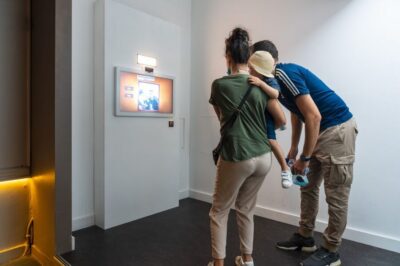
An adjoining historical room shifts the focus from government to commerce and seafaring. Bruges’ connection to the sea is presented through an augmented reality model and a collection of artifacts.
The augmented reality model is a helpful feature because maritime trade can be hard to picture from written labels alone. A model gives you a sense of how the city’s relationship with the water fit into its wider development. The artifacts add physical evidence to the display, giving the room more substance than a purely digital presentation.
This section is especially worthwhile if you want to understand why Bruges became important in the first place. The city’s story was not built only through grand buildings and powerful rulers. Its place in regional trade mattered too.
The room also gives the visit a useful rhythm. The Gothic Hall is large, ceremonial, and visually dramatic. The maritime display is more focused and explanatory. Moving between the two helps you see Bruges as both a seat of government and a city linked to commerce.
I would not expect a long maritime museum visit here. This is one part of a city hall experience, not a full day devoted to shipping or port history. But it is enough to make the building feel more connected to the forces that shaped Bruges.
Same city, a completely different way to spend a day:
- Bruges: Choco-Story Chocolate Museum Guided Tour w/Tastings
★ 4.2 · 1,379 reviews - From Bruges: Great War Flanders Fields Minibus Tour w/ Lunch
★ 4.9 · 1,257 reviews - Bruges: Guided Rickshaw Tour
★ 4.9 · 1,199 reviews - Round-Trip Shuttle Service from Zeebrugge to Bruges
★ 4.0 · 1,143 reviews
Portraits of mayors, kings, emperors, and Napoleon
Downstairs, life-sized portraits show former rulers and civic figures. The group includes mayors, kings, emperors, and Napoleon, giving you a quick visual record of changing power.
Life-sized portraits work well in this setting because scale matters. A small portrait in a display case can feel distant. Full-size figures make the procession of rulers more immediate, even if you do not know every name or date.
Napoleon is the most instantly recognizable figure in the group, but the wider selection matters more than any one portrait. It shows that Bruges’ civic story includes local officials as well as major European rulers. The city was governed through different levels of authority, and the portraits make that shift visible.
This lower-level section is also useful if the Gothic Hall feels too focused on decoration. The portraits give you people to look at and a clearer sense of political change. I would take a moment to compare the figures rather than simply walk past them. Their clothing, posture, and presentation can tell you how each period wanted authority to appear.
The portraits do not turn City Hall into a large political museum. They are part of a concise visit. Still, they add a human face to the building’s story and help connect the grand rooms with the people who once governed Bruges.
How long should you plan for the visit?
The ticket is valid for one day, but that does not mean you will spend a full day inside City Hall. The visit is best treated as a compact stop within a broader Bruges sightseeing plan.
One visitor described the experience as fairly brief, with the focus on Bruges and its rulers. That is a fair expectation. You can see the main rooms and displays without committing several hours, but you should not book this expecting an extensive guided program.
The one-day validity gives you some flexibility. Check the available starting times when you book, then fit City Hall around your other plans. If your schedule is tight, the short format is an advantage. If you want a long, detailed museum visit, you may find it limited.
I would place it on a route through the historic center, especially because the building sits on the Burg. You can treat it as a focused architectural and history stop, then continue exploring the surrounding city.
Price, ticket flexibility, and practical restrictions
At $10 per person, the ticket offers solid value if you want to enter the building rather than admire only its exterior. The Gothic Hall, original vault, murals, maritime display, and portraits give you several distinct things to see.
The value is less clear if your schedule allows only a rushed glimpse. Since the visit is fairly short, the ticket works best when you care about historic interiors or want a clear explanation of Bruges’ civic past. If you are mainly interested in wandering streets and canals, you may prefer to spend your time outside.
You can reserve now and pay later, which is useful when your Bruges plans are still moving around. Free cancellation is available up to 24 hours in advance for a full refund. That flexibility matters in a city where traffic delays or changing day plans can affect your timing.
One practical warning comes from a missed visit caused by traffic delays. If you are arriving by car or from outside the center, leave extra time. A late arrival can mean losing the booking, and the ticket may not be easy to change once the time has passed.
Large bags and luggage are not allowed inside. Pets are also prohibited, although assistance dogs are permitted. Flash photography is not allowed, so bring a camera setting that works without flash if you want photographs of the interior.
The building is wheelchair accessible. Children under 13 can get a free ticket at the box office, so check that option before purchasing a paid child ticket.
Who will enjoy this city hall most?
I would recommend City Hall to anyone who likes architecture with a clear historical purpose. The building is not just a decorated room. It shows how Bruges presented its authority and how civic spaces were designed to impress.
It also suits history-minded families. The portraits and augmented reality model give children more to look at than a room of small text panels, while the free ticket for children under 13 can keep the cost down.
Couples may appreciate the wedding connection, especially if they are interested in how public buildings continue to serve local life. The Gothic Hall is not only an old room preserved behind glass. It still hosts ceremonies and council meetings.
I would be more cautious if you need a long activity to fill an afternoon. City Hall is a compact visit, and the experience centers on a few rooms. Pair it with other sights in Bruges rather than treating it as a stand-alone full-day attraction.
Should you book Bruges City Hall?
Book it if you want to see one of the Low Countries’ oldest city halls from the inside, admire an original medieval vault, and connect Bruges’ architecture with its rulers and maritime past. At $10, it is a sensible addition to a day in the historic center.
Skip it only if your time is extremely limited or if you are satisfied with exterior views. The visit is not long, and there is no extended guided tour included. For most people who enjoy historic buildings, though, the Gothic Hall and polychromed vault make this a worthwhile, well-priced stop.
FAQ
Where is Bruges City Hall located?
Bruges City Hall is in Bruges, Flanders, Belgium, on the Burg square, a historic center of civic and religious administration.
What does the ticket include?
The ticket includes entrance to Bruges City Hall.
How much does admission cost?
The listed price is $10 per person. Children under 13 can obtain a free ticket at the box office.
How long is the ticket valid?
The ticket is valid for one day. Check availability for the starting times offered on your chosen date.
Can I cancel the booking?
Yes. You can cancel up to 24 hours in advance for a full refund.
Is Bruges City Hall wheelchair accessible?
Yes, the city hall is wheelchair accessible. Large bags and luggage are not allowed, and flash photography is prohibited.
Just added around Bruges
- Best of Brussels Private Tour from Zeebrugge or Bruges★ 4.0 · 3 reviews
- Private taxi Transfer from Bruges to Amsterdam★ 5.0 · 3 reviews
- Bruges Photo Session By a Pro★ 5.0 · 3 reviews
- Private 3-hour walking tour of Bruges with official tour guide★ 4.0 · 3 reviews
- BeerWalk Bruges (French guide)★ 5.0 · 3 reviews
- Brussels: Private & Customizable Day Trip to Bruges★ 5.0 · 3 reviews
- Private: Discover Bruges beers & brewery with chocolate pairing by a young local★ 5.0 · 3 reviews
- Bruges: Ticket Volkskundemuseum (Folk Museum)★ 5.0 · 3 reviews
Bruges Tours, compared.

Small Group Boat Cruise and Guided Walking Tour
Read our review →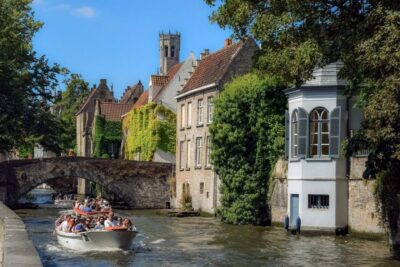
Walking Tour, Canal Boat Trip w/Beer Tasting Option
Read our review →
Choco-Story Chocolate Museum Guided Tour w/Tastings
Read our review →
From Bruges: Great War Flanders Fields Minibus Tour w/ Lunch
Read our review →

Belgian Waffle-Making Workshop with Beer Tasting
Read our review →
Browse the lists this tour appears in