
Reviewed · BRUGES TOURS
Historical Walking Tour: Legends of Bruges
Bruges is easiest to understand on foot, and this tour links its grand squares, canals, churches, brewery, and medieval lanes into one story-led walk. You begin at the Markt and finish at Burg Square, with the city’s trade, rulers, rebels, swans, beer, and old hospitals woven into the route.
I like the unusually low $3.62 price, which makes a two-hour introduction easy to fit into a Bruges day. I also like the range of stops: you see the famous sights, but you hear about leather workers, beer pipes, beguines, and the city’s quarrels with French and Austrian rulers.
The main consideration is pace and weather. This is a long outdoor walk with a maximum of 24 people, and one family had to leave early on a freezing day with a toddler. The tour also depends on a minimum group size and suitable weather.
Key points to know before you book
- Eleven central stops in about 2 hours and 15 minutes: The route covers Bruges’ main sights without requiring transport.
- Stories give the landmarks meaning: Expect tales about the Fools of Bruges, the swans of Minnewater Lake, medieval trade, and the French king.
- A very low-cost introduction: The listed price is $3.62 per person, with tips recommended for the guide.
- English-speaking guides vary in style: Names praised for warm storytelling include Louis, Victoria, Martin, Sander, Wouter, Thomas, and others.
- You see sights from outside rather than taking a museum tour: The route visits palace gardens and church exteriors, but admission to interiors is not part of the experience.
- Book early in your stay: The walk gives useful ideas for food, chocolate, sightseeing, and later visits around Bruges.
Why this Bruges walk works so well for first-time visitors
Bruges can feel almost too pretty to decode. You see stepped gables, still canals, old stone bridges, and horse carriages, but without context it is easy to treat the whole place as a picture postcard. This tour gives you a working outline of the city.
The route is arranged like a broad loop through the historic center. It begins in the Markt, moves toward the church and hospital quarter, reaches the Beguinage and Minnewater, then returns through the museum district and old commercial streets to Burg Square.
That order matters. You are not simply ticking off attractions. You learn how Bruges grew as a trading city, how power shifted between merchants and rulers, and how ordinary work supported the city’s wealth.
The tour is especially useful if you have only one day in Bruges. It also suits a first morning in town, since several guides give practical suggestions for places to revisit, eat, buy chocolate, or explore at greater length. You can use the walk to decide where to spend the rest of your time.
The low price makes this an easy choice for budget-minded visitors. It is not a private tour, and the guide’s income depends on tips, so bring some cash or plan to tip according to the value you receive. At this price, the tour works best as an orientation rather than a substitute for paid museum visits.
More History Tours in Bruges
- THE Storytelling Tour of Bruges | First Day Must | History & Tips
★ 5.0 · 925 reviews - Historical Walking Tour: The Story of Bruges – by Legends
★ 4.7 · 483 reviews - Private Historical Tour: The Highlights of Bruges
★ 5.0 · 315 reviews
Starting at the Markt and hearing Bruges’ political story
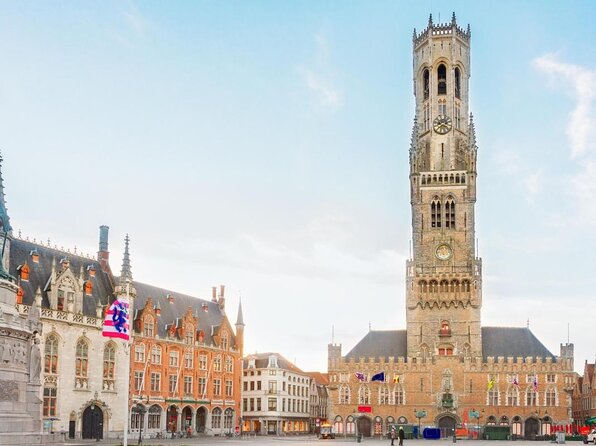
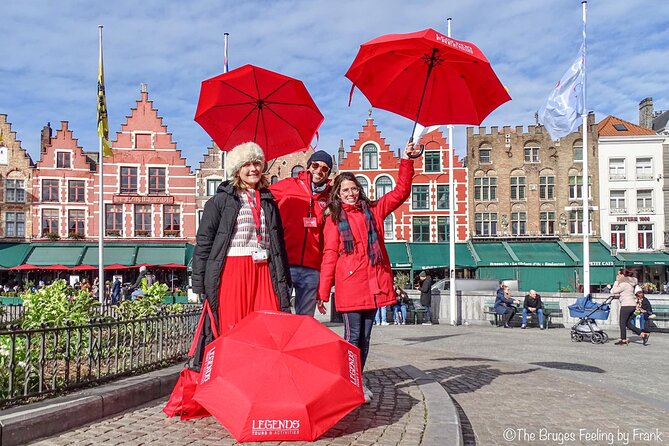
The meeting point is Pieter de Coninck en Jan BreydelMarkt, the central Markt in Bruges. This is a sensible place to begin because the square gives you an immediate view of the city’s scale, architecture, and former commercial power.
The opening discussion covers Bruges as a medieval trading hub. You also hear about the difficult relationship between Bruges and the French king, an important thread in the city’s political story. The guide uses the square to explain why local wealth did not always translate into obedience.
The Markt can be busy, so stay close enough to hear clearly. A group of up to 24 is manageable, but the center of the square is open and active. If you arrive early, confirm the meeting point before the group gathers.
From here, the tour moves to the Belfort, Bruges’ famous bell tower.
The Belfort and the sound of medieval power
The stop at the Belfort focuses on the halls behind the belfry and the tower’s role during the Middle Ages. The key idea is that a bell tower was not just a tall building for pretty views. It helped mark time, signal danger, and represent civic power.
The tour does not include a climb of the tower, so you should not expect panoramic views as part of the experience. One useful tip is to buy Belfort climbing tickets early in the morning if you want to go up separately. The walk can help you decide if that extra visit belongs in your schedule.
The short stop keeps the route moving, but you may want more time here if you are interested in architecture or the tower interior. This is one of the places where the tour’s broad coverage comes with a tradeoff: you get the story, not an extended visit.
Gruuthusemuseum and the business behind Bruges’ wealth
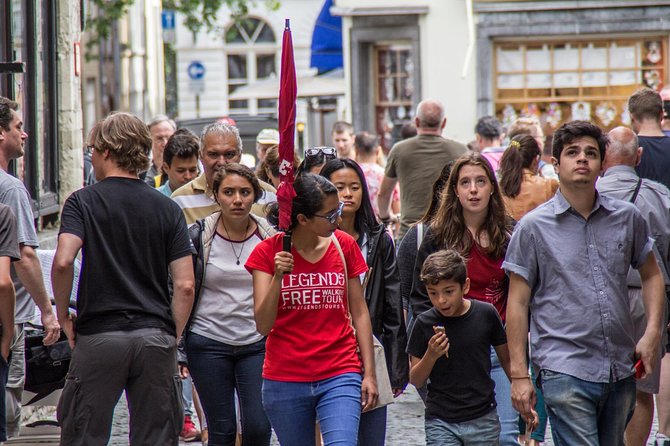
At the Gruuthusemuseum, you stop by a former city palace tied to the wealthy Gruuthuse family. Their fortune came from a monopoly connected to a particular part of the beer trade, giving the guide a chance to show how money was made in medieval Bruges.
This is a useful correction to the idea that old European cities were built only by kings and churches. Merchant families shaped Bruges, too. Their homes, privileges, and commercial links tell you how trade filtered into architecture and social power.
The palace has been renovated, but this experience does not function as a full museum visit. If you want to see the collections inside, you will need separate time and admission. The tour gives you a reason to return with more purpose.
More Walking Tours in Bruges
- Bruges: Small Group Boat Cruise and Guided Walking Tour
★ 4.8 · 4,102 reviews - Bruges: Walking Tour, Canal Boat Trip w/Beer Tasting Option
★ 4.4 · 2,759 reviews - Guided boat trip and walk
★ 4.5 · 703 reviews - Bruges: Guided Walking Tour
★ 4.5 · 682 reviews
Sint-Janshospitaal and the human side of medieval society
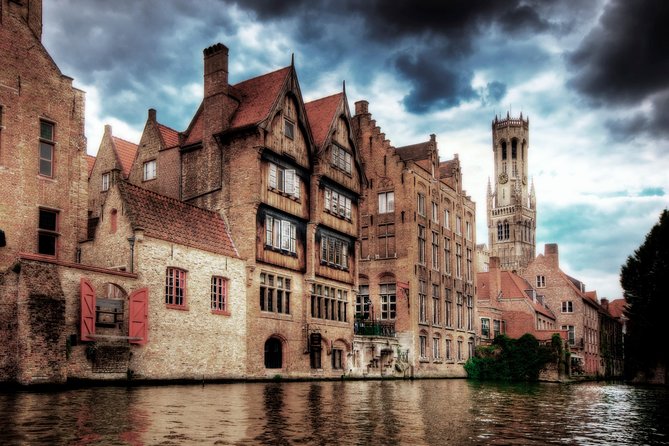
The next stop is Sint-Janshospitaal, described as one of the oldest surviving hospitals in the world. The guide explains why hospitals were central to medieval society, not merely places for medical treatment in the modern sense.
This is one of the more thoughtful stops because it shifts attention away from rulers and rich merchants. A hospital reflects charity, religion, illness, care, and the daily needs of people who lived in or passed through the city.
The building itself is magnificent, but the value here comes from connecting its appearance to its social role. If your interest is mainly architecture, you will enjoy the exterior and setting. If you want to see its art and displays in detail, plan a separate visit.
The Beguinage, an unusual community of women
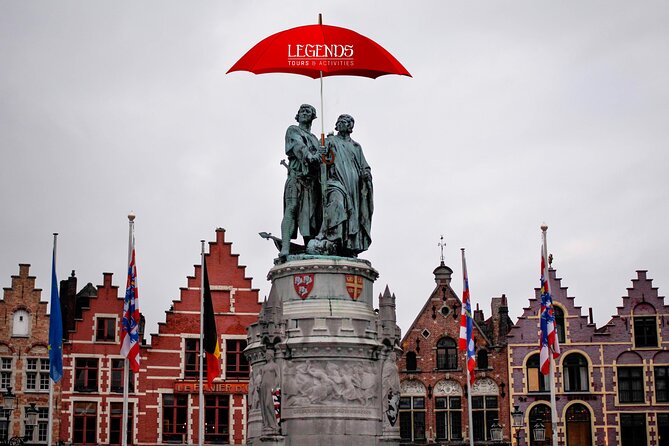
The Princely Beguinage Ten Wijngaarde offers a quieter change of mood. The walk takes you into the picturesque complex, where a community of women lived together for more than 800 years.
The guide’s explanation helps you understand the Beguinage as a lived community rather than a pretty courtyard. Its women shared a religious and social setting without fitting neatly into the usual categories of medieval marriage or convent life.
Keep your voice low and respect the peaceful character of the site. This is a place where the tour’s walking format works well. You can absorb the lanes, walls, and houses while hearing why the community mattered.
The stop is brief, about ten minutes, so treat it as an introduction. You may want to return later when you are not moving with a group.
De Halve Maan Brewery and the Fools of Bruges
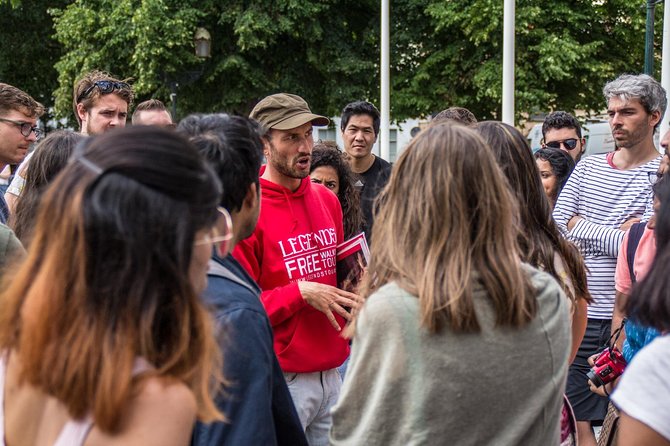
At De Halve Maan Brewery, the guide tells the story behind Bruges’ nickname, the Fools of Bruges. You also see a section of the beer pipeline that runs beneath the city.
That detail makes the stop memorable. It links an old local story to a piece of modern infrastructure and shows that beer remains part of Bruges’ identity, not just a product sold to visitors.
The tour stops outside the brewery, so a brewery visit or tasting is not included. If you want to go in, save it for after the walk or another time. The guide’s story is the main offering here, and it breaks up the churches and squares with something practical and distinctly local.
Minnewater Lake and the story of Bruges’ swans

Minnewater Lake, often called the Lake of Love, brings the route into one of Bruges’ most scenic areas. Here you hear why swans appear on the city’s canals and how Bruges became involved in a conflict with Emperor Maximilian of Austria.
The swan story gives you a small symbol to watch for during the rest of your stay. The Maximilian tale adds a political layer to what might otherwise seem like a quiet waterside stop.
This is also a good place to notice how much the experience depends on weather. The walk is outdoors from start to finish, and rain or cold can affect your enjoyment. There are regular pauses, but the route still asks you to keep walking.
Our Lady’s Church and Michelangelo’s Bruges connection
Onze-Lieve-Vrouwekerk, or the Church of Our Lady, is one of the route’s major architectural sights. Its brick tower is the second tallest of its kind in the world, and the church contains a statue by Michelangelo as well as the tombs of the last Dukes of Burgundy.
The guide tells the church’s story from outside, so admission is not part of the tour. That distinction matters. The walk gives you a useful explanation of what is inside, but art lovers should allow extra time to enter separately.
The church connects Bruges to both northern European craftsmanship and major Italian art. The tombs also bring the Burgundian rulers into focus, tying the building to the political power discussed earlier in the Markt.
The Groeningemuseum garden and Flemish art
The tour continues into the garden of the Groeningemuseum, where works by major Flemish masters are displayed. This is a short stop, only about five minutes, but it gives you a quick introduction to Bruges’ artistic importance.
Do not expect a full gallery visit here. The garden stop is more about orientation and a glimpse of the museum setting. If Flemish painting is high on your list, you will need separate museum time.
Still, this pause helps explain why Bruges is more than medieval buildings and canals. The city’s art belongs to the same story of wealth, patronage, religion, and civic pride that runs through the entire walk.
Huidenvettersplein and the smell of old trade
At Huidenvettersplein, the former Tanner’s Square, you hear about the unpleasant work of greasing animal skins and turning them into leather. It is a small but valuable piece of social history.
This stop reminds you that historic cities were places of labor. The grand squares depended on trades that were noisy, smelly, and far less romantic than the finished buildings suggest.
I like this kind of detail because it gives Bruges texture. You begin to notice that every attractive corner once had a practical purpose. The square is also a useful reminder that medieval commerce involved much more than luxury goods and beer.
Finishing at Burg Square, the city’s political heart
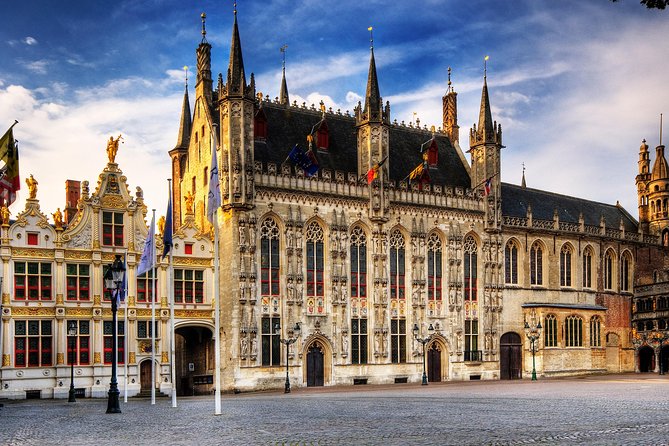
The walk ends at Burg Square, after passing the old Fishmarket. Burg is described as the political heart and birthplace of Bruges, making it a fitting final stop.
By this point, the route has connected commerce, government, religion, art, industry, and local legend. The square works as a conclusion because it brings the city’s power structure back into view after the more personal stories of hospitals, beguines, and craftsmen.
The endpoint is De Burg, Burg 15. From here, you can continue exploring on foot, return to a sight that caught your attention, or follow the guide’s suggestions for food and shopping.
Guide style, group size, and the human factor
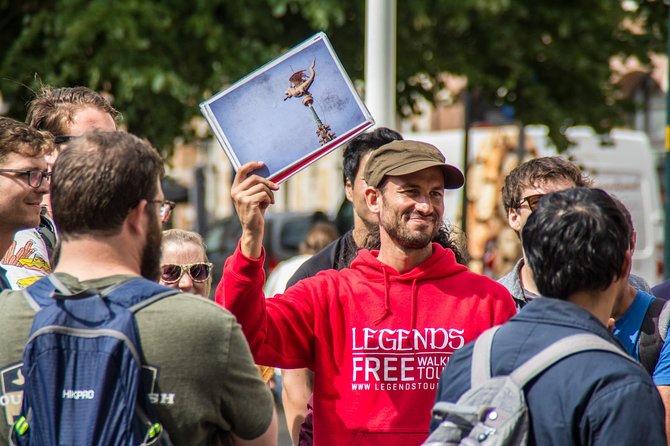
The guide can make a real difference on a story-heavy walk. Guides associated with especially warm and engaging tours include Louis, Victoria, Martin, Sander, Wouter, Thomas, Erik, Emiel, Celine, Nicholas, Willem, and Patrick.
You should not book expecting a specific person unless the booking clearly confirms one. What you can expect is an English-speaking guide, with styles that may range from playful storytelling to a more formal history lesson.
The strongest guide experiences combine facts with local personality. Louis was praised for bringing Bruges to life and for answering questions in detail. Victoria was noted for humor and historical flair, while Martin was praised for entertaining, in-depth explanations. Sander used visual aids on one tour, which can help when discussing buildings and old events.
The group maximum is 24 people. That is not intimate, but it is small enough for questions when everyone stays together. A group of four can feel very personal, while a full group may require you to stand near the guide and speak up.
Price, tips, and what you actually receive
At $3.62 per person, this is one of the least expensive ways to get a structured introduction to Bruges. The listed price includes fees and taxes, and the tour lasts about 2 hours and 15 minutes.
The value comes from the route and the guide’s interpretation, not from admission to attractions. You see many important places, but the tour does not pay for the Belfort climb, church entry, brewery access, or full museum visits.
Tips are recommended, and one piece of practical feedback makes clear that guides may have to pay to conduct the tour. I would treat the listed price as an entry point, then budget a tip if the guide gives you useful stories, answers questions, and helps shape the rest of your day.
Some guides have added small touches, including chocolate samples or a complimentary truffle. Do not book solely for that, since such extras may vary, but a chocolate stop fits naturally into a Bruges walk.
Who should book Legends of Bruges
I would choose this tour if you are visiting Bruges for the first time, have limited time, or want a clear sense of place before exploring alone. Families can benefit from the frequent stops, though very young children may struggle in cold or poor weather.
It also suits history fans who prefer stories about people, trade, politics, and daily work rather than a list of dates. The tour is less suitable if you want long museum visits, a tower climb, a food tour, or a private guide focused only on your interests.
Wear comfortable shoes and prepare for outdoor conditions. The route is not presented as strenuous, but it is a good walk, and the cold affected at least one family’s ability to finish.
Free cancellation is available up to 24 hours before the start time. Changes or cancellations inside that window are not refunded, and poor weather or failure to reach the minimum group size can lead to a new date or a full refund.
Should you book this Bruges walking tour?
Book it if you want maximum orientation for very little money. The route covers the city’s main sights while adding stories you could easily miss on a solo stroll, from beer pipelines and leather tanning to Burgundian tombs and swan legends.
I would schedule it near the start of your Bruges stay, then return to the museums, Belfort, church, brewery, or Beguinage that most interested you. Skip it if you need guaranteed access to interiors or a private, slow-paced experience.
For a first look at Bruges, the balance is excellent: broad coverage, strong local storytelling, and a price that leaves room in your budget for chocolate, museum tickets, and a good Belgian beer.
FAQ
Where does the Historical Walking Tour: Legends of Bruges start?
The tour starts at Pieter de Coninck en Jan BreydelMarkt, 8000 Brugge, Belgium.
Where does the tour end?
The tour ends at De Burg, Burg 15, 8000 Brugge, Belgium.
How long does the tour last?
The tour lasts approximately 2 hours and 15 minutes.
What language is the tour offered in?
The tour is offered in English.
How much does the tour cost?
The listed price is $3.62 per person. Tips are recommended.
Are attraction admission tickets included?
The tour includes all fees and taxes, but the stops are described as free admission visits and the experience does not include separate tickets for climbing the Belfort or entering museums, the church, or the brewery.
How many people can join the tour?
The maximum group size is 24 people.
Can I cancel for a full refund?
Yes. You can cancel at least 24 hours before the local start time for a full refund. Cancellations or changes made less than 24 hours before the start time are not refunded. If poor weather or an insufficient number of bookings cancels the tour, you will be offered another date or experience, or a full refund.
Just added around Bruges
- Private taxi Transfer from Bruges to Amsterdam★ 5.0 · 3 reviews
- Bruges Photo Session By a Pro★ 5.0 · 3 reviews
- Best of Brussels Private Tour from Zeebrugge or Bruges★ 4.0 · 3 reviews
- Private 3-hour walking tour of Bruges with official tour guide★ 4.0 · 3 reviews
- BeerWalk Bruges (French guide)★ 5.0 · 3 reviews
- Brussels: Private & Customizable Day Trip to Bruges★ 5.0 · 3 reviews
- Private: Discover Bruges beers & brewery with chocolate pairing by a young local★ 5.0 · 3 reviews
- Bruges: Ticket Volkskundemuseum (Folk Museum)★ 5.0 · 3 reviews
Bruges Tours, compared.

Small Group Boat Cruise and Guided Walking Tour
Read our review →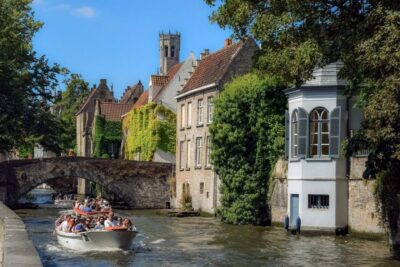
Walking Tour, Canal Boat Trip w/Beer Tasting Option
Read our review →
Choco-Story Chocolate Museum Guided Tour w/Tastings
Read our review →
From Bruges: Great War Flanders Fields Minibus Tour w/ Lunch
Read our review →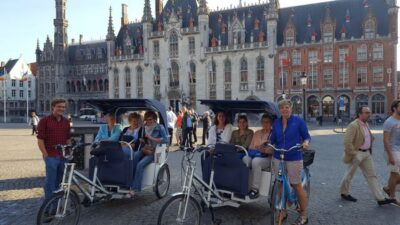

Belgian Waffle-Making Workshop with Beer Tasting
Read our review →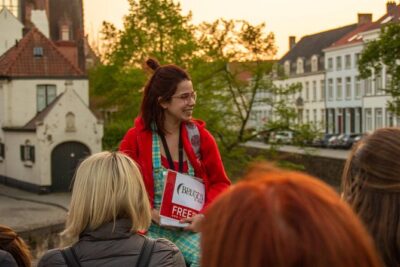
THE Storytelling Tour of Bruges | First Day Must | History & Tips
Read our review →Browse the lists this tour appears in