
Reviewed · BRUSSELS TOURS
Architecture Tour of Brussels
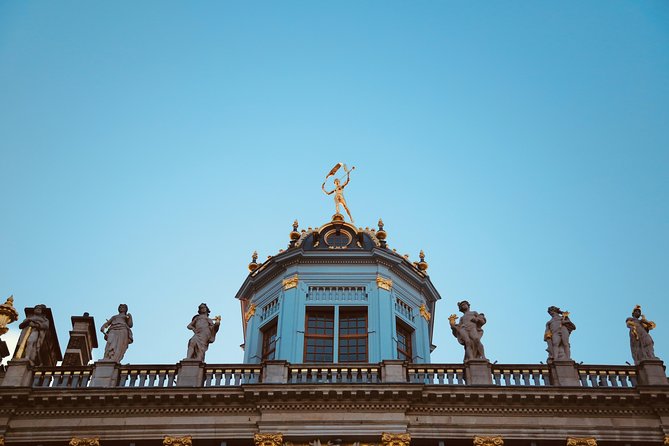
Grand Place is a fine place to begin, but the real appeal of this tour is learning to read Brussels through its buildings. An architect guide connects the square’s Gothic and Baroque facades with theaters, shopping arcades, churches, old waterways, and modern art spaces.
I like the small group limit of 18 and the strong mix of sights, from the Royal Galleries to Manneken Pis and Mont des Arts. I also like the evening start, when the old center has a more atmospheric feel. The main catch is that two hours is tight for ten stops, so some locations receive only a quick explanation.
Key points at a glance
- Grand Place begins the story: See how a market surrounded by wooden houses became one of Europe’s great architectural squares.
- An architect leads the walk: The focus is on facades, design choices, urban change, and the people connected to each place.
- Ten central stops fit into about two hours: You cover major landmarks without spending time on transport.
- The 8pm departure changes the mood: The route takes place in the evening, with a different feel in the historic center.
- Mont des Arts provides the photo finish: Look toward Brussels City Hall on one side and the Royal Palace on the other.
- The price is modest for a guided overview: At $30.10, this works best as a first-night orientation rather than a detailed study of every building.
Why this Brussels architecture walk works
This is not mainly a tour of interiors. It is a city walk built around what you can see from the street: facades, squares, monuments, churches, theaters, and the way Brussels changed over time.
That approach suits you if you want a useful framework for the city. Instead of seeing Grand Place, the Bourse, and Sablon as separate photo stops, you hear how commerce, royal power, defense, religion, theater, and art shaped the center.
The guide is a professional local architect, and the strongest part of the experience is the chance to ask about design rather than only dates. Gamaal is specifically associated with several strong bookings and is described as someone who adjusted the discussion to the group’s interests. Jimmy is also named in the feedback, with praise for his stories, recommendations, and ability to adapt when the wind became difficult.
That means your guide may shape the evening quite a bit. The experience is not presented as a rigid script, and the guide may spend more time on churches, famous people, or building styles if that is what interests you.
A few more Brussels half-days to weigh up
- Brussels: Atomium Entry Ticket with Design Museum Ticket
★ 4.4 · 9,254 reviews - From Brussels: Guided Day Trip to Bruges and Ghent
★ 4.6 · 8,353 reviews - From Brussels: Bruges & Ghent Day Tour – 2 Fairytale Cities
★ 4.7 · 8,242 reviews
Starting at Grand Place after dark
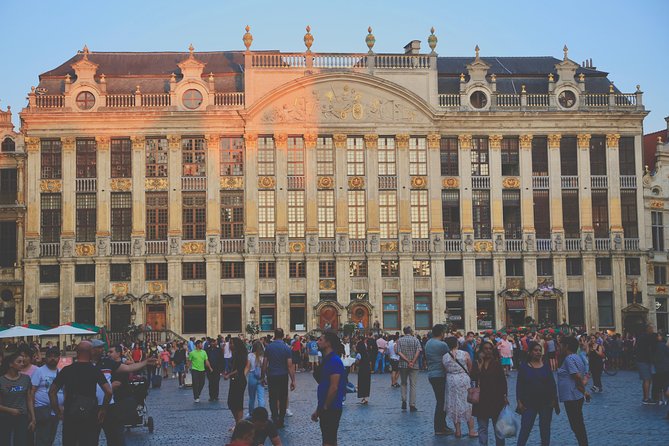
Meet at the Godiva shop at Grand Place 21/22 at 8pm. The square is the right starting point for an architecture tour because its present appearance hides a rougher beginning.
The guide explains how Grand Place began as a market bordered by wooden houses. Over time, those modest buildings gave way to the Gothic and Baroque facades you see today. The point is not simply that the buildings are old. It is that the square reflects changing wealth, taste, power, and rebuilding.
Allow about 20 minutes here. That is enough to examine the facades and hear stories about famous people connected with the square, but not enough for a detailed discussion of every building. If you want postcard photographs, arrive a little early and take them before the group sets off.
Grand Place is also the busiest visual moment of the walk. It can be easy to look up, snap a picture, and move on. An architect guide gives you a reason to slow down and compare the buildings instead.
Les Galeries Royales Saint-Hubert and the birth of the shopping arcade
The next major stop is Les Galeries Royales Saint-Hubert, described as the first shopping mall in the world. The arcade dates from the same period as Belgium, giving the guide a useful way to connect national history with commercial architecture.
You spend about 20 minutes here. The focus is on the architect who imagined the complex and worked through a network of contacts to make the project real. That is a practical lesson in architecture: grand buildings do not appear through drawings alone. They depend on money, influence, planning, and persistence.
The covered galleries are also linked with cafes where famous writers spent time. That adds a literary layer to what might otherwise seem like an elegant shopping passage. Look closely at the proportions, glass overhead, and long interior view. This is one of the stops where the architecture is easy to appreciate even if you are not a specialist.
The drawback is simple. The tour does not include a shopping break, so you will have to return later if you want to browse the stores or sit for coffee.
La Monnaie and Place De Brouckere
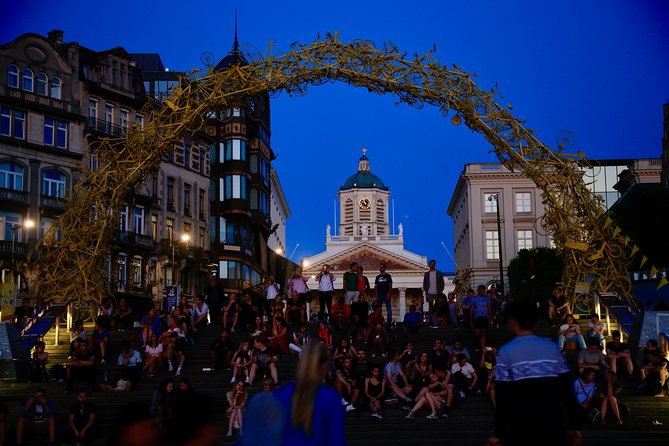
At La Monnaie, the Royal Theatre becomes the subject. The stop lasts about 10 minutes, so expect a concise account of the theater’s long past, along with a look at the shopping street and the role of this area in the Belgian Revolution.
This is a good example of the tour’s method. A building is not treated as an isolated object. The guide links its use, location, and political setting. You get a sense of how theater, retail, and public events shared the same part of town.
The walk then reaches Place De Brouckereplein for another 10-minute stop. Here the discussion turns to the De Brouckere palace and the old river route that once ran through the city.
The waterway mattered because it helped form part of Brussels’ defenses. That detail changes the way you see the center. Streets and squares were not laid out only for beauty or trade. Water could also help protect a town.
These stops are short, which keeps the route moving. If you have a special interest in urban planning or the old river system, ask questions quickly before the group moves on.
Same city, a completely different way to spend a day:
- Choco-Story Brussels: Chocolate Museum Entrance with Tasting
★ 4.3 · 4,883 reviews - Bruges and Ghent – Belgium’s Fairytale Cities – from Brussels
★ 4.0 · 4,809 reviews - Brussels: Hop-On Hop-Off Bus Tour
★ 4.0 · 4,016 reviews - Brussels: Guided Walking Tour
★ 4.6 · 3,560 reviews
La Bourse and the commercial heart of Brussels
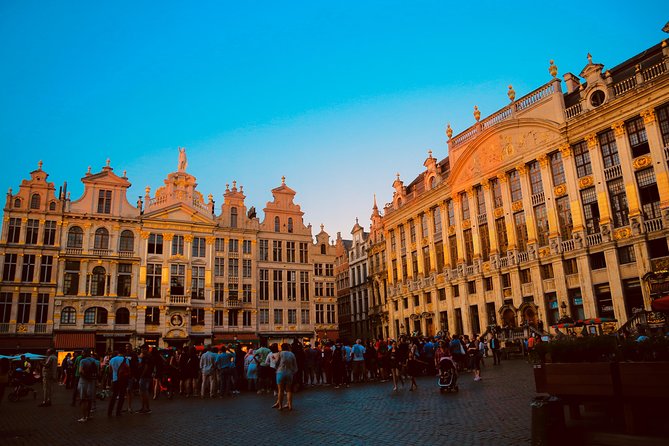
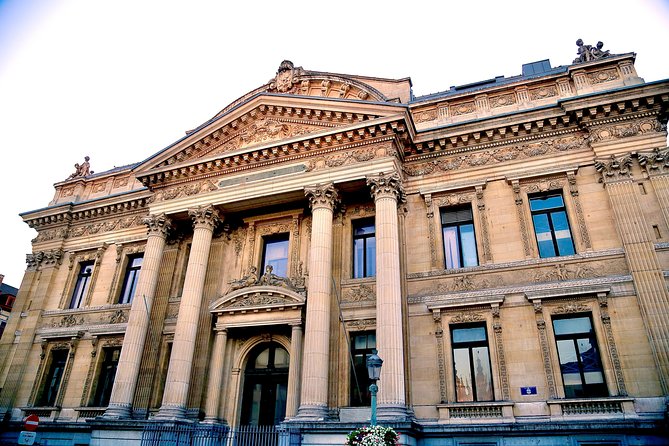
La Bourse de Bruxelles receives about 10 minutes. The guide traces the development of the exchange from Bruges to Grand Place and then to its present square.
That movement tells you something about the changing center of financial life. Buildings follow commerce, and commerce follows the city’s power and connections. The Bourse itself has also taken on a new role as a Brussels art destination, giving the building a life beyond its original purpose.
This is one of the more useful stops for understanding adaptation. A landmark does not have to remain frozen in its first function. The architecture can carry its past while the building takes on something new.
At $30.10, details like this help justify the price. You are not paying simply to be led from one famous facade to another. You are getting the connections between them, though the short stop means you should not expect an extended building tour.
Manneken Pis, the small statue with a large reputation
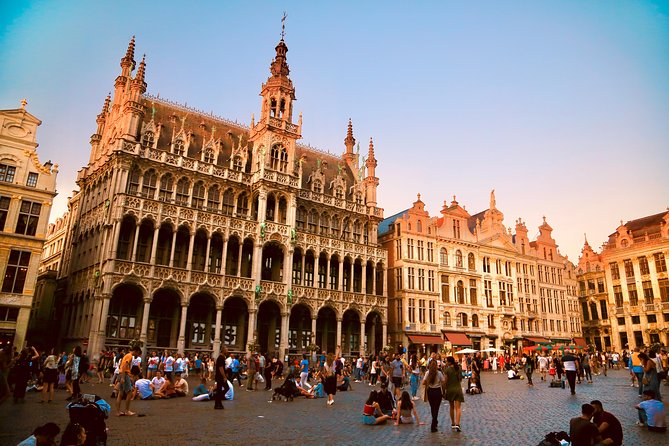
The Manneken Pis stop lasts about 15 minutes. The guide presents the statue as Brussels’ greatest disappointment, a joke that makes sense once you see how small the famous boy is compared with the attention he receives.
The main subject is the collection of more than 1,200 uniforms associated with the statue. You also hear four well-known stories about its origin and meaning, then climb the hill toward the wardrobe museum.
This stop works best if you enjoy the gap between a city’s grand reputation and its very small reality. Manneken Pis is not an architectural masterpiece. Its value lies in the stories, the rituals, and the way Brussels has built a larger identity around it.
Do not expect a long museum visit within the two-hour schedule. The focus is on the statue, its stories, and the wardrobe collection as part of the wider walk.
Jacques Brel and the cultural side of the city
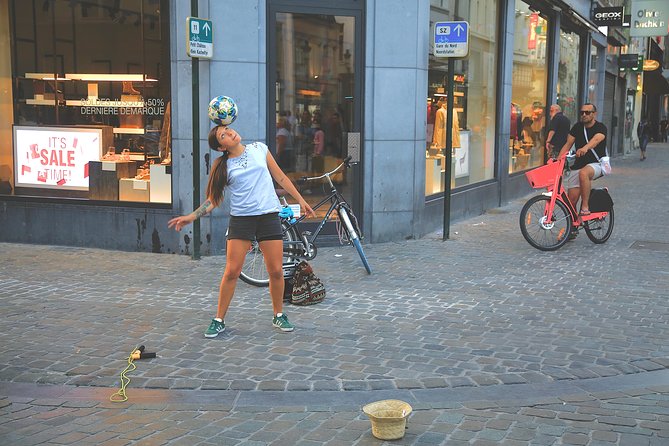
The Jacques Brel statue gets about five minutes. The guide asks why Brussels has a sculpture of the famous singer and songwriter, opening a brief conversation about local cultural identity.
It is a quick stop, but it breaks up the architectural material with a reminder that cities are shaped by artists and performers as well as stone and brick. If you know Brel’s work, this moment may carry more weight. If you do not, it is a short introduction rather than a full biography.
The limited time is both a strength and a weakness. You keep moving through the center, but you will not get a lengthy treatment of every person or building.
Sablon, chocolate, and Notre Dame des Victoires
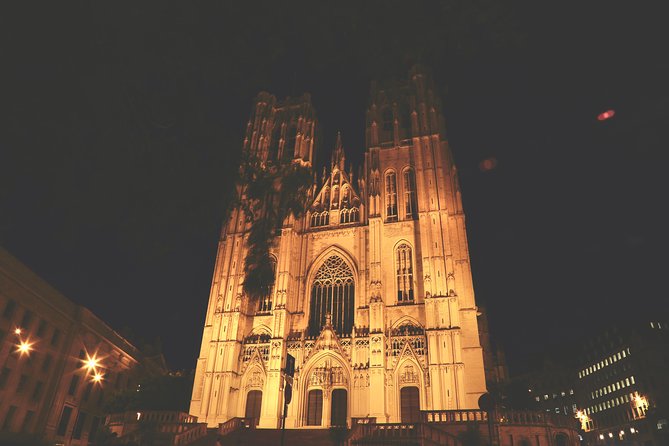
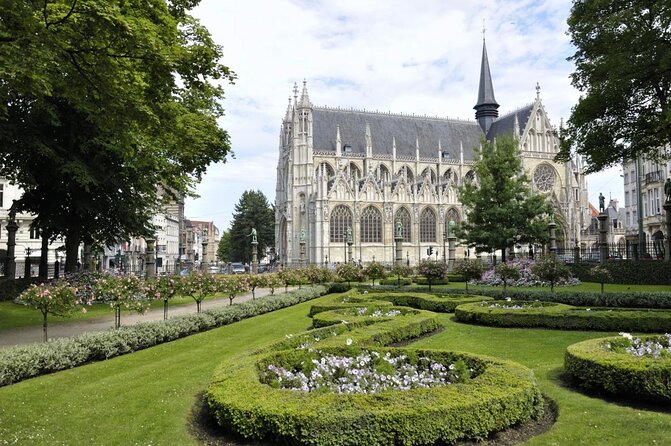
The route continues to Notre Dame des Victoires au Sablon for about 15 minutes. This is one of the more rewarding church stops because the guide combines the building with two familiar Brussels subjects: chocolate and the Sablon district.
The church gives the architect guide room to discuss religious design and the visual details that can be missed when you visit alone. The chocolate connection ties the stop back to daily life and local pleasure rather than leaving the discussion in the realm of formal architecture.
Sablon also changes the feel of the route. After the commercial arcades, theaters, exchange, and comic statue, you get a quieter setting with a stronger church presence. Bring a camera, but listen for the design details first. A quick photo will not tell you why the church looks the way it does.
BOZAR and a modern turn
BOZAR Centre for Fine Arts is a brief five-minute stop. The guide invites you to consider what lies behind the large walls of the building.
That question is more important than the length of the stop suggests. BOZAR introduces a different kind of cultural architecture, one that does not depend on the ornate medieval and Baroque appearance found earlier in the walk.
You should think of this as a preview, not a museum visit. Admission to an exhibition is not part of the experience, and there is no time to explore the full center. The value is in seeing how Brussels’ cultural life continues beyond its historic facades.
Mont des Arts and the best photo view
The final major stop is Mont des Arts, with about 20 minutes for the view. This is the natural ending because it lets you look back across the old city and understand the route as a whole.
The main photograph points toward Brussels City Hall, with the tower as the key focus. At the other end, you can see the Royal Palace. The viewpoint also helps you connect the city’s medieval core with its royal and civic centers.
This is the place to pause. The tour’s earlier stops come in quick succession, while Mont des Arts gives you a broad visual frame. If you want a photo of the old city walls and skyline, have your phone ready before the group arrives.
The tour ends back at the meeting point, though the route information also describes Mont des Arts as the final sightseeing stop. Confirm the exact walking arrangement with your guide at the beginning, especially if you need to meet transport afterward.
What the $30.10 price really buys you
At $30.10 per person, the tour is reasonably priced for a two-hour guided introduction. All listed stops have no separate admission charge, so the fee pays for the professional local guide, the route planning, and the interpretation.
That matters in Brussels because the sights are close together but not always easy to connect. You can walk past a theater, exchange, church, or palace without knowing how it fits into the city’s story. The guide supplies that link.
I would not book this expecting a full architectural course. Ten stops in two hours means the pace is brisk, and several locations receive only five or 10 minutes. You are buying breadth and context, not long indoor visits or detailed technical analysis.
The group maximum of 18 is another positive. It is large enough to meet fellow participants but small enough for questions to be practical. Several bookings were treated almost like private walks because the group was small, though that cannot be guaranteed.
Timing, comfort, and who should choose it
The 8pm start makes this useful for your first evening in Brussels. You can spend the day on museums or nearby sights, then use the walk to get your bearings in the old center.
It is also a good choice if you like evening city views. The German-language feedback specifically appreciated the atmosphere of an evening walk through the old town, and the guide offered restaurant advice. That kind of local suggestion can be useful after the final stop.
Transport is not included, and the route is built around central Brussels sights. Plan on making your own way to Grand Place and account for the time needed to move between stops. Most participants can join, and the meeting point is near public transportation.
I would choose this for:
- A first visit to Brussels
- Anyone curious about buildings and city planning
- Couples or small groups wanting a guided evening walk
- People who prefer stories and connections over museum interiors
- Visitors with only a short time in the city
I would look elsewhere if you want a slow photographic walk, extensive time inside BOZAR, or a specialist tour devoted to one period of architecture.
Booking details worth knowing
The experience is offered in English and uses a mobile ticket. Confirmation arrives within 48 hours, subject to availability.
You can cancel for a full refund up to 24 hours before the 8pm start time. Changes or cancellations inside that window are not accepted, and the local start time controls the deadline.
The tour requires a minimum number of participants. If that minimum is not reached, you are offered another date or experience, or a full refund.
Should you book the Brussels architecture tour?
Book it if you want a lively, well-organized introduction to central Brussels and like having an architect explain what you are seeing. The best parts are Grand Place, the Royal Galleries, the church at Sablon, and the final view from Mont des Arts.
The tour is especially good value on your first night, when a two-hour route can help you understand the city before you explore on your own. Just keep your expectations in line with the schedule. This is a fast survey of ten places, not a detailed examination of each one.
If Gamaal or Jimmy is leading, you may get an especially flexible and humorous evening, but guide assignment is not stated as guaranteed. For $30.10, a small English-speaking group, a strong set of central landmarks, and an evening finish make this an easy choice for curious first-time visitors.
FAQ
Where does the Architecture Tour of Brussels begin?
The tour begins at the Godiva shop at Grand Place 21/22, 1000 Bruxelles, Belgium.
What time does the tour start?
The stated start time is 8pm.
How long does the experience last?
It lasts approximately two hours. One booking was described as running slightly longer than two hours.
What language is the tour offered in?
The tour is offered in English.
What is included in the price?
A professional local guide is included.
Is transportation included?
No. Transport is not included.
What sights are included?
The route includes Grand Place, Les Galeries Royales Saint-Hubert, La Monnaie, Place De Brouckereplein, La Bourse de Bruxelles, Manneken Pis, the Jacques Brel statue, Notre Dame des Victoires au Sablon, BOZAR Centre for Fine Arts, and Mont des Arts.
How large is the group?
The maximum group size is 18 participants.
Is there an admission fee for the stops?
The listed stops have no admission ticket charge. The experience does not include separate admission to an exhibition or indoor attraction.
Can I cancel for a full refund?
Yes. You can cancel at least 24 hours before the local start time for a full refund. Cancellations or changes made less than 24 hours before the start are not accepted for a refund.
Just added around Brussels
- Private Tour – Bruges and Ghent, our fairytale cities★ 5.0 · 3 reviews
- Bruxelles: Photoshoot Experience★ 4.4 · 3 reviews
- Private Day Trip from Brussels to Bruges★ 4.5 · 3 reviews
- Private Arrival Transfer from Brussels Airport to Bruges with Business car★ 5.0 · 3 reviews
- Leuven: City Walk with Audio Guide in 7 Languages on your Phone★ 3.0 · 3 reviews
- Brussels: Express Walk with a Local in 60 minutes★ 5.0 · 3 reviews
- 2 Hour Beer Tasting with Local Beer Sommelier in Brussels★ 5.0 · 3 reviews
- Floating in the clouds★ 5.0 · 3 reviews
Brussels Tours, compared.
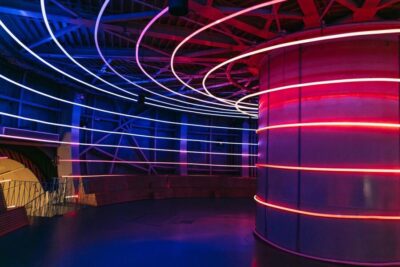
Atomium Entry Ticket with Design Museum Ticket
Read our review →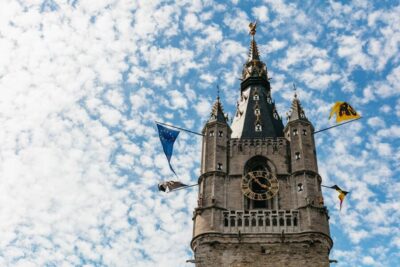
From Brussels: Guided Day Trip to Bruges and Ghent
Read our review →
From Brussels: Bruges & Ghent Day Tour – 2 Fairytale Cities
Read our review →
Choco-Story Brussels: Chocolate Museum Entrance with Tasting
Read our review →
Bruges and Ghent – Belgium’s Fairytale Cities – from Brussels
Read our review →
From Brussels: Luxembourg Tour with Dinant Visit
Read our review →
Hungry Mary’s Famous Beer and Chocolate Tour in Brussels
Read our review →Browse the lists this tour appears in