
Reviewed · BRUSSELS TOURS
Visite guidée : Bruxelles, 1000 Ans de Luttes
Brussels’ Marolles district is where this walk earns its title. You move from a 12th-century church to the giant Palace of Justice, then through narrow streets and old working-class corners before finishing at the daily flea market. The subject is not royal Brussels or postcard Brussels. It is the city shaped by ordinary people, public arguments, housing struggles, and stubborn local pride.
I like two things right away. First, the tour gives social history a human scale, with stories about the people who lived in and defended the Marolles. Second, it tackles the Palace of Justice renovation scandal instead of simply posing outside it. The main consideration is that this is a short walking tour with a strong focus on one district, so it suits curious visitors more than anyone seeking a broad introduction to all of Brussels.
Key points to know before you book
- A two-hour walk through the Marolles: The route links the Chapel district, the Palace of Justice, the Marolles elevator, and Place du Jeu de Balle.
- Social history rather than monument collecting: You learn how disadvantaged residents lived, organized, and fought to protect their neighborhood.
- An English-language experience: Guides such as François, Simon, and Thomas have led this tour, though your specific guide is not guaranteed.
- Free-entry sights along the way: The listed stops have no separate admission charge, keeping the advertised $3.62 price unusually low.
- A useful Brussels viewpoint: The Marolles elevator provides a short stop with one of the city’s best views.
- A local finish: The route ends in the middle of Place du Jeu de Balle, surrounded by bars and restaurants.
Why the Marolles tells a different Brussels story
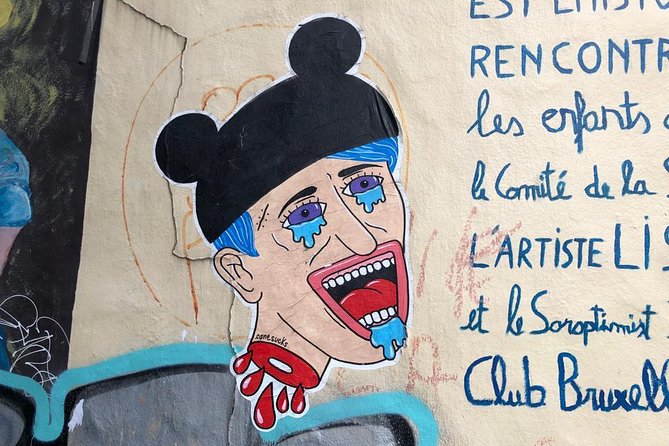
Many first walks through Brussels concentrate on the Grand-Place, ornate guildhalls, chocolate shops, and major royal landmarks. This route takes another path. It asks how people lived outside the old city walls, how neighborhoods were treated by city authorities, and why residents fought to keep their identity.
That focus gives the walk a clear point of view. You are not simply collecting dates. You are looking at Brussels through class, housing, migration, religion, and neighborhood loyalty. The approach also helps explain why the Marolles still feels distinct even though it sits close to the city center.
The title, 1000 Years of Struggles, is broad, but the walk is most effective when it connects long-term changes to visible places. A church, a courthouse, a public elevator, a small street, and a flea market become pieces of one local story. I find that far more useful than a long list of rulers and construction dates.
The tour has also worked well for people who already know Brussels. One local who had lived in the city for several years described learning enough to see Brussels differently. That is a useful clue: you do not need to be a first-time visitor to get value from this walk.
A few more Brussels half-days to weigh up
- Brussels: Atomium Entry Ticket with Design Museum Ticket
★ 4.4 · 9,254 reviews - From Brussels: Guided Day Trip to Bruges and Ghent
★ 4.6 · 8,353 reviews - From Brussels: Bruges & Ghent Day Tour – 2 Fairytale Cities
★ 4.7 · 8,242 reviews
Notre-Dame de la Chapelle, a quiet beginning
The meeting point is Rue de la Chapelle 21, near Église Notre-Dame de la Chapelle. Allow yourself enough time to reach the exact starting address, since the route begins at the church rather than at Place du Jeu de Balle.
The church dates from the 12th century and is one of the area’s oldest landmarks. You spend about 10 minutes here, learning about its role and some of its lesser-known details. The church also hosts painting exhibitions and offers Mass in Polish every Sunday, details that point to the changing communities connected with this part of Brussels.
That Polish connection matters because the tour looks at living neighborhoods, not frozen monuments. A building can preserve medieval fabric while serving modern residents with different languages and traditions. The church therefore works as an introduction to the Marolles’ layered identity.
Admission is free, and no separate ticket is needed. The stop is brief, so do not expect a long church visit or an extended art presentation. Think of it as the first chapter in a local story.
The Palace of Justice and a very Belgian renovation tale
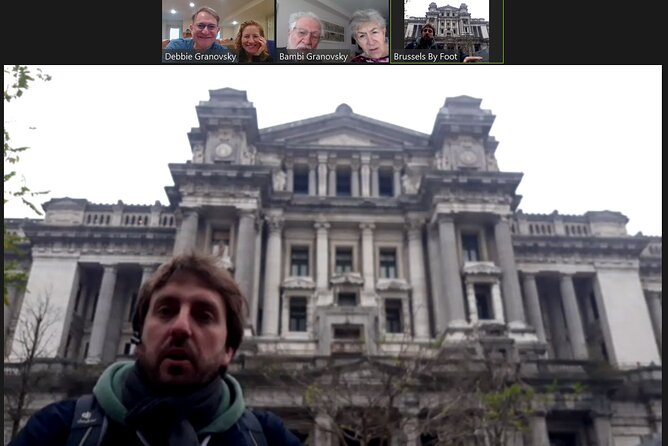
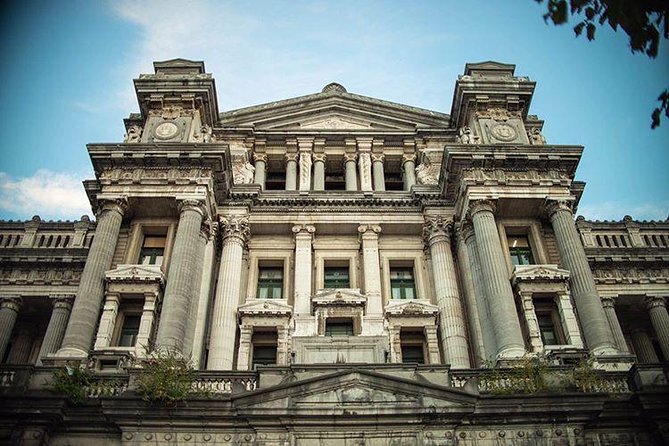
From the church, the walk turns to the Palais de Justice. You spend about 15 minutes here, discussing the building and the renovation work that began roughly 40 years ago and still had not ended when this experience was described.
That unfinished project becomes a way to talk about public money, bureaucracy, and the kind of civic scandal that feels particularly Belgian. The point is not only that the building has scaffolding or repair problems. It is that a major public structure can become a symbol of delay, cost, and political frustration.
This is one of the tour’s strongest subjects because you can look at a real building while hearing how residents understand it. The Palace of Justice is not treated as a distant institution. Its condition connects to everyday questions about who pays, who decides, and how long a city should tolerate disruption.
The stop should appeal to you if you have ever looked at the Palace of Justice and wondered what happened to it. It also adds a modern note to a tour that begins in the medieval period. The route does not pretend that Brussels’ struggles ended centuries ago.
The drawback is simple: 15 minutes is enough for an explanation, not a full architectural study. If your main interest is the building’s design, statues, or interior, this tour may leave you wanting more. Its emphasis is public life and local controversy.
The Marolles elevator and a fast change of view
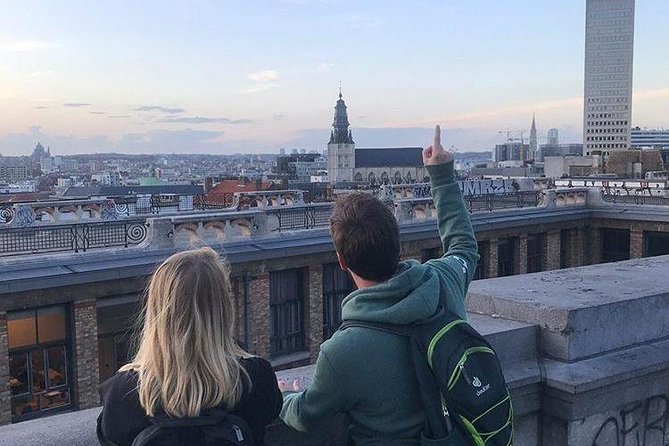
The Ascenseur des Marolles takes only about five minutes, but it gives the route a welcome change of pace. The elevator carries you to a high point where you can look across Brussels, described as one of the best views in the city.
The stop also makes practical sense. The Marolles sits below the Palace of Justice and the Sablon area, and the elevator helps you understand the physical relationship between these parts of Brussels. After hearing about social divisions and invisible borders, a higher viewpoint lets you see how close the districts are in geographical terms.
Do not expect a long viewpoint visit. Five minutes is a quick pause for orientation and photographs, followed by the neighborhood walk. Still, short stops can be useful when they give you a clear sense of place. Here, the view helps connect the map in your head with the streets under your feet.
Same city, a completely different way to spend a day:
- Choco-Story Brussels: Chocolate Museum Entrance with Tasting
★ 4.3 · 4,883 reviews - Bruges and Ghent – Belgium’s Fairytale Cities – from Brussels
★ 4.0 · 4,809 reviews - Brussels: Hop-On Hop-Off Bus Tour
★ 4.0 · 4,016 reviews - Brussels: Guided Walking Tour
★ 4.6 · 3,560 reviews
Small streets and the character of the Marolles
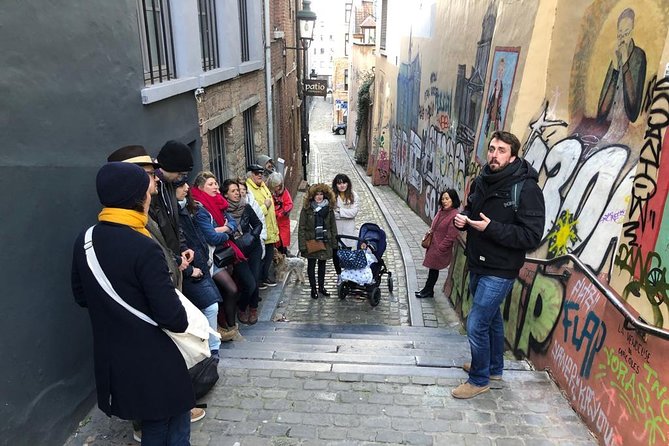
The main neighborhood section lasts about 20 minutes. This is where the tour turns from landmarks to daily life. You walk through a district described as poor and unruly in earlier periods, with tiny streets and blind alleys that preserve unexpected stories.
The Marolles’ importance comes from its people as much as its buildings. The walk looks at disadvantaged residents who remained independent-minded and worked to protect their place in central Brussels. You hear about the conditions they faced and the way their identity developed within the city.
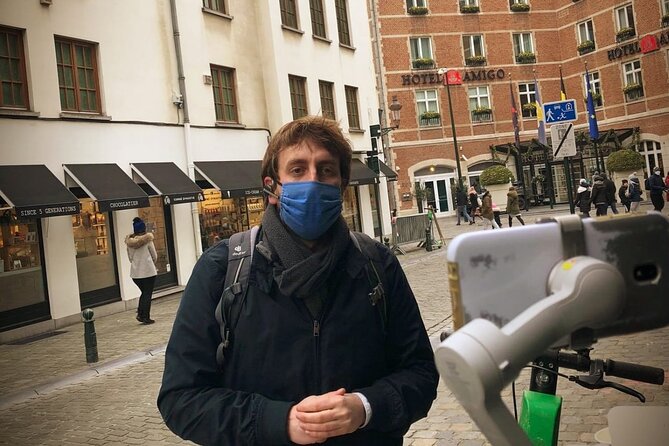
The guide’s job is especially important here. A list of dates would not explain what it meant to identify with the Marolles. The strongest version of this tour uses anecdotes to show how local pride, hardship, and resistance fit together. Guides named François, Simon, and Thomas have been praised for storytelling, clear explanations, and answers to questions about the district.
Your guide may be someone else, but the experience is designed around a personal interpretation of the Marolles. Thomas, in particular, has led walks for both residents and visitors, presenting the visible and invisible borders within Brussels. That theme gives you something to watch for as you walk: not just where one district ends, but how people decide where they belong.
The neighborhood stop is also where the walk becomes most nuanced. The Marolles is not presented as a simple story of poverty or victimhood. The focus includes independence, community feeling, and efforts to conserve the area. That balance keeps the route from turning into either a romantic portrait of old Brussels or a catalogue of urban problems.
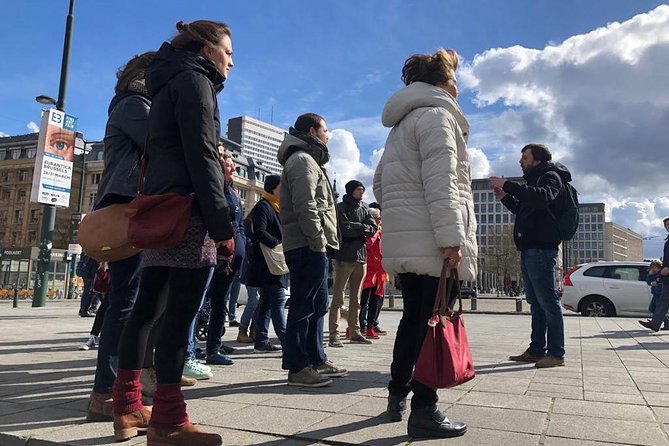
Because the neighborhood has narrow streets and blind alleys, comfortable shoes are sensible. The route lasts around two hours in total, and most people can take part, but you should still expect to be on foot for the duration. The group can include up to 25 people, large enough for a social outing but small enough for a guide to maintain a walking conversation.
Place du Jeu de Balle and the daily flea market
The final stop is Place du Jeu de Balle, where the route ends after about 10 minutes. The square is home to the Marolles’ daily flea market, an important part of the district’s public life.
The market is not treated as a decorative extra. You learn how people have fought to keep the place conserved, which brings the tour’s main idea back into view. The square is a physical setting for trade, memory, and neighborhood identity.
This is a good ending because the tour finishes in a place still used by local people. You can continue the conversation in one of the bars or restaurants around the square, or simply stay to watch the square change through the day. The endpoint is Pl. du Jeu de Balle 64, in the middle of the square, so you are not dropped at an isolated street corner.
The flea market itself may appeal to you even if social history is not your main interest. It gives the walk a relaxed finish after the heavier discussion of poverty, public spending, and urban conflict. On the other hand, the tour does not include purchases, food, or a guided market shopping session. Any meal or drink afterward is your own expense.
What the low price really means
At $3.62 per person, this is one of the least expensive guided walks you are likely to find in Brussels. The listed stops have free admission, so the price is mainly paying for the guide’s time and interpretation rather than museum entry.
There is also a stated gratuity of €10 per person that is not included. That changes the practical calculation. If you plan to follow the suggested gratuity, your real outlay is much higher than the headline price, though it remains reasonable for a two-hour English-language walk led by a local guide.
I would judge the value by the content rather than the entry cost. You receive a focused route, local social context, a city view, and a useful introduction to a district that many standard city walks treat only briefly. If you want major interiors or paid attractions, the value is less obvious. If you want stories that help you understand Brussels beyond its grand façades, the price is attractive.
The walk is usually booked about 25 days ahead, so you should not assume you can always find a last-minute place. Confirmation is provided at booking. Free cancellation is available up to 24 hours before the start time, while later cancellations and changes are not refunded or accepted. A minimum group size is required, and if the operator cancels for that reason, you receive another option or a full refund.
Who will get the most from this walk
I would choose this experience if you have already seen Brussels’ best-known center and want a more grounded second look. It also suits anyone interested in working-class history, urban change, local politics, religious communities, and the way residents defend a neighborhood’s character.
It works for families with older children, couples, solo visitors, and Brussels residents who want to test what they think they know. The information says most people can participate, and service animals are allowed. Public transport is nearby, which makes the starting point practical.
The tour is offered in English. Since the subject depends on stories and explanation, strong listening skills will help more than a desire to rush from sight to sight. You should also be comfortable walking for about two hours and moving through small streets.
I would not make this your only Brussels sightseeing plan if you have never seen the Grand-Place, the historic center, or the city’s major museums. The route is deliberately narrow in geographic scope. Its strength is depth in the Marolles, not coverage of every major attraction.
My take on the guides and storytelling
The strongest praise for this experience centers on the guide’s delivery. François has led groups through unusual places in the Sablon and Marolles, including a group of 12 friends who wanted more than familiar Brussels sights. Simon has presented the living conditions and progress of disadvantaged residents, while Thomas has been singled out for changing the way long-term residents see the city.
Those names are useful because they show the range of the guiding style, but they do not guarantee who will lead your departure. What you can reasonably expect is a walk built around stories, questions, and local perspective rather than a fixed audio script.
I especially like the mix of historical and anecdotal material. The tour aims to keep the past connected to modern Brussels, which makes the Palace of Justice and the flea market feel like part of the same discussion. You are not asked to admire the district from a distance. You are encouraged to understand its tensions.
The guide can also help with the context that a map cannot provide. The Marolles is physically close to prestigious parts of Brussels, yet its social identity has developed through different pressures. That contrast is one of the most useful things you take away from the walk.
Should you book Bruxelles, 1000 Ans de Luttes?
Book it if you want an English-language walk with a strong local voice, unusual stops, and a clear focus on how ordinary people shaped Brussels. The combination of Notre-Dame de la Chapelle, the unfinished Palace of Justice renovation story, the elevator view, and Place du Jeu de Balle gives you a route with variety without losing its main subject.
Skip it if you want grand interiors, a full city overview, or a shopping-focused market tour. Also remember that the €10 gratuity is listed separately from the $3.62 price.
For curious visitors and Brussels residents, I think this is a smart choice. It is short, inexpensive, and more thoughtful than a standard monument walk. You finish with a better sense of why the Marolles matters, not just where it is.
FAQ
How long does the Brussels 1000 Years of Struggles tour last?
The tour lasts approximately two hours.
Where does the tour begin?
It begins at Rue de la Chapelle 21, 1000 Bruxelles, Belgium, at Église Notre-Dame de la Chapelle.
Where does the tour end?
It ends at Pl. du Jeu de Balle 64, 1000 Bruxelles, Belgium, in the middle of the square.
Is the tour offered in English?
Yes. The experience is offered in English.
What is included in the price?
The listed inclusions are the entrance fee and registration fees. The main stops also have free admission.
Is gratuity included?
No. A gratuity of €10 per person is listed separately.
Can I cancel for a full refund?
Yes, if you cancel at least 24 hours before the experience start time. Cancellations or changes made less than 24 hours before the start are not refunded or accepted.
Just added around Brussels
- Private Tour – Bruges and Ghent, our fairytale cities★ 5.0 · 3 reviews
- Bruxelles: Photoshoot Experience★ 4.4 · 3 reviews
- Private Day Trip from Brussels to Bruges★ 4.5 · 3 reviews
- Private Arrival Transfer from Brussels Airport to Bruges with Business car★ 5.0 · 3 reviews
- Leuven: City Walk with Audio Guide in 7 Languages on your Phone★ 3.0 · 3 reviews
- Brussels: Express Walk with a Local in 60 minutes★ 5.0 · 3 reviews
- 2 Hour Beer Tasting with Local Beer Sommelier in Brussels★ 5.0 · 3 reviews
- Floating in the clouds★ 5.0 · 3 reviews
Brussels Tours, compared.
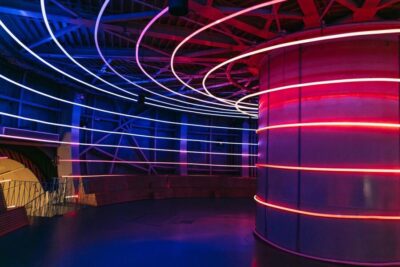
Atomium Entry Ticket with Design Museum Ticket
Read our review →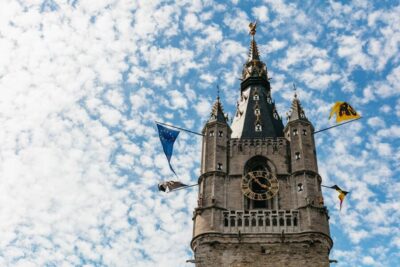
From Brussels: Guided Day Trip to Bruges and Ghent
Read our review →
From Brussels: Bruges & Ghent Day Tour – 2 Fairytale Cities
Read our review →
Choco-Story Brussels: Chocolate Museum Entrance with Tasting
Read our review →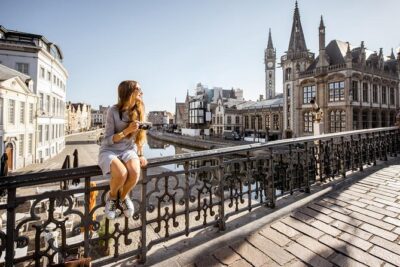
Bruges and Ghent – Belgium’s Fairytale Cities – from Brussels
Read our review →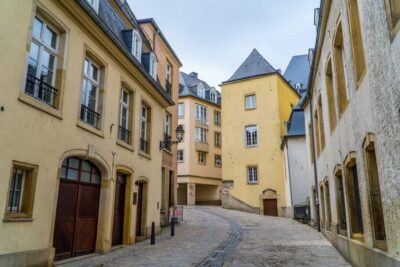
From Brussels: Luxembourg Tour with Dinant Visit
Read our review →
Hungry Mary’s Famous Beer and Chocolate Tour in Brussels
Read our review →Browse the lists this tour appears in