
Reviewed · BRUSSELS TOURS
Excursion to Bruges and Ghent by bus from Brussels
Bruges and Ghent give you two very different pictures of medieval Belgium in one long day. In Bruges, you walk beside canals, cross storybook bridges, and enter squares lined with stepped-gable buildings. In Ghent, you get bigger churches, taller towers, a riverside center, and the imposing Castle of the Counts of Flanders.
I like the Spanish-speaking guidance, which adds useful context to places that can otherwise blur together. I also like the round-trip coach, since it removes the need to plan separate train journeys and city-center connections.
The tradeoff is time. With roughly 1.5 hours of free time in each city, this is a smart first look, not a slow exploration. Traffic can affect the schedule, and the day may feel tiring, especially if the group order changes.
Key points to know before booking
- Two medieval cities in one day: Bruges and Ghent are close enough to combine, but the schedule leaves little room for lingering.
- Spanish-speaking guides: Guides such as Eduardo, Irene, Unai, Carlos, Ana, and Paula have led departures, though the assigned guide can vary.
- A walking-heavy program: The route includes canals, bridges, squares, churches, guild halls, and castle views on foot.
- Free time is limited: Plan on about 1.5 hours in Bruges and 1.5 hours in Ghent, depending on traffic and the group’s pace.
- Chocolate is part of the stop: A visit to Chocolalino includes an artisan chocolate tasting and advice on spotting handmade products.
- Easy city-to-city transport: An air-conditioned coach handles the journey from Brussels and the transfer between Bruges and Ghent.
One long day from Brussels
The tour begins at 8:30 a.m. at Carrefour de l’Europe, near Brussels Central Station and public transportation. You meet the guide there, board an air-conditioned coach, and spend about 10.5 hours on the full outing before returning to the same meeting point.
The group can include up to 45 people. That keeps the price low, but it also means you need to stay alert when the guide gives meeting times. The coach is a real convenience, yet the road portion can be affected by traffic. One especially poor experience involved a much longer-than-expected drive, while other departures had a coach that was clean and comfortable and left on time.
At $54.45 per person, the value is good if you want transportation, two guided city walks, and a Spanish-speaking guide in one package. It is less attractive if you already feel comfortable arranging Belgian trains and prefer to spend several hours in just one place.
A few more Brussels half-days to weigh up
- Brussels: Atomium Entry Ticket with Design Museum Ticket
★ 4.4 · 9,254 reviews - From Brussels: Guided Day Trip to Bruges and Ghent
★ 4.6 · 8,353 reviews - From Brussels: Bruges & Ghent Day Tour – 2 Fairytale Cities
★ 4.7 · 8,242 reviews
Bruges begins at Minnewater Lake
The coach drops you at Bargeplein, also called Katelijnparking. There is a short bathroom break before the walk starts, then the guide leads you toward Minnewater Lake, Bruges’ Lake of Love.
This is a gentle opening. The lake gives you a calm view before the busier lanes of central Bruges, and the guide explains the story tied to the water. You only spend about five minutes here, so think of it as a quick orientation and photo stop rather than a full park visit.
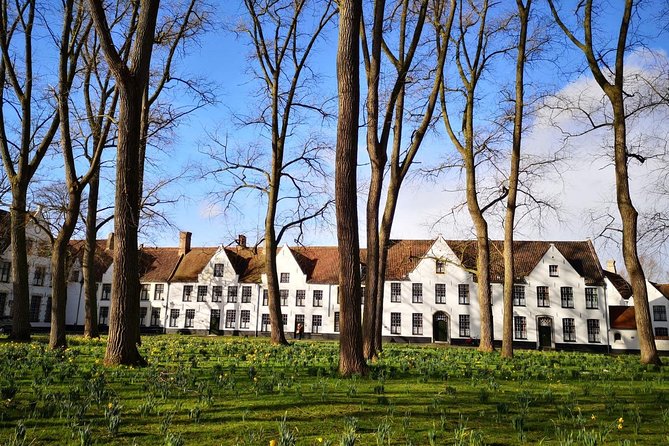
Next comes the Beguinage, founded in 1245. This former community for beguines introduces an important part of Bruges’ social history: women who lived together in a religious setting without belonging to a conventional convent. The stop lasts about ten minutes, enough to see the quiet character of the place and hear its background.
You then walk along Stoofstraat, where the guide points out features that help identify original medieval houses. That detail is useful. Bruges can look almost too polished, and learning what is old, altered, or rebuilt gives the streets more meaning.
Canals, beer, and Bruges legends
At Walplein, the subject turns to Belgian beer. The square is a good place to connect the city’s trade and brewing traditions with daily life. Again, the stop is brief, about five minutes, so you get the story without a brewery visit or tasting session.
The walk continues to St. Bonifacius Bridge, one of Bruges’ most photogenic corners. The guide shares the local legend associated with the bridge, then gives you time for pictures. This is one of those stops where the setting does much of the work: water, old masonry, and narrow medieval buildings come together in a small space.
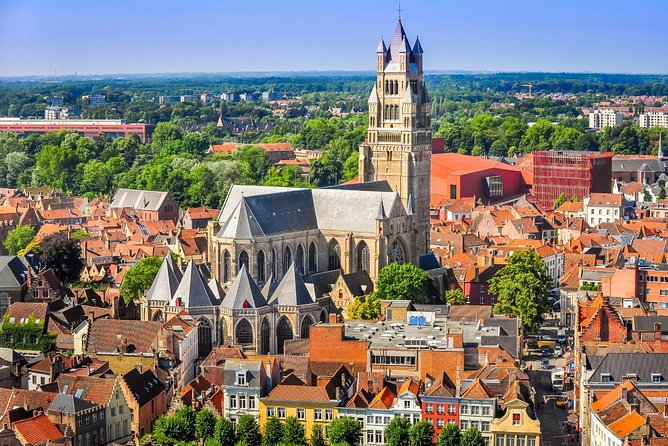
You pass Old St. John’s Hospital, where the guide explains how medical care worked in medieval Bruges. The eight-minute stop helps you see the hospital as more than an attractive old building. Across from it, you view the Church of Our Lady from outside and hear about Michelangelo’s white-marble Virgin and Child inside.
The tour does not include a formal church admission in Bruges. The guide explains the sculpture, but you should not expect a long interior visit here. That is an important distinction if Michelangelo’s work is your main reason for coming.
Burg Square and the famous canal view
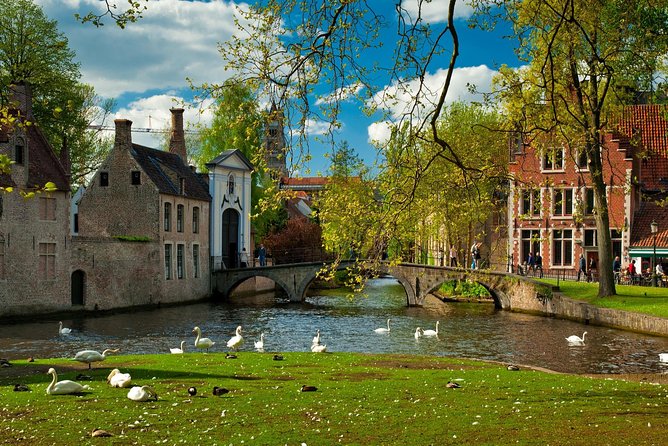
At the Gruuthusemuseum, the guide introduces the powerful Gruuthuse family and explains their place in Bruges’ past. The stop lasts only five minutes, but it helps make sense of the grand buildings around this part of town.
Burg Square is one of the day’s strongest stops. You see the Gothic Town Hall, the former courthouse, and the Basilica of the Holy Blood. The guide explains how the buildings fit together, while you get a short ten-minute look at one of Bruges’ most important civic spaces.
Then comes Rozenhoedkaai, often called the city’s most photographed spot. The name refers to the Quay of the Rosary, and the view offers the classic Bruges scene of canal water, old façades, and narrow passageways. You have about five minutes for photos, so keep your camera ready before the group arrives.
At Huidenvettersplein, or Tanners Square, you learn how medieval tanners worked. This small stop adds an everyday trade to the grand churches and wealthy houses. I appreciate that balance. The city becomes less like a picture postcard and more like a working commercial center.
Same city, a completely different way to spend a day:
- Choco-Story Brussels: Chocolate Museum Entrance with Tasting
★ 4.3 · 4,883 reviews - Bruges and Ghent – Belgium’s Fairytale Cities – from Brussels
★ 4.0 · 4,809 reviews - Brussels: Hop-On Hop-Off Bus Tour
★ 4.0 · 4,016 reviews - Brussels: Guided Walking Tour
★ 4.6 · 3,560 reviews
Market Square, chocolate, and free time in Bruges
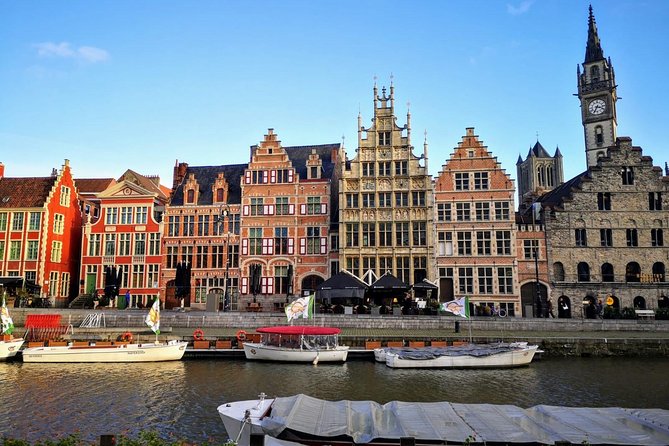
The guided Bruges walk ends at Grote Markt, the Market Square. The guide points out the buildings around the square, then gives practical suggestions for eating and buying traditional chocolate. You also receive the meeting instructions for the coach to Ghent.
The group then visits Chocolalino, described as a certified artisan chocolate shop. You taste artisan chocolates and get tips for telling handmade products from industrial ones. It is a short eight-minute stop, and it should be treated as an introduction rather than a full chocolate workshop.
After the guided route, you have about 1.5 hours of free time in Bruges. This is enough for a meal, a short canal-side wander, additional photographs, or a quick shop. It is not enough for every museum, a leisurely canal cruise, and a relaxed lunch.
I would use the free time strategically. Pick one goal before you leave the guide: eat, shop, visit a specific site, or simply walk. The center is compact, but queues and crowded streets can quickly consume your break.
You return to Bargeplein to meet the guide and bus. The transfer to Ghent is scheduled at about ten minutes within the itinerary, but the actual road journey depends on traffic. Listen carefully to the exact return instructions, especially if the day’s order changes.
Ghent opens with towers and Saint Bavo’s Cathedral
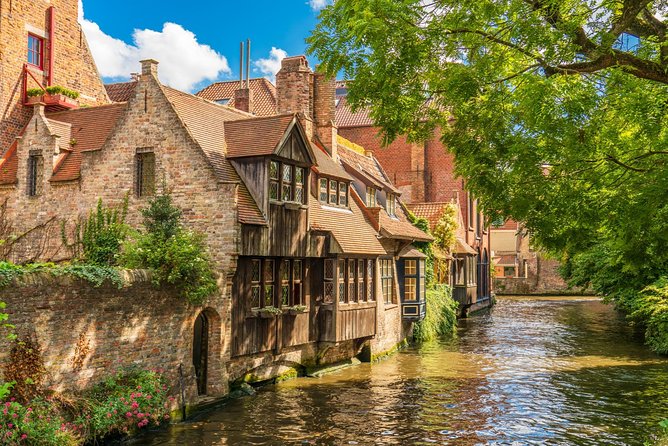
In Ghent, the group walks from the drop-off point toward the center. The tour begins at Ghent Town Hall, where the guide explains the building’s different architectural styles. This is a short five-minute introduction, but it prepares you to notice how many periods appear side by side in Ghent.
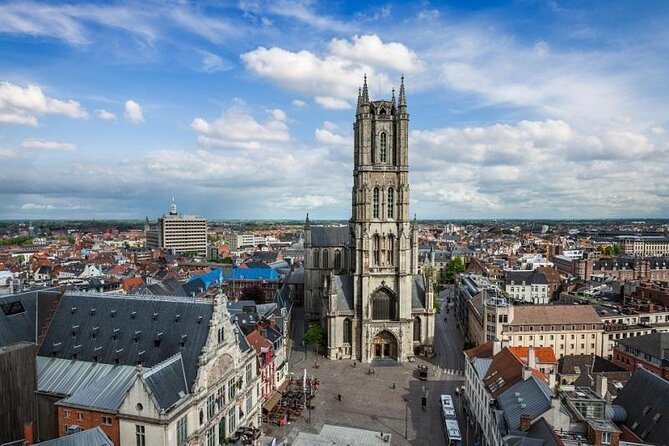
At the Belfry of Ghent, the guide covers the tower’s role and the story of its dragon. The belfry is one of the city’s defining landmarks, and the ten-minute stop gives you a clear exterior view and historical setting. Entry to the tower is not listed as part of the tour.
Saint Bavo’s Cathedral receives the longest stop in Ghent, about 25 minutes. You see the exterior and interior, and the guide explains the famous Adoration of the Mystic Lamb by Hubert and Jan van Eyck. The work’s thefts and recoveries make for a memorable story, but the timing remains limited.
If the cathedral is important to you, stay close to the guide and use the interior time well. The tour provides an introduction rather than an extended art visit, and the schedule must keep the whole group moving.
Ghent’s churches, guild houses, and riverside center
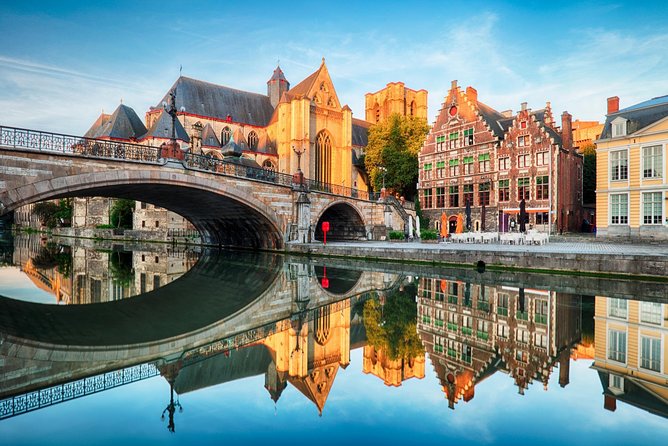
The next stops show why Ghent feels different from Bruges. At Saint Nicholas Church, the guide points out that Belgian churches can host concerts and other events. The stop lasts only three minutes, so it is more of a quick observation than a full church visit.
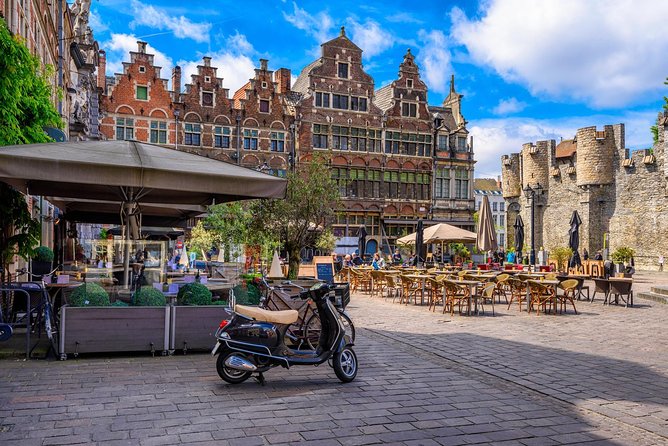
At the Masons’ Guild Hall, you learn what guild houses were and why their façades mattered. Guilds were tied to trade, status, and city life, and these buildings help explain the commercial power of medieval Ghent.
Korenmarkt follows. The guide discusses the former post office building and its unusual history. Then, at St. Michael’s Bridge, you get one of the best photo positions in the city, with views toward the towers and the Church of Saint Michael.
The walk continues along Graslei and Korenlei beside the Lys River. This is one of Ghent’s most appealing stretches. The guide identifies the old buildings, including the grain house and the building now used as the Marriott Hotel, while you have time for photographs.
The contrast with Bruges is clear. Bruges feels smaller and more tightly composed. Ghent has broader waterways, larger civic buildings, and a stronger sense of a living university and commercial city, though this tour focuses on the historic center rather than modern Ghent.
Meat House, cuberdons, and the Counts’ castle
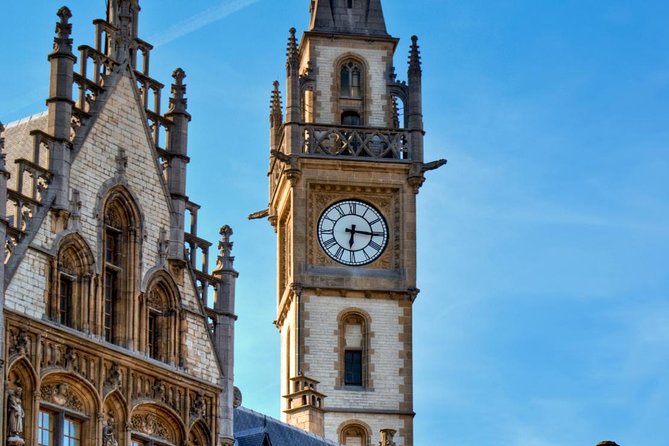
At OOOST, identified as the Meat House, you see a 15th-century covered market. The stop explains how meat was sold and displayed in earlier times. It is another practical detail that makes the old center easier to read.
Across from the Meat House, the group pauses at Kleine Vismarkt. A traditional street seller introduces cuberdons, a famous Ghent sweet. You receive information about the treat, but the schedule allows only about three minutes, so any purchase is likely a quick one.
The guided route ends at Sint-Veerleplein. Here, the guide explains the square and its surrounding buildings, including the setting near the Castle of the Counts of Flanders. The tour’s highlights include the castle, but the provided timing does not promise a full interior visit. You should understand this as an exterior and historical introduction unless your guide changes the route.
You then get about 1.5 hours of free time in Ghent. The guide gives suggestions for food and souvenirs and reminds you where and when to meet the bus. Ghent can reward a simple walk along the river, a meal near the center, or a closer look at a church or square you passed too quickly during the guided route.
What the walking pace feels like
This is a walking tour with frequent short stops. Many listed stops last between three and ten minutes, so the guide is constantly gathering the group, explaining a point, and moving on.
That pace works well if you want a clear overview. You hear stories about hospitals, guilds, beer, chocolate, churches, trade, and civic power without having to prepare your own route. It can feel rushed if you want to sit beside a canal, study architecture, or enter several buildings.
The full day is also physically demanding. The day includes two city walks, coach transfers, and free time on foot. Wear comfortable shoes and keep your belongings organized when the group moves through crowded lanes.
In some Bruges departures, Belgian tourist regulations require radio guides with headphones. You may bring wired headphones with a 3.5 mm jack. Wireless headphones are not suitable, and disposable headphones are available for €1.
The guide makes the difference
The strongest part of this experience is the human guidance. Spanish-speaking guides named Eduardo, Irene, Unai, Carlos, Ana, Paula, Guiomara, and others have led departures, and the style can vary from one day to the next.
The best guides keep the history lively, give clear meeting instructions, and remain available when someone needs help. Several praised guides were described as friendly, attentive, practical, and detailed. That matters on a day with multiple regrouping points.
Still, guide quality and traffic control are not entirely predictable. One departure had a serious bus delay and an inexperienced driver, while another had unclear return instructions and an uncomfortable coach. The operator apologized for these problems, but they remain valid reasons to pay close attention to timing and keep some patience in reserve.
The tour can also change the order of the cities. The usual plan begins with Bruges and continues to Ghent, but the order may shift for operational reasons. If Bruges is your top priority, ask for the day’s sequence at the start and set your expectations accordingly.
Who gets the best value
I would choose this excursion if you have limited time in Brussels and want a guided introduction to both cities. It is especially useful for first-time visitors who prefer Spanish explanations and do not want to arrange trains, local transfers, and walking routes themselves.
Families can also benefit from the simple structure, though children must be able to handle a long day. Children under two need a proper safety seat on the bus, supplied by the family.
I would not choose it if you want a quiet, museum-heavy day. The free periods are short, the guided stops are tightly timed, and you may leave wishing you had more hours in Bruges or Ghent. One useful approach is to return later on your own to the city you prefer.
Meals and drinks are not included. The guide can recommend places to eat, but you should budget separately and avoid using all your free time waiting for a meal.
Cancellation is free until 24 hours before the start time. Poor weather or an insufficient number of bookings can also lead to a change of date, an alternative experience, or a full refund.
Should you book this Bruges and Ghent day trip?
Book it if coverage matters more than depth. For $54.45, round-trip transport and two guided city walks make this a reasonable way to see Bruges and Ghent from Brussels in one day.
Skip it if your ideal day means lingering over lunch, visiting several interiors, or photographing Bruges at a slow pace. In that case, choose one city and spend the day there.
For most first visits, I see this as a practical sampler with strong historical guidance, attractive photo stops, and a fair price. Just accept the long day, keep track of meeting times, bring wired headphones if needed, and expect an overview rather than complete freedom.
FAQ
Where does the tour start and finish?
The tour starts at Carrefour de l’Europe, Carr de l’Europe, 1000 Brussels, at 8:30 a.m. It ends back at the same meeting point.
How long does the excursion last?
The full experience lasts approximately 10 hours and 30 minutes.
Is transportation included?
Yes. Round-trip travel from Brussels and the transfer between Bruges and Ghent are provided by air-conditioned bus.
Is the guide Spanish-speaking?
Yes. A professional Spanish-speaking guide leads the excursion. The assigned guide can vary, and guides who have led departures include Eduardo, Irene, Unai, Carlos, Ana, Paula, and Guiomara.
How much free time do I get in Bruges and Ghent?
You receive approximately 1.5 hours of free time in Bruges and approximately 1.5 hours in Ghent. The exact amount can change with traffic and the group’s pace.
Are food and drinks included?
No. Food and drinks are not included, though the guide provides suggestions for places to eat.
Do I need headphones?
Belgian regulations sometimes require radio guides in Bruges. You can bring wired headphones with a 3.5 mm jack, or buy disposable headphones for €1. Wireless headphones are not suitable.
Can I cancel for a refund?
You can cancel for a full refund if you do so at least 24 hours before the experience begins. Cancellations or changes made less than 24 hours before the start time are not accepted for a refund.
Just added around Brussels
- Private Tour – Bruges and Ghent, our fairytale cities★ 5.0 · 3 reviews
- Bruxelles: Photoshoot Experience★ 4.4 · 3 reviews
- Private Day Trip from Brussels to Bruges★ 4.5 · 3 reviews
- Private Arrival Transfer from Brussels Airport to Bruges with Business car★ 5.0 · 3 reviews
- Leuven: City Walk with Audio Guide in 7 Languages on your Phone★ 3.0 · 3 reviews
- Brussels: Express Walk with a Local in 60 minutes★ 5.0 · 3 reviews
- 2 Hour Beer Tasting with Local Beer Sommelier in Brussels★ 5.0 · 3 reviews
- Floating in the clouds★ 5.0 · 3 reviews
Brussels Tours, compared.
Atomium Entry Ticket with Design Museum Ticket
Read our review →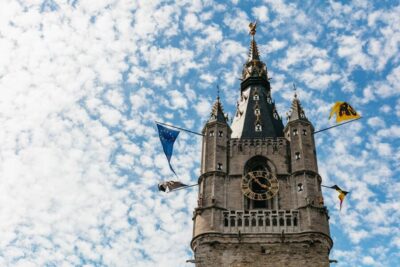
From Brussels: Guided Day Trip to Bruges and Ghent
Read our review →
From Brussels: Bruges & Ghent Day Tour – 2 Fairytale Cities
Read our review →
Choco-Story Brussels: Chocolate Museum Entrance with Tasting
Read our review →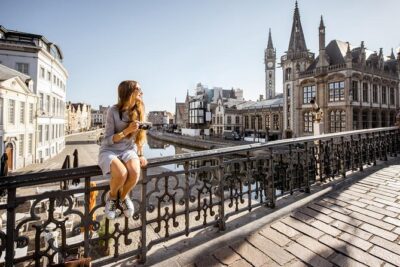
Bruges and Ghent – Belgium’s Fairytale Cities – from Brussels
Read our review →
From Brussels: Luxembourg Tour with Dinant Visit
Read our review →
Hungry Mary’s Famous Beer and Chocolate Tour in Brussels
Read our review →Browse the lists this tour appears in