
Reviewed · BRUSSELS TOURS
Bruges and Ghent Day Trip from Brussels
Bruges and Ghent in one day is a fast but rewarding way to see two of Belgium’s finest medieval cities without sorting out trains, maps, or local bus connections. You’ll stroll beside Bruges canals, hear the story behind its Lake of Love, then follow Ghent’s Lys River past guild halls and old trading streets.
I like the mix of guided orientation and free time, which gives you useful context without locking you into a full-day group schedule. I also like the simple round-trip bus from central Brussels, especially if you want to see both cities on a short Belgium visit. The catch is the pace: with about 1.5 hours in Bruges and one hour in Ghent, plus a lot of walking, you’ll get an overview rather than a leisurely stay.
Key points to know before you book
- Two medieval cities in one day: Bruges and Ghent have different personalities, and this tour lets you compare them without changing hotels or planning complicated transport.
- A long walking day: Expect cobblestones, bridges, city streets, and roughly 2.5 hours of guided walking spread across both destinations.
- Bruges gets the longer visit: The route includes Minnewater, the Begijnhof, Burg Square, the Markt, and several canal viewpoints before free time.
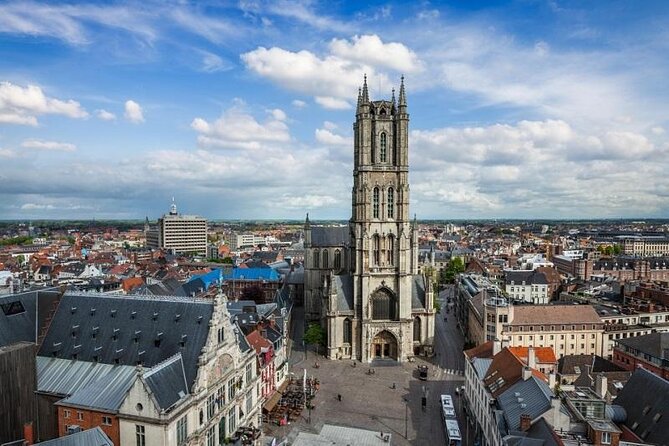
- Ghent’s highlights are compact: Saint Bavo’s Cathedral, the Belfry, Korenmarkt, Saint Michael’s Bridge, Graslei, and Korenlei fit into a concentrated walking route.
- Bring wired earphones: Radio-guides may be required in Bruges. You can use your own 3.5 mm wired headphones or buy a pair for €1.
- Your guide matters: Guides including Angie, Antonio, Blanca, Jorge, Julian, Oscar, and JC have led versions of this outing, and the quality of the commentary can shape the day.
A full day from Brussels, with little planning
The meeting point is Carrefour de l’Europe, near Brussels Central Station, with departure at 8:30 in the morning. That location is handy if you are staying near the historic center or using public transportation. Several buses may leave from the same area, so check the correct vehicle and guide before boarding.
The outing lasts about 10 hours. The bus has air conditioning and handles the long transfers between Brussels, Bruges, Ghent, and back again. The exact timing can shift with traffic and the group’s pace, so treat the published schedule as a guide rather than a stopwatch.
A short bathroom stop comes first at Bargeplein, also called Katelijnparking. The bus leaves you there for about 10 minutes before the Bruges walk begins. This is not sightseeing time, but it is useful after the morning departure and gives you a chance to confirm the guide’s meeting instructions.
The group can reach 45 people. That is a fairly large walking party, and it changes the feel of the tour. You will spend less time deciding where to go, but you need to stay alert at crossings, corners, and crowded viewpoints. Some departures are smaller, which makes it easier to hear and keep up. On a full bus, the guide’s flag, voice, or meeting instructions matter a great deal.
A few more Brussels half-days to weigh up
- From Brussels: Guided Day Trip to Bruges and Ghent
★ 4.6 · 8,353 reviews - From Brussels: Guided Day Trip to Dinant and Luxembourg
★ 4.5 · 1,973 reviews - Luxembourg and Dinant Day Trip from Brussels
★ 4.0 · 1,474 reviews
Bruges begins at the Lake of Love
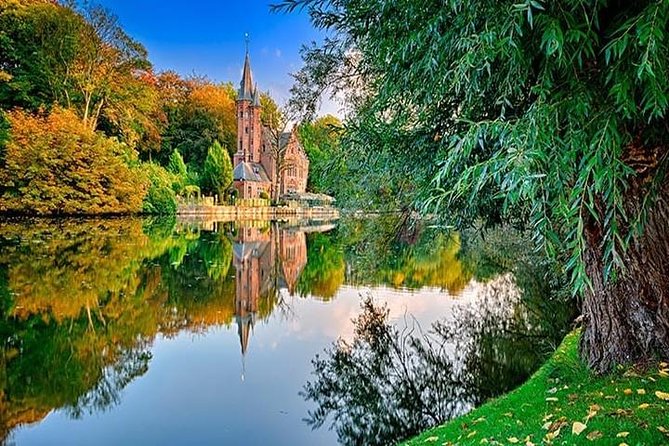
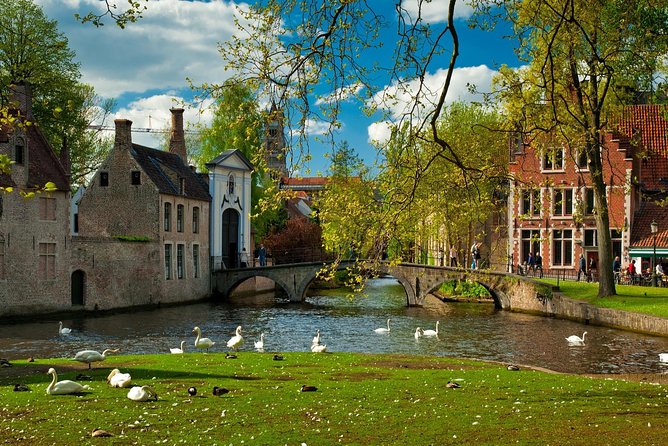
The first real stop is Minnewater, Bruges’ Lake of Love. You get only about five minutes here, but the setting gives the guide a natural place to explain the city’s origins and the local love story tied to the lake.
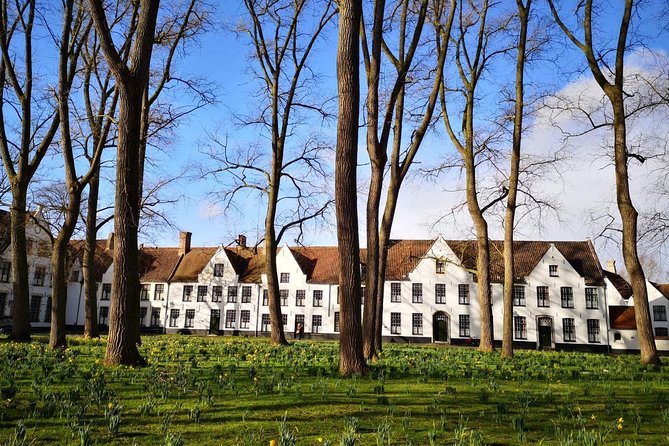
From there, you walk to the Begijnhof, founded in 1245. This quiet enclosed area preserves the story of the beguines, a remarkable community of women who lived religious lives without joining a convent. The stop lasts about 10 minutes, long enough for an introduction and a look around, though not for a slow visit.
The route then adds two distinctly Belgian pleasures: chocolate and beer. At Chocolalino, described as a certified artisan chocolate shop, you have a brief chance to taste handmade chocolate. The guide explains how to tell artisan chocolate from industrial products, which is more useful than simply being pointed toward a shop window. Five minutes is short, so think of this as a sample and shopping tip, not a full tasting session.
Walplein brings the beer story. This attractive square is tied to Bruges’ brewing tradition, and the guide explains how beer shaped daily life and trade. Again, you stop for roughly five minutes. If you want a proper beer, save it for free time, when you can sit down rather than listen while standing with the group.
Bruges’ lanes, hospitals, and famous canal views
Stoofstraat is one of the route’s small but worthwhile details. Here, the guide points out original medieval houses and explains how to recognize them. This kind of street-level observation helps you read Bruges instead of simply photographing it.
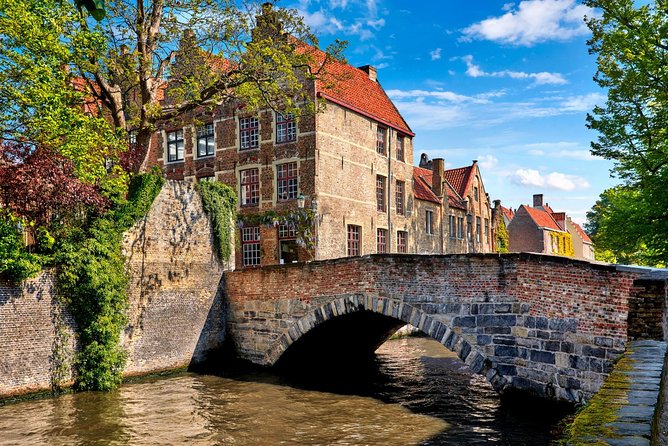
You then pause at a small bridge for photos before reaching Saint John’s Hospital. The hospital dates from the medieval period, and the guide explains how medical care worked in Bruges at that time. You see the building from outside, but the tour does not include a full interior visit.
Across from the hospital is the Church of Our Lady. The guide discusses the white marble Madonna and Child by Michelangelo, which is inside. This is important: the route explains the artwork from outside, but entry and a close look at the sculpture are not included as part of the guided walk.
The next stop is the Gruuthusemuseum. The focus here is the powerful Gruuthuse family and its place in Bruges society. You do not tour the museum itself, so anyone interested in its collections should use free time, another visit, or a separate ticket.
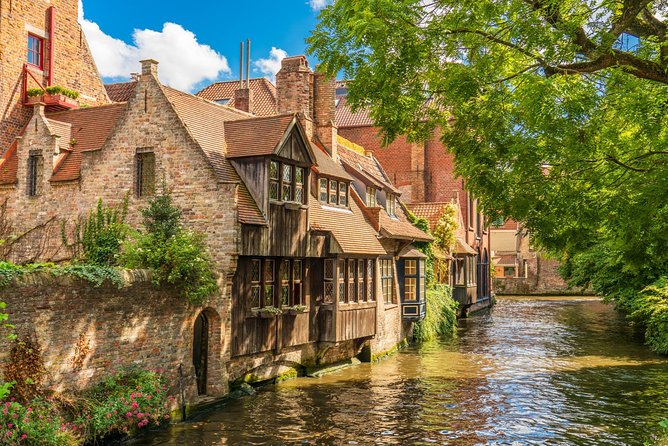
Boniface Bridge is one of the prettiest photo stops in Bruges. The guide tells the bridge’s legend, then gives you a moment to take pictures. Soon after comes Quai du Rosaire, or Rozenhoedkaai, the canal view most often associated with Bruges postcards. It is a compact stop of about five minutes, and crowds can make the best photo position difficult.
At Huidenvettersplein, the old Tanners Square, you hear how leather workers operated in medieval Bruges. Then the route reaches Burg Square, where you can see the Gothic Town Hall, the Old Court House, and the Basilica of the Holy Blood. This is one of the strongest sections of the walk because several major buildings sit close together.
Bruges Markt and limited free time
The guided portion ends at the Markt, Bruges’ main market square. The guide explains the buildings around the square and gives suggestions for traditional chocolate shops, places to eat, and ways to use your free time.
You then get about 1.5 hours in Bruges, depending on traffic and the group’s pace. This is enough for a quick lunch, a drink, chocolate shopping, or a short independent wander. It is not enough for all of those at a relaxed pace, especially if you want to enter the Basilica, climb a tower, visit a museum, or take a canal boat.
Plan before the bus arrives. If you stop for a sit-down meal, keep an eye on the clock. Some people find the return walk to the bus longer than expected, especially if they wander beyond the central squares. The meeting point is back at Bargeplein, where the guide and coach wait for the trip to Ghent.
Bruges is often the city people prefer on a first visit because its canals, bridges, and preserved center make an immediate impression. This tour shows you the classic core, but the short free period means you will not see every corner. I would treat it as a first look, not a complete Bruges visit.
Same city, a completely different way to spend a day:
- Brussels: Atomium Entry Ticket with Design Museum Ticket
★ 4.4 · 9,254 reviews - From Brussels: Bruges & Ghent Day Tour – 2 Fairytale Cities
★ 4.7 · 8,242 reviews - Choco-Story Brussels: Chocolate Museum Entrance with Tasting
★ 4.3 · 4,883 reviews - Bruges and Ghent – Belgium’s Fairytale Cities – from Brussels
★ 4.0 · 4,809 reviews
Ghent starts with towers and Saint Bavo’s Cathedral
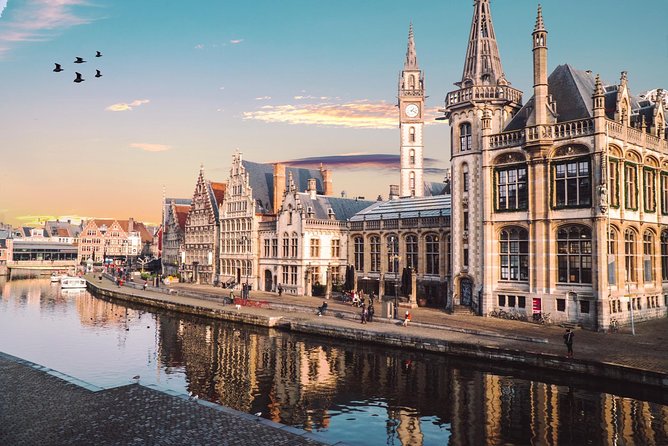
After the transfer, the bus reaches Ghent. The group walks toward the center, where the guided tour begins near the Town Hall. Ghent feels different from Bruges. It is larger and more urban, with a strong university presence and a broader mix of architectural styles.
At Ghent Town Hall, the guide explains the building’s different styles. The stop is brief, but it gives you a useful introduction to the city’s changing fortunes and building traditions.
Next comes the Belfry of Ghent, the city’s emblematic tower. The guide tells the story of its dragon, a familiar symbol high above the center. The tour views the tower from outside, so admission to climb it is not included.
Saint Bavo’s Cathedral is the main interior stop in Ghent. You see both the outside and inside, and the guide explains the famous Adoration of the Mystic Lamb by Hubert and Jan van Eyck. The painting has a remarkable history of theft and recovery, making this one of the most memorable stories of the day.
The cathedral stop lasts about 25 minutes, longer than most other stops. That extra time matters. Still, if you want to study the artwork closely or explore the cathedral in detail, you may need to return during free time, assuming the schedule allows.
Ghent’s guild houses and Lys River views
The walk continues to Saint Nicholas’ Church, where the guide points out how Belgian churches can serve as venues for concerts and other events. The stop is very short, around three minutes.
Nearby, the Masons’ Guild Hall offers a quick look at guild-house architecture and the unusual details of its facade. Korenmarkt follows, with an explanation of the former post office building. These stops are brief, but together they show how commerce, craft groups, religion, and civic life shaped central Ghent.
Saint Michael’s Bridge is the best photo point on the Ghent route. From here, you can look toward the city’s towers and along the river. The guide also explains the story of Saint Michael’s Church. Hold your place near the middle of the bridge if you want a clear view, but stay close enough to hear the meeting instructions.
The walk then follows the Lys River along Graslei and Korenlei. These waterfront streets are lined with historic buildings, including a Masons’ Guild House and the building now used as the Marriott Hotel. This is where Ghent feels especially grand, with the old river trade route tying the architecture together.
The Great Butchers’ Hall, dating from the 15th century, was once a covered market. At nearby Kleine Vismarkt, you make a short stop at a traditional market stall to hear about cuberdons, Ghent’s famous cone-shaped candy. You may want to buy some, but food and drinks are not included.
The guided route ends at Sint-Veerleplein. The guide explains the square and nearby buildings, then suggests places for Belgian beer and souvenirs. You receive the instructions for the return bus here, so listen carefully before setting off on your own.
One hour in Ghent, and what you can realistically do
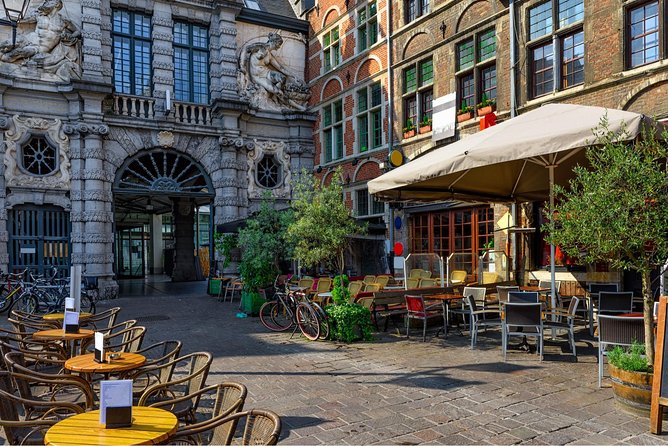
Free time in Ghent lasts about one hour. The city center is compact, so you can take more photos, browse a shop, have a quick drink, or return to a favorite place from the walk.
A full meal can be difficult in this window. If you want to eat, choose a quick option and avoid crossing the whole center. Ghent’s highlights are close together, which makes the short free period feel more useful than the equivalent time in Bruges.
The return to Brussels completes a long day. Depending on traffic, group movement, and the exact drop-off arrangements, you should expect to finish back near the original meeting area. Pay attention to the guide’s final instructions, since the coach may not always stop directly beside the starting point.
Guide quality, radios, and group management
The English-speaking guide is central to the experience. Strong guides such as Angie, Antonio, Blanca, Jorge, Julian, and JC have been praised for clear explanations, friendly delivery, useful food suggestions, and good organization. Antonio, in particular, has been described as entertaining for younger groups, while Angie’s calm presentation suits people who prefer a measured pace.
The experience can feel less polished if the radio system fails or the group spreads out. Static has made commentary hard to hear on some departures, and Bruges regulations sometimes require radio-guides. Bring your own wired headphones with a 3.5 mm jack if you have them. Wireless headphones are not suitable. Disposable headphones cost €1.
You should also expect a walking tour built around frequent short stops. The guide may speak for several minutes, then move the group a short distance and stop again. That format gives you many landmarks in a small area, but it can feel repetitive if you prefer long visits inside museums or monuments.
Wear shoes that handle cobblestones and bridges. The tour operates in all weather, so bring suitable clothing and do not count on a dry day. Children under two need an appropriate car seat on the bus.
Is $56.72 good value?
At $56.72 per person, the price is reasonable for round-trip transportation from Brussels, two guided city walks, and an English-speaking guide. You are paying to avoid route planning and to fit both cities into one day, not for meals, museum tickets, or extended free time.
The value is strongest if you have only one spare day from Brussels. A guide gives you historical context at the Town Halls, cathedral, guild houses, canals, and squares, while the bus removes the stress of coordinating two separate train trips.
The value is weaker if you already feel comfortable planning public transportation and want to explore at your own speed. Independent visits would give you more control over meals, interiors, shopping, and photo stops. This tour also cannot promise the same guide or the same group size on every date.
Free cancellation is available up to 24 hours before the start time. If poor weather or too few bookings causes cancellation, you are offered another date or a full refund.
Who should book this day trip?
I would book this for a first-time visitor to Brussels who wants a broad look at Bruges and Ghent without spending two days on the project. It also suits solo visitors who like having a guide and a fixed bus, as well as families and couples willing to keep moving.
I would think twice if you have limited mobility, dislike cobblestones, need long meal breaks, or want deep time inside museums and churches. The tour is physically active and the free periods are short.
For the best day, arrive early, bring wired headphones, carry euros for small purchases, and write down the bus meeting times. Stay close to the group during the city walks, especially in crowded squares. If the guide is Angie, Antonio, Blanca, Jorge, Julian, Oscar, or JC, you can expect different personalities and presentation styles, so listen for the practical instructions as carefully as the stories.
Should you book the Bruges and Ghent day trip?
Book it if your priority is seeing both cities efficiently. Bruges receives the longer visit and the most classic canal scenery, while Ghent packs impressive towers, Saint Bavo’s Cathedral, guild houses, and riverfront views into a smaller route.
Skip it if you would rather spend a full day in one place. Bruges alone deserves more time, and Ghent also rewards a slower visit. At this price, the trip is a sensible introduction, provided you accept the large-group format, long walking day, and limited free time.
FAQ
Where does the tour start?
The tour starts at Carrefour de l’Europe, Carr de l’Europe, 1000 Brussels, Belgium. Departure is at 8:30 am.
How long does the experience last?
The experience lasts approximately 10 hours and ends back at the meeting point in Brussels.
Is transportation included?
Yes. Round-trip transportation in an air-conditioned bus is included, with travel from central Brussels to Bruges, then Ghent, and back to Brussels.
Is the tour offered in English?
Yes. The tour includes a professional English-speaking guide and guided walking tours in both cities.
Are meals and drinks included?
No. Food and drinks are not included. The guide can suggest places to eat and drink during your free time.
Do I need headphones?
You may need headphones because Belgian regulations sometimes require radio-guides in Bruges. You can bring your own wired headphones with a 3.5 mm jack, or buy disposable headphones for €1. Wireless headphones are not accepted for this purpose.
Can I cancel the tour?
You can cancel for a full refund up to 24 hours before the experience begins. Cancellations or changes made less than 24 hours before the start time are not refunded or accepted.
Just added around Brussels
- Private Tour – Bruges and Ghent, our fairytale cities★ 5.0 · 3 reviews
- Private Day Trip from Brussels to Bruges★ 4.5 · 3 reviews
- Bruxelles: Photoshoot Experience★ 4.4 · 3 reviews
- Private Arrival Transfer from Brussels Airport to Bruges with Business car★ 5.0 · 3 reviews
- Leuven: City Walk with Audio Guide in 7 Languages on your Phone★ 3.0 · 3 reviews
- Brussels: Express Walk with a Local in 60 minutes★ 5.0 · 3 reviews
- 2 Hour Beer Tasting with Local Beer Sommelier in Brussels★ 5.0 · 3 reviews
- Floating in the clouds★ 5.0 · 3 reviews
Brussels Tours, compared.
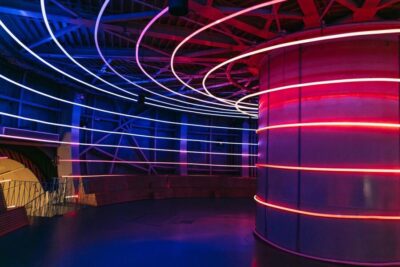
Atomium Entry Ticket with Design Museum Ticket
Read our review →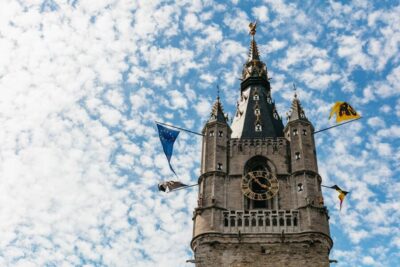
From Brussels: Guided Day Trip to Bruges and Ghent
Read our review →
From Brussels: Bruges & Ghent Day Tour – 2 Fairytale Cities
Read our review →
Choco-Story Brussels: Chocolate Museum Entrance with Tasting
Read our review →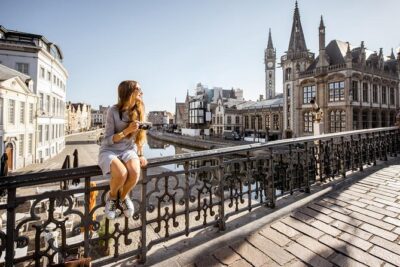
Bruges and Ghent – Belgium’s Fairytale Cities – from Brussels
Read our review →
From Brussels: Luxembourg Tour with Dinant Visit
Read our review →
Hungry Mary’s Famous Beer and Chocolate Tour in Brussels
Read our review →Browse the lists this tour appears in