
Reviewed · BRUSSELS TOURS
Evening Tour: The Dark Side of Brussels
Brussels looks polished by day, but after sunset its grand squares and quiet lanes take on a different mood. This walking tour links churches, courthouses, old neighborhoods, and city viewpoints with stories about crime, punishment, murder, suicide, and political power. It is less a fright night than a city history walk with a darker edge.
I like the route’s variety, especially the move from elegant Sablon to the working-class Marolles. I also like the price: $3.62 per group of up to six makes this an easy way to fill an evening, though you should budget a generous tip because the tour is built around the free-tour model. The main drawback is the title. If you expect ghost stories or Brussels nightlife, you may find the content too mild and too focused on history.
Key points before you book
- The route crosses several distinct Brussels districts, from Grand Place and Sablon to the Marolles and Kapellekerk.
- The darker material is historical, with attention to torture, punishment, murder, suicide, and political forces rather than modern nightlife.
- The walk usually runs about two hours, and one departure lasted well beyond that, so wear comfortable shoes.
- Guides make a major difference, with strong praise for storytellers including Sebastian, Rahim, David, Ann Marie, Ian, Den, and Gunny.
- The advertised price is unusually low, but tipping is an important part of the experience.
- The meeting point is Grand Place, while the walk ends at Kapellekerk, so you finish in the Marolles rather than back where you began.
What The Dark Side Of Brussels Really Is

The name suggests a spooky tour, perhaps with ghost legends, grisly crimes, or tales of Brussels after midnight. In practice, you get a guided evening walk through the city’s lesser-known and less flattering past.
Some stories concern torture, murder, suicide, and punishment. Others explain political structures, social divisions, architecture, and events that shaped Brussels. The dark material gives familiar monuments a new angle, but the walk also includes ordinary city history and cultural facts.
That mix is why the experience works best for you if you want context rather than theatrical scares. Several guides have been praised for being funny, warm, and engaging, but the route itself is not presented as a horror show. Think of it as a night history walk with unsettling footnotes.
The English-language format is useful for a mixed group, and the maximum group size is 35. That is not intimate, especially in crowded squares, but a strong guide can keep the group moving and project well. David, in particular, was praised for making sure people could hear him, while one quiet guide was harder to follow in busy areas.
A few more Brussels half-days to weigh up
- Brussels: Sightseeing Sunset Bus Tour
★ 3.8 · 70 reviews - Brussels: Private Beers, Bars, and Live Music Tour by Night
★ 5.0 · 6 reviews - Evening Tour: The Dark Side of Bruges
★ 5.0 · 956 reviews
Starting At Grand Place And Moving Toward Sablon
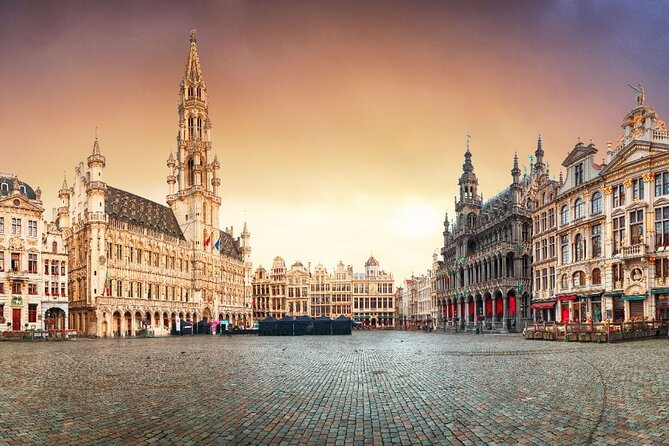
The meeting point is Grand Place, also called Grote Markt, in central Brussels. The precise meeting information identifies the start as Grand Place, and one guide has been described as waiting in front of City Hall. Arrive early and look carefully around the City Hall side of the square, since the area can be packed.
This is one of the most important practical points. One person missed the guide after searching for more than 25 minutes, despite arriving early. You should not assume the whole group will be easy to spot. Have the meeting point loaded on your phone, allow extra time for the walk from the metro, and check the guide’s identifying information at booking.
From Grand Place, the route heads toward Place du Grand Sablon. The supplied description calls this area a market, but the walk’s appeal is broader than shopping. Sablon is one of Brussels’ more polished districts, with grand façades, cafés, antiques, and historic religious buildings.
The guide uses this change of setting to show how Brussels can shift from monumental public space to refined neighborhood streets within a short walk. At about ten minutes, the stop is brief, so do not expect a full market visit or time to browse shops. It is a story stop, not a shopping break.
Place Saint-Jean And The Anneessens District
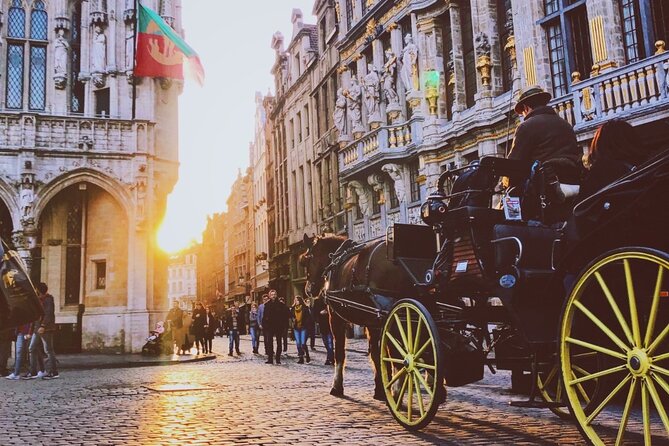
Place Saint-Jean provides a quieter pause among old buildings and cafés. The St. John the Baptist Church gives the square a clear focal point, and the setting helps explain how religious sites once organized city life.
The stop is scheduled for about ten minutes. You may hear a story connected to the church, the square, or the surrounding district, but the exact presentation can vary with the guide and the size of the group. That flexibility can be a strength when the guide is lively, though it also explains why the advertised order or emphasis may not always match the walk exactly.
Next comes Tour Anneessens, a district known for a mix of architecture, markets, and communities. Here the tour shifts away from postcard Brussels. You get a closer look at how the city’s social character changes from one neighborhood to another.
This is also where the title’s dark side is better understood. The material is often about class, government, punishment, and political history rather than lurid tales. If you want facts that explain why a district developed as it did, this section may be among the more useful parts of the walk.
Rue De Rollebeek And Notre Dame Du Sablon
Rue de Rollebeek is a short, attractive street lined with cobblestones, cafés, and small shops. It gives the tour a more relaxed rhythm after the larger squares. The street itself is not a major attraction requiring a long visit, but it helps you see the ordinary scale of central Brussels.
The guide may use this stretch to connect architecture with the people who lived and worked here. That is a welcome change from simply moving from monument to monument. You are walking through a real neighborhood, not only stopping for photographs.
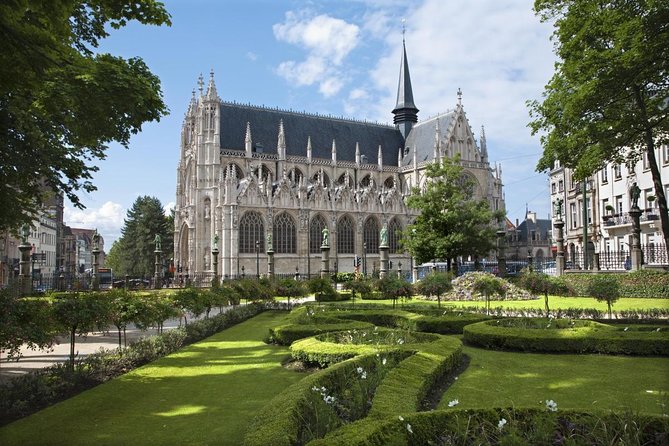
At Notre Dame du Sablon, the focus turns to architecture and religious history. This Gothic church is known for its stained glass and detailed interior and exterior work. The tour allows about ten minutes here, enough to appreciate the building and hear why it matters.
The church is also a good example of the tour’s broad approach. Its beauty contrasts with the darker stories elsewhere on the route. You are not being led through a nonstop sequence of grim events. Instead, the guide sets troubling episodes beside the city’s art, faith, and civic life.
Same city, a completely different way to spend a day:
- Brussels: Atomium Entry Ticket with Design Museum Ticket
★ 4.4 · 9,254 reviews - From Brussels: Guided Day Trip to Bruges and Ghent
★ 4.6 · 8,353 reviews - From Brussels: Bruges & Ghent Day Tour – 2 Fairytale Cities
★ 4.7 · 8,242 reviews - Choco-Story Brussels: Chocolate Museum Entrance with Tasting
★ 4.3 · 4,883 reviews
The Palais De Justice Viewpoint
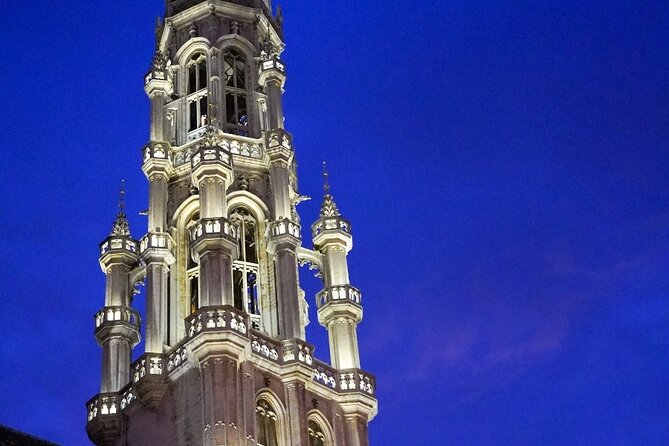
The Palais de Justice is the route’s grandest piece of architecture. This huge courthouse dominates its hill and offers broad views over Brussels. Even if legal history is not your main interest, the scale of the building makes it a memorable stop.
The courthouse gives the guide a natural opening to discuss law, power, punishment, and the way public institutions shape a city. It is probably the stop most closely connected to the tour’s advertised theme, since the building’s purpose leads directly into questions about justice and sentencing.
The listed visit lasts about ten minutes, but the walking approach and the slope matter. One person found the route more strenuous than the description suggested, though still manageable for anyone in reasonable walking shape. You should expect a genuine city walk, not a flat circuit around a single square.
The viewpoint is especially worthwhile in the evening. Brussels takes on a different feel as daylight fades, and the guide can point out the city from above rather than only from street level. Bring shoes with good grip, particularly if the pavement is wet.
Petit Sablon And The Move Into The Marolles
Petit Sablon is a formal garden square surrounded by 48 small bronze statues representing medieval guilds. The setting is calmer than Grand Place and gives you a chance to look closely at the craftsmanship before the route continues.
This stop adds social history to the architectural story. The guild figures recall the trades and organizations that helped shape medieval Brussels. A guide who takes time here can turn what looks like a decorative garden into a lesson about work, civic identity, and power.
The walk then heads to Place du Jeu de Balle in the Marolles. This square is closely linked with Brussels’ daily flea market, where you might find old photographs, second-hand clothing, vintage furniture, and assorted objects. The market is a daytime feature, so an evening departure may not offer the full trading scene, but the square still introduces you to the character of the neighborhood.
The Marolles feels less formal than Sablon. That contrast is one of the route’s best qualities. You move from aristocratic streets and grand churches into an area associated with local life, commerce, and a more informal atmosphere.
Do not expect every stop to deliver a dramatic revelation. Some people find the smaller locations less compelling than the major monuments. The value comes from the connections the guide makes between them.
Finishing At Kapellekerk
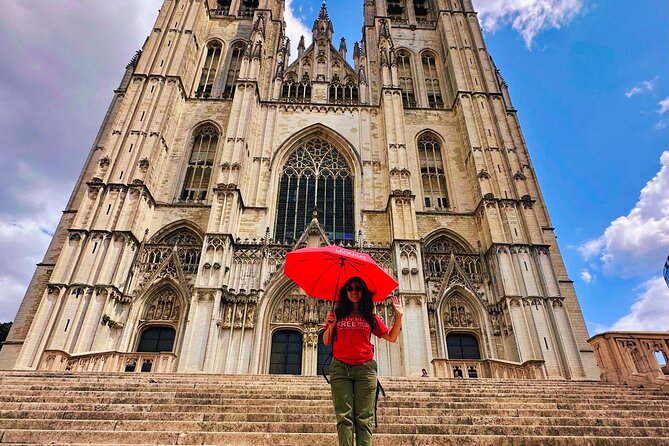
The final stop is Église Notre-Dame de la Chapelle, usually called Kapellekerk. The church is Gothic, and its origins reach back to a chapel founded here in 1134. It sits in the Marolles, giving the tour a clear ending in one of Brussels’ older neighborhoods.
The official end point is Brux.-Chap, or Brussels-Chapel, on Rue des Ursulines. This is useful because you do not finish in an isolated spot or need to retrace the whole route to return to central Brussels. You can continue exploring the Marolles, find food nearby, or use public transportation.
The ending also reinforces the tour’s wider theme. You have seen churches, markets, a courthouse, gardens, and civic squares. Brussels’ darker past is not confined to one haunted building. It is tied to the way the city governed people, divided neighborhoods, enforced punishment, and remembered its past.
The Guides Make Or Break The Evening
The strongest departures have been led by guides who combine solid facts with a relaxed delivery. Sebastian has been praised for being entertaining and well informed, while Rahim has been singled out for humor, warmth, and a clear desire to teach. Ann Marie was appreciated for storytelling and for taking questions along the way.
Other named guides include David, Ian, Gunny, and Den. Their styles have differed. Some presentations were polished and rehearsed, while others felt more conversational. That variation is normal on a multi-guide walking tour, but it means your experience can depend heavily on who leads the group.
I would prioritize hearing ability when choosing your place in the group. Walk near the guide, especially in Grand Place and other busy areas. If the group is large, standing at the back can make a soft voice difficult to follow.
The group limit of 35 is reasonable for a city walk, but it is not a private experience. The low price is partly explained by this format. You get a shared route, a standard meeting point, and a guide whose income depends largely on tips.
Price, Timing, And What The Low Fare Means
At $3.62 per group of up to six, the booking price is remarkably low. It is best understood as a small reservation fee for a free walking tour rather than the full cost of professional guiding.
Bring euros for a tip. Several accounts make clear that the guide’s earnings depend on gratuities, and a strong two-hour performance deserves to be treated that way. If you would normally pay for a regular guided walk, use that amount as your reference point rather than assuming the booking fee covers everything.
The listed duration is about two hours, though one guide continued well beyond that. Most people should plan for at least the full two hours, with a little flexibility afterward. The tour is usually booked about 14 days ahead, which suggests you should reserve in advance if your Brussels schedule is tight.
You receive a mobile ticket, and the tour is offered in English. Confirmation arrives at booking. Free cancellation is available up to 24 hours before the start time. Changes or cancellations inside that 24-hour window are not accepted for a refund, and the experience can be canceled if a minimum number of participants is not reached.
Who Should Book This Brussels Walk
I would choose this tour if you have already seen the main sights and want a different frame for them. It is also a good first taste of Brussels if you enjoy unusual facts, city politics, architecture, and stories about punishment or crime.
It suits solo visitors, couples, and small groups. One solo participant found the group easy to join, and the shared format can be a simple way to meet people without committing to a full-day activity.
You should skip it if you want a tightly scripted true-crime tour, ghost stories, or a short, gentle stroll. The route includes a fair amount of walking, and the content may feel too general if you are seeking precise statistics or a long stop inside each monument.
Service animals are allowed, the route is near public transportation, and most people can participate. Still, the hills, cobblestones, and pace are worth considering if walking is difficult for you.
Should You Book The Dark Side Of Brussels?
Book it if the idea of Brussels’ lesser-known history appeals to you more than a scare-focused night out. The best guides turn a low-cost walk into a lively lesson about churches, courts, neighborhoods, punishment, and politics, with the added pleasure of seeing the city at dusk.
Go in with the right expectation: this is a dark-themed history walk, not necessarily a dark nightlife tour. If you arrive prepared for a long route, locate the guide carefully at Grand Place, stay close enough to hear, and plan to tip, you are likely to get good value from the evening.
FAQ
Where does the tour start?
The tour starts at Grand Place, also called Grote Markt, in Brussels. The meeting information places the guide in front of City Hall on the main square.
Where does the tour end?
The tour ends at Kapellekerk, or Église Notre-Dame de la Chapelle, on Rue des Ursulines in the Marolles neighborhood.
How long does the tour last?
The advertised duration is approximately two hours. One departure lasted well over two hours, so allow some extra time if your evening schedule is tight.
What language is the tour offered in?
The tour is offered in English.
What is included?
A professional guide is included. Tickets to the listed stops are free, and the tour does not list additional admission charges.
How large can the group be?
The maximum group size is 35 travelers.
Is this a true-crime or ghost tour?
The tour focuses on lesser-known and troubling aspects of Brussels history, including torture, murder, suicide, and punishment. It is not presented solely as a ghost or nightlife tour.
Is the tour physically demanding?
It is a walking tour through central Brussels, and some people have found it more strenuous than the description suggests. Most people can participate, but comfortable walking shoes are advisable.
Are service animals allowed?
Yes, service animals are allowed.
Can I cancel for a full refund?
Yes. You can cancel up to 24 hours before the experience start time for a full refund. Cancellations or changes made less than 24 hours before the start time are not accepted for a refund.
Just added around Brussels
- Private Tour – Bruges and Ghent, our fairytale cities★ 5.0 · 3 reviews
- Bruxelles: Photoshoot Experience★ 4.4 · 3 reviews
- Private Day Trip from Brussels to Bruges★ 4.5 · 3 reviews
- Leuven: City Walk with Audio Guide in 7 Languages on your Phone★ 3.0 · 3 reviews
- Private Arrival Transfer from Brussels Airport to Bruges with Business car★ 5.0 · 3 reviews
- Brussels: Express Walk with a Local in 60 minutes★ 5.0 · 3 reviews
- 2 Hour Beer Tasting with Local Beer Sommelier in Brussels★ 5.0 · 3 reviews
- Floating in the clouds★ 5.0 · 3 reviews
Brussels Tours, compared.
Atomium Entry Ticket with Design Museum Ticket
Read our review →
From Brussels: Guided Day Trip to Bruges and Ghent
Read our review →
From Brussels: Bruges & Ghent Day Tour – 2 Fairytale Cities
Read our review →
Choco-Story Brussels: Chocolate Museum Entrance with Tasting
Read our review →
Bruges and Ghent – Belgium’s Fairytale Cities – from Brussels
Read our review →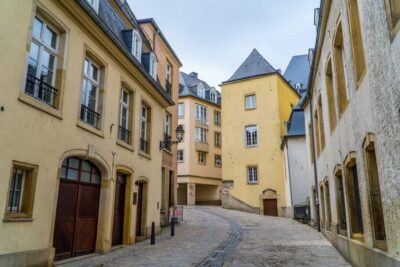
From Brussels: Luxembourg Tour with Dinant Visit
Read our review →
Hungry Mary’s Famous Beer and Chocolate Tour in Brussels
Read our review →Browse the lists this tour appears in