
Reviewed · BRUSSELS TOURS
Brussels 3-Hour Guided Art Nouveau Tour
Brussels Art Nouveau is best understood from the street, where iron balconies, curling stonework, colored glass, and carved wood turn ordinary townhouses into works of art. This three-hour walk takes you from Grand-Place to the Bailli district, then finishes at the Victor Horta Museum, with local guides such as Maria explaining the people, politics, and technology behind the style. I like the unusual route through a residential part of Brussels, and I like the way guides use interior photographs to show what you cannot enter. The main drawback is clear: the buildings are viewed from outside, so you need a separate museum ticket if you want to see Horta’s interiors.
I also like the tour’s strong social and technical context. You learn why iron, glass, wood, and stone mattered, not just what a handsome doorway looks like. Allow for a lot of walking, some uphill pavement, a tram ride, and possibly a bilingual presentation that can stretch the timing.
Key points at a glance
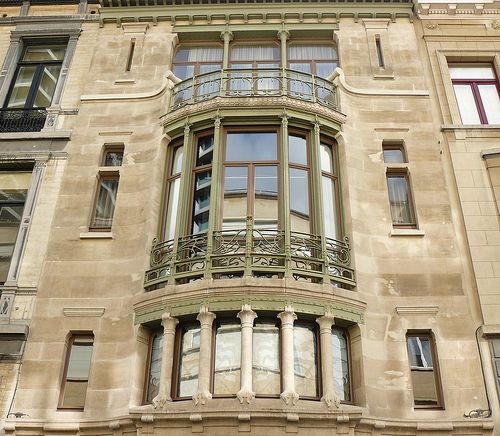
- Hotel Tassel: See Victor Horta’s early landmark, built in 1893 and 1894, and a key stop for understanding Brussels Art Nouveau.
- Bailli district: Walk through the part of Brussels with the largest concentration of Art Nouveau buildings on this route.
- Interior photographs: Guides may show printed images of rooms that are closed to the public during the walk.
- Victor Horta Museum finish: End outside Horta’s former home, then visit independently if you reserve admission in advance.
- Three languages: Tours are offered in English, French, and Spanish.
- $35 price: A fair rate for a focused, three-hour architecture walk, but transport and museum admission add to the cost.
Why Brussels is the right place for this architecture walk
Art Nouveau in Brussels is not one fixed look. It is a way of designing buildings in which structure and decoration work together. A metal support may curve like a plant stem. A doorway may blend stone, glass, and wood instead of treating each material as a separate layer.
That is why a guide adds real value here. Without help, you may notice pretty facades but miss the larger idea: architects were testing new materials and new shapes while moving away from older decorative rules. The tour also connects architecture with the social and political setting of the period, giving the buildings a place in the story of Brussels rather than treating them as isolated photo stops.
The walk focuses on architects including Victor Horta, Paul Hankar, Octave Van Rysselberghe, Henry van de Velde, Albert Roosenboom, and Armand Van Waesberghe. You get a useful sense of how several designers approached the same movement in different ways.
A few more Brussels half-days to weigh up
- Brussels: Private 3-Hour Sightseeing Walking Tour
★ 4.6 · 112 reviews - Beer Tasting and Scavenger Hunt in Brussels – About 3 Hours
★ 4.5 · 35 reviews - Private Wellness (3 hours)
★ 5.0 · 6 reviews
Meeting at Grand-Place and taking the tram
The tour begins at 10:00 on Grand-Place, one of the easiest places in Brussels to find. Look for the guide holding a white umbrella. That simple marker matters in a busy square, especially if you are arriving by foot from a hotel or train station.
Grand-Place is not the main subject of the tour. It is the starting point before you leave the historic center for the Bailli district. The route includes a tram ride, so bring a little money or a transport pass and check the exact arrangements when booking. Transportation is not included in the stated price, and the activity information specifically notes that train transport is excluded.
The change of scene is part of the appeal. You move from Brussels’s central postcard setting into residential streets where Art Nouveau houses are easier to miss without a guide. Wear comfortable shoes. The route involves several hours on foot, and one detailed account described the early part as uphill.
Old England House and the opening lesson
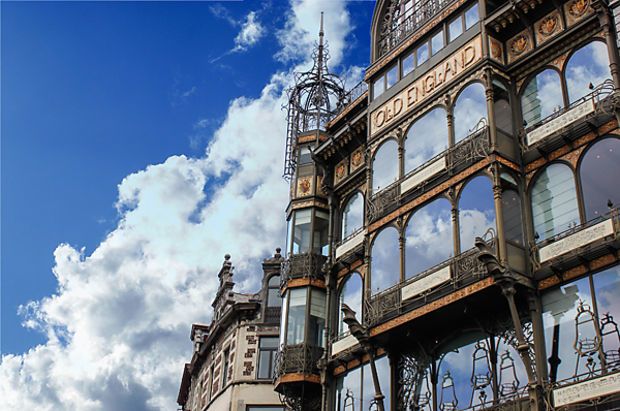
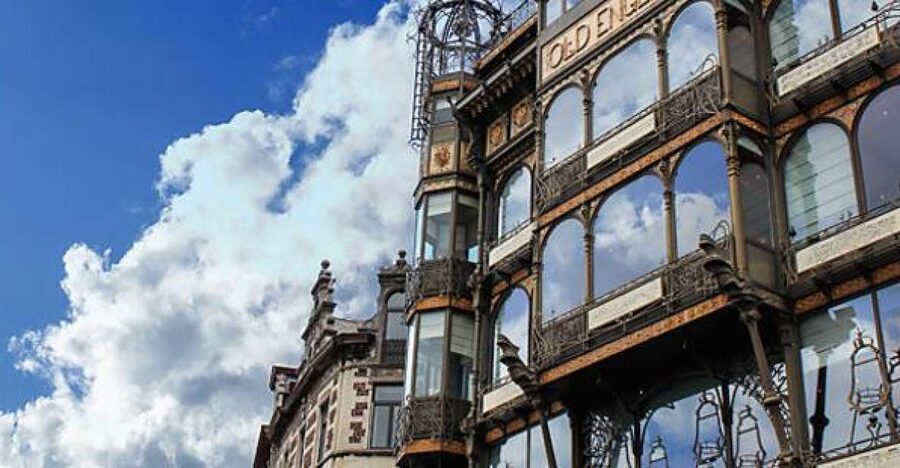
Old England House, now associated with the Musical Instrument Museum, provides an early look at how Art Nouveau could use metal and glass in a bold public building. It is a useful introduction because the tour is not limited to private homes. You begin to see how the style worked on a larger urban scale.
The stop also helps frame the material lesson that runs through the morning. Rather than simply pointing out curves and ornaments, the guide explains how iron, glass, wood, and stone were combined into new forms. This makes the later houses easier to read.
Do not expect a museum visit here as part of the tour. The experience is an exterior architecture walk, and admission to museums is not included.
Hotel Tassel, Victor Horta’s breakthrough
Hotel Tassel is one of the essential stops. Victor Horta built it in 1893 and 1894, and it is often treated as a key early work of Brussels Art Nouveau. The house lets you consider how Horta joined the outside facade with the spaces within.
You will look at the exterior while the guide explains the design. This is where printed interior photographs can make a big difference. You may be standing outside a closed private building, but seeing the inside helps you understand that Horta’s ideas were not limited to a decorated front door.
The guide’s role is especially useful here. Maria, who has led this tour, is known for connecting the architecture with social and technological changes of the period. She has also explored links between Art Nouveau and political movements of the time, an unusual angle that gives the buildings more meaning.
Same city, a completely different way to spend a day:
- Brussels: Atomium Entry Ticket with Design Museum Ticket
★ 4.4 · 9,254 reviews - From Brussels: Guided Day Trip to Bruges and Ghent
★ 4.6 · 8,353 reviews - From Brussels: Bruges & Ghent Day Tour – 2 Fairytale Cities
★ 4.7 · 8,242 reviews - Choco-Story Brussels: Chocolate Museum Entrance with Tasting
★ 4.3 · 4,883 reviews
The Van Rysselberghe and Otlet houses
The Van Rysselberghe House was built by Octave Van Rysselberghe in 1912. It gives you a later point of comparison with the earlier work on the route. By this stage, you can look for the architect’s handling of line, surface, and structure with a better eye than you had at the first stop.
Hotel Otlet, designed by Octave Van Rysselberghe and Henry van de Velde between 1894 and 1898, adds another layer. Two architects working together can make a useful comparison with Horta’s solo projects. The guide can point out how different designers used similar materials without producing identical buildings.
The drawback is that the route does not take you through the houses. You may feel that you are only seeing the outer shell, particularly if interiors are your main reason for booking. The guide’s images and explanations help, but they are not a substitute for entering the buildings.
Hotel Goblet d’Alviella and Paul Hankar’s work
Hotel Goblet d’Alviella was built by Octave Van Rysselberghe in 1882. Its earlier date helps show that the architectural story did not arrive fully formed in one moment. The tour presents a sequence of buildings, so you can compare how the style developed and how each architect handled the narrow Brussels townhouse format.
Paul Hankar is represented by several important stops. Hotel Ciamberlani dates from 1897, and the house of painter René Janssens dates from 1898. These buildings show Hankar’s contribution to the movement and make the Bailli district feel like a genuine neighborhood study rather than a single-architect tour.
The private home of Paul Hankar is another worthwhile address because it links the architect’s public work with his own domestic ideas. You will want to listen closely here, since the distinction between a residence designed for a client and one designed for the architect himself can add useful context.
Armand Van Waesberghe and the Beukman House
The route also includes an Art Nouveau building by architect Armand Van Waesberghe and the Beukman House, designed by Albert Roosenboom in 1900. These less famous names are part of what makes the walk worthwhile.
A standard Brussels sightseeing route usually gives you the grand square, major museums, and famous statues. This tour takes you toward houses you might not locate on your own. You gain a broader view of the movement, including architects whose names are less familiar but whose work helps define the city’s architectural character.
At the same time, the tour covers only a selected part of Brussels’s Art Nouveau buildings. If you want to see every major address, you will need a guidebook or a separate self-guided outing. Think of this experience as a well-explained introduction to one district, not a complete survey of the city.
Why the Victor Horta Museum matters
The tour ends outside the Victor Horta Museum. This is a smart finish because the morning’s explanations prepare you to notice details inside Horta’s former home that might otherwise pass unnoticed.
Admission is not included, and you should reserve a museum ticket ahead of time if you want to go in immediately after the walk. The tour ends at the museum, but that does not guarantee you can enter without a timed reservation or available ticket. One person specifically missed the interior because a ticket had not been booked in advance.
The museum also answers the chief weakness of the walking tour. Outside, you study facades and doorways. Inside, you can see how the design continues through rooms, stairs, fittings, and decorative details. If you have only a passing interest in Art Nouveau, the tour may be enough. If Horta is a main reason for your Brussels visit, add the museum.
The guide makes the difference
The strongest part of this experience is the guiding. Guides such as Maria have been praised for clear explanations, enthusiasm, patience, and the ability to answer questions. Danielle has also led the tour, and the activity is offered in English, French, and Spanish.
The best guides do more than name an architect and a date. They explain how the period’s technology made new forms possible, how the buildings relate to city life, and how Art Nouveau differs from nearby styles such as Art Deco. You should leave able to spot recurring features rather than simply remembering a list of addresses.
The language setup deserves attention. If the tour combines two languages, every explanation may be repeated, making the walk longer. A bilingual group can also make it harder to hear when the group is large. The guide may work hard to keep everyone included, but a smaller, single-language group would likely feel more efficient.
Price, pace, and practical value
At $35 per person, this is a reasonable price for a specialist three-hour tour in Brussels. You are paying for a local guide, a planned route, architectural context, and access to a part of the city that is easy to overlook.
The value is strongest if you are new to Art Nouveau. A guide can save you from wandering between addresses without understanding what you are seeing. It is also useful if you enjoy architecture but do not want to spend hours researching a walking route.
The value is weaker if you expect entry into several historic houses. No interior visits are included, and museum admission costs extra. You should budget separately for the tram and for the Victor Horta Museum if you plan to visit it.
The three-hour length is long enough to build a clear story but short enough to fit into a day of sightseeing. Still, this is not a relaxed cafe-to-cafe stroll. You need comfortable shoes and enough energy for walking, stairs or slopes may be part of the route, and the tram adds a small break between districts.
The activity is marked wheelchair accessible, but the walking conditions deserve a practical check before booking. The route includes a tram and reported uphill walking, so ask the provider about the current route if you need step-free access at every point.
Who should book this Brussels Art Nouveau tour
I would choose this tour if you like architecture, design, city history, or overlooked residential neighborhoods. It is especially useful for first-time Art Nouveau visitors who want a clear foundation before visiting the Horta Museum.
It also suits you if you prefer explanation over sightseeing alone. The guide points out details you may otherwise miss and may bring printed images of interiors, which helps bridge the gap between viewing a facade and understanding the whole building.
I would think twice if you need a fast-paced tour with many interior entries. You will spend most of the time outside, and the route covers a limited section of Brussels rather than every major Art Nouveau address.
For the best use of your morning, book the tour for a day when you can visit the Horta Museum afterward. That turns the exterior walk into a fuller study of Horta’s ideas and gives the tour a satisfying final chapter.
Final call: a smart pick with one important add-on
Book this tour if you want to understand why Brussels is central to Art Nouveau, not just photograph attractive houses. The strongest features are the specialist guide, the Bailli district route, and the explanations of materials, architects, and city life.
Just remember what you are buying: a guided exterior walk, not a series of house visits. Add a pre-booked Victor Horta Museum ticket, plan for transport costs, and wear shoes suited to a long walk. With those points handled, $35 buys a focused and useful introduction to one of Brussels’s most distinctive contributions to European design.
FAQ
Where does the Art Nouveau tour begin?
The tour begins at Grand-Place in Brussels. Look for the guide holding a white umbrella.
What time does the tour start?
The stated starting time is 10:00. You should check availability for the date you want to book.
How long does the tour last?
The guided experience lasts three hours.
Which languages are available?
The tour is offered in English, French, and Spanish.
Does the tour include entry to the buildings?
No. The buildings on the route are viewed from outside, and museum admission is not included.
Does the tour include the Victor Horta Museum?
The route ends in front of the Victor Horta Museum, but admission is not included. You need to arrange your own museum ticket.
Is transport included?
The route includes a tram ride to the Bailli district, but transport costs are not included in the stated activity price. The information also notes that train transportation is excluded.
What should I bring?
Bring comfortable shoes because the tour includes substantial walking and some uphill sections may be involved.
Is the tour wheelchair accessible?
The activity is listed as wheelchair accessible. Because the route includes walking and a tram ride, confirm current access arrangements if you need step-free travel throughout.
Can I cancel the booking?
You can cancel up to 24 hours in advance for a full refund. The reserve-now, pay-later option lets you hold a place without paying at the time of booking.
Just added around Brussels
- Private Tour – Bruges and Ghent, our fairytale cities★ 5.0 · 3 reviews
- Bruxelles: Photoshoot Experience★ 4.4 · 3 reviews
- Private Day Trip from Brussels to Bruges★ 4.5 · 3 reviews
- Private Arrival Transfer from Brussels Airport to Bruges with Business car★ 5.0 · 3 reviews
- Leuven: City Walk with Audio Guide in 7 Languages on your Phone★ 3.0 · 3 reviews
- Brussels: Express Walk with a Local in 60 minutes★ 5.0 · 3 reviews
- 2 Hour Beer Tasting with Local Beer Sommelier in Brussels★ 5.0 · 3 reviews
- Floating in the clouds★ 5.0 · 3 reviews
Brussels Tours, compared.
Atomium Entry Ticket with Design Museum Ticket
Read our review →
From Brussels: Guided Day Trip to Bruges and Ghent
Read our review →
From Brussels: Bruges & Ghent Day Tour – 2 Fairytale Cities
Read our review →
Choco-Story Brussels: Chocolate Museum Entrance with Tasting
Read our review →
Bruges and Ghent – Belgium’s Fairytale Cities – from Brussels
Read our review →
From Brussels: Luxembourg Tour with Dinant Visit
Read our review →
Hungry Mary’s Famous Beer and Chocolate Tour in Brussels
Read our review →Browse the lists this tour appears in