
Reviewed · BRUSSELS TOURS
From Brussels: The Battle of the Bulge Remembrance Tour
The most moving part of this Battle of the Bulge tour is the change in scale. You begin among carefully tended rows of graves, then reach the streets, forests, and foxholes where the winter battle unfolded. By the time you enter the Bastogne War Museum, the names and places already have meaning.
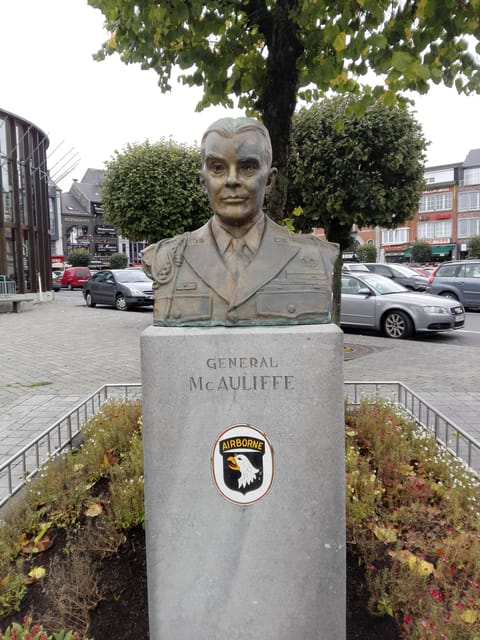
I like the way the day joins major memorials with simple, physical reminders of combat, especially the Foy foxholes and the Sherman tank in McAuliffe Square. I also like that museum admission is included. The drawback is the length: at 11 hours, with long bus rides from Brussels, this is a serious history day rather than a light excursion.
Key points to know before booking
- The day begins at Neuville-en-Condroz American Cemetery, where thousands of white crosses create a quiet and solemn opening.
- McAuliffe Square puts Bastogne’s wartime story in the middle of town, with a Sherman tank, shops, and places to buy lunch.
- The Mardasson Memorial honors American soldiers killed in the battle with an unusual star-shaped design and a short guided visit.
- The Bastogne War Museum is included, and you get about two hours inside its displays and 3D presentations.
- The Foy foxholes make the fighting feel real, showing the cramped defensive positions used by the 101st Airborne Division.
- This is best for people who can walk comfortably, since it is not suitable for wheelchair users or people with limited mobility.
Why Bastogne makes such a powerful day trip
The Battle of the Bulge was Germany’s last major offensive on the Western Front in World War II. Bastogne became a key Allied stronghold during the fighting, and its name is closely tied to the stubborn defense by American forces in the winter of 1944 and 1945.
You do not need to arrive with a detailed military background. The guide sets up the story as you travel south from Brussels, explaining the armies involved and the events that led to the battle. Guides Martin King and Stefan have been praised for bringing energy and clear explanations to the long ride, while Jan has been especially good at adapting the day for personal connections to the war.
That bus time matters. The trip includes roughly two hours of coach travel, and the roads between Brussels and the Ardennes take up a large part of the day. A strong guide turns that time into useful preparation. A quiet guide would make the journey feel much longer, so it is worth confirming that the tour runs in English and includes a live guide.
A few more Brussels half-days to weigh up
- Brussels: Atomium Entry Ticket with Design Museum Ticket
★ 4.4 · 9,254 reviews - From Brussels: Guided Day Trip to Bruges and Ghent
★ 4.6 · 8,353 reviews - From Brussels: Bruges & Ghent Day Tour – 2 Fairytale Cities
★ 4.7 · 8,242 reviews
From Brussels to the first cemetery
The meeting point is outside the National Bank of Belgium at Bd de Berlaimont 18. Look for the tour staff and the Keolis coach. The day finishes at Brussels Central Station, which is convenient if you are continuing by train or staying in the center.
The first major stop is the Neuville-en-Condroz American Cemetery. Rows of white crosses honor thousands of American service members killed in the fighting. The setting asks you to slow down. This is not a quick photo stop in the usual sense, and the respectful mood sets the right tone for everything that follows.
I find a cemetery visit especially useful at the start of a military tour because it puts names and lives before maps and troop movements. You see the cost of the battle before hearing the tactical details. Bring comfortable shoes, but also bring a little patience. The cemetery is a place for quiet attention, not rushing from one marker to the next.
McAuliffe Square and Bastogne’s Sherman tank
Bastogne gives you a break from the quiet of the cemetery. McAuliffe Square sits in the town center and offers a chance to walk, take photographs, and see an imposing M3 Sherman tank. The tank is a strong visual link between the modern town and the armored fighting that shaped its wartime story.
The square also helps with the practical side of an 11-hour outing. You have access to nearby dining and shopping, and lunch is scheduled at a local restaurant. Lunch and drinks are not included, so plan to pay separately. The exact meal arrangements are not specified, but you should expect to budget for food and beverages during the stop.
Do not expect a long free period here. The schedule gives you short visits and photo opportunities before the main museum visit. That is enough to get your bearings, see the tank, and understand Bastogne as a living town rather than only a memorial site.
The Mardasson Memorial’s star-shaped design
The Mardasson Memorial is one of Bastogne’s most recognizable monuments. Its star-shaped form honors American soldiers killed during the battle, and the site gives the guide room to explain the meaning of the memorial and the wider campaign.
The guided visit is fairly short, around 15 minutes. That can feel brief if you want a long architectural explanation, but it works well as part of a full day packed with several important sites. I like the placement of the memorial in the sequence: you have seen the town and tank, and now you reach a formal monument before entering the museum.
Take your time with photographs, but keep the memorial’s purpose in mind. This is not just a scenic stop. It is a place of remembrance, and the short guided talk helps connect the monument to the soldiers it honors.
Same city, a completely different way to spend a day:
- Choco-Story Brussels: Chocolate Museum Entrance with Tasting
★ 4.3 · 4,883 reviews - Bruges and Ghent – Belgium’s Fairytale Cities – from Brussels
★ 4.0 · 4,809 reviews - Brussels: Hop-On Hop-Off Bus Tour
★ 4.0 · 4,016 reviews - Brussels: Guided Walking Tour
★ 4.6 · 3,560 reviews
Two hours inside the Bastogne War Museum
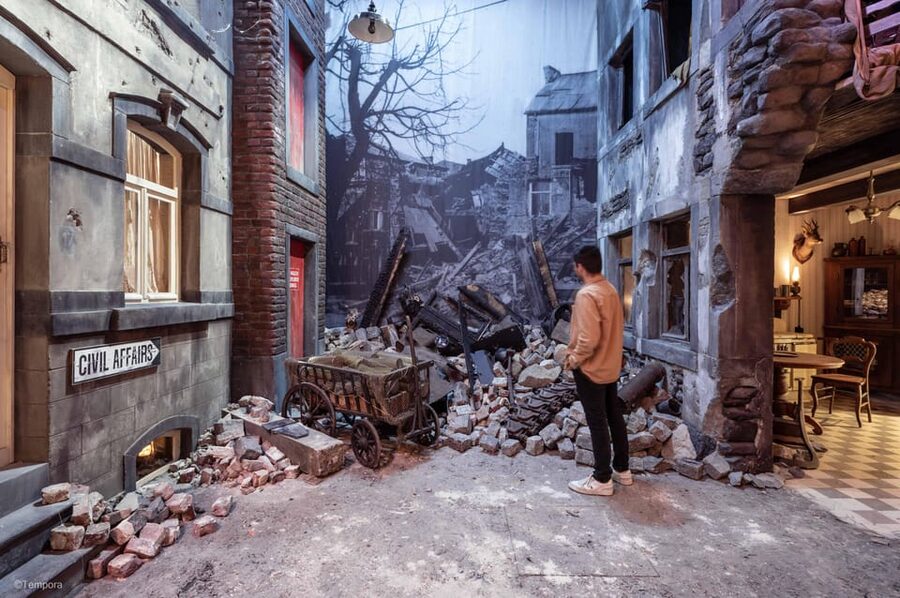
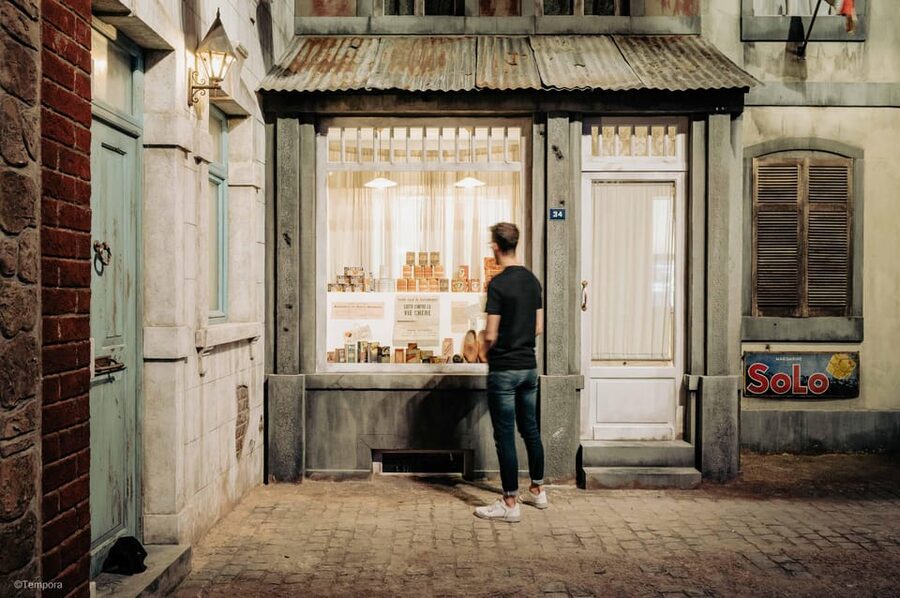
The Bastogne War Museum is the main indoor stop, with admission included in the tour price. You get about two hours to explore its exhibitions, 3D displays, and personal accounts connected to the Battle of the Bulge.
This museum works best after the morning visits. You have already heard the basic story, seen the town, and visited places of remembrance. As a result, the displays are easier to follow. The guide’s explanations before entering are valuable here because they give you a framework for what you are about to see.
Two hours is a useful amount of time, but it is not unlimited. One person on the tour found there was enough time to see the museum, though the final part felt rushed. I would keep your pace steady from the start. Read the key panels, watch the main presentations, and leave time for displays that catch your attention rather than spending too long in the first rooms.
The museum’s 3D material adds a visual layer to the campaign, while the personal stories keep the subject from becoming only a series of dates and military movements. You may prefer the museum to the outdoor stops if you want more explanation. If you learn best by seeing actual ground and defensive positions, the later visit to Foy may be the emotional high point.
The German cemetery and the full cost of war
The tour also includes a German cemetery. This is an important part of the day because it broadens the focus beyond the American experience. The American cemetery honors the Allied dead, while the German cemetery reminds you that the battle left casualties on both sides.
The tone is not about treating every cause as equal. It is about seeing the human cost in full. A visit to both cemeteries makes the day more thoughtful than a tour focused only on victory, equipment, and famous units.
Expect another short stop rather than a long period for independent study. The schedule includes a photo stop and visit of about 30 minutes in this part of the day. Comfortable shoes will help, especially because you move between outdoor sites and spend much of the day on your feet.
Foy’s foxholes and the 101st Airborne Division
At Foy, you visit the foxholes and cavities dug by American soldiers for protection. These positions were associated with the 101st Airborne Division, and the physical remains offer a direct sense of how exposed and cramped frontline life could be.
The foxholes are not a polished museum exhibit. Their value comes from their simplicity. You see depressions in the ground and defensive positions in the forest, then try to picture soldiers using them for shelter during a winter battle. That act of imagination is often more powerful than another display case.
This stop also explains the mobility warning. The tour is not suitable for wheelchair users or people with limited mobility, and the outdoor portions may be uneven. You should be comfortable walking and standing for repeated short visits. Wear shoes with good support, and expect the weather to affect how easy the ground feels.
The Foy visit receives especially strong praise from people looking for a more personal connection to the battle. It is one of the places where the story shifts from military overview to physical experience. You are not simply hearing where soldiers fought. You are looking at the ground where they made defensive positions.
The guide can shape the whole day
The guides are a major part of the experience. Martin King is known for combining historical detail with an entertaining delivery, and Stefan has been praised for clear explanations, warmth, and an energetic approach. Jan has also shown flexibility by adding a stop connected to a family member’s wartime service when circumstances allowed.
Those personal touches matter on a long coach trip. The Battle of the Bulge involves several armies, changing lines, and many place names. Without a clear explanation, Bastogne can become a string of monuments with little connection between them.
A good guide also helps you understand what you are seeing at the museum and foxholes. One useful feature of this tour is the order of the stops: the guide explains the battle before you encounter the museum’s displays, so you are not starting from zero.
The guide does not replace your own time. At some sites you will have only 10 to 20 minutes, and the museum gives you more freedom. Listen during the coach ride, ask questions when there is time, and use the independent portions for quiet reflection and photographs.
Is $97 a fair price?
At $97 per person, the tour offers solid value if you want a guided day from Brussels. The price includes coach transportation, an English-speaking professional guide, and admission to the Bastogne War Museum. The museum ticket alone is an important inclusion because it is the longest and most substantial indoor stop.
You still need to pay for lunch and beverages. Add that to your budget before booking. The tour is also a better value for someone who would otherwise need to arrange transport between Brussels, Bastogne, the cemeteries, the memorial, and Foy. Those sites are spread out, and the coach removes the need to plan each connection.
The tradeoff is time. You pay for convenience and a guided route, but you spend much of the day in transit. A self-drive trip could give you more control over the pace, yet it would require navigation, parking, historical preparation, and separate admission planning. For a first visit focused on the major Battle of the Bulge sites, the organized format makes practical sense.
Transportation receives a perfect score from 86 percent of the published ratings, and the driver is repeatedly praised alongside the guide. That is useful on a day with long road sections. Still, no coach trip from Brussels to Bastogne will feel short, so bring water, snacks if you want them, and something warm if the weather is cool.
Who should take this Bastogne tour?
I would recommend it most strongly to:
- People with a serious interest in World War II
- Families tracing an American relative’s military service
- First-time visitors who want the major Bastogne sites in one day
- People who prefer a guide to explain military movements and memorials
- Anyone comfortable walking outdoors and spending a full day away from Brussels
You may want another plan if you dislike long coach rides, need a flexible schedule, or have limited mobility. The day includes several short stops, outdoor ground, cemetery visits, and a museum visit that can feel rushed near the end if you try to see every display in detail.
This is also not a casual sightseeing trip. Bastogne has cafés and shops, but the main purpose is remembrance and military history. Go because you want to understand the battle and honor those who served, not because you are looking for a relaxed Ardennes countryside outing.
Practical details that matter
The tour runs for 11 hours. It begins at the National Bank of Belgium and ends at Brussels Central Station. Transportation is by bus, with hotel pickup and drop-off available only when you select the private option.
The tour is conducted in English. Free cancellation is available up to 24 hours before departure, and you can reserve now and pay later. Starting times depend on availability, so check the schedule before you commit to other plans.
Wear comfortable shoes. That advice is basic but important here, since you walk through cemeteries, town streets, memorial grounds, museum spaces, and the Foy area. Lunch and drinks are not included, so carry money for the restaurant stop.
Should you book it?
Book this tour if you want a focused, guided introduction to Bastogne and the Battle of the Bulge without arranging your own transport. The included museum entry, strong English-speaking guides, two cemeteries, the Mardasson Memorial, and the Foy foxholes give the day real range.
I would choose it especially if a family connection to the war makes the subject personal, or if you want a guide to explain the events while you travel. I would skip it only if 11 hours sounds exhausting or if uneven outdoor walking is difficult.
The best reason to book is the combination of places. The cemetery gives the battle a human cost, Bastogne gives it a town and a tank, the museum gives it structure, and Foy gives it physical reality. That is a full day, but it is a meaningful one.
FAQ
How long is the Battle of the Bulge tour from Brussels?
The tour lasts 11 hours, including transportation between Brussels and the Bastogne area.
Where does the tour meet?
Meet outside the National Bank of Belgium at Bd de Berlaimont 18. Tour staff and the Keolis coach will be there.
Where does the tour finish?
The tour finishes at Brussels Central Station.
Is admission to the Bastogne War Museum included?
Yes. Entrance to the Bastogne War Museum is included in the tour price.
Is lunch included?
No. Lunch and beverages are not included, so you should budget separately for them during the local restaurant stop.
Is the tour suitable for wheelchair users?
No. The tour is not suitable for wheelchair users or people with mobility impairments. Comfortable shoes are recommended because the day includes walking at outdoor sites.
Just added around Brussels
- Private Tour – Bruges and Ghent, our fairytale cities★ 5.0 · 3 reviews
- Private Day Trip from Brussels to Bruges★ 4.5 · 3 reviews
- Bruxelles: Photoshoot Experience★ 4.4 · 3 reviews
- Private Arrival Transfer from Brussels Airport to Bruges with Business car★ 5.0 · 3 reviews
- Leuven: City Walk with Audio Guide in 7 Languages on your Phone★ 3.0 · 3 reviews
- Brussels: Express Walk with a Local in 60 minutes★ 5.0 · 3 reviews
- 2 Hour Beer Tasting with Local Beer Sommelier in Brussels★ 5.0 · 3 reviews
- Floating in the clouds★ 5.0 · 3 reviews
Brussels Tours, compared.
Atomium Entry Ticket with Design Museum Ticket
Read our review →
From Brussels: Guided Day Trip to Bruges and Ghent
Read our review →
From Brussels: Bruges & Ghent Day Tour – 2 Fairytale Cities
Read our review →
Choco-Story Brussels: Chocolate Museum Entrance with Tasting
Read our review →
Bruges and Ghent – Belgium’s Fairytale Cities – from Brussels
Read our review →
From Brussels: Luxembourg Tour with Dinant Visit
Read our review →
Hungry Mary’s Famous Beer and Chocolate Tour in Brussels
Read our review →Browse the lists this tour appears in