
Reviewed · BRUGES TOURS
Private Historical Tour: The Highlights of Bruges
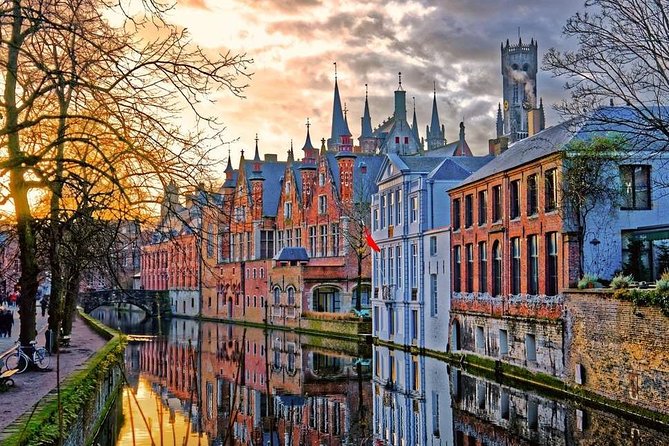
Bruges makes a fine first impression, but its prettiest streets can hide a complicated past. This private walk connects the canals, squares, churches, hospitals, and trading houses to the medieval power struggles that shaped the city. Guides such as Martin, Piet, Sam, Patrick, and Mauricio are praised for turning dates and buildings into lively stories.
I like the private format, which lets you set a comfortable pace and ask questions without holding up a large group. I also like the practical local advice, especially the recommendations for Flemish food, beer, waffles, fries, chocolate, and restaurants. The main caution is time: eleven stops in about two hours means some places receive only a quick explanation, and one account described the route ending before the Beguinage and Minnewater Lake.
Key points to know before booking
- Private walk for your party: You get a guide focused only on your group, with room to adjust the pace and ask questions.
- A strong first look at Bruges: The route links Markt, Burg Square, the canals, major churches, museums, and medieval civic sites.
- Good local stories: Expect tales about swans, Emperor Maximilian, the nickname Fools of Bruges, and the city’s trade.
- Hotel pickup and drop-off included: The stated meeting point is Pieter de Coninck en Jan Breydelmarkt, but hotel pickup is also offered, so confirm the arrangement.
- Two hours, mostly outdoors: Museum and church admissions are not included, and the tour generally works best as an orientation walk.
- Book early for preferred times: The experience is often reserved about 56 days ahead, and you should give your requested start time when booking.
Why this private Bruges walk works well
The best use of this tour is as your first serious look at Bruges. You get the basic map in your head, then learn which buildings matter and why. Instead of seeing a handsome square as just a photo stop, you hear how trade, taxation, rulers, religion, and local pride shaped it.
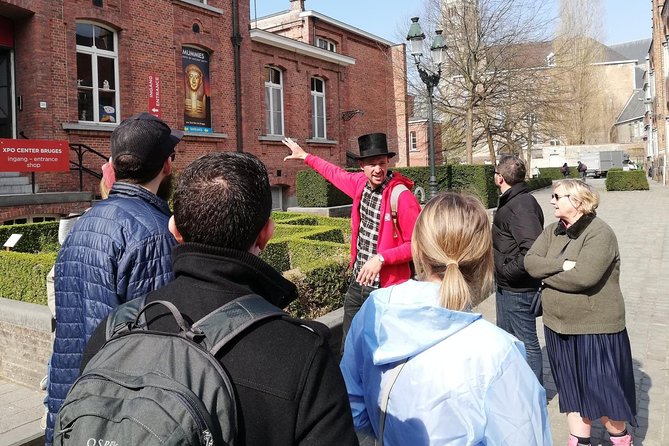
The private setup matters in Bruges. The center can get crowded, especially around the Christmas markets and during the hours when day trippers arrive. A guide can steer your small party through busy streets more easily than a large group, and you can stop for pictures without creating a traffic jam.
You should also expect a walking tour rather than a series of long interior visits. Most stops last 10 minutes, with 15 minutes at Minnewater Lake and Burg Square, and only five minutes near the Groeningemuseum garden. That structure gives you a broad sweep, but it does not allow a full museum visit or a climb up the Belfort.
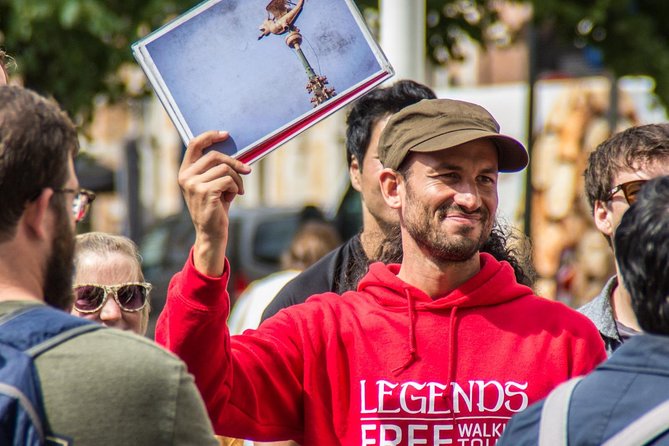
The guide quality is one of the strongest reasons to book. Martin is praised for clear English, precise dates, personal stories, and thoughtful follow-up recommendations. Piet is described as attentive and entertaining, including on a very cold day. Sam has used laminated images to show how Bruges looked in earlier periods, while Mauricio has tailored explanations to specific interests and used visual aids.
Those details tell you what to look for. The best guides do not simply point at a tower. They show you an old image, explain who paid for the building, connect it to a political quarrel, and then suggest what to see next. Your experience can vary by assigned guide, but the available feedback includes Martin, Piet, Sam, Patrick, Erik, Louis, Hilde, Wouter, Helga, and Mauricio.
More History Tours in Bruges
- Historical Walking Tour: Legends of Bruges
★ 5.0 · 2,541 reviews - THE Storytelling Tour of Bruges | First Day Must | History & Tips
★ 5.0 · 925 reviews - Historical Walking Tour: The Story of Bruges – by Legends
★ 4.7 · 483 reviews
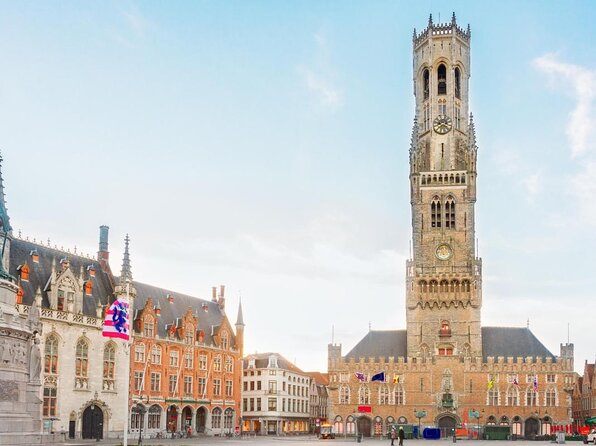
Markt and Belfort: Bruges begins with trade and power
The tour starts at Pieter de Coninck en Jan Breydelmarkt, beside the city’s famous Markt. This is the right place to begin because Bruges first makes sense as a commercial center. Your guide explains the city’s role as a medieval trading hub, then moves into the uneasy relationship between Bruges and the French king.
That political thread gives the square more weight. Bruges was not simply a prosperous town enjoying its wealth. It had local interests, civic pride, and leaders who did not always welcome outside control. You hear how those tensions affected the city and why Bruges became important beyond its canals and handsome façades.
The stop is scheduled for about 10 minutes, so expect an introduction rather than a full lecture. I would use this moment to ask your guide for the broad timeline of Bruges. That will help you place the later stories about the Dukes of Burgundy, Maximilian of Austria, and the city’s trading families.
At the Belfort, the guide visits the halls behind the bell tower and explains its medieval role. The tower was not just a photogenic landmark. It represented civic authority and the ability of the city to protect records, valuables, and public interests.
Admission to the Belfort is not included, and this stop does not mean you climb the tower. You get an explanation of the building and its purpose from the outside and adjoining halls. If reaching the top is a priority, plan a separate visit and allow extra time beyond this two-hour walk.
Gruuthusemuseum and St John’s Hospital: wealth beside care
The Gruuthusemuseum introduces you to a city palace once owned by a wealthy Bruges family. Your guide explains how the family gained power through a monopoly in one part of the trade. That detail is useful because it links architecture to business. A grand home was not merely a decorative statement. It reflected money, status, and control over commerce.
The stop lasts around 10 minutes. You should think of it as a doorway into the museum’s story, not a museum tour. Admission is not included, so you can return later if the palace and its collections catch your interest.
Next comes Sint-Janshospitaal, one of the oldest surviving hospitals in the world. Its importance goes beyond medical care. Medieval hospitals were part of the social structure of the city, offering help to the sick and poor while also reflecting religious duty and civic responsibility.
The building is magnificent, but the short stop limits what your guide can cover. You may hear why the hospital mattered and what role it played, while the art and interior collections require a separate ticket. If you have a strong interest in medieval art, place this museum and the Groeningemuseum on your own follow-up list.
Beguinage and Minnewater Lake: quieter Bruges and good stories
The Princely Beguinage Ten Wijngaarde brings a change of mood. You walk into a picturesque enclosed community where women have lived together for more than 800 years. The setting is calmer than Markt, and the white buildings and green space offer a welcome pause from the main streets.
The tour description calls this the biggest beguinage of its kind in the world. Your guide explains how the community functioned and why beguinages became an important part of medieval society. You do not need to know the full religious and social background in advance. The guide’s job here is to make the place readable rather than simply scenic.
Minnewater Lake, commonly called the Lake of Love, adds another pleasant outdoor stop. Here you hear why swans appear on Bruges canals and how the city came into conflict with Emperor Maximilian of Austria. These are exactly the sort of compact local stories that help you remember a place after the tour ends.
This part of the route is worth watching carefully because one reported experience did not include either the Beguinage or Minnewater Lake, despite both being described as stops. That may have resulted from a shortened route, timing, weather, or a communication problem. I would confirm the planned route with the guide at the start, especially if these two sites matter most to you.
More history walks around Bruges:
- 2-Hour Historical Walking Tour in Bruges with Praline Included
★ 5.0 · 291 reviews - Bruges: Private Historical Highlights Walking Tour
★ 4.7 · 191 reviews - Bruges: Nightly Tales and Untold History Walking Tour
★ 4.9 · 87 reviews - Bruges: History, Chocolate and Beer Walking Tour
★ 4.9 · 65 reviews
De Halve Maan and the Church of Our Lady
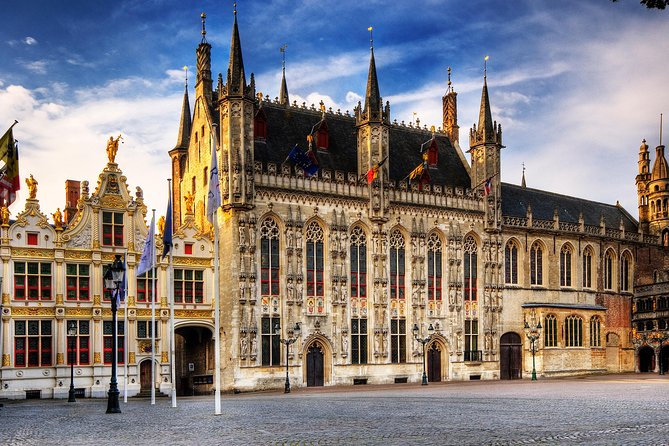
At De Halve Maan Brewery, the guide stops outside to tell the story behind Bruges’ nickname, Fools of Bruges. You also see a section of the beer pipeline running beneath the city. This is a small but memorable link between modern brewing and the practical problems of moving beer through a historic center.
No brewery admission is included, and the stop is about 10 minutes. Do not book this expecting a tasting or brewery tour. Instead, treat it as a local anecdote and a useful marker for a possible return visit if you want to explore Bruges beer culture on your own.
The Church of Our Lady is one of the tour’s most important architectural stops. Its brick tower is described as the second tallest brick tower in the world, and the church houses a Michelangelo statue along with the tombs of the last Dukes of Burgundy.
That combination gives your guide a lot to work with: architecture, sculpture, dynastic power, and the city’s relationship with Burgundy. Admission is not included, so the explanation may take place partly outside or in accessible areas rather than as a full church visit. If you want time with the Michelangelo or the tombs, set aside a separate visit.
Groeningemuseum garden and the Tanner’s Square
The guide enters the garden of the Groeningemuseum, where works by major Flemish masters are on display. With only about five minutes scheduled here and admission not included, this is a preview rather than an art lesson.
That can still be valuable. Bruges is often praised for its medieval streets, but Flemish painting gives you another way to understand the city’s place in European culture. I would ask which artists or works deserve a longer look later, then return when you can give the museum your full attention.
Huidenvettersplein, the old Tanner’s Square, offers a less polished piece of urban history. This was where hides were greased and processed into leather, an unpleasant but essential trade. The stop reminds you that historic cities were working places, not stage sets designed only for pretty photographs.
The square also helps explain how specialized trades shaped neighborhoods. Smells, noise, waste, and commerce all affected where people lived and worked. A guide who tells this part well can make the old center feel more real and less like a collection of façades.
Burg Square: ending at Bruges’ political heart
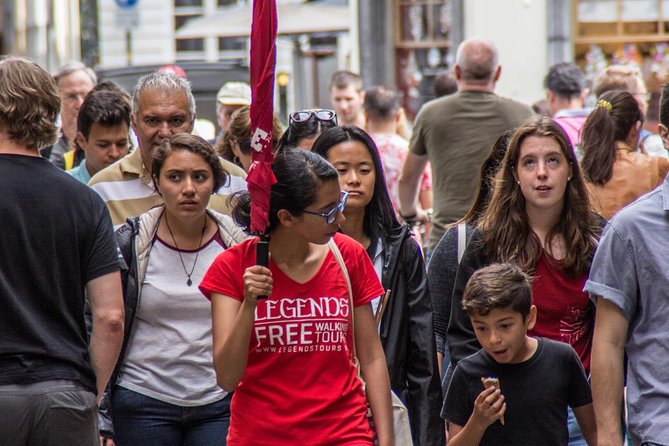
The walk finishes on Burg Square after passing the old Fishmarket. Burg is the political heart and birthplace of Bruges, making it a fitting place to end. By this point, you have seen the commercial center, civic tower, wealthy palace, hospital, religious communities, brewery, church, museum district, and working quarter.
The final 15 minutes give you a chance to pull those threads together. Ask your guide what deserves a return visit and how to reach it. Guides have offered useful suggestions for restaurants, Flemish dishes, local beers, waffles, fries, chocolate, and quieter places to eat.
The endpoint is listed as Burg Square, not back at your hotel. Hotel pickup and drop-off are included in the stated features, but the meeting and ending details should be confirmed when you book. If you are staying outside the central area, clarify whether the guide will meet you at the hotel and where the walk will finish.
Pace, crowds, weather, and family appeal
A private walk is especially useful if your group includes different ages or walking speeds. One account describes a comfortable pace for a slower walker, and another says a family ranging from age 9 to 75 enjoyed the experience. You still cover a lot of ground, but the guide can pause for questions, pictures, or a short rest.
The route is mainly outdoors, so weather matters. A guide named Piet kept checking on the group during a very cold day, but you should still dress for Belgian weather and wear shoes suited to old city streets. The tour can be particularly pleasant early in the day, before the center fills with day trippers and larger groups.
Evening departures are available according to one account, and an evening walk was described as a good introduction to Bruges. Because you must specify your preferred start time, ask what times are available for your date rather than assuming a standard departure.
The experience is offered in English. Service animals are allowed, it is near public transportation, and most people can participate. If you need a booking for more than 15 people, contact the provider directly at [email protected].
Is $99.81 per person a good value?
At $99.81 per person, this is not the cheapest way to see Bruges. The value depends on your group size and how much you care about private attention. A couple or family pays more than it would for a free public walk, but you gain a guide dedicated only to your party, a flexible pace, hotel pickup and drop-off as stated, and the chance to ask about exactly what interests you.
The price includes the guide and all fees and taxes, but not food, drinks, or admission to the Belfort, Gruuthusemuseum, Sint-Janshospitaal, De Halve Maan Brewery, Church of Our Lady, or Groeningemuseum. That distinction matters. The tour gives you context for these places, but you will pay extra if you return inside.
I see the strongest value for first-time visitors with limited time, families that need a private pace, and couples who want local advice without joining a large group. If you already know Bruges well or mainly want museum interiors, the cost is harder to justify.
The rating is 4.9 from 315 reviews, with 98 percent recommending the experience. The high marks focus on guide personality, historical detail, clear communication, humor, and restaurant and beer suggestions. The weaker experience described a short route and too little historical depth, so I would state your preference clearly at the start: ask for the full route and say you want history rather than only a light overview.
Who should book this Bruges tour?
Book it if you want to get your bearings quickly and understand the city before exploring on your own. You will see the major landmarks, hear stories you might miss while walking alone, and finish with useful ideas for food, drink, and museums.
It is also a good match for visitors who dislike large groups. The private format lets you ask about architecture, medieval trade, local customs, or present-day Bruges without waiting for a dozen other questions.
Think twice if you want long interior visits, a brewery tasting, or a Belfort climb included in the two-hour price. Those are separate activities. Also confirm the Beguinage and Minnewater Lake are on your route, since the published plan gives them a place but one experience did not reach them.
Free cancellation is available up to 24 hours before the start time for a full refund. Changes or cancellations inside that 24-hour window are not accepted, and cut-off times follow local Bruges time.
Should you book the Highlights of Bruges tour?
I would book this as an opening walk, not as your entire Bruges program. The route covers enough ground to make the city understandable, while the private guide can add the human details that turn a church, square, or canal into part of a larger story.
Choose it if you value a relaxed pace, direct questions, hotel pickup, and personal food and drink advice. Before paying, give your preferred start time and confirm the pickup point, full route, and amount of historical detail you want. If the guide follows that plan, $99.81 buys a useful and personable introduction to Bruges.
FAQ
How long does the private Bruges tour last?
The tour lasts approximately two hours.
Is the tour private?
Yes. Only your party participates in the activity.
Where does the tour start and end?
The stated start point is Pieter de Coninck en Jan Breydelmarkt in Bruges, and the stated endpoint is Burg Square. Hotel pickup and drop-off are also included, so confirm the exact arrangement when booking.
Is the tour offered in English?
Yes. The experience is offered in English.
Are attraction admission tickets included?
No. The tour includes all fees and taxes, but admission is not included for the Gruuthusemuseum, Sint-Janshospitaal, De Halve Maan Brewery, Church of Our Lady, or Groeningemuseum. The listed stops at the Belfort, Beguinage, Minnewater Lake, Markt, Huidenvettersplein, and Burg Square do not include a separate admission charge.
Can I cancel for a full refund?
Yes. You can cancel at least 24 hours before the start time for a full refund. Cancellations or changes made less than 24 hours before the start time are not accepted for a refund.
Just added around Bruges
- Private taxi Transfer from Bruges to Amsterdam★ 5.0 · 3 reviews
- Bruges Photo Session By a Pro★ 5.0 · 3 reviews
- Best of Brussels Private Tour from Zeebrugge or Bruges★ 4.0 · 3 reviews
- Private 3-hour walking tour of Bruges with official tour guide★ 4.0 · 3 reviews
- BeerWalk Bruges (French guide)★ 5.0 · 3 reviews
- Brussels: Private & Customizable Day Trip to Bruges★ 5.0 · 3 reviews
- Private: Discover Bruges beers & brewery with chocolate pairing by a young local★ 5.0 · 3 reviews
- Bruges: Ticket Volkskundemuseum (Folk Museum)★ 5.0 · 3 reviews
Bruges Tours, compared.
Small Group Boat Cruise and Guided Walking Tour
Read our review →
Walking Tour, Canal Boat Trip w/Beer Tasting Option
Read our review →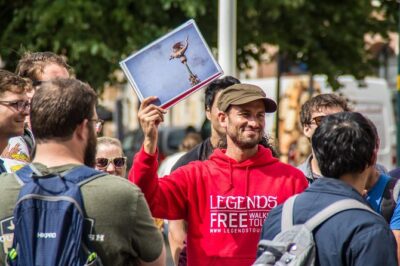
Choco-Story Chocolate Museum Guided Tour w/Tastings
Read our review →
From Bruges: Great War Flanders Fields Minibus Tour w/ Lunch
Read our review →
Belgian Waffle-Making Workshop with Beer Tasting
Read our review →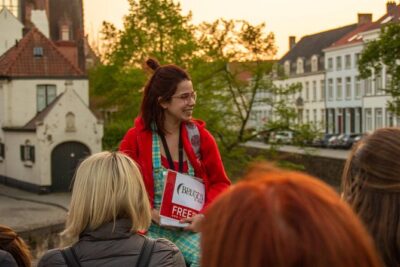
Browse the lists this tour appears in