
Reviewed · BRUGES TOURS
2-Hour Historical Walking Tour in Bruges with Praline Included
Bruges gives you a lot in a small space, and this two-hour walk makes a smart first pass through the old center. You move from Burg Square to the Markt, along canals and medieval lanes, then return to Burg Square with the city’s main sights connected by stories rather than isolated photo stops. I especially like the mix of grand landmarks and odd little details, including medieval nightlife, swans, tanners, beer, medicine, and chocolate.
I also like the local feel. Guides Peter and Joost are Bruges natives or long-time local experts who bring humor, food tips, and personal advice to the route. The small group limit of six should make it easier to hear and ask questions, though some sessions may be larger in practice. The main consideration is that the very low listed fare appears to function as a tip-based tour, so plan to give the guide a fair tip if you enjoy the experience.
Key things to know before you book
- A full old-town circuit in two hours: The route covers Burg Square, the Markt, the Belfry area, canals, museums, breweries, chocolate shops, and several lesser-known lanes.
- Stories beyond postcard Bruges: You hear about World War I and World War II, the plague, medieval hygiene, prostitution, tanners, beer production, and the city’s swans.
- A praline with a local connection: The included chocolate is made by a Guild of Bruges Chocolatiers, but only if the relevant shop is open.
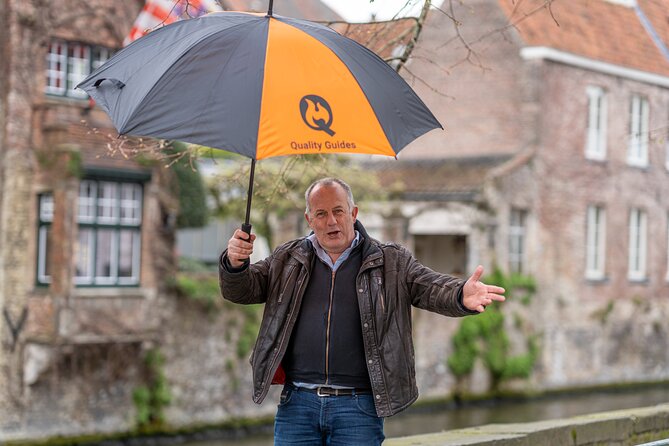
- Strong guide-led experience: Peter and Joost are praised for clear English, energy, humor, useful food advice, and a gentle pace.
- Mostly an orientation tour: You see museums and churches from outside or in courtyards. Admission to interior attractions is not included.
- Easy central meeting point: Start at Markt 4 and finish back at the meeting point, with rest, water, and public toilet stops along the way.
Starting at Burg Square, where Bruges tells its first story
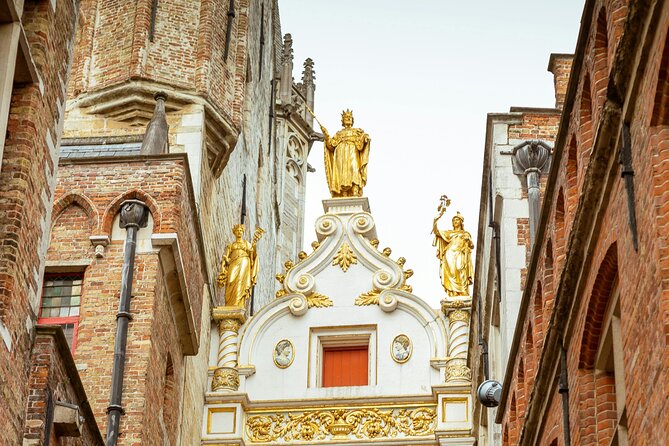
The tour begins at Markt 4, beside Bruges’ central Markt, though the opening stop is Burg Square. That short walk immediately places you in the oldest political heart of the city. Burg is framed by the Town Hall, the Basilica of the Holy Blood, and the former courthouse, with several architectural styles gathered in one compact space.
This is a useful place to begin because your guide can explain how Bruges developed before you start chasing photographs. The first stop lasts about ten minutes, enough time for the basic story without turning the introduction into a lecture.
You then move to the Markt, the square most people picture when they think of Bruges. Medieval buildings, the Belfry, and the former cloth halls make it a natural place to discuss the city’s commercial power. The stop itself is brief, around five minutes, so expect an overview rather than a detailed architectural reading.
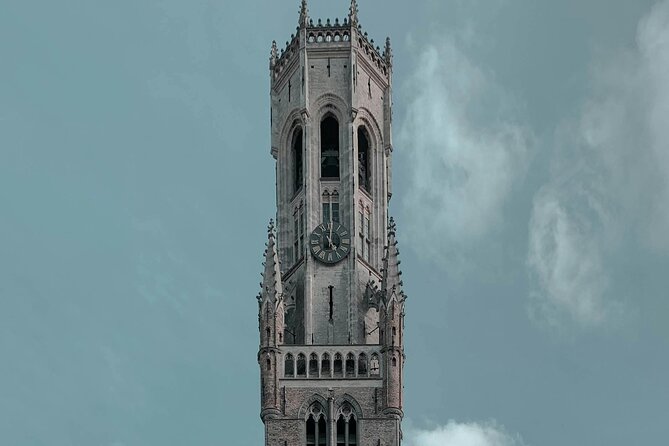
At the Belfort, or Belfry, the guide explains its origins, the problems facing the tower today, and the wealth once tied to Bruges’ cloth trade. This is one of the tour’s strengths: you get context for the buildings instead of simply being told where to take a picture.
The route also pauses at the Praalboog Pro Patria. Here the subject shifts from medieval commerce to Belgium’s independence and Bruges during both world wars. That change matters. Bruges can feel like a preserved medieval stage set, but this stop reminds you that the city continued through modern political crises and wartime hardship.
More History Tours in Bruges
- Historical Walking Tour: Legends of Bruges
★ 5.0 · 2,541 reviews - THE Storytelling Tour of Bruges | First Day Must | History & Tips
★ 5.0 · 925 reviews - Historical Walking Tour: The Story of Bruges – by Legends
★ 4.7 · 483 reviews
Gruuthuse, beer, and a church filled with art
The next section brings you toward the Gruuthuse complex. At the Gothic gate, you hear about the Gruuthuse family and the companies that run canal tours. The stop is short, only a few minutes, but it helps connect Bruges’ grand residences with the tourism economy you see today.
In the courtyard of the Gruuthuse Museum, the guide tells the story of the resident who built wealth through Gruut, a medieval beer seasoning. You also hear why brewers eventually shifted from Gruut to hops. That beer thread gives the city’s history a practical edge. Trade, taste, taxes, and brewing methods all shaped daily life.
The tour continues to the Church of Our Lady, known locally as O.L.V.-kerk. The focus is on the church, its Pietà, and other valuable works of art. You should treat this as a guided introduction, not a museum visit. The listed schedule allows about five minutes, and no admission is included, so return later if the artworks catch your attention.
At Saint John’s Hospital, the story takes a clever turn. Rather than simply pointing out another old building, the guide links medieval medicine with the origins of pralines. This is one of the tour’s most appealing details because it ties a serious subject to a familiar Belgian pleasure.
The included praline is a small but welcome extra. It is crafted by the Guild of Bruges Chocolatiers, though the information makes clear that you receive it only when the associated shop is actually open. Do not book this solely for the chocolate, but it adds a nice local touch when available.
Canals, breweries, and Bruges after dark
At Sint-Janskaai, the group stops beside the water for photographs with a medieval backdrop. Bruges rewards a walking tour here because the canals are not separate from the city’s story. They explain how goods, people, and money moved through the town, even if you do not take a boat ride.
The walk then reaches Walplein and Huisbrouwerij De Halve Maan, the famous brewery with a pipeline running beneath the city. The guide uses the brewery to explain modern brewing and the practical problem of moving beer through a historic center. You get the story and the exterior view, not a brewery admission or tasting.
Stoofstraat offers a darker and more surprising chapter. This tiny street is presented as Bruges’ medieval red-light district, along with the customs that grew around it. The guide also reveals the less pleasant side of the city’s swans. That balance is useful. Bruges is beautiful, but its past included poverty, exploitation, bad sanitation, and strict social divisions.
Katelijnestraat is the food stop in spirit, even if there is no full tasting included. You pass shops selling chocolate, waffles, and fries, while the guide also discusses the plague and the city’s harder days. This is a good place to note recommendations, so have your phone ready if you want to save names of places to eat later.
The route includes rest stops, drinking water, and public toilets along the way. That matters on a two-hour walk, especially in summer or if you are touring with children. One family found the guide flexible when a toddler needed to step away for movement, and the walk has also been comfortable for older participants. Still, you should expect continuous walking over city streets and bring sensible shoes.
Boniface Bridge and Bruges’ best photo angles
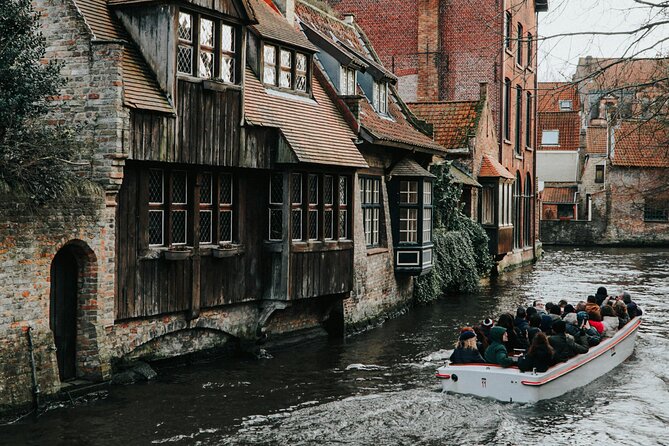
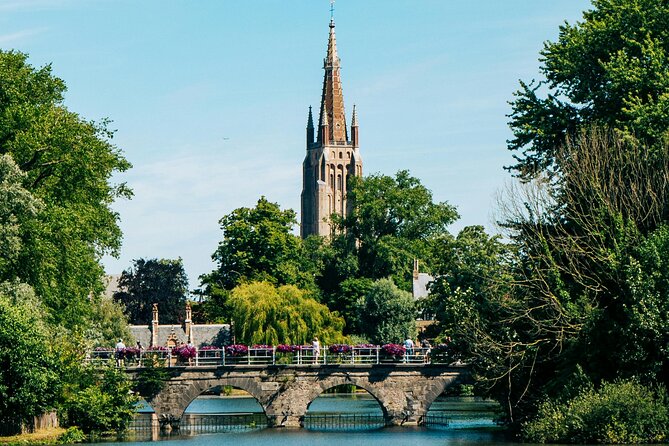
The Bonifacius Bridge is one of the most picturesque points on the route. It is often presented as a bridge of love, but the guide adds some less romantic details. That is typical of this tour: attractive places come with a story, and the story usually has a wrinkle.
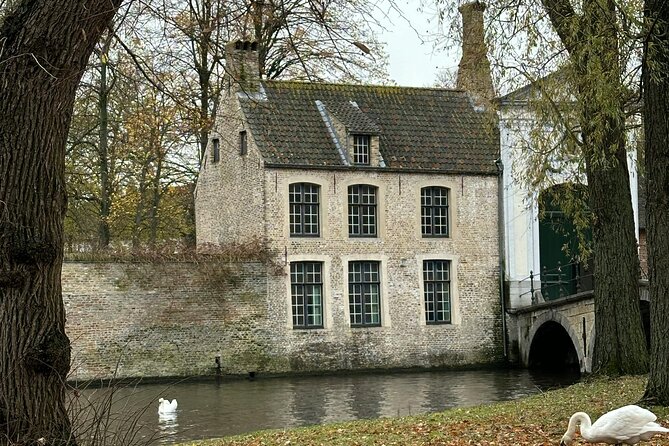
The surrounding medieval gardens make this a slower, more scenic section. Ten minutes here gives you time to listen and take photographs, though the group may be moving through a popular area. If you want a quiet, carefully framed picture, note the spot and return early or later in the day.
The Groeningemuseum follows, with a brief introduction to Jan van Eyck, Hans Memling, Hugo van der Goes, Gerard David, and other Flemish Primitives. These 15th-century works are central to Bruges’ artistic identity, but five minutes is enough only to explain why the museum matters. You will need a separate visit for the paintings themselves.
The route also includes the Dijver, described as Bruges’ oldest port. The story reaches back to Viking trade and the loading of loot for transport toward Scandinavia. You also get a view of one of the city’s well-known terraces. This is a good example of the tour’s range: art, beer, warfare, trade, and street life all appear within a short walk.
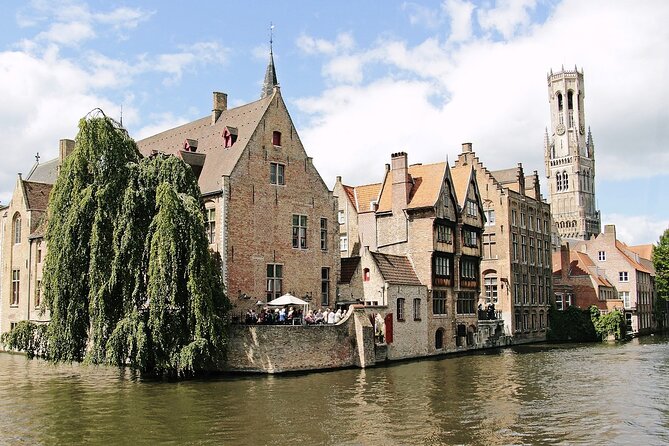
At Rosary Quay, you reach the classic Bruges picture spot. From here, you can frame the Belfry and the Church of Our Lady together, with the hotel connected to the film In Bruges also in the view. The guide points out the location, but this remains a public photo stop rather than a film-themed tour.
More Walking Tours in Bruges
- Bruges: Small Group Boat Cruise and Guided Walking Tour
★ 4.8 · 4,102 reviews - Bruges: Walking Tour, Canal Boat Trip w/Beer Tasting Option
★ 4.4 · 2,759 reviews - Guided boat trip and walk
★ 4.5 · 703 reviews - Bruges: Guided Walking Tour
★ 4.5 · 682 reviews
Tanners, fish markets, and a final return to Burg
Huidenvettersplein brings you back to workaday medieval Bruges. The guide explains the tanners’ trade and why this square was once among the dirtiest and worst-smelling places in town. Today it is a place to eat and drink, which makes the contrast easy to grasp.
This stop is scheduled for about ten minutes, so you have time to understand how unpleasant some urban jobs were before modern sanitation. It also gives you another chance to note a restaurant or café for later, though the tour does not include a meal.
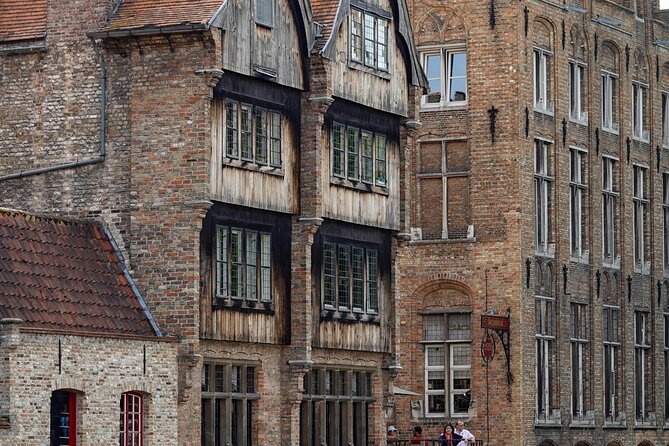
At Vismarkt, the guide explains the existence of two fish markets, supposedly intended for two different kinds of customers. The square also leads toward the central part of Bruges, where Gothic, Renaissance, and Classicist buildings sit close together. You do not need to be an architecture specialist to appreciate the visual shift.
The tour ends back at Burg Square. The Town Hall, Basilica of the Holy Blood, and courthouse provide the final setting, and the guide brings the route together with stories tied to each building. Ending where you started is convenient if you want to continue exploring on foot, return to your hotel, or use the advice gathered during the walk.
What the two-hour format gives you
Two hours is long enough to learn the geography of central Bruges without exhausting yourself. The route includes many stops, but most are short, often three to ten minutes. That keeps the pace moving and lets you see a broad range of the old center.
I would think of this as an orientation walk, not a deep visit to any one attraction. You will not have time to tour the Belfry, explore the Groeningemuseum, study the Church of Our Lady, and visit the Gruuthuse Museum during the route. You will know which places deserve a return visit, and you will understand how they fit together.
The pace has been comfortable for senior participants, and one guide kept the walk manageable during hot weather by using sheltered spots. Another practical note comes from the city itself: rain can arrive even when the forecast looks friendly. Bring a rain jacket or umbrella, since the tour is outdoors and shops along the route may be your fallback if the weather turns.
The activity is offered in English on a mobile ticket. It is near public transportation, permits service animals, and asks for a moderate level of physical fitness. The maximum group size is listed as six, which is especially valuable at busy squares where a large group can make questions and photographs harder.
The guide makes the difference
The strongest reason to choose this walk is the guide. Peter is repeatedly described as funny, clear, energetic, and deeply familiar with Bruges. He grew up in the city and explains it with affection, but his style also includes awkward, strange, and less flattering parts of the past.
Joost is another named guide associated with the experience. He is praised for good English, clear delivery, strong energy, and memorable storytelling. You may receive one guide or the other, so do not book expecting a particular person unless the provider confirms it.
Both guide styles appear to favor stories over a list of dates. That helps the two hours pass quickly, but it also means the walk may not suit you if you want a formal academic lecture or exhaustive architectural detail.
Ask for eating and drinking suggestions. This is one of the most useful extras built into the experience. The guides offer advice about places to eat and other sights to visit, helping you decide how to spend the rest of your time in Bruges.
Is the $3.63 price really the whole cost?
At $3.63 per person, the listed price is remarkably low for a two-hour guided walk. Even with a reasonable tip, it remains strong value if your goal is to get oriented, hear local stories, and identify places to revisit.
You should understand the payment culture before you go. The tour appears to rely heavily on tips, and one guide is described as having left full-time work to lead tours. Several comments make clear that the low booking price is not meant to replace a proper gratuity.
That is not a reason to avoid the tour, but it is a reason to budget honestly. If you value the guide’s time, humor, local advice, and two hours of attention, plan your tip before arriving. One person was unhappy after realizing only at the end that the experience was tip-based, so do not let the low headline price create confusion.
The chocolate is a bonus, not the core value. It is available only when the Guild-affiliated shop is open, and the experience does not include museum tickets, a brewery visit, a canal cruise, or a meal.
Who should choose this Bruges walk?
I would choose it for a first visit, a short stay, or a cruise stop when you need the city to make sense quickly. It is also useful early in a longer visit because you can mark the Belfry, Groeningemuseum, Church of Our Lady, brewery, and canal areas for later.
It suits solo visitors, couples, families with older children, and older adults who can manage a moderate walk. The guide’s humor and willingness to answer questions make it more personal than a recorded audio route.
You may want something else if you dislike tip-based tours, need extensive time inside museums, or prefer a slow photography walk. The schedule is designed to cover many points, so some stops will feel brief.
Book at least a few weeks ahead if your dates are fixed. The experience is booked about 19 days in advance on average, which suggests that popular times can fill. You receive confirmation at booking, and free cancellation is available up to 24 hours before the start time. Cancellations or changes inside that window are not accepted for a refund.
My take: a smart first walk through Bruges
Book this tour if you want stories, orientation, and local advice more than formal admissions or long museum visits. The route covers nearly every major sight in central Bruges, while the guide adds the unusual material that makes the city memorable: beer ingredients, medieval medicine, bad smells, wartime survival, a red-light lane, swan lore, and the darker side of beautiful squares.
The low price makes it an easy choice, provided you understand the tip expectation and the praline depends on shop hours. I would take this near the start of a Bruges visit, wear shoes suited to two hours on foot, carry rain protection, and keep the guide’s food recommendations for later.
FAQ
How long is the walking tour?
The tour lasts approximately two hours.
Where does the tour begin?
The meeting point is Markt 4, 8000 Brugge, Belgium.
Where does the tour finish?
The activity ends back at the meeting point.
Is the tour offered in English?
Yes. The experience is offered in English.
Is a praline included?
A praline crafted by the Guild of Bruges Chocolatiers is included when the relevant shop is open.
Are entrance tickets included?
The listed stops show free admission, but the tour is primarily an outdoor walking experience. Separate admission is not provided for attractions such as the Belfry, museums, or church interiors.
How many people can join the tour?
The activity has a maximum listed group size of six people.
What level of fitness is needed?
A moderate level of physical fitness is recommended for the walking route.
Can I cancel for a full refund?
Yes, if you cancel at least 24 hours before the experience start time. Cancellations or changes made less than 24 hours in advance are not accepted for a refund.
More 2-Hour Experiences in Bruges
- Bruges Private 2-Hour Walking Tour
★ 4.7 · 296 reviews - 2-Hour Medieval Walk and Chocolate Tasting in Bruges
★ 5.0 · 48 reviews - 2-Hour Private Walking Tour of Bruges
★ 5.0 · 13 reviews - Guided Bike Tour: 2 Hours Highlights of Antwerp
★ 5.0 · 347 reviews
Just added around Bruges
- Bruges Photo Session By a Pro★ 5.0 · 3 reviews
- Best of Brussels Private Tour from Zeebrugge or Bruges★ 4.0 · 3 reviews
- Private taxi Transfer from Bruges to Amsterdam★ 5.0 · 3 reviews
- Private 3-hour walking tour of Bruges with official tour guide★ 4.0 · 3 reviews
- BeerWalk Bruges (French guide)★ 5.0 · 3 reviews
- Brussels: Private & Customizable Day Trip to Bruges★ 5.0 · 3 reviews
- Private: Discover Bruges beers & brewery with chocolate pairing by a young local★ 5.0 · 3 reviews
- Bruges: Ticket Volkskundemuseum (Folk Museum)★ 5.0 · 3 reviews
Bruges Tours, compared.

Small Group Boat Cruise and Guided Walking Tour
Read our review →
Walking Tour, Canal Boat Trip w/Beer Tasting Option
Read our review →
Choco-Story Chocolate Museum Guided Tour w/Tastings
Read our review →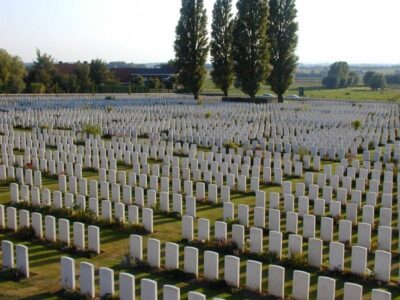
From Bruges: Great War Flanders Fields Minibus Tour w/ Lunch
Read our review →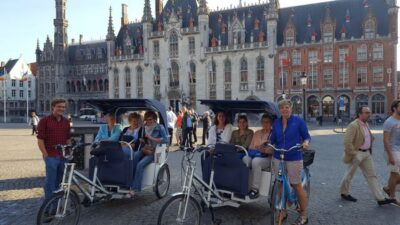
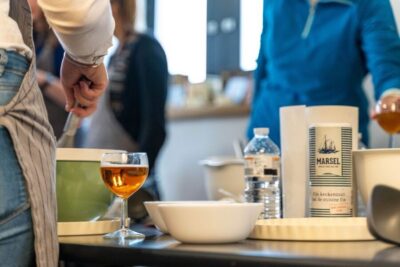
Belgian Waffle-Making Workshop with Beer Tasting
Read our review →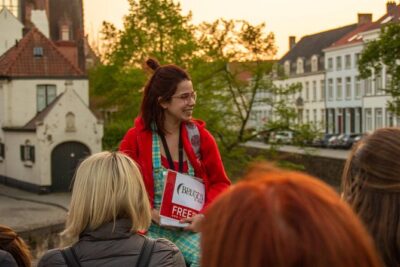
Browse the lists this tour appears in