
Reviewed · BRUSSELS TOURS
Brussels: Chocolate Appreciation and Tasting Walking Tour
Belgian chocolate is best understood one bite at a time, and this two-hour walking tour gives you eight chances to taste the difference between truffles, pralines, filled chocolates, and more unusual flavors. You move through central Brussels, stopping at five shops rather than sitting through a long lecture.
I like the mix of chocolate and city history, especially the route through the Royal Galleries of Saint Hubert and Grand Place. I also like the personal touch guides such as Anna, Nina, Zoe, Asmin, Kate, and Julie bring to the tasting, with explanations of each shop and occasional personal recommendations. The main drawback is simple: at about $44, some people may want more than eight small tastings, and the tour is not suitable for people with diabetes.
Key points at a glance
- Eight tastings at five chocolatiers: Sample classic and unusual Belgian chocolates, including truffles, pralines, fruit or alcohol fillings, basil, gin, and even very dark chocolate.
- A useful central Brussels route: Walk from the Royal Galleries of Saint Hubert through Grand Place toward Saint Catherine’s district.
- Chocolate explained clearly: Learn about cocoa plants, the journey of cocoa beans to Europe, and the making of Belgian chocolate.
- Strong guide element: Guides including Anna, Nina, Zoe, Asmin, Kate, and Julie are praised for lively stories and clear explanations.
- Good first-day activity: The route gives you a quick introduction to central Brussels as well as ideas for chocolate shops to revisit.
- Plan for the weather: The tour runs rain or shine, and late arrivals or no-shows do not receive a refund.
Starting inside the Royal Galleries of Saint Hubert
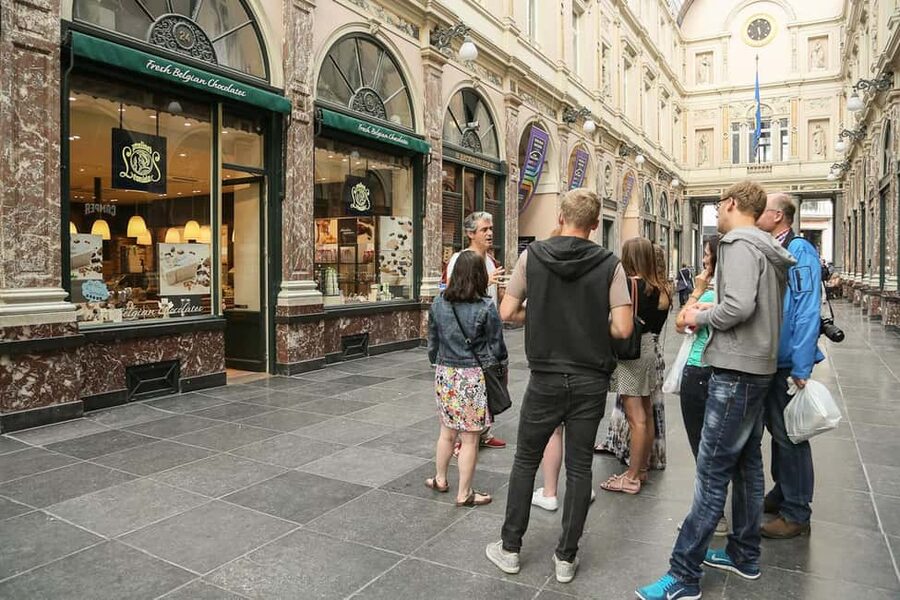
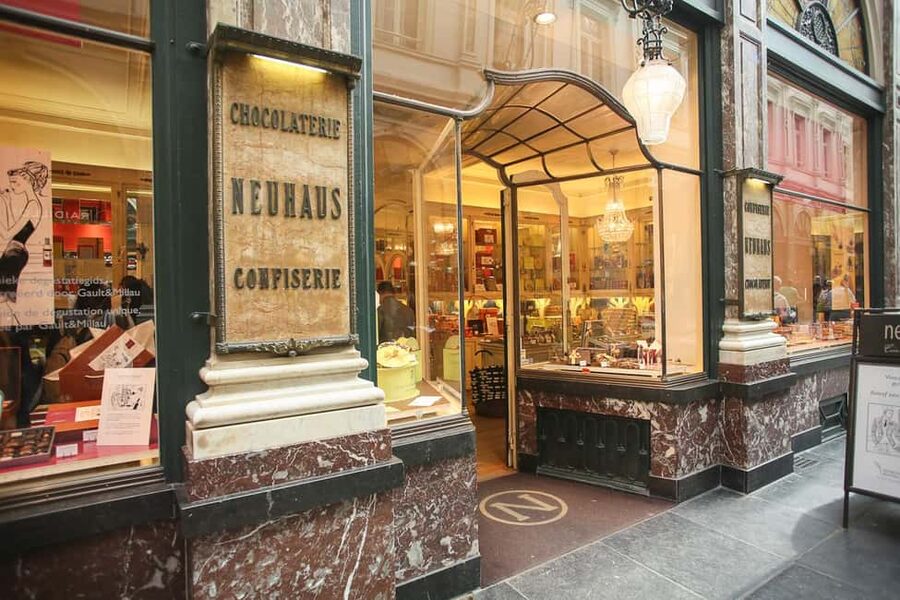
Your meeting point is outside the Roseline d’Oreye shop at Galerie du Roi 10, inside the Royal Galleries of Saint Hubert. This is a sensible place to begin. The elegant covered arcade puts you in the middle of old Brussels before the first chocolate explanation even starts.
The galleries are more than a convenient meeting point. Their polished passages, glass roof, and small boutiques create the right setting for a tour about luxury food and Belgian craftsmanship. Your guide begins by placing chocolate in the story of Brussels, then leads you through the galleries while pointing out details about the city.
The exact chocolate shops can vary, so you should think of the experience as a guided tasting route rather than a fixed list of famous brands. The point is to compare several houses and styles, not simply collect a souvenir from one large store.
More Food Tours in Brussels
- Choco-Story Brussels: Chocolate Museum Entrance with Tasting
★ 4.3 · 4,883 reviews - Hungry Mary’s Famous Beer and Chocolate Tour in Brussels
★ 5.0 · 2,258 reviews - Belgian Beer Tasting in Brussels
★ 5.0 · 1,280 reviews
Learning how Belgian chocolate became a tradition
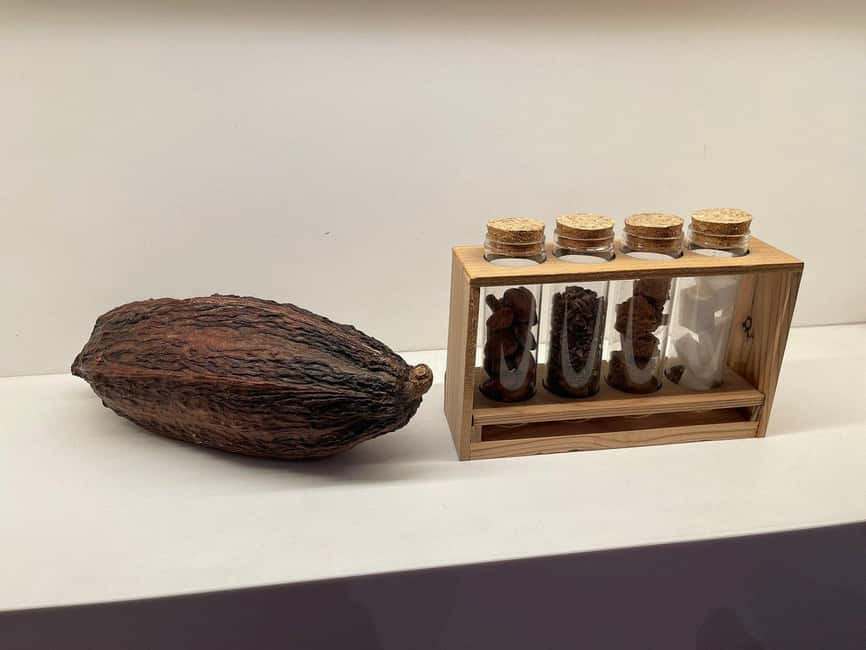
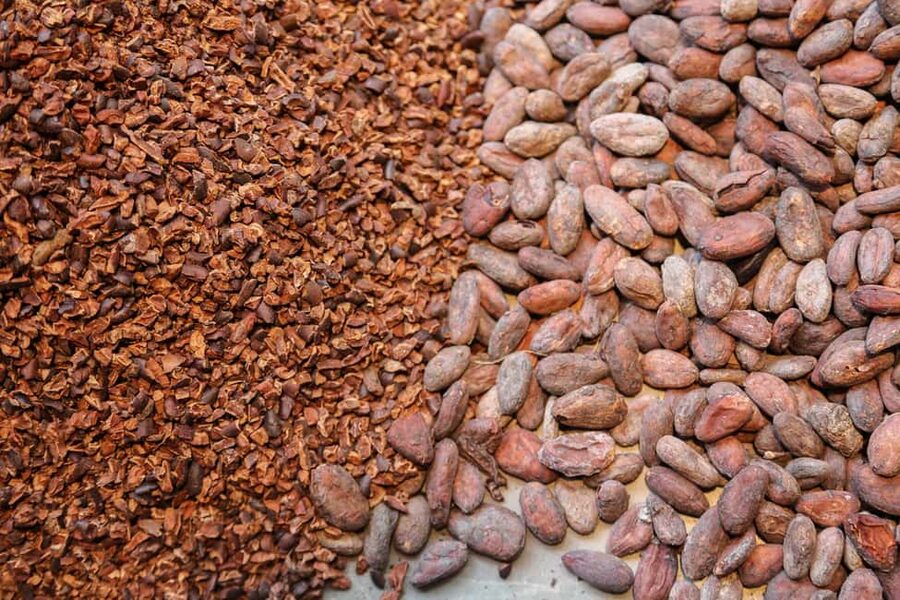
The strongest part of this experience is the explanation between tastings. You hear about the cocoa plant, where different varieties grow, how beans are processed, and how chocolate came to Europe. That background gives each sample more meaning than simply eating a sweet and moving on.
Guides have also explained the complicated history of chocolate in Brussels and Belgium, along with the methods behind truffles and pralines. The best guides, including Anna, Nina, Zoe, and Asmin, keep this information moving with stories and questions instead of turning the walk into a classroom.
You may learn why two chocolates with the same basic ingredients can taste so different. The filling, texture, cocoa percentage, origin of the beans, and finishing method all matter. A sample can be soft and creamy, crisp, fruit-filled, strongly alcoholic, or intensely bitter.
The tour also introduces you to chocolate as a form of gastronomy. One stop may offer something familiar, while another gives you basil, gin, fruit, or a very high-cocoa chocolate. That range is useful if you normally buy Belgian chocolate by appearance alone.
Five shops, eight small lessons in taste
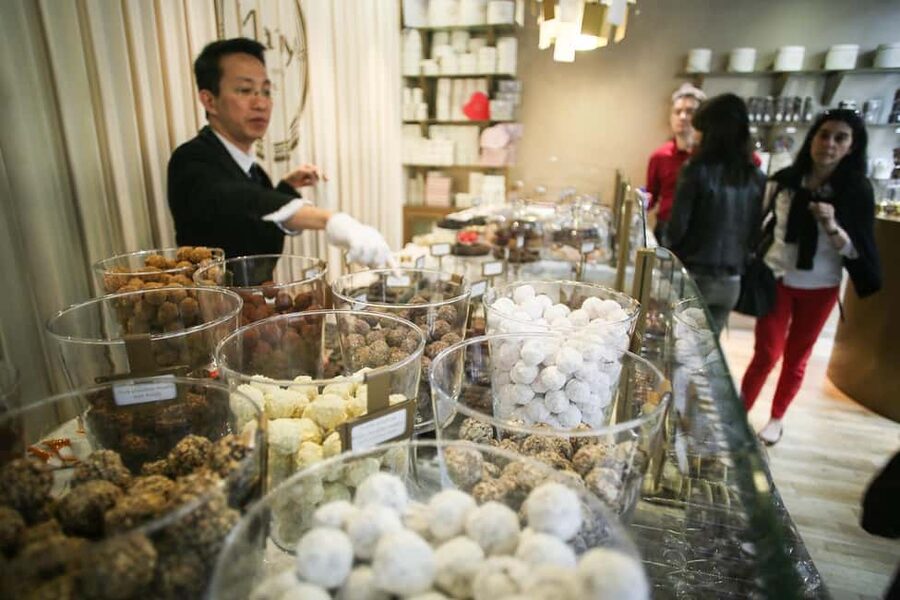
The five stops are the heart of the tour. You receive eight tastings in total, with the guide explaining what you are eating and why that shop is worth visiting. The samples are small, but they are selected to show contrasts.
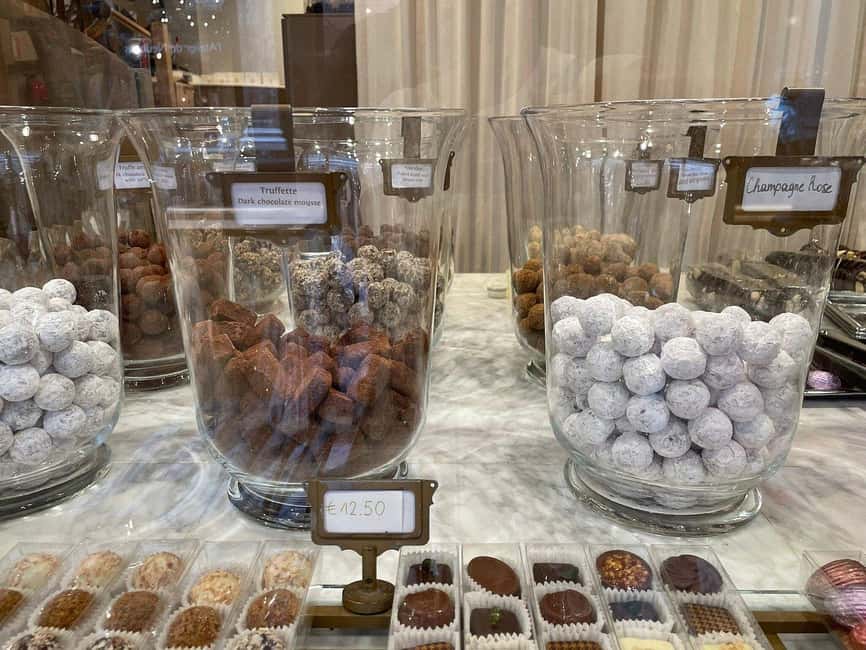
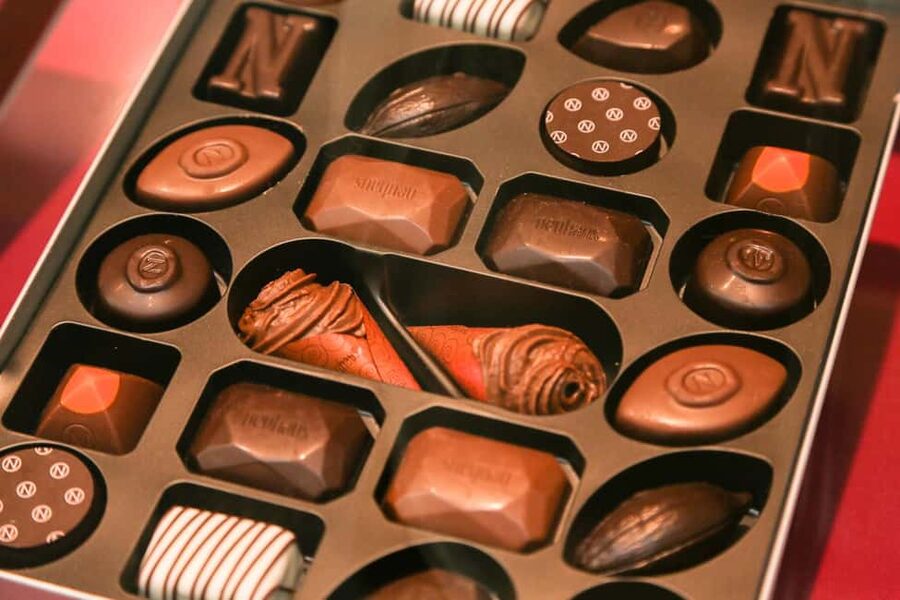
You can expect classic Belgian forms such as pralines and truffles. In Belgium, praline usually means a filled chocolate rather than the American nut candy, so this tour helps clear up a common point of confusion. Truffles tend to have a softer, richer center, while pralines can feature a wider range of fillings and textures.
Some samples are more adventurous. The tasting may include fruit-filled chocolate, alcohol-filled pieces, basil-flavored chocolate, or chocolate made with gin. One reported tasting even included 100 percent chocolate, which is a useful reminder that cocoa flavor can be powerful and not especially sweet.
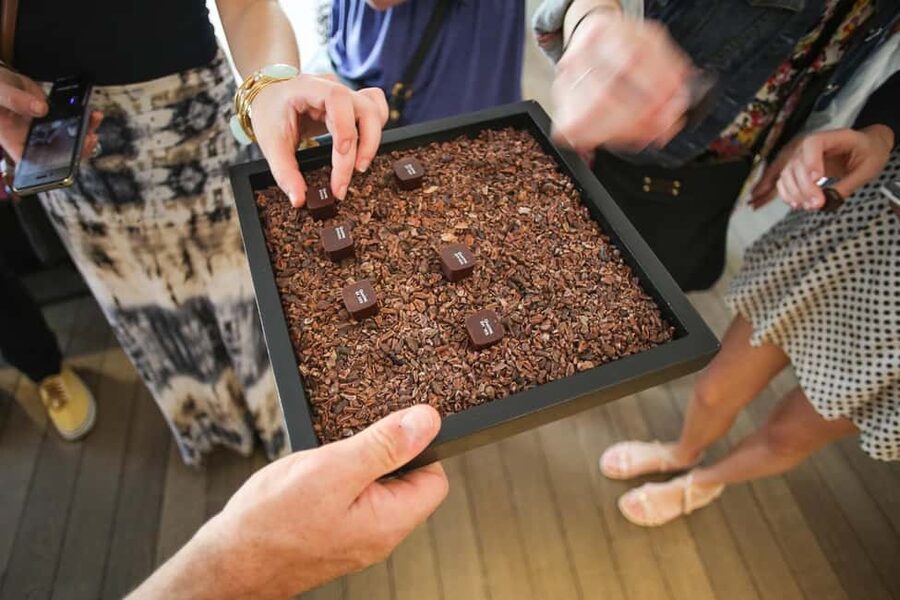
Your guide shows you how to taste rather than swallow each piece quickly. You may be encouraged to notice aroma, texture, sweetness, bitterness, and the way the filling changes as the chocolate melts. I like this approach because it makes the eight pieces feel like a comparison, not eight random snacks.
The shop explanations also add value. You learn something about the character of each chocolatier and the style of chocolate being sold. If a particular stop catches your attention, you can return later to buy a larger box with more confidence.
Walking through Grand Place
From the galleries, the route continues through central Brussels toward Grand Place. This is one of the city’s essential sights, with ornate guildhall facades and a broad square that gives you a strong sense of Brussels architecture.
The chocolate stop here works well because Grand Place is not treated as a separate sightseeing block. You see one of Brussels’ major landmarks while the guide links the city’s commercial and cultural life to its food traditions. The commentary also helps you notice Brussels beyond the chocolate counters.
Do not expect a full architectural tour of every building. The focus remains chocolate, with the city serving as the setting and supporting story. That balance suits you if you want a light introduction to Brussels rather than a dedicated art or architecture walk.
Grand Place can be busy, and the group may pause in an active public area. Stay close to the guide and avoid arriving at the last minute, since the tour does not wait for late arrivals. Comfortable shoes are a good idea, even though the walk is described as gentle.
More Walking Tours in Brussels
- Brussels: Guided Walking Tour
★ 4.6 · 3,560 reviews - Brussels: Historical Walking Tour with Chocolate & Waffle Tasting
★ 5.0 · 1,165 reviews - Brussels Walking and Tasting Tour (Beers,Chocolates&Fries/Waffle)
★ 5.0 · 929 reviews - Brussels Chocolate Walking Tour and Workshop
★ 4.5 · 885 reviews
From Saint Hubert to Saint Catherine’s
The final part of the walk heads toward Saint Catherine’s and the area around Quai aux Briques. This changes the feel of the route. You leave the grand, polished galleries and central square for a neighborhood known for food, shops, and a more local street atmosphere.
The route information gives Quai aux Briques 36, 1000 Bruxelles, as the finish. The meeting instructions also say the activity ends back at the meeting point, so I would confirm the exact endpoint when booking, especially if you have dinner reservations or a train to catch.
This part of the walk matters because it gives you more than a loop around the most obvious monuments. You see central Brussels in stages, from the historic covered galleries to Grand Place and then toward Saint Catherine’s. The guide’s city commentary fills in the gaps between tastings.
You should not book this as a food tour with a full meal. Eight samples can be satisfying, but they are still tasting portions. Plan another meal afterward, particularly if you are making this your main afternoon activity.
Why the guide makes the difference
The tour depends heavily on the person leading it. The chocolate shops provide the samples, but the guide turns those samples into an experience with shape and purpose.
Anna is praised for giving the right amount of context, teaching proper tasting technique, and suggesting additional chocolates beyond the included samples. Nina is described as strong on both the story behind each shop and personal recommendations. Zoe is noted for adding useful information about Brussels’ historic places as well as the chocolate stops.
Asmin’s tour included stories about the history of chocolate in Brussels and explanations of the individual stores. Kate brought enthusiasm to the discussion of cocoa plants and bean processing, while Julie is praised for making the experience both informative and enjoyable. These details suggest that the best guides do not simply recite facts. They respond to questions and adjust the pace to the group.
No specific group size is provided, so I would not assume an intimate small-group setting. If you care about group size, check the details before reserving. The experience is offered in English only, and guide quality may naturally vary from one departure to another.
Is $44 a fair price?
At $44 per person, this is not the cheapest way to eat chocolate in Brussels. You can buy several individual pieces on your own for less. The price makes more sense when you count the guide, the structured route, eight tastings, and the background about chocolate and Brussels.
I see the value in the comparison. Without guidance, it is easy to walk into the same type of shop repeatedly and buy whatever looks attractive. This tour gives you five stops and several styles in a short period, which is useful if you have limited time or want help deciding where to shop later.
Still, one fair criticism is that the tasting portions may feel modest for the cost. The standard includes eight tastings, not eight full-size chocolates or a box to take home. If your top priority is quantity, spend the money at a chocolatier instead.
For a first visit to Brussels, I think the price is reasonable if you value explanation and orientation. You are paying for access to a planned tasting route and a guide who can explain what you are sampling. You are not paying for lunch.
Practical planning before you reserve
The tour lasts two hours, and you need to check the available start times when booking. Since it is a walking activity with several stops, avoid scheduling it too close to a museum reservation, train departure, or dinner booking.
It operates rain or shine. Brussels weather can change quickly, so bring suitable clothing and shoes rather than treating this as an indoor chocolate crawl. Much of the tasting takes place inside shops, but you still walk between them.
The tour is in English only. If you need another language, this is not the right choice based on the available information.
Cancellation is free up to 24 hours before the activity for a full refund, and you can reserve now and pay later. Late arrivals and no-shows are not refunded. I would arrive early and wait outside the Roseline d’Oreye shop inside the galleries, since the starting point is specific and easy to miss if you are rushing.
The activity is marked as unsuitable for people with diabetes. That may seem obvious for a chocolate tasting, but it is important to take the restriction seriously rather than hoping to skip a sample on the day.
Who will enjoy this most?
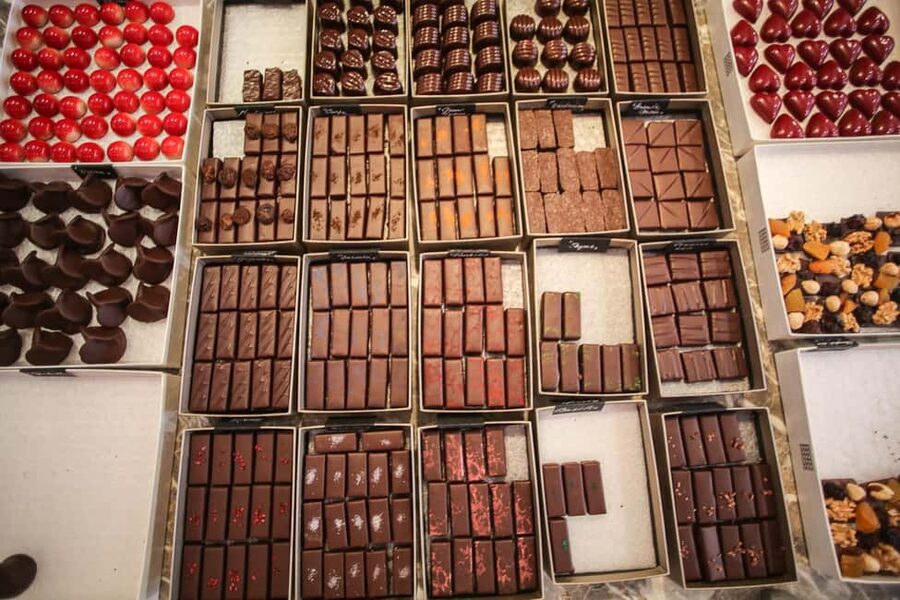
I would recommend this tour to chocolate lovers who also want a gentle introduction to Brussels. It works particularly well for first-time visitors, couples, families with older children, and anyone who wants a planned afternoon rather than a self-guided search through shop windows.
It also suits curious eaters. The unusual samples, including basil, gin, fruit fillings, alcohol flavors, and very dark chocolate, make the experience more interesting than a parade of milk chocolate truffles.
The tour can work for children, but the tasting style may appeal more to older children and teenagers who can listen to the explanations. One account specifically describes a 12-year-old enjoying the mix of chocolate, history, and Brussels culture.
I would skip it if you dislike walking, want a full meal, avoid sugar, or prefer to choose every shop yourself. It may also disappoint you if you expect large samples or a chocolate-making workshop. This is a tasting and city walk, not a hands-on class.
Should you book this Brussels chocolate walk?
I would book it early in your Brussels stay, especially if you want a quick introduction to the city and plan to buy chocolate later. The route combines five shops, eight tastings, Grand Place, the Royal Galleries of Saint Hubert, Saint Catherine’s, and clear explanations of how cocoa becomes Belgian chocolate.
The strongest reason to go is the guide. Anna, Nina, Zoe, Asmin, Kate, and Julie are all praised for making the walk engaging, answering questions, and adding useful city context. The main reason to hesitate is value: $44 is fair for instruction and variety, but less appealing if you only want a large amount of chocolate.
Book it if you enjoy learning what you eat and want help choosing among Brussels chocolatiers. Skip it if quantity matters more than context. For most visitors who have two free hours and no dietary problem with chocolate, this is a tasty and practical way to get oriented.
FAQ
How long does the Brussels chocolate tour last?
The walking tour lasts two hours. Check the available dates and start times when booking.
How many chocolate tastings are included?
The activity includes eight chocolate tastings at five different chocolate shops.
Where does the tour start?
Meet outside the Roseline d’Oreye shop at Galerie du Roi 10, inside the Royal Galleries of Saint Hubert in central Brussels.
Where does the tour finish?
The route information identifies Quai aux Briques 36, 1000 Bruxelles, as the finish. The meeting instructions also describe the activity as ending back at the meeting point, so confirm the exact endpoint when booking.
Which language is the tour offered in?
The live guided tour is offered in English only.
Does the tour operate in bad weather?
Yes. The tour operates rain or shine, so dress for the conditions and wear comfortable walking shoes.
Is the tour suitable for people with diabetes?
No. The activity is specifically marked as not suitable for people with diabetes.
Can I cancel for a refund?
You can cancel up to 24 hours in advance for a full refund. There are no refunds for late arrivals or no-shows, and the reserve-now, pay-later option lets you hold a place without paying immediately.
More Dessert Tours in Brussels
- Brussels: Belgian Chocolate Making Workshop with Tastings
★ 4.7 · 1,629 reviews - Brussels: 2.5-Hour Chocolate Museum Visit with Workshop
★ 4.6 · 1,263 reviews - Brussels: 2.5-Hour Belgian Chocolate Making Workshop
★ 4.8 · 933 reviews - Brussels: Historical Tour with Chocolate & Waffle Tasting
★ 4.8 · 642 reviews
Just added around Brussels
- Private Tour – Bruges and Ghent, our fairytale cities★ 5.0 · 3 reviews
- Private Day Trip from Brussels to Bruges★ 4.5 · 3 reviews
- Bruxelles: Photoshoot Experience★ 4.4 · 3 reviews
- Private Arrival Transfer from Brussels Airport to Bruges with Business car★ 5.0 · 3 reviews
- Leuven: City Walk with Audio Guide in 7 Languages on your Phone★ 3.0 · 3 reviews
- Brussels: Express Walk with a Local in 60 minutes★ 5.0 · 3 reviews
- 2 Hour Beer Tasting with Local Beer Sommelier in Brussels★ 5.0 · 3 reviews
- Floating in the clouds★ 5.0 · 3 reviews
Brussels Tours, compared.
Atomium Entry Ticket with Design Museum Ticket
Read our review →
From Brussels: Guided Day Trip to Bruges and Ghent
Read our review →
From Brussels: Bruges & Ghent Day Tour – 2 Fairytale Cities
Read our review →
Choco-Story Brussels: Chocolate Museum Entrance with Tasting
Read our review →
Bruges and Ghent – Belgium’s Fairytale Cities – from Brussels
Read our review →
From Brussels: Luxembourg Tour with Dinant Visit
Read our review →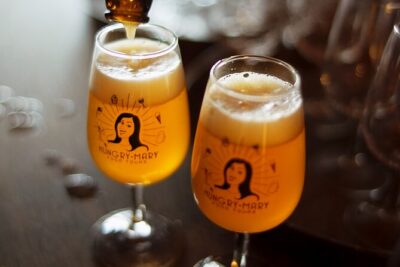
Hungry Mary’s Famous Beer and Chocolate Tour in Brussels
Read our review →Browse the lists this tour appears in