
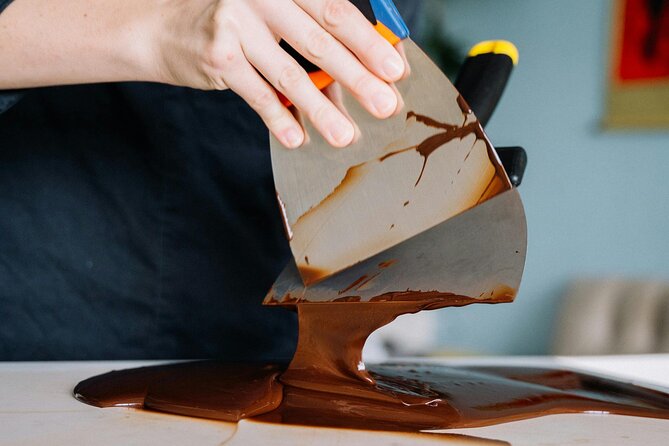
Reviewed · BRUGES TOURS
Unique Belgian Chocolate Making Workshop in Bruges
Belgian chocolate is best understood with your hands, not just bought in a shop. In this two-hour Bruges workshop, you make praline shells, add ganache and other fillings, and learn how chocolate and beer fit into Belgian food culture. Between stages, the host serves selected Belgian beers and explains what you are tasting.
I like the social setup, where you work beside chocolate lovers from several countries, and I like the useful souvenir: a box of chocolates you made yourself. Hosts including Wilfred, Brecht, Laurent, and Michele have been praised for keeping the class warm and easygoing. The main point to consider is that each chocolatière is shared by two people, so solo participants or pairs should confirm how the chocolates and hands-on work will be divided.
Key points to know before booking
- Make filled Belgian pralines from scratch: You work with dark chocolate shells, milk-chocolate ganache, nuts, syrups, and other fillings.
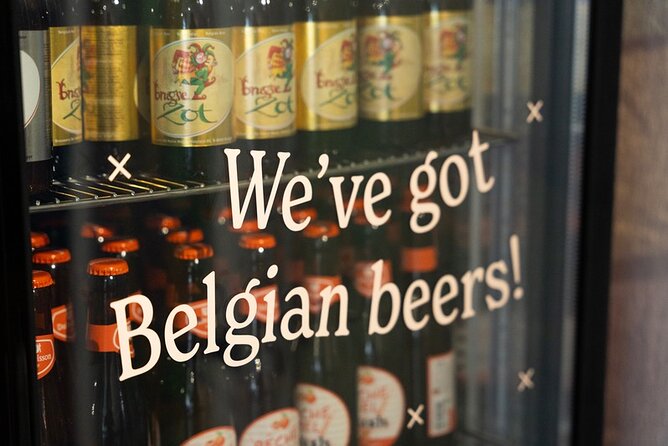
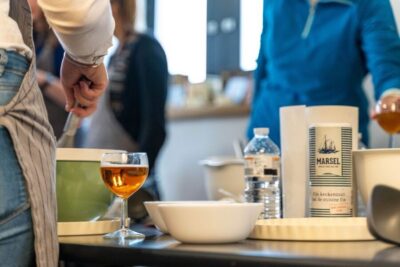
- Taste Belgian beer during the waiting time: The session usually includes three or four different beers, with explanations about their styles and place in Belgian culture.
- Share one chocolate station per two people: This creates a friendly rhythm, but it also means you should not assume every person receives a full individual workstation.
- Take home your own chocolates: The class produces roughly 15 to 21 filled pieces per couple in some sessions, packed as a sweet souvenir.
- Learn in English with an international group: Hosts can translate parts of the presentation when needed.
- Plan a walk afterward: The workshop ends where it begins at Langestraat 52, close to the Sint-Gillis Quarter.
Why this makes sense in Bruges
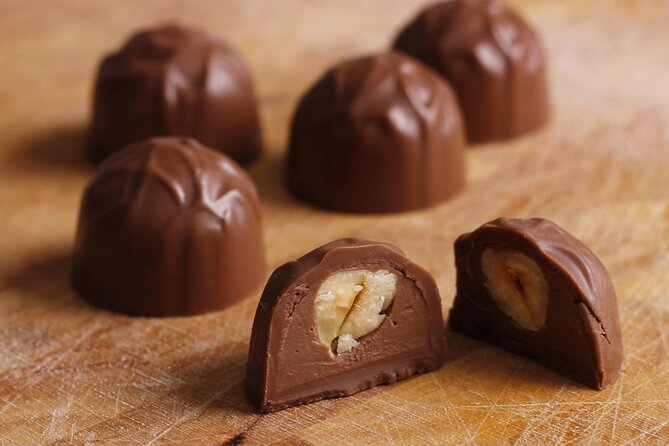
Bruges has no shortage of chocolate shops. You can step into one, point at a neat display, and leave with a box in five minutes. This class gives you something those shops cannot: a look at how pralines are built and a chance to make a batch yourself.
That hands-on part matters. You see how the shell holds the filling, how the ganache is added, and how the pieces need time to set before you can finish them. You are not simply watching a chef work behind glass. You are handling the materials, choosing flavors, and accepting that handmade chocolate may look a little less perfect than a shop display.
The beer pairing makes the afternoon feel distinctly Belgian. Beer is not an extra drink tacked onto the class. It helps explain how Belgium treats everyday food and drink as a serious pleasure, with many local styles and careful serving traditions. The host talks about the beers while the chocolate moves through its waiting stages.
I would not book this as a formal pastry-school lesson. It is a relaxed cultural activity with useful instruction, tasting, and a social feel. You learn enough to understand the process and repeat parts of it at home, but the main reward is an enjoyable afternoon in Bruges.
More Chocolate Tastings in Bruges
- Belgian Chocolate Workshop in Bruges
★ 5.0 · 660 reviews - Bruges: Belgian Praline and Mendiants Chocolate Workshop
★ 4.7 · 620 reviews - Bruges: Chocolate Making Workshop and Chocolate Museum Entry
★ 4.6 · 395 reviews
Arriving at Langestraat 52
The meeting point is Langestraat 52, 8000 Brugge, and the activity returns there at the end. No private transport is included, so you need to make your own way to the address. The location is near public transportation, and the nearby Sint-Gillis Quarter gives you an easy area to explore after class.
Allow a little extra time to find the entrance. One practical complaint concerns the workshop being hard to spot from the street, with no obvious sign outside. I would use the exact address, check the location before setting out, and avoid arriving at the last minute.
The class usually lasts about two hours, though some people allow two and a half hours to enjoy it without rushing. It fits well after a morning of sightseeing, especially if you want a break from churches, canals, and cobbled streets. It also works nicely before an evening meal, provided you remember that beer tasting and chocolate can be surprisingly filling.
The group can include up to 18 people. That is large enough for a lively international mix but small enough for a host to keep the activity moving. Some sessions have fewer than 10 participants, which creates a more intimate atmosphere. Group size can affect how much direct help you receive, so expect a shared class rather than a private lesson.
Building the chocolate shells
The class begins with an introduction to Belgian chocolate and the basic process behind pralines. The exact order can vary, but the central task is to create your own filled chocolates rather than simply decorate pre-made pieces.
The shells use dark chocolate, while the ganache filling uses milk chocolate. That combination gives the finished pralines a clear contrast: a firmer dark outer layer with a sweeter, softer center. If you prefer very mild chocolate, the dark shells may taste more intense than standard milk chocolate sweets.
You work at a chocolatière, a chocolate-making station shared by two participants. This is worth understanding before you arrive. Couples and friends can easily work together, but two strangers may need to take turns with the main tools. The shared arrangement also affects how many chocolates you take home.
Some sessions produce about 15 filled chocolates per pair, while others have produced around 21 pieces with several fillings. The final amount can depend on the group, the pace, and the choices made at the station. You should think of the chocolates as a shared handmade souvenir unless the host explains a different arrangement at the start.
This is a forgiving activity for beginners. The host gives instructions as the work progresses, and you do not need previous chocolate-making experience. Experienced home cooks may find the process familiar, but they still get the fun of working with Belgian ingredients and learning how the class handles praline shells and fillings.
Choosing ganache, nuts, and flavored fillings
The most enjoyable part is choosing what goes inside the chocolates. Available options described in the experience include ganache, nuts, fruit, and flavored syrups. The choices let you make a mixed box instead of repeating one flavor from piece to piece.
The fillings also give the class a personal touch. You might favor a simple chocolate center, while your partner chooses nuts or a fruit note. Since the station is shared, talk through your choices before you begin if you want an even split.
The finished pieces do not need to look like factory-made pralines. That is part of the charm. You are learning the sequence and making something edible, not competing in a professional confectionery display. The chocolate is the part that matters, and the ingredients are described as high quality.
There is some waiting between stages while the chocolate hardens. Instead of leaving you idle, the host uses this time for beer tasting and explanations about chocolate, Belgian brewing, and Bruges. That pacing keeps the session active without making it feel rushed.
If you have a food allergy or dietary restriction, tell the provider in advance. The class has accommodated dietary needs, including a vegan participant, but you should not rely on last-minute changes. The listed chocolate uses dark chocolate for the shells and milk chocolate for the ganache, so ask ahead about ingredients if dairy, nuts, or other allergens matter to you.
Same city, a completely different way to spend a day:
- Bruges: Small Group Boat Cruise and Guided Walking Tour
★ 4.8 · 4,102 reviews - Bruges: Walking Tour, Canal Boat Trip w/Beer Tasting Option
★ 4.4 · 2,759 reviews - Historical Walking Tour: Legends of Bruges
★ 5.0 · 2,541 reviews - Bruges: Choco-Story Chocolate Museum Guided Tour w/Tastings
★ 4.2 · 1,379 reviews
Belgian beer between each chocolate stage
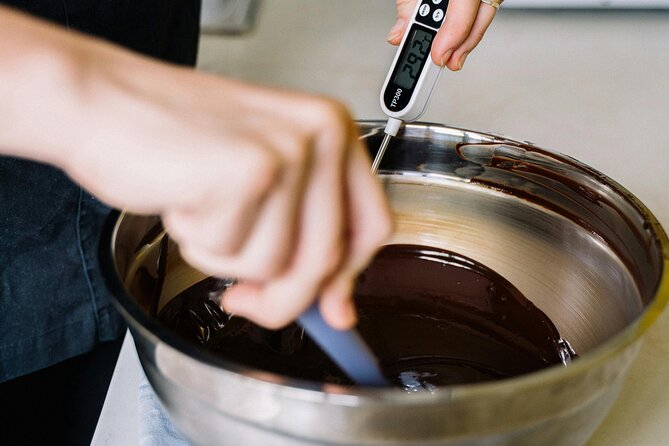
The beer tasting is a major reason this class feels different from a standard chocolate lesson. The session includes Belgian beers, often three or four distinct types. The host explains the choices and connects them to Belgian brewing traditions while you wait for the chocolate to set.
You do not need to be a beer expert. The tasting is presented for mixed groups, including people who do not usually enjoy beer. Some participants have found at least one flavored or unusual beer they liked, even when beer was not normally their drink.
The beers are alcoholic for participants aged 18 and older. Anyone under 18 receives non-alcoholic drinks instead. That makes the workshop workable for families, but the alcohol rules are clear and should be considered when choosing the activity.
The beer also changes how you taste the chocolate. A darker or sweeter beer can make the ganache seem richer, while a lighter beer may refresh your palate between samples. You will not become a brewer in two hours, but you will leave with a better sense of why Belgian beer is treated as part of the country’s culinary identity.
The hosts are one of the strongest parts of the format. Wilfred is described as engaging and well informed about both beer and chocolate. Brecht has also been praised for a lively presentation, while Laurent made a solo participant feel welcome enough to join part of the group afterward. Michele has been singled out for a warm, enjoyable session.
Those names may not tell you who will lead your date, but they give you a useful sense of the teaching style. Expect an informal host who talks, demonstrates, answers questions, and keeps the group involved. It is less stiff than a technical cooking course.
The social side of a shared station
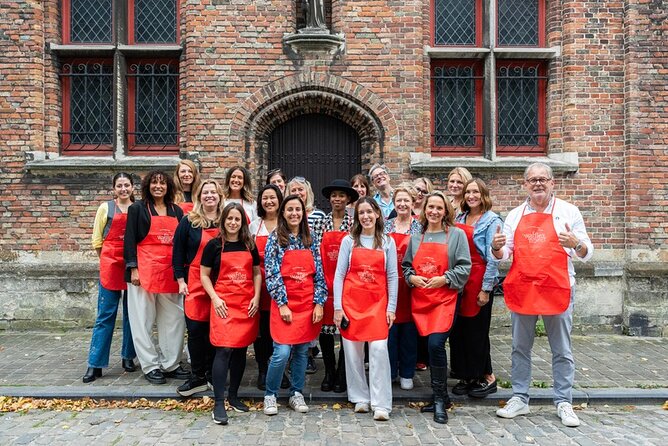
This workshop suits people who enjoy doing an activity with others. The group usually includes different nationalities, and the shared stations naturally create conversation. Solo participants can fit in, couples can work together, and families can make the activity part of a shared afternoon.
The social element is not a minor detail. A two-hour class can feel slow if you are only waiting for instructions, but the combination of making, tasting, and talking gives the time a steady rhythm. Several participants have found the group friendly enough to continue socializing after the class.
Still, a shared station is not ideal for everyone. If each person in your party wants an equal amount of hands-on work and an individual box, ask for clarification before booking. One negative account came from a larger family group where several people shared the making and the chocolates, despite expecting everyone to participate separately.
For families, the official minimum age is 12, and children under 16 must be accompanied by an adult on a one-to-one basis. Some past participants described bringing younger children, but the stated age requirement is the rule you should follow when planning your booking.
Service animals are allowed. The workshop is conducted in English because the group is international, though hosts can translate some parts when necessary. You should be comfortable following a practical demonstration in English, but you do not need advanced cooking vocabulary.
What the $70.89 price includes
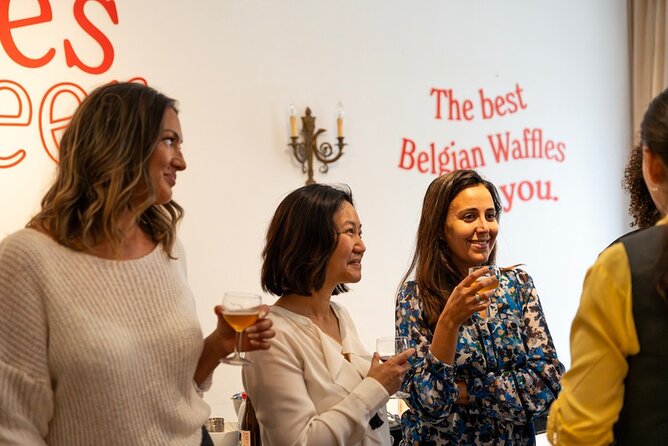
At $70.89 per person, this is not the cheapest way to eat chocolate in Bruges. You can buy excellent pralines for much less. The value comes from the combination of an activity, instruction, beer tasting, chocolate ingredients, equipment, and a take-home box.
The price includes Belgian beers, bottled water, snacks, Belgian chocolate treats, and all cooking materials. You do not need to bring molds, utensils, or ingredients. Private transportation is not included, but the class takes place at a fixed city address near public transportation.
I think the cost is reasonable if you want an organized half-day activity rather than a quick tasting. You are paying for the host’s time, the practical setup, several drinks, the ingredients, and the chance to leave with chocolates you helped make. The value is weaker if you mainly want to purchase chocolate or if you dislike beer, though non-alcoholic drinks are available for minors and the chocolate-making remains the main event.
The workshop is commonly booked well ahead, with an average booking lead time of about 52 days. That does not mean every date sells out, but it is a useful warning for a short Bruges visit. If this is important to your schedule, book before your trip rather than hoping to find a place on arrival.
How to fit it into a Bruges day
I would place the workshop after a morning of sightseeing. Bruges is a city where you can spend hours walking, taking photographs, and looking into chocolate shops, but your feet may appreciate a seated activity with a clear start and finish.
Afterward, take time in the Sint-Gillis Quarter. The workshop highlights this area as a good place to continue exploring, and returning to the streets with a box of handmade pralines gives the class a natural ending. You could also use the activity as a reason to see a part of Bruges beyond the most crowded central sights.
The class ends at the meeting point, so you do not need to arrange a pickup. Keep your chocolates protected from heat and rough handling afterward. The experience information does not specify special packaging or storage conditions, so ask the host if you are carrying them for the rest of the day.
Free cancellation is available if you cancel at least 24 hours before the start time. Changes or cancellations inside that window are not refunded, and a minimum group size applies. If the provider cancels because that minimum is not met, you receive an alternative date or experience, or a full refund.
Who should book this workshop
I would recommend it most strongly to:
- Couples who like food activities and want a shared souvenir
- Solo visitors looking for an easy way to meet people
- Families with children aged 12 and older
- Chocolate fans who want more than a shop visit
- Beer drinkers curious about Belgian styles
- Anyone with a free afternoon after sightseeing in Bruges
I would be more cautious if you want a private class, dislike group activities, or expect each person to have an individual workstation. It may also disappoint you if you want advanced confectionery instruction. The class is practical and informative, but it is built for enjoyment rather than professional training.
Should you book the Belgian chocolate workshop?
Yes, if you have about two hours and want to connect Belgian chocolate with Belgian beer in a hands-on way. The strongest reasons are the friendly international format, the hosts’ easy presentation style, the range of fillings, and the chocolates you take home.
Before booking, remember three things: the class is in English, each station is shared by two people, and the official minimum age is 12. Tell the provider about allergies or dietary needs in advance, and allow extra time to find the entrance at Langestraat 52.
For a short stay, this is a good choice because it gives you more than a taste. You learn a process, hear useful food history, meet other people, and leave with a box of pralines that carries a better memory than an ordinary souvenir. At 94 percent recommended and rated 4.8 from 47 reviews, it is a strong pick for a relaxed, social afternoon in Bruges.
FAQ
Where does the chocolate workshop begin?
It begins at Langestraat 52, 8000 Brugge, Belgium.
Where does the activity end?
The workshop ends back at the meeting point on Langestraat.
How long does the workshop last?
The activity lasts approximately two hours. Allowing two to two and a half hours is sensible if you want a little extra time around the class.
Is the workshop offered in English?
Yes. The workshop is conducted in English because participants come from many countries. Hosts can translate some parts when needed.
What drinks are included?
Belgian beers, bottled water, and non-alcoholic drinks for participants under 18 are included.
Can children take part?
The official age requirement is 12 and older. Children under 16 must be accompanied by an adult on a one-to-one basis.
Does each participant get an individual chocolate station?
No. Each chocolatière is shared by two participants.
What kind of chocolate and fillings are used?
Dark chocolate is used for the praline shells, and milk chocolate is used for the ganache filling. Options can include nuts, fruit, and flavored syrups. Tell the provider about allergies or dietary restrictions in advance.
What happens if I need to cancel?
You can receive a full refund if you cancel at least 24 hours before the local start time. Cancellations or changes made less than 24 hours in advance are not refunded.
More Workshops in Bruges
- Bruges: Belgian Waffle-Making Workshop with Beer Tasting
★ 4.9 · 960 reviews - The Waffles ‘n Beer Workshop in Bruges Centre
★ 5.0 · 429 reviews - Belgian Chocolate Truffle Making Workshop in Bruges
★ 5.0 · 49 reviews - “Hidden Brugge” Photo Tour – 2hr open city tour & workshop
★ 5.0 · 27 reviews
More Dessert Tours in Bruges
- Choco-Story: The Chocolate Museum in Bruges
★ 4.0 · 544 reviews - Bruges: Belgian Chocolate Making Workshop with Beer Tasting
★ 4.9 · 203 reviews - Bruges: Chocolate Truffle Making Class
★ 4.6 · 149 reviews - Chocolate Workshop at Choco-Story Brugge
★ 5.0 · 84 reviews
Just added around Bruges
- Best of Brussels Private Tour from Zeebrugge or Bruges★ 4.0 · 3 reviews
- Private taxi Transfer from Bruges to Amsterdam★ 5.0 · 3 reviews
- Bruges Photo Session By a Pro★ 5.0 · 3 reviews
- Private 3-hour walking tour of Bruges with official tour guide★ 4.0 · 3 reviews
- BeerWalk Bruges (French guide)★ 5.0 · 3 reviews
- Brussels: Private & Customizable Day Trip to Bruges★ 5.0 · 3 reviews
- Private: Discover Bruges beers & brewery with chocolate pairing by a young local★ 5.0 · 3 reviews
- Bruges: Ticket Volkskundemuseum (Folk Museum)★ 5.0 · 3 reviews
Bruges Tours, compared.
Small Group Boat Cruise and Guided Walking Tour
Read our review →
Walking Tour, Canal Boat Trip w/Beer Tasting Option
Read our review →
Choco-Story Chocolate Museum Guided Tour w/Tastings
Read our review →
From Bruges: Great War Flanders Fields Minibus Tour w/ Lunch
Read our review →
Belgian Waffle-Making Workshop with Beer Tasting
Read our review →
Browse the lists this tour appears in