
Reviewed · BRUGES TOURS
BRYGGJA ROMANTICA – 3 Hour Romantic Tour in Bruges
Bruges is at its best when you leave the postcard streets for the narrow lanes where the crowds thin out. This three-hour walk takes you from the Markt through old guild quarters, small churches, quiet bridges, and romantic canal views, then gives you a 30-minute boat ride at the end.
I like the way the tour looks past the usual photo stops, especially the curious corners around Burg Square and the old streets near Jan Van Eyckplein. I also like the personal scale: the group is limited to 12 people, and guide Ivan has a warm, story-driven style that works well even when the weather turns cold or wet.
The main consideration is timing. You spend much of the afternoon walking outdoors, and the tour requires good weather. Some visits, including the Poorters Loge and Gruuthusemuseum, do not include admission, so this is mainly a guided city walk with a boat trip rather than a full museum tour.
Key points at a glance
- Quiet Bruges beyond the main crowds: The route uses small lanes, older bridges, and less obvious corners that many people walk past.
- A guide-led afternoon with Ivan: Ivan is specifically named as a guide, and his engaging stories are a major part of the experience.
- A boat trip is included at the finish: You receive tickets for a 30-minute canal cruise after reaching Dijver.
- Small group size: The tour accepts a maximum of 12 people, a useful advantage in narrow streets and busy Bruges.
- Churches, beer, diamonds, and medieval trade: The stops cover much more than Bruges postcards, from Staminee De Garre to Sint-Annakerk and the old port quarter.
- Good value at $54.07: The price includes the walking tour, guide, boat tickets, and the downloadable BRUGORAMA photo show, but not every admission fee.
A romantic Bruges walk that goes past the postcard view
Most first-time visits to Bruges revolve around the Markt, the canals, and the famous view at Rozenhoedkaai. Those places deserve their fame, but they can feel crowded and familiar. The appeal here is the change of pace: you still see the classic sights, but you reach them by way of small streets and overlooked corners.
The tour starts at Historium Bruges on Markt at 1:30 p.m. That gives you an easy meeting point in the center, though you should arrive ready to walk rather than treating the first stop as a formal attraction. The route lasts about three hours, ending on Gruuthusestraat near Dijver.
This is a walking tour first. The boat trip comes at the end, after the city route, and lasts 30 minutes. That order makes sense. You get the street-level stories and odd details while walking, then finish by seeing Bruges from the water.
A few more Bruges half-days to weigh up
- Bruges: 3-Hour Beer and Chocolate Tasting Private Tour
★ 4.9 · 8 reviews - Private 3-hour walking tour of Bruges with official tour guide
★ 4.0 · 3 reviews - Brussels 3-Hour Guided Art Nouveau Tour
★ 4.0 · 282 reviews
Staminee De Garre and Bruges in a very narrow lane
The first stop is Staminee De Garre, a small beer stop in the narrowest street. The point is not simply to find a place for a Belgian beer. The lane itself has a historical and practical reason for being so tight, giving the guide an early chance to show how Bruges developed around limited urban space.
Admission is free, but the description highlights the pub as a place to taste excellent beer. The tour information does not say that a drink is included, so plan to pay for anything you order yourself.
This is a short five-minute stop. Think of it as a quick introduction to Bruges character, not a beer tasting session. If you like local food and drink, it adds flavor to the route. If you are expecting a long sit-down break, you may find it brief.
Diamonds and the Cordoeaniersstraat detail
The route then passes Brugs Diamanthuis on Cordoeaniersstraat. The supplied details list this as a five-minute stop with free admission, although the stop information contains an instruction to update the duration and admission details. I would treat this part as a brief exterior or orientation stop and confirm the final arrangements when booking.
That uncertainty matters because the value of a tour often depends on what you actually enter. The safest expectation is a short guide explanation connected with the street and its trade, not a guaranteed extended indoor visit.
The stop also shows the range of this walk. Bruges is not presented only as a pretty medieval shell. Its streets carry links to work, commerce, craft, and the movement of goods.
Burg Square and a joke most people miss
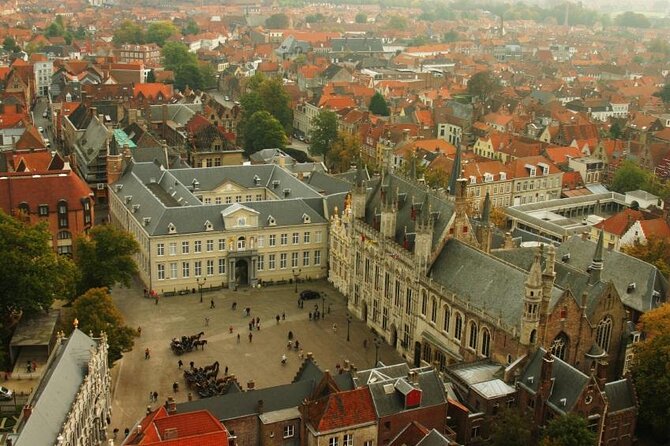
At Burg Square, the guide covers the Chapel of the Holy Blood and the City Hall, two of the city center’s best-known buildings. Then comes something less expected: a sight that many tourists, and even some residents of Bruges, have never noticed.
The description calls the discovery hilarious, but does not reveal the punchline. That is a good reason not to search for it in advance. This is the kind of small surprise that gives a walking tour its value. You could see the grand buildings on your own, but you might miss the odd, human detail beside them.
The stop lasts about 10 minutes and admission is free. It is a compact piece of sightseeing, but it helps break up the formal architecture with humor.
Same city, a completely different way to spend a day:
- Bruges: Small Group Boat Cruise and Guided Walking Tour
★ 4.8 · 4,102 reviews - Bruges: Walking Tour, Canal Boat Trip w/Beer Tasting Option
★ 4.4 · 2,759 reviews - Historical Walking Tour: Legends of Bruges
★ 5.0 · 2,541 reviews - Bruges: Choco-Story Chocolate Museum Guided Tour w/Tastings
★ 4.2 · 1,379 reviews
Poorters Loge and the business of medieval Bruges
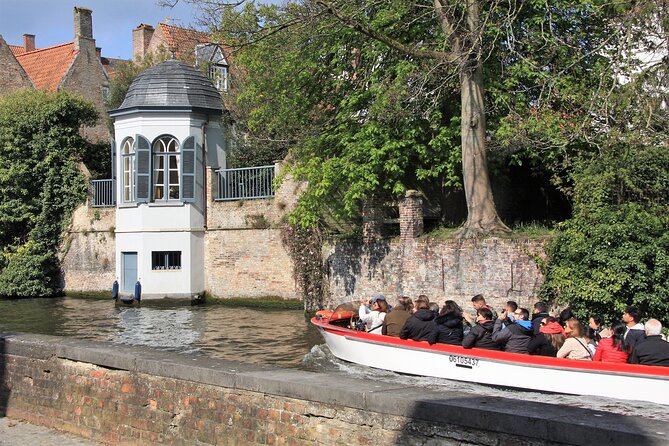
The Poorters Loge is described as an early office building. That idea gives the stop a useful angle: Bruges was not just a place of churches and canals, but a working city where merchants, officials, and trading groups needed places to meet and conduct business.
This stop lasts five minutes. Admission is not included, so you should not count on entering as part of the standard tour. The building still earns its place on the route because the guide can explain its role from outside and connect it to the commercial life of the city.
I like this kind of stop because it answers a question that a pretty view cannot: how did people actually use Bruges? The route keeps returning to that practical side of the city.
Jan Van Eyckplein and the quieter old port
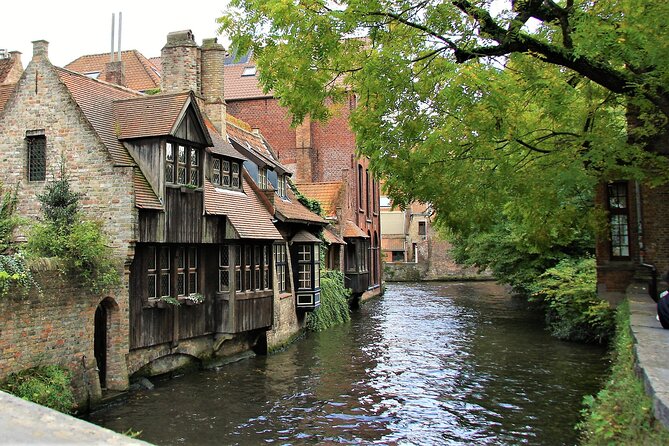
Jan Van Eyckplein is one of the longer stops, at about 10 minutes, and the route description points to its many historical layers. The square can feel quiet now, but it was once very busy in the Middle Ages.
That contrast is one of the most useful things a city guide can offer. Modern Bruges is admired for stillness, clean views, and calm canals. In earlier centuries, the same spaces were tied to trade and movement. A quiet square may have been a crowded working center long before it became a scenic place for photographs.
The stop is free and takes place outdoors. You may find this part especially rewarding if you want Bruges explained as a living city rather than a collection of monuments.
Sint-Annakerk, the small church with a large painting
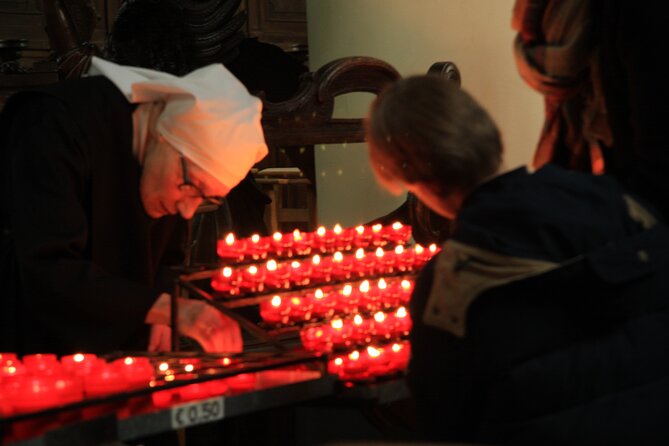
Sint-Annakerk is presented as what appears to be the smallest church on the route, yet it houses the largest painting in Bruges. That contrast makes it an easy stop to remember.
The visit lasts about 10 minutes and admission is free. The description does not identify the painting, so you should expect the guide to provide the context during the stop rather than arriving with a detailed museum lecture in advance.
This is also a useful pause in the walk. Bruges churches can be easy to pass when you are focused on canals and façades, but the tour asks you to look inside a smaller place and notice the surprise in its scale.
The second-oldest and oldest bridges
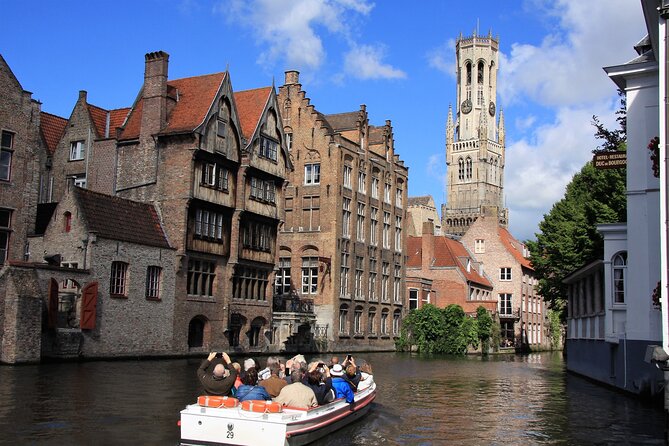
Several unnamed stops focus on two old bridges, including the second-oldest bridge and the oldest bridge on the route. Their exact names and visit times are not provided, so you should ask the guide to point out which structures you are seeing.
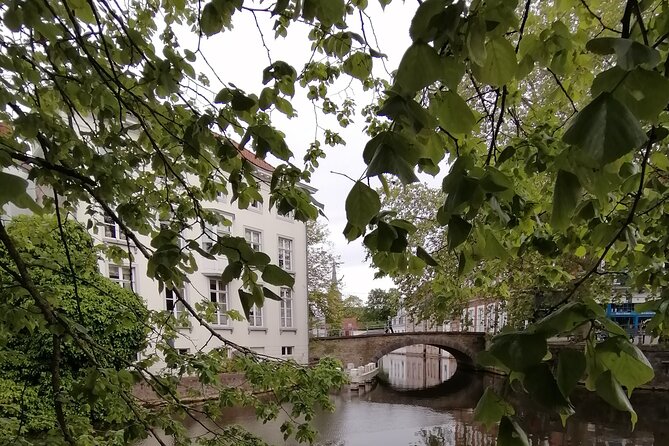
These stops sound simple, but bridges are central to understanding Bruges. They shaped movement through the city and created many of the viewpoints people now associate with its canals. A bridge can be more than a photo platform. It can explain how streets, waterways, and neighborhoods connect.
Because the route stays outdoors, these moments also keep the walk moving. You will not spend the whole afternoon standing inside attractions. You will see the city as a connected set of lanes and crossings.
Steenhouwersdijk and Churchill’s painting spot
Steenhouwersdijk is one of the most romantic parts of the route. The stop lasts four minutes and is tied to Winston Churchill, who liked to paint this spot.
That connection gives the view a personal story without turning it into a long historical lecture. You are asked to look at the place as an artist might, not just as another canal scene. The appeal is visual, but the Churchill detail gives the view a clear reason for being on the route.
Admission is free. Bring a camera, but do not rush past the guide’s explanation. This is one of the places where a short comment can change how you see a familiar Bruges scene.
Vismarkt, where fish and lace once met
Vismarkt is another five-minute stop. Its name points to fish, while the route also connects the area with lace. The description says this place once served a different purpose, inviting the guide to explain how the area changed over time.
Like Jan Van Eyckplein, Vismarkt helps you picture Bruges as a place of work. Fish, lace, beer, and trade all appear along this route. That variety keeps the tour from becoming a simple procession of churches and pretty water.
Admission is free. It is a quick stop, so take note of the guide’s key details and save the area for a longer look later if your schedule allows.
Rozenhoedkaai, the photograph you came for
Rozenhoedkaai is the classic Bruges viewpoint. The tour description makes the point plainly: if you do not take this picture, you have missed a standard Bruges moment.
That directness is welcome. Some tours try too hard to avoid famous sights in the name of being different. This one includes Rozenhoedkaai but places it among quieter locations, so the famous view feels like part of a larger story rather than the entire purpose of the afternoon.
The stop lasts five minutes and is free. Depending on the crowd and weather, five minutes may feel short for photographs. Keep your camera ready before you arrive, and listen first for the best angle or the guide’s explanation.
Dijver and the final canal ride
Dijver is the last major walking stop and lasts about 15 minutes. It is also where you start the boat trip at the end of the tour, only about five minutes from the original meeting place.
The route description hints at a surprising link between a church and something else, but does not spell it out. This is another small mystery best left for the guide. The stop ties together the city’s religious buildings, waterways, and street-level stories before you shift from walking to boating.
At the end, you receive tickets for a 30-minute canal trip. The boat ride is a real part of the package, not just a suggestion for later. It gives you a different view after an afternoon on foot, though the exact boat departure arrangements are not specified.
Gruuthusemuseum and Boniface Bridge
The route includes Gruuthusemuseum for about 10 minutes. The Lords of Gruuthuse are linked with the motto Plus est en vous, meaning there is more in you. The stop seems designed to introduce the family and the building’s place in Bruges rather than provide a full museum visit.
Admission is not included. If you want to enter, treat that as an extra cost and extra time beyond the standard three-hour route. The short stop is better suited to hearing the guide set the scene and deciding if you want to return for a longer visit.
Boniface Bridge follows as a five-minute stop. The question here is whether it is one of the oldest bridges. The route does not give a final answer, which is part of the point. You can ask the guide to sort out the competing claims about age, appearance, and local tradition.
The bridge is also close to the tour’s end, so it works as a final compact sight before or around the canal boat arrangements.
What $54.07 buys you
At $54.07 per person, this is not the cheapest way to stroll around Bruges, but the price covers more than a self-guided walk. You get about three hours with a local guide, a group capped at 12 people, the unusual route, the canal boat tickets, and the BRUGORAMA photo show.
The boat trip is important when judging value. If you planned to pay for a canal cruise anyway, combining it with a guided walk may make the package sensible. You also avoid spending your whole afternoon comparing routes and deciding which small streets or bridges deserve your time.
The two listed admission charges are not included. That is not unusual, but it means the tour is best viewed as a guided orientation plus cruise, not an all-inclusive museum pass.
BRUGORAMA is a useful extra. You can download the photo show to your phone or watch it on your television after the trip. It gives you a way to keep the visual side of the experience after you leave Bruges.
Weather, group size, and who will enjoy it most
The tour is offered in English and accepts a maximum of 12 people. That is a good size for a city with narrow streets and small viewpoints. It also gives you a better chance to hear the guide than you would in a large group.
The walking is outdoors, and the experience requires good weather. Bring suitable clothing, especially if the forecast calls for wind or rain. Ivan has led the route in blustery, rainy conditions, and his relaxed storytelling helped keep the afternoon enjoyable, but poor weather can still affect your comfort and photographs.
I would choose this tour if you:
- Want Bruges explained through odd details, old trades, and small streets
- Prefer a personal group to a large city tour
- Like a mix of famous views and less obvious stops
- Want a canal cruise included at the end
- Have three hours available in the afternoon
- Enjoy guides who tell stories rather than simply naming buildings
I would look elsewhere if you want long indoor visits, a formal beer tasting, or a tour built mainly around museum collections. The pace is active, and several stops are only four or five minutes long.
Booking and cancellation details to keep in mind
Confirmation is provided at booking. The meeting point is Historium Bruges, Markt 1, and the start time is 1:30 p.m. The tour ends at Gruuthusestraat 17, with the boat tickets provided for the canal ride.
Service animals are allowed, and the activity is near public transportation. Most people can participate, but you should be comfortable with several hours of city walking and outdoor stops.
Free cancellation is available if you cancel at least 24 hours before the local start time. Changes or cancellations inside that window are not refunded, and changes are not accepted. If poor weather causes the tour to be canceled, you are offered another date or a full refund.
Should you book BRYGGJA ROMANTICA?
Book it if you want Bruges to feel less like a checklist of famous views and more like a place with odd corners, old trades, small churches, and stories attached to bridges. The strongest parts are the quiet route, the small group, Ivan’s friendly storytelling, and the canal cruise that finishes the afternoon.
The tour is also a good fit for couples, first-time visitors, and anyone who wants the classic Rozenhoedkaai view without spending every minute in the busiest streets. Just remember that some admissions cost extra, the Diamond House details need confirmation, and bad weather can affect the plan.
At $54.07, I consider it fair value if you would otherwise book a canal cruise and a guided walk separately. If you prefer to wander alone or want substantial time inside museums, spend the money on individual visits instead. For a compact, story-led introduction to Bruges with a romantic boat ride at the end, this is a sensible choice.
FAQ
How long is the BRYGGJA ROMANTICA tour?
The experience lasts approximately three hours, followed by a 30-minute boat trip on the canals.
Where does the tour start?
The tour starts at Historium Bruges, Markt 1, 8000 Brugge, Belgium.
What time does the tour begin?
The scheduled start time is 1:30 p.m.
Where does the tour end?
The walking tour ends at Gruuthusestraat 17, 8000 Brugge, Belgium. The canal boat trip begins at the end of the tour from the Dijver area.
Is the canal boat ride included?
Yes. At the end of the walking tour, you receive tickets for a 30-minute boat trip on the canals.
How many people can join the tour?
The maximum group size is 12 people.
Is the tour offered in English?
Yes. The experience is offered in English.
Can I cancel for a full refund?
Yes, if you cancel at least 24 hours before the experience start time. Cancellations made less than 24 hours before the start are not refunded. If poor weather causes the tour to be canceled, you are offered another date or a full refund.
Just added around Bruges
- Private taxi Transfer from Bruges to Amsterdam★ 5.0 · 3 reviews
- Bruges Photo Session By a Pro★ 5.0 · 3 reviews
- Best of Brussels Private Tour from Zeebrugge or Bruges★ 4.0 · 3 reviews
- Private 3-hour walking tour of Bruges with official tour guide★ 4.0 · 3 reviews
- BeerWalk Bruges (French guide)★ 5.0 · 3 reviews
- Brussels: Private & Customizable Day Trip to Bruges★ 5.0 · 3 reviews
- Private: Discover Bruges beers & brewery with chocolate pairing by a young local★ 5.0 · 3 reviews
- Bruges: Ticket Volkskundemuseum (Folk Museum)★ 5.0 · 3 reviews
Bruges Tours, compared.
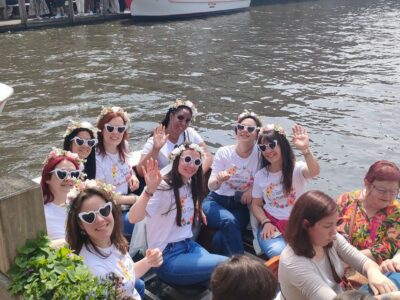
Small Group Boat Cruise and Guided Walking Tour
Read our review →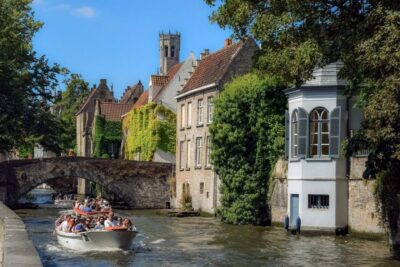
Walking Tour, Canal Boat Trip w/Beer Tasting Option
Read our review →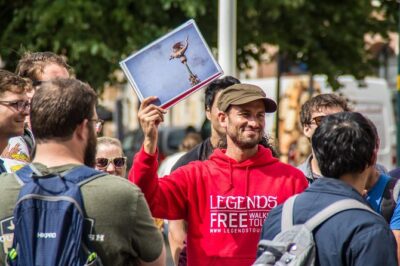
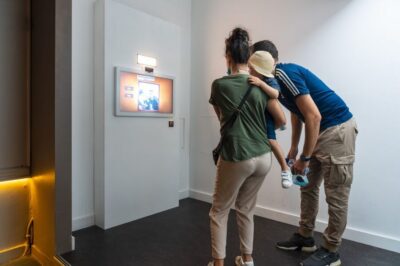
Choco-Story Chocolate Museum Guided Tour w/Tastings
Read our review →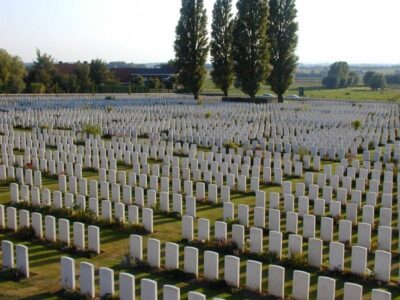
From Bruges: Great War Flanders Fields Minibus Tour w/ Lunch
Read our review →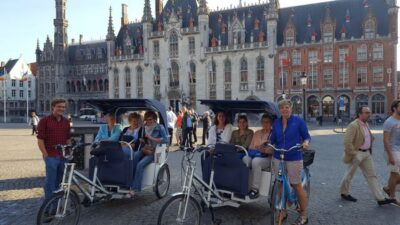
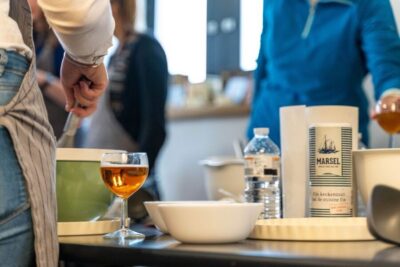
Belgian Waffle-Making Workshop with Beer Tasting
Read our review →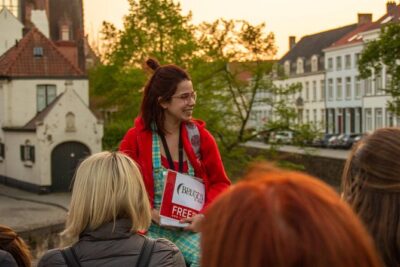
Browse the lists this tour appears in