
Reviewed · BRUGES TOURS
Bruges: Ticket Museum Sint-Janshospitaal
St John’s Hospital gives you two very different museum experiences under one old roof: Hans Memling’s delicate 15th-century masterpieces and challenging contemporary art. Then the visit shifts again, into a 17th-century pharmacy where herbs, bottles, and old medical practice bring the building’s working past into focus.
I like the way the museum connects art with care rather than treating the hospital as a pretty shell. I also like the chance to make your own artwork, a feature that gave one recent visitor a welcome hands-on break. The main consideration is that one contemporary work, a human-animal image, may feel unpleasant or upsetting to some people.
Key points
- Memling’s hospital masterpieces: See major works Hans Memling made especially for St John’s Hospital, where they have remained since the 15th century.
- A real medieval setting: Walk through a hospital founded in the 12th century, with its original sense of shelter and service still central to the visit.
- Modern art with a sharp edge: Works by Berlinde De Bruyckere and Patricia Piccinini add present-day ideas about empathy, bodies, and care.
- The old pharmacy: Enter an authentic 17th-century interior and visit the adjoining herb garden.
- Flexible one-day admission: The $17 ticket includes entry, lets you skip the ticket line, and allows free cancellation up to 24 hours ahead.
- Good family detail: Children under 13 can get a free ticket at the box office, though children should bring a passport or ID card.
A 12th-century hospital with a human purpose
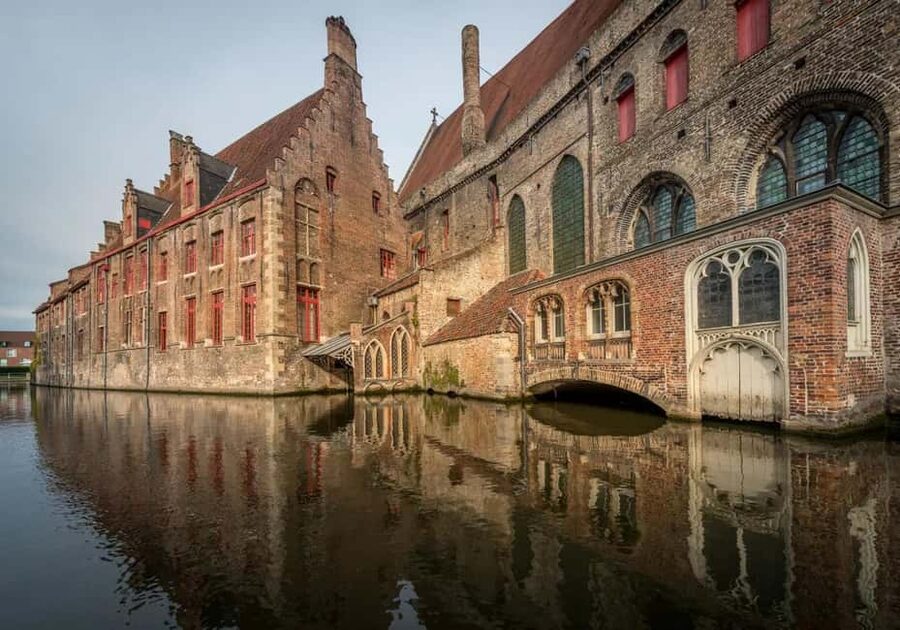
The first thing to understand is that St John’s Hospital is not simply an art museum placed inside an old building. The building itself was a place of care from the Middle Ages onward. People came here for medical attention, shelter, or a bed for the night.
That changes the way you read the rooms. The paintings are not just decorative objects made for a wealthy collector. Some of Hans Memling’s most important works were created for this hospital, and they have stayed here since the 15th century. They belonged to a working place where illness, poverty, faith, and daily kindness met.
I find that setting more useful than a long list of dates. You can look at a finely painted panel, then remember that it was made for people living with pain and uncertainty. The museum asks you to think about hospitality in its oldest sense: giving someone care and shelter when they need it.
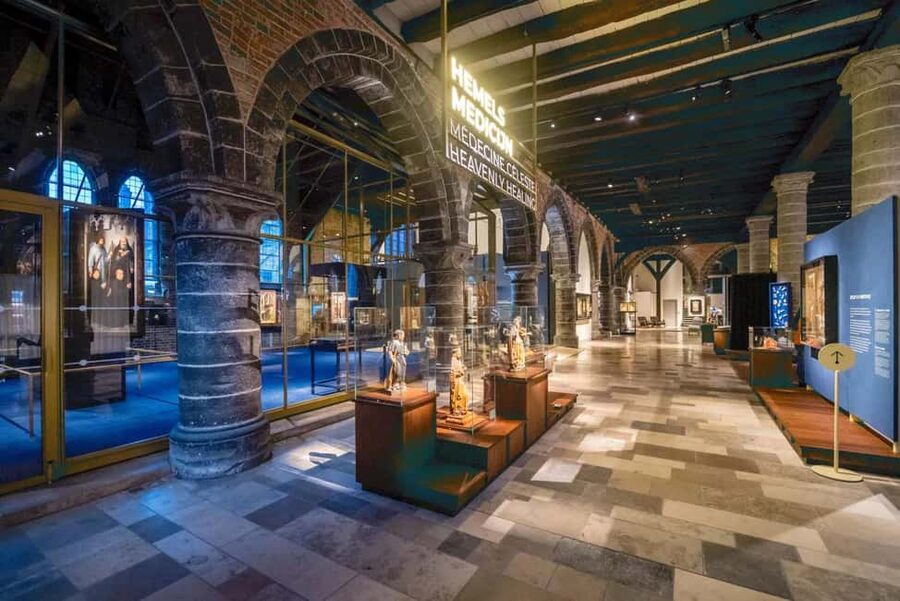
The hospital also carries the marks of time. Its medieval architecture is well preserved, so your route is shaped by old walls and rooms rather than by a modern gallery box. That can make the visit feel a little less polished and controlled, but it gives the art a setting with real purpose.
More Museums in Bruges
- Bruges: Choco-Story Chocolate Museum Guided Tour w/Tastings
★ 4.2 · 1,379 reviews - Choco-Story: The Chocolate Museum in Bruges
★ 4.0 · 544 reviews - Bruges: Chocolate Making Workshop and Chocolate Museum Entry
★ 4.6 · 395 reviews
Meeting Hans Memling’s Flemish masterpieces
Memling is the main reason many people come here, and the collection earns that attention. He was one of the best-known Flemish Primitives, a group admired for precise detail, luminous color, and careful religious imagery.
At St John’s Hospital, the key point is not only that his paintings are famous. They were made for this particular institution. They have been part of the hospital’s story since the 15th century, which gives them a strong sense of place that you do not get from a painting moved between unrelated galleries.
Take your time with the details. Flemish painting rewards close looking. Faces, fabric, small objects, and expressions carry much of the meaning. Even if you are not an art specialist, you can appreciate the exact work that went into every surface.
The Memling collection is also the visit’s safest choice for people who prefer traditional art. The later contemporary rooms can be severe or unsettling, but Memling offers beauty, order, and a direct link to the hospital’s earlier purpose.
One practical tip: do not rush through the Memling rooms simply because the paintings are the oldest part of the museum. They are the reason the hospital became such an important art site, and the building gives them unusual weight.
Contemporary art asks harder questions
After the old masters, the museum brings you into the present with works by Berlinde De Bruyckere and Patricia Piccinini. These artists do not recreate the hospital’s past. Instead, their work adds questions about the body, vulnerability, sympathy, and what it means to care for another living being.
That contrast is deliberate. Memling presents care through religious art and hospital tradition. The modern works approach the same broad subject through contemporary sculpture and imagery. You are not asked to admire everything in the same way.
I like this change of pace because it keeps the museum from becoming a simple medieval-art stop. You see how ideas about illness, humanity, and compassion can shift over time. The result is less predictable than a museum made up only of Flemish paintings.
Still, you should know that the modern section may not suit every mood. One recent response described a human-animal depiction as disgusting, and that reaction is worth taking seriously. The work may be intended to provoke thought about bodies or empathy, but it can also feel disturbing. If you are visiting with young children or prefer gentle, decorative art, stay alert to the tone of this section.
A more welcoming feature is the chance to create your own artwork. One recent visitor specifically enjoyed this part. It gives you something active to do after looking at formal paintings and sculptures, and families may find it especially useful. The available information does not specify how long the activity takes or exactly what materials are provided, so treat it as an added feature rather than the main reason to buy the ticket.
The hospital’s rooms tell the story
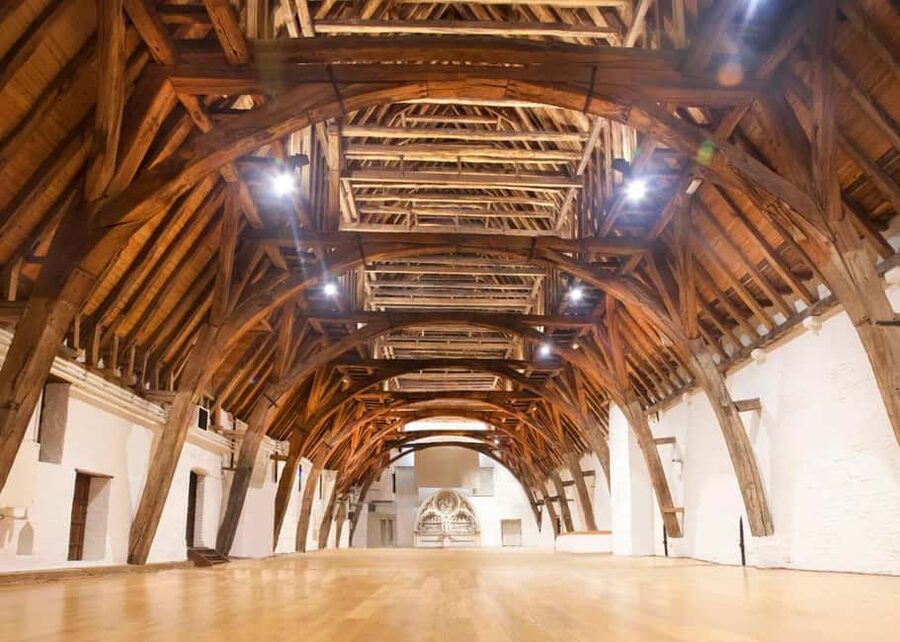
The architecture is not background decoration. St John’s Hospital has been connected with care since the 12th century, and its old rooms help explain how the institution worked.
You can picture the building as a place with practical demands: people needed beds, treatment, food, warmth, and protection. The museum’s theme of hospitality grows from that everyday work. It is a simple idea, but the setting gives it force.
The building will appeal to you if you like museums where the site matters as much as the collection. You are not walking through anonymous white rooms. The old structure creates a direct link between the objects and the people who once depended on this place.
The trade-off is that a medieval building may not offer the smooth, spacious flow of a new museum. The supplied details do not describe every stair, doorway, or route inside, so visitors who need very specific access information should confirm the layout before booking. The ticket is listed as wheelchair accessible, which is useful, but the museum remains an old hospital rather than a purpose-built modern venue.
Same city, a completely different way to spend a day:
- Bruges: Small Group Boat Cruise and Guided Walking Tour
★ 4.8 · 4,102 reviews - Bruges: Walking Tour, Canal Boat Trip w/Beer Tasting Option
★ 4.4 · 2,759 reviews - Historical Walking Tour: Legends of Bruges
★ 5.0 · 2,541 reviews - From Bruges: Great War Flanders Fields Minibus Tour w/ Lunch
★ 4.9 · 1,257 reviews
Inside the 17th-century pharmacy
Save time for the old hospital pharmacy. It has an authentic 17th-century interior and an herb garden, giving you a close look at the practical side of medicine.
This is where the hospital’s story becomes concrete. Paintings can show ideals of healing and compassion, but a pharmacy points to the substances and routines people used when they were actually sick. The herbs connect medical practice to the garden, while the old interior gives the stop a strong sense of place.
I would not treat the pharmacy as a quick final room. It provides a useful counterpoint to Memling’s art. First you see how the hospital represented care through paintings. Then you see the tools and setting connected with treatment.
The information available does not list specific medicines, displays, or demonstrations, so I would not promise a full lesson in medieval pharmacology. Think of it as a compact historical section that adds texture to the main museum visit.
How much time should you allow?
The ticket is valid for one day, but no fixed visit length is given. That flexibility is helpful because you can fit the museum into a day of sightseeing in Bruges rather than plan around a timed tour.
You might spend a short visit focusing on Memling, the architecture, and the pharmacy. Or you can take longer with the contemporary art and the hands-on creative feature. Your pace will depend on how closely you look at the paintings and how much time you give the building itself.
There is no guide name or guided-tour format provided here. You should expect admission to the museum rather than a personal tour led by a named guide. That suits independent visitors who want to pause, move on, and return to a work without keeping up with a group.
The ticket also lets you skip the ticket line. That matters in a city where your day can disappear one small queue at a time. You still need to check available starting times when booking, even though the admission remains valid for one day.
Is the $17 ticket good value?
At $17 per person, this is not a throwaway museum visit, but you get more than one narrow collection. The ticket covers a medieval hospital, a major Memling collection, contemporary art, the old pharmacy, and the herb garden.
I consider that solid value if you care about art and historic buildings. Memling alone gives the visit a clear anchor, while the hospital and pharmacy make it more than a standard painting gallery. The modern works add another layer, though their appeal will depend on your taste.
The value is less convincing if you want a large museum filled with dozens of unrelated collections. St John’s Hospital has a focused story. You are paying for the connection between the site, the art, and the idea of care.
Families should also do the math before booking online. Children under 13 can obtain a free ticket at the box office, so a family may not need to pay the full adult price for every member. Children should bring a passport or ID card, as that is listed as necessary for the free child ticket.
Practical details that shape your visit
The entrance ticket is included, and no additional tour service or transport is part of this activity. You make your own way to the museum and explore at your own pace.
Large bags and luggage are not allowed. Plan to visit before collecting your bags or after leaving them somewhere suitable. Pets are also not permitted, except for assistance dogs.
Flash photography is not allowed. That protects the art and keeps the rooms calmer, but you should check any other photography rules on arrival rather than assume every camera use is acceptable.
The museum is wheelchair accessible according to the activity information. That is an important benefit, especially in a historic building. Since old structures can have details that vary from room to room, anyone who needs precise access information should confirm it directly before the visit.
You can cancel up to 24 hours in advance for a full refund, and you can reserve now while paying later. Those terms are useful if your Bruges plans may change, though you should still check the exact time and conditions attached to your booking.
Who will enjoy St John’s Hospital most?
I would recommend this museum to several kinds of visitors:
- Art lovers: Memling’s works are the central draw, especially if you want to see paintings in the hospital for which they were made.
- Architecture fans: The preserved medieval hospital gives you a real historic setting rather than a replica.
- Museum visitors who like contrast: The movement from Flemish religious art to contemporary works keeps the experience varied.
- People interested in medical history: The old pharmacy and herb garden add a practical side to the story.
- Families with older children: The creative activity may help balance the more serious art, and children under 13 can get free admission at the box office.
I would be more cautious if you dislike unsettling contemporary art. The museum’s modern section includes imagery that some people may find hard to look at. It is also not the best fit if your only goal is a short, purely scenic stop.
Should you book the St John’s Hospital ticket?
Book it if you want Bruges history tied to a genuine working institution, not just another handsome building. The combination of Memling, medieval rooms, contemporary art, and the 17th-century pharmacy gives you several good reasons to keep looking after the first gallery.
The $17 price makes sense for an independent visit, especially with one-day validity, line-skipping entry, flexible cancellation, and a free box-office ticket for children under 13. I would choose it confidently for art-focused visitors and for anyone curious about how care was practiced and represented across centuries.
Think twice if disturbing modern imagery will spoil the visit for you. You can still focus on the hospital, Memling, and pharmacy, but the contemporary section is part of the museum’s current identity. For most visitors who want a focused, thoughtful stop in Bruges, St John’s Hospital is a strong choice.
FAQ
How much does the St John’s Hospital Museum ticket cost?
The ticket costs $17 per person.
How long is the ticket valid?
The ticket is valid for one day. You should check availability for the available starting times.
What does the entrance ticket include?
It includes admission to St John’s Hospital Museum, including the Memling collection, contemporary artworks, the old hospital pharmacy, and the herb garden.
Can I cancel the booking?
Yes. You can cancel up to 24 hours in advance for a full refund.
Is the museum wheelchair accessible?
Yes. The activity is listed as wheelchair accessible.
Do children need a full-price ticket?
Children under 13 can obtain a free ticket at the box office. Children should bring a passport or ID card.
Just added around Bruges
- Private taxi Transfer from Bruges to Amsterdam★ 5.0 · 3 reviews
- Bruges Photo Session By a Pro★ 5.0 · 3 reviews
- Best of Brussels Private Tour from Zeebrugge or Bruges★ 4.0 · 3 reviews
- Private 3-hour walking tour of Bruges with official tour guide★ 4.0 · 3 reviews
- BeerWalk Bruges (French guide)★ 5.0 · 3 reviews
- Brussels: Private & Customizable Day Trip to Bruges★ 5.0 · 3 reviews
- Private: Discover Bruges beers & brewery with chocolate pairing by a young local★ 5.0 · 3 reviews
- Bruges: Ticket Volkskundemuseum (Folk Museum)★ 5.0 · 3 reviews
Bruges Tours, compared.

Small Group Boat Cruise and Guided Walking Tour
Read our review →
Walking Tour, Canal Boat Trip w/Beer Tasting Option
Read our review →
Choco-Story Chocolate Museum Guided Tour w/Tastings
Read our review →
From Bruges: Great War Flanders Fields Minibus Tour w/ Lunch
Read our review →

Belgian Waffle-Making Workshop with Beer Tasting
Read our review →
Browse the lists this tour appears in