
Reviewed · BRUGES TOURS
Bruges: Musea Brugge Card with Entry to 11 Museums
Bruges has an unusual gift: its greatest sights are close enough to link on foot, yet each opens a different door into the city. With the 72-hour Musea Brugge Card, you can climb the Belfry, face Michelangelo’s Madonna and Child, study Flemish paintings, and step into old civic halls without buying a new ticket each time.
I like the card for two clear reasons. First, the QR-code entry is simple: scan your voucher at the door, with no physical card to collect. Second, it nudges you into smaller places you might otherwise skip, such as the Folk Museum or Sint-Janshuis Mill. The main caution is that not every Bruges museum is included, and shorter winter hours can make three days feel less generous than they sound.
Key points
- Climb 366 steps at the Belfry: Reserve a free time slot online, then earn a panoramic view from Bruges’ famous medieval tower.
- See major Flemish art: The Groeninge Museum brings together paintings by the Flemish Primitives.
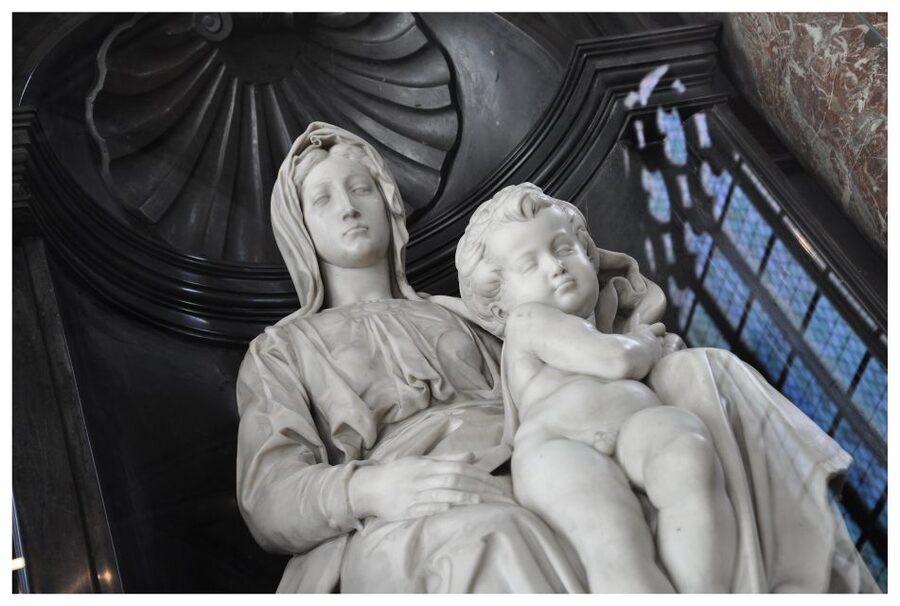
- Meet Michelangelo in Bruges: The Church of Our Lady Museum contains the Madonna and Child.
- Use a phone, not a paper pass: Scan the digital voucher at each attraction and save it to your phone wallet.
- Walk between most stops: The included museums are concentrated in central Bruges, so public transportation is usually unnecessary.
- Plan around closures: Sint-Janshuis Mill closes in winter, and some museums may close on Mondays or keep shorter seasonal hours.
What the 72-hour card actually gives you
The Musea Brugge Card covers one-time entry to 11 museums and monuments for three days. You can start at the Museum Pavilion, the main ticketing center, or simply go straight to any included attraction and scan the voucher at the entrance.
The card includes the Belfry and Carillon, Brugse Vrije, House Gezelle, Groeninge Museum, Gruuthuse Museum, Museum of the Church of Our Lady, Church of Our Lady of the Pottery, St John’s Hospital, Sint-Janshuis Mill, City Hall, and the Museum of Folk Life.
That list matters because it mixes major sights with smaller places. You get fine art, archaeology, furniture, folklore, religious art, civic history, and contemporary work. This is not a pass for one narrow subject. It lets you build a Bruges visit around your own interests.
The pass is valid for 72 hours, not simply three calendar days. Still, opening times control how much you can see. Most sites are close together, but many shut around the same time, so you cannot assume that every late afternoon is useful museum time.
More Museums in Bruges
- Bruges: Choco-Story Chocolate Museum Guided Tour w/Tastings
★ 4.2 · 1,379 reviews - Choco-Story: The Chocolate Museum in Bruges
★ 4.0 · 544 reviews - Bruges: Chocolate Making Workshop and Chocolate Museum Entry
★ 4.6 · 395 reviews
Start with the Belfry and its 366 steps
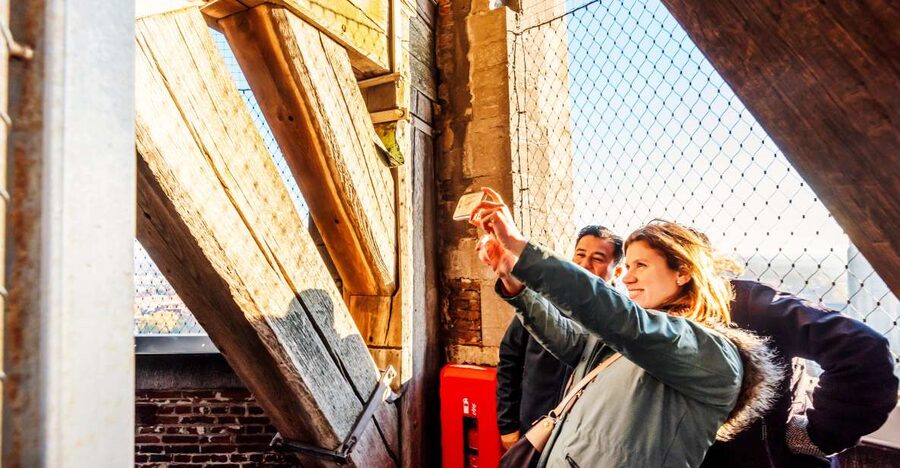
The Belfry is the card’s most physical stop and one of its best rewards. You climb 366 steps through a medieval tower before reaching the viewing level, where Bruges spreads below in a broad pattern of rooftops, towers, and historic streets.
The climb is narrow and steep in places. It is not a casual lift ride, and the height can feel intense if you dislike confined stairways. Yet the effort gives the tower a real sense of place. You are not simply looking at a medieval landmark from the square. You are moving through it, floor by floor.
Reserve a free time slot through the Musea Brugge website before you arrive. This is the one included attraction where advance timing is especially useful. The card may help you skip the regular ticket line, but a timed entry remains recommended because the Belfry can be busy.
Allow enough time to arrive before your slot. The card is excellent for flexibility, but the Belfry visit itself works best when treated as an appointment. If you are visiting Bruges in winter, check the current hours carefully, since seasonal schedules are shorter.
Compare Flemish art at the Groeninge Museum
The Groeninge Museum is the card’s main stop for classic painting. Its collection includes work by the Flemish Primitives, the artists who helped make Bruges and the wider region famous for close observation, polished surfaces, and intense religious imagery.
You can take your time here without feeling forced to cover an enormous collection. The museum is a good match for anyone who wants art with a strong connection to the city and region. It also gives you a quieter counterpoint to the crowded streets around Markt and Burg.
The digital Musea Brugge website provides free audio tours for the included locations. That is useful if you want more context without paying for a separate guide. I would check the audio options before your visit and bring headphones if you plan to use them.
The Groeninge is also a sensible early stop. It gives you a visual framework for other religious and civic sites, especially the Church of Our Lady and St John’s Hospital.
Meet Michelangelo at the Church of Our Lady
The Museum of the Church of Our Lady contains Bruges’ most famous single artwork, Michelangelo’s Madonna and Child. Seeing a work by Michelangelo outside Italy gives this stop extra weight, especially when you consider how much of Bruges’ appeal comes from encountering major art in historic settings rather than in one large modern gallery.
The church itself adds to the experience. You are not looking at the sculpture in isolation. Its setting connects art, faith, patronage, and the long life of the city’s religious institutions.
This is one of the places where the card can quickly make financial sense. If you plan to visit the Belfry, Groeninge Museum, Church of Our Lady, and St John’s Hospital, you are already using the pass on four of the city’s strongest cultural stops.
Expect a more focused visit here than at Groeninge. The attraction is important because of one exceptional work and the building around it, not because you need to spend half a day inside.
Same city, a completely different way to spend a day:
- Bruges: Small Group Boat Cruise and Guided Walking Tour
★ 4.8 · 4,102 reviews - Bruges: Walking Tour, Canal Boat Trip w/Beer Tasting Option
★ 4.4 · 2,759 reviews - Historical Walking Tour: Legends of Bruges
★ 5.0 · 2,541 reviews - From Bruges: Great War Flanders Fields Minibus Tour w/ Lunch
★ 4.9 · 1,257 reviews
Step into St John’s Hospital
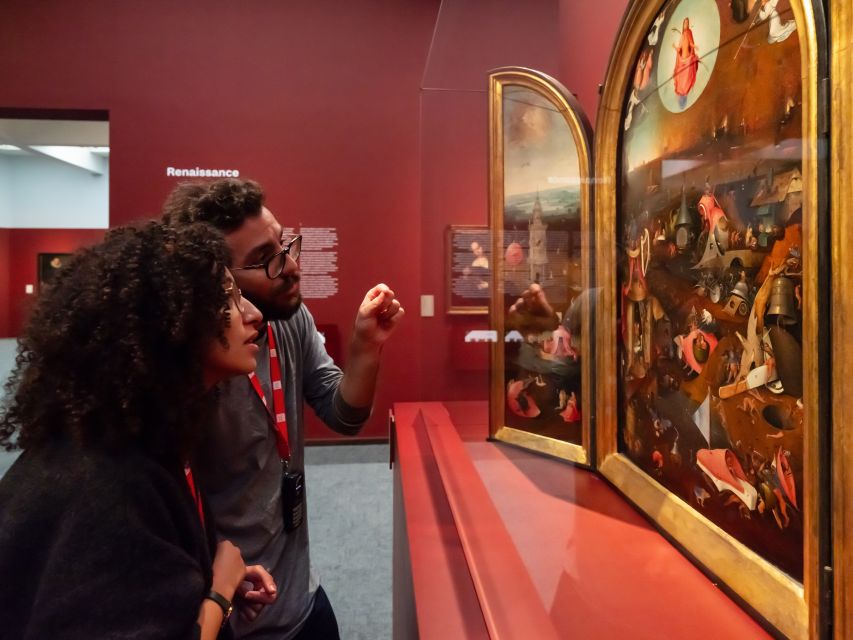
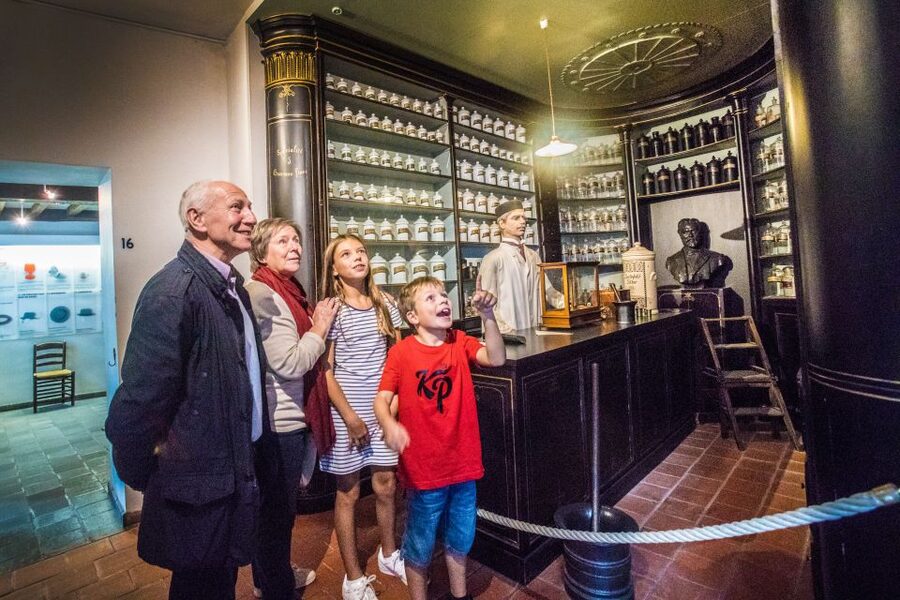
St John’s Hospital is among the most rewarding inclusions for visitors who want more than paintings. Its setting connects medical care, religious life, and art in a way that feels very specific to old Bruges.
The building is historic, and the collection adds another layer. You might see the city through its institutions rather than only through its grand squares and canals. This is one reason I like having the card for three days: you can give a place such as St John’s Hospital the attention it deserves instead of racing through it because of a separate admission fee.
It is also close to several other major stops, including the Church of Our Lady and Gruuthuse Museum. Grouping those sites on foot creates a sensible half-day route.
Check the opening day before planning your route. Gruuthuse Museum and St John’s Hospital have both been affected by Monday closures, so a quick look at the official schedule can prevent a wasted walk.
See Bruges from Gruuthuse Museum to City Hall
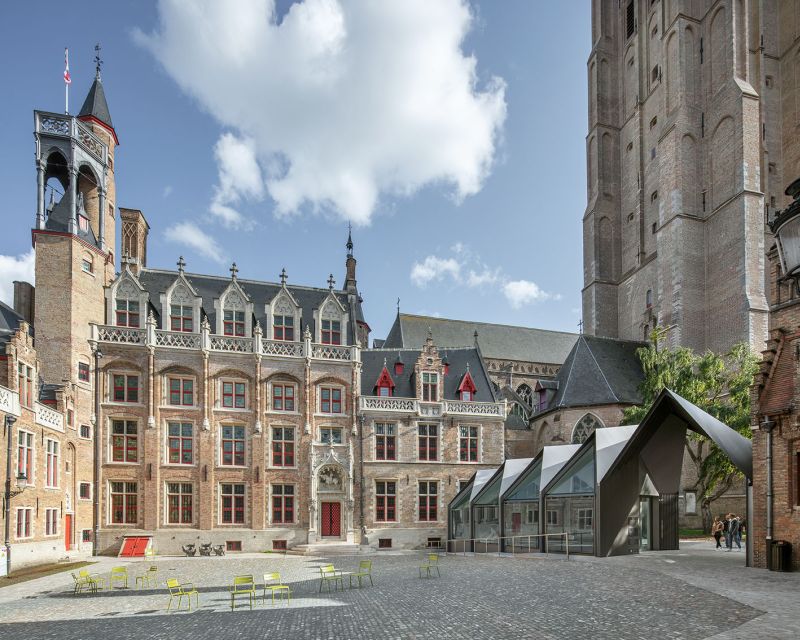
Gruuthuse Museum offers a different view of Bruges through objects, interiors, and the life of a wealthy historic household. It complements the art museums by showing how people lived and how material culture shaped the city.
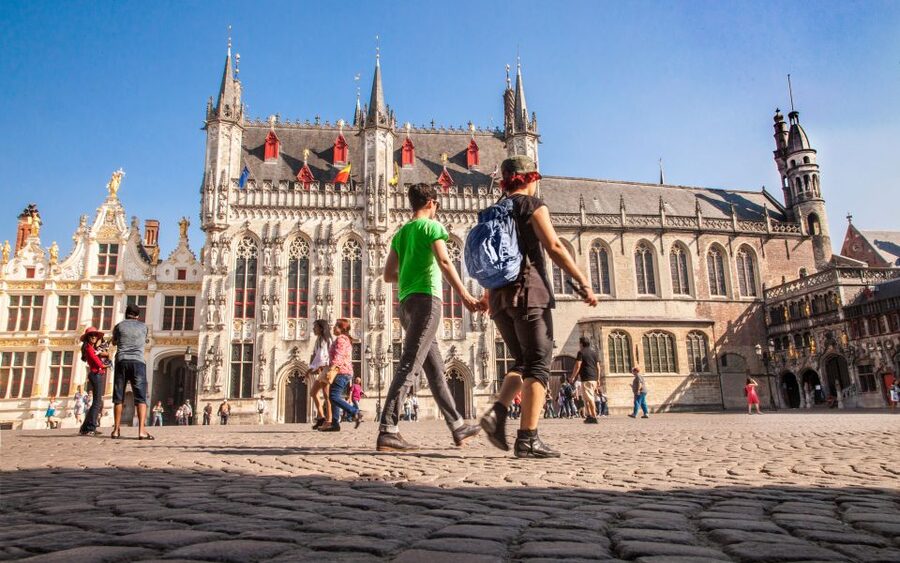
City Hall, or Stadhuis, is another essential stop. The historic hall is a highlight in its own right, and an audiovisual display explains how Bruges developed over time. I especially like this kind of presentation because it helps you read the city outside the museum. Afterward, the streets and buildings around Burg make more sense.
Brugse Vrije, also called the Liberty of Bruges, continues the civic story. Together, City Hall and Brugse Vrije show how Bruges was governed and how public power was displayed. These are useful visits if you have already seen the postcard views and want to understand the machinery behind the city.
The attractions are near one another, but their shared central location can create a practical problem. They may also close at similar times. Start earlier than you think, especially during a busy season or a winter visit.
Try the smaller museums you might skip
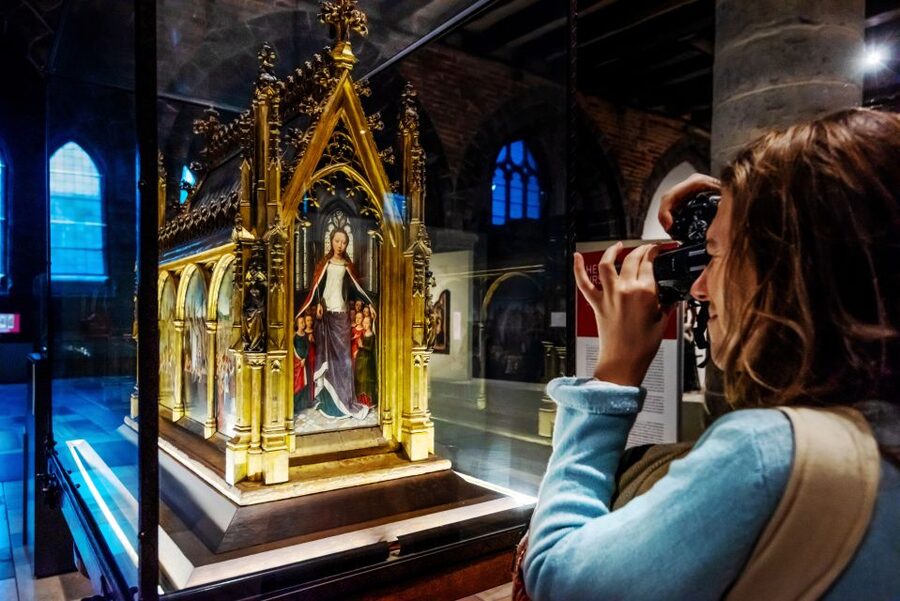
The Museum of Folk Life is a good example of why a multi-site card changes your habits. Without an extra ticket to buy, you can step into a smaller museum on your way back from another sight. Its focus on everyday traditions, furnishings, and local culture helps balance the major art collections.
House Gezelle offers another compact stop connected with Bruges and its people. It will not suit everyone as much as the Belfry or Groeninge, but it adds local character to the card’s cultural range.
The Church of Our Lady of the Pottery takes you farther from the most concentrated central group. It offers another religious and heritage setting, and it works well for anyone who wants to see a less familiar side of Bruges.
These sites are not all equal in size or fame. That is worth saying plainly. Some are better thought of as monuments, historic houses, or specialist collections rather than full museums. If you only want the headline sights, you may not use all 11 entries. If you enjoy following small threads through a city, the variety is a strength.
Walk to Sint-Janshuis Mill
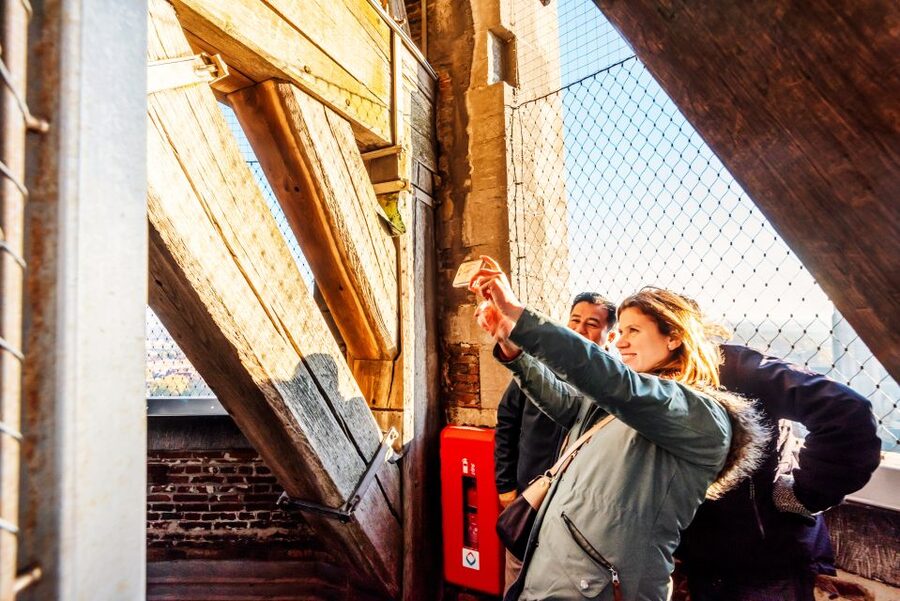
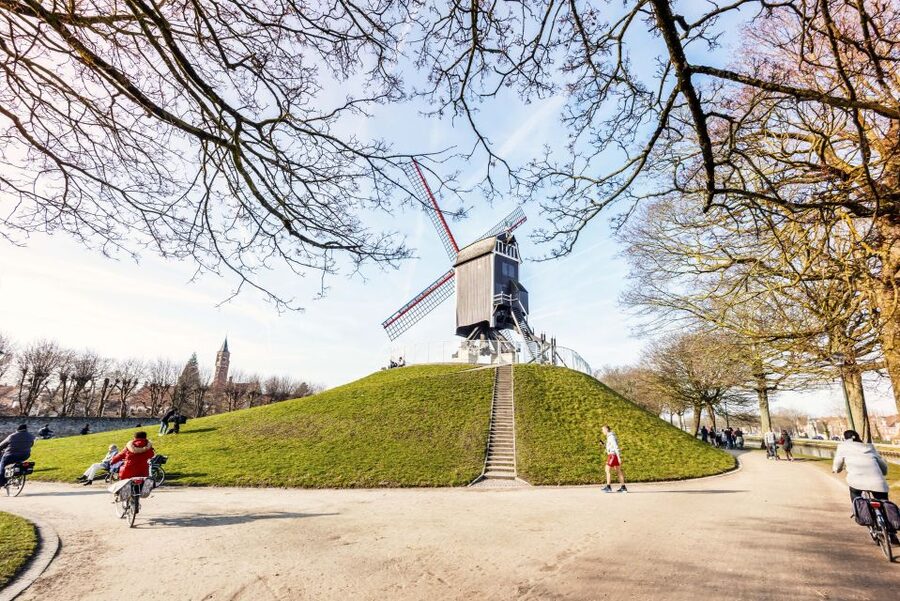
Sint-Janshuis Mill is the outlier in the group. It is not in the tight central cluster of the main museums, but it gives you a change of pace and a look at Bruges beyond its most photographed streets.
The windmill visit includes steep, vertiginous steps. If you are comfortable with heights and uneven climbs, it can be one of the most memorable entries on the card. If not, you may prefer to enjoy the structure from outside and spend your time elsewhere.
The mill is closed during winter and opens on April 1. Do not build your itinerary around it without checking the season. This is the clearest example of why the card’s 72-hour validity does not automatically mean every listed stop is available.
What the card costs and when it pays off
The listed price is $38 per person. The exact value depends on how many included places you visit, but the basic calculation is simple: use the pass for at least three substantial admissions and it begins to make sense, with greater savings as you continue.
Past individual admission prices have made the Belfry and other major sites costly enough that four or five stops can produce clear savings. The card also removes the small friction of repeated ticket purchases. That matters in Bruges, where you may want to make a quick visit to a smaller museum rather than commit to another full-price ticket.
The strongest value comes from a two or three-day stay. You can visit the Belfry at a reserved time, see the Church of Our Lady and Groeninge Museum, then return for City Hall, St John’s Hospital, Folk Life, or Gruuthuse Museum.
It is less compelling if you plan to see only one or two places. It also does not include public transportation. That is not a serious issue for most central Bruges sightseeing because the main sites are within a short walk, but it is still important if you expect a general city pass with transit included.
Build a practical three-day plan
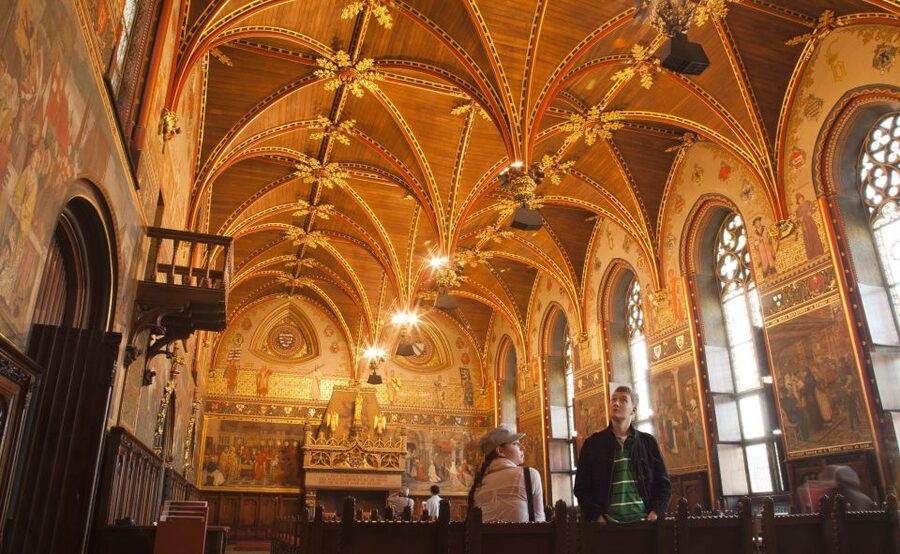
Use the first day for the central highlights. Reserve the Belfry, then visit City Hall and Brugse Vrije around the Burg area. Add Groeninge Museum if your schedule and interest in art allow.
On the second day, group the Church of Our Lady, St John’s Hospital, and Gruuthuse Museum. These stops fit naturally together and give you a good blend of sculpture, religious art, historic buildings, and household culture.
Use the third day for the smaller sites. Choose the Folk Museum, House Gezelle, Church of Our Lady of the Pottery, or Sint-Janshuis Mill based on your interests and the season. You do not need to force all 11 attractions into the schedule. The best use of the card is to give you options.
For a one-day visit, the pass can still work. One person managed seven museums in a single day, but that pace will feel brisk. If you have only one day, choose the Belfry, Groeninge, Church of Our Lady, St John’s Hospital, and City Hall first. Add another stop only if you still have energy.
Digital entry, closures, and access details
The card is easy to use once it is on your phone. Scan the voucher QR code at each entrance, and save it to your phone wallet if that is convenient. No physical collection is required.
Some people have found the digital card confusing to locate after saving it, especially when it moved into deleted or expired-card areas of a phone wallet. Keep the original voucher email available as a backup and make sure your screen is charged before a full day of visits.
Large bags and luggage are not allowed. Assistance dogs are allowed, but other pets are not. Flash photography is prohibited.
Some museums, including Gruuthuse Museum, are not wheelchair accessible. The 366 steps at the Belfry and the steep steps at the mill also make those stops unsuitable for some visitors. Check access details with Musea Brugge before purchase if mobility is a concern.
You can activate the card up to one year after purchase, which gives you useful flexibility if your plans change. Free cancellation is available up to 24 hours in advance, and the reserve now, pay later option can help if you are still arranging your Bruges visit.
Who should buy the Musea Brugge Card?
I would choose this pass if you enjoy museums, historic buildings, and the freedom to pop into one more place without debating the cost. It is especially useful for a two or three-day stay, for first-time visitors who want the major sights, and for return visitors who have already seen the central squares.
Families and mixed-interest groups may also like it because the collection is broad. One person can focus on Flemish art, another on civic buildings, and someone else on folklore or industrial heritage.
I would think twice if your Bruges visit is mostly about walking, eating, and taking photographs. The card does not include transport, every museum in town, or every popular paid attraction. It works best when you are prepared to enter at least three or four included sites.
Should you book it?
Book the Musea Brugge Card if you want to climb the Belfry, see Michelangelo’s Madonna and Child, visit Groeninge and St John’s Hospital, and still have time for City Hall or the Folk Museum. The QR entry, central locations, free audio tours, and 72-hour validity make it easy to use.
Skip it if you will only enter one or two museums or if your visit falls in winter and the mill is a priority. For most culture-focused visits, though, $38 is a sensible price for a flexible pass that turns Bruges from a pretty walking stop into a city you can understand from several angles.
FAQ
How long is the Musea Brugge Card valid?
The card is valid for 72 hours, or three days, after activation.
How many attractions are included?
The card includes one-time entry to 11 museums and monuments in Bruges.
Which major sights are included?
Included highlights include the Belfry, City Hall, Groeninge Museum, Gruuthuse Museum, St John’s Hospital, the Museum of the Church of Our Lady, and Brugse Vrije.
Is the Belfry included?
Yes. The card includes entry to the Belfry and Carillon.
Do I need to reserve a Belfry time slot?
Reserving a free time slot online through the Musea Brugge website is recommended.
Can I use the card at any attraction first?
Yes. You can begin at the Museum Pavilion, the main ticketing center, or go directly to any included museum or monument.
How do I activate the card?
Go directly to an included attraction and scan your voucher at the entrance. You can activate the card up to one year after purchase.
Is public transportation included?
No. The Musea Brugge Card covers entry to the 11 listed attractions but does not include public transportation.
Is Sint-Janshuis Mill open all year?
No. The mill is closed during winter and opens on April 1. Seasonal opening hours should be checked before you plan your visit.
Are all the museums wheelchair accessible?
No. Some museums, including Gruuthuse Museum, are not wheelchair accessible. The Belfry and mill also require steep stair climbs.
Just added around Bruges
- Private taxi Transfer from Bruges to Amsterdam★ 5.0 · 3 reviews
- Bruges Photo Session By a Pro★ 5.0 · 3 reviews
- Best of Brussels Private Tour from Zeebrugge or Bruges★ 4.0 · 3 reviews
- Private 3-hour walking tour of Bruges with official tour guide★ 4.0 · 3 reviews
- BeerWalk Bruges (French guide)★ 5.0 · 3 reviews
- Brussels: Private & Customizable Day Trip to Bruges★ 5.0 · 3 reviews
- Private: Discover Bruges beers & brewery with chocolate pairing by a young local★ 5.0 · 3 reviews
- Bruges: Ticket Volkskundemuseum (Folk Museum)★ 5.0 · 3 reviews
Bruges Tours, compared.

Small Group Boat Cruise and Guided Walking Tour
Read our review →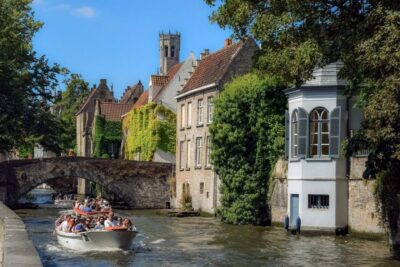
Walking Tour, Canal Boat Trip w/Beer Tasting Option
Read our review →
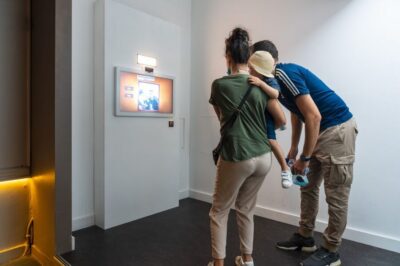
Choco-Story Chocolate Museum Guided Tour w/Tastings
Read our review →
From Bruges: Great War Flanders Fields Minibus Tour w/ Lunch
Read our review →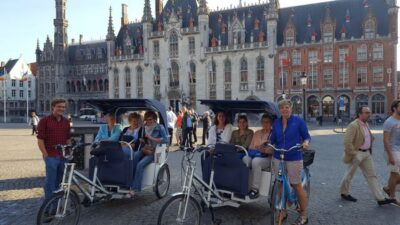

Belgian Waffle-Making Workshop with Beer Tasting
Read our review →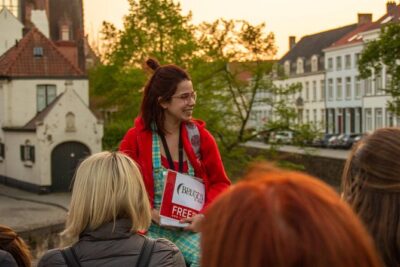
Browse the lists this tour appears in