
Reviewed · BRUGES TOURS
Flanders Fields Remembrance Tour from Bruges
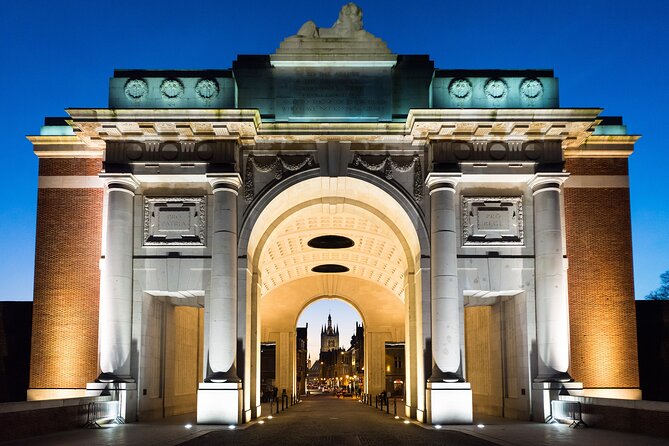
The most powerful part of this day comes at the end, when you stand beneath Ypres’ Menin Gate for the daily Last Post Ceremony. It is a simple tribute, not a staged show, and that restraint gives it weight. By then, you have seen trenches, cemeteries, shell-marked ground, and the dressing station where John McCrae wrote In Flanders Fields.
I like two things here. First, the tour connects scattered sites into one clear story, from the German cemetery at Vladslo to Passchendaele and Tyne Cot. Second, guides such as Diederik Naeyaert, Diedericke, Stefan, and Dedrick have earned strong praise for turning difficult military history into something personal and understandable.
The main drawback is the length. At about 10 hours and 30 minutes, this is a packed day with plenty of time in a vehicle. Group size and transport can also vary. The experience is described as using an air-conditioned minivan, yet some departures have used a large coach with more than 20 people, so ask about the vehicle if that matters to you.
Key points to know before booking
- The Last Post is the emotional high point: The daily ceremony at Menin Gate closes the tour with a quiet tribute to Commonwealth soldiers.
- You visit several types of memorial site: Expect German and Commonwealth cemeteries, trenches, battlefields, bunkers, a museum, and Ypres itself.
- The guide makes a major difference: Diederik Naeyaert and Stefan are among the guides praised for detailed, clear commentary.
- Plan for a full day: The tour begins at 11:00 a.m. and returns to the Bruges meeting point after the evening ceremony.
- Transport may not match the wording: Some departures use a comfortable large bus rather than a minivan.
- Lunch needs checking: The formal details list lunch as extra, although some departures have included a simple meal and drink.
Why Flanders Fields works best as a guided day
The battlefields around Ypres are not one compact attraction. They stretch across villages, fields, cemeteries, museums, roads, and memorial parks. Without a guide, you can see the headstones and trenches but miss how the sites fit together.
This tour gives you that connection. You move through the German position at Vladslo, the Canadian story at the Trench of Death, the fighting around Passchendaele, the Commonwealth cemetery at Tyne Cot, and the medical post at Essex Farm. The stops are not just a string of monuments. They show how the war affected soldiers from different countries and how the same ground changed hands or served different purposes.
The strongest guides keep the tone serious without turning the day into a lecture. Diederik Naeyaert is repeatedly singled out for his detailed command of First World War events. Stefan and Dedrick also receive high praise for clear explanations and a calm, respectful manner.
That matters on a long outing. You will hear a lot of names, dates, battles, and military terms. A guide who can explain the human cost, answer questions, and keep the group together makes the information easier to follow.
More Flanders Fields memorial tours:
- From Bruges: Great War Flanders Fields Minibus Tour w/ Lunch
★ 4.9 · 1,257 reviews - From Bruges: Flanders Fields Remembrance Full-Day Trip
★ 4.8 · 65 reviews - Australian Battlefields Private Tour in Flanders from Bruges
★ 5.0 · 15 reviews
Vladslo and Käthe Kollwitz’s Grieving Parents
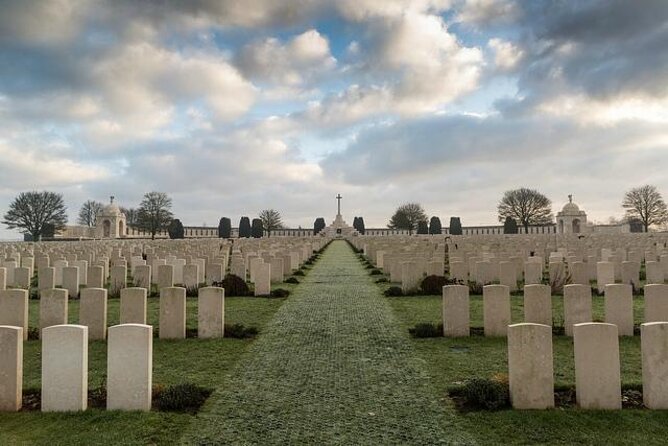
The first major stop is the German Military Cemetery at Vladslo. Thousands of German soldiers are buried here, and the mood differs from the Commonwealth cemeteries later in the day.
The focus is Käthe Kollwitz’s Grieving Parents, a restrained sculpture showing two mourning figures. Kollwitz lost her own son during the war, which gives the work an especially personal force. You do not need a long explanation to understand its message. The sculpture asks you to think about the parents left behind, not only the soldiers listed on the graves.
This is a quiet opening to the tour. You are not rushed into a battle explanation before seeing the human result. Allow a few minutes to look closely at the sculpture and the cemetery layout.
The Trench of Death and the Brooding Soldier
Near Diksmuide, you visit the Trench of Death, a preserved section of the Western Front. This is one of the more direct physical encounters with the war. Rather than looking at a distant field, you see the narrow defensive spaces where soldiers lived, worked, and faced constant danger.
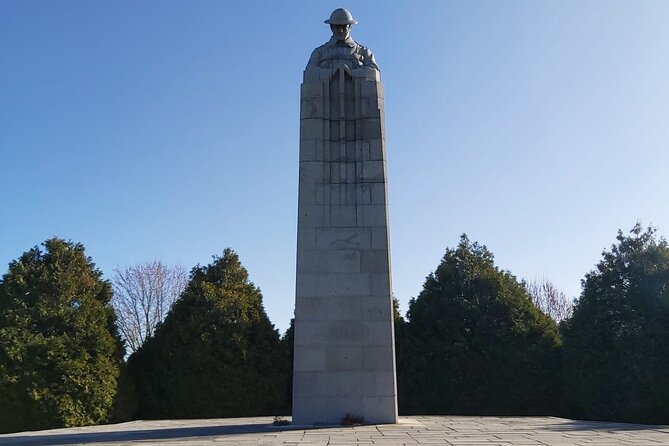
The nearby Brooding Soldier honors roughly 2,000 Canadian soldiers who died during the first German gas attack. The statue’s posture is thoughtful and heavy, which suits the site. It does not glorify combat. It points toward sacrifice and loss.
The trench can be sobering because the distance between the opposing positions was often very small. Several people find that seeing the ground in person changes how they understand descriptions of trench warfare. The day’s calm countryside makes the contrast sharper.
Lunch and the Ypres museum stop
Lunch is a practical break in a demanding schedule. The tour details say lunch is not included, but some departures have provided a simple plowman’s lunch and drink, sometimes at the Hooge Crater Museum cafe. Confirm the arrangement before you go, and budget for food if your booking does not include it.
The meal is less about fine dining than giving you time to sit, eat, and talk with people on the bus. The schedule has many stops, so this pause helps you reset before the afternoon visits.
The Flanders Fields Museum in Ypres adds a different layer. Cemeteries show the aftermath, while the museum uses uniforms, personal objects, weapons, maps, and other artifacts to explain the wider war. The audio-guided visit lets you take in the displays at your own pace.
You should check the museum’s operating status for your date. One departure found it closed, so the schedule can change. If it is open, the visit helps fill in the political and military background that the outdoor sites cannot explain on their own.
A few more Bruges half-days to weigh up
- Bruges: Small Group Boat Cruise and Guided Walking Tour
★ 4.8 · 4,102 reviews - Bruges: Walking Tour, Canal Boat Trip w/Beer Tasting Option
★ 4.4 · 2,759 reviews - Historical Walking Tour: Legends of Bruges
★ 5.0 · 2,541 reviews - Bruges: Choco-Story Chocolate Museum Guided Tour w/Tastings
★ 4.2 · 1,379 reviews
Hill 60 and Passchendaele
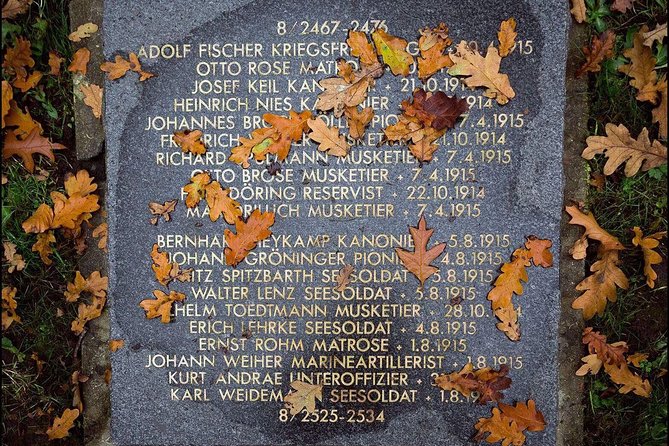
Hill 60 is a battlefield memorial site near Zillebeke. Its importance comes from the ground itself. This was a heavily contested position, and tunnels played a major role in the fighting.
The stop is valuable for showing that the Western Front was not only a flat line of trenches. Height, tunnels, observation points, and artillery positions all shaped the battles. You may not spend a long time here, but the guide’s explanation gives the site meaning.
The route then heads toward Passchendaele, one of the war’s bloodiest battlefields. Today, the area is quiet and traditionally built, which makes it hard to picture the mud, bombardment, and exhaustion associated with the battle.
The contrast is part of the experience. You see ordinary roads and settled communities over ground that once became a place of extreme suffering. The tour does not treat Passchendaele as a dramatic backdrop. It uses the site to explain the scale and futility of the fighting.
Tyne Cot and the Commonwealth cemeteries
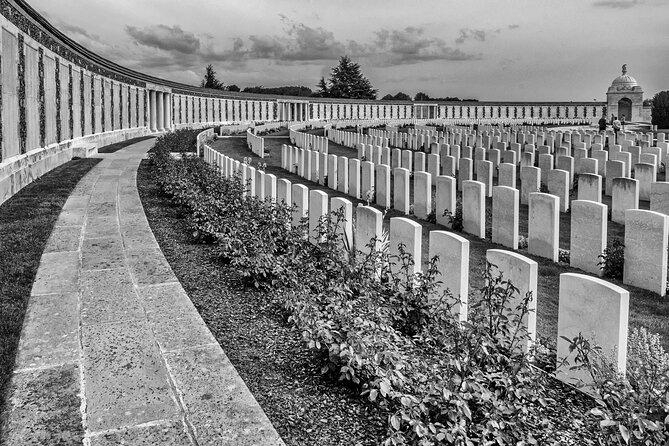
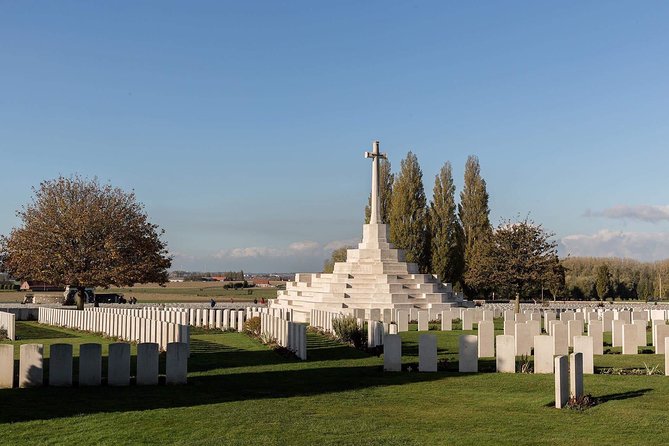
Tyne Cot is the largest Commonwealth war cemetery in the world, with about 35,000 headstones and names connected to soldiers missing after battle. The rows are orderly, but the number of graves is difficult to absorb all at once.
Give yourself a moment to look beyond the first rows. The cemetery’s size makes the cost of the war visible in a way that a single memorial cannot. You may also notice how carefully maintained the grounds are. The quiet setting and precise arrangement encourage reflection rather than quick sightseeing.
The itinerary also includes Passchendaele New British Cemetery, a smaller site that helps balance Tyne Cot’s vast scale. Some people may find several cemetery visits repetitive, especially late in the day. I see the reason for including them, since German and Commonwealth burial sites express different national traditions, but this is not a tour for someone who wants only one or two headline sights.
Time can be limited. One departure allowed less time than desired at Tyne Cot and the Passchendaele museum. If you want to read every inscription or explore each display in detail, a longer specialist tour may suit you better.
Essex Farm and John McCrae’s poem
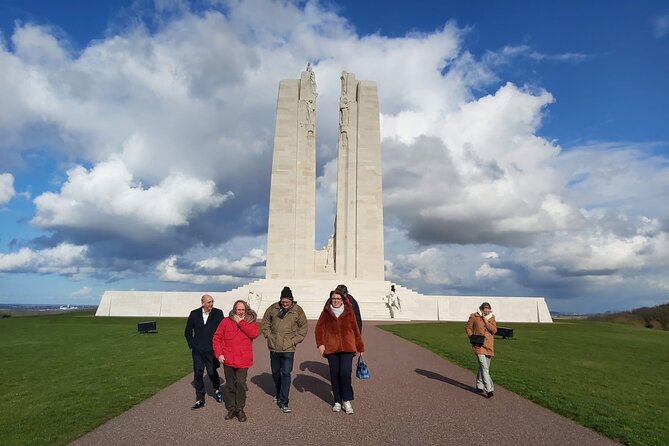
At Essex Farm Cemetery, you see the former dressing station where Canadian doctor John McCrae wrote In Flanders Fields. The stop is brief, around 15 minutes, but its cultural importance is large.
McCrae wrote the poem after witnessing the death of a fellow soldier. Its words helped shape later remembrance ceremonies, and the poppy became linked with the memory of the war dead. Seeing the bunkers and medical site gives the poem a physical setting.
This is a good place to bring the day’s events together. You have seen where soldiers fought and where they were buried. Essex Farm reminds you that doctors, nurses, stretcher bearers, and medical staff also worked close to the front, trying to cope with injuries on an industrial scale.
Ypres and the Last Post Ceremony
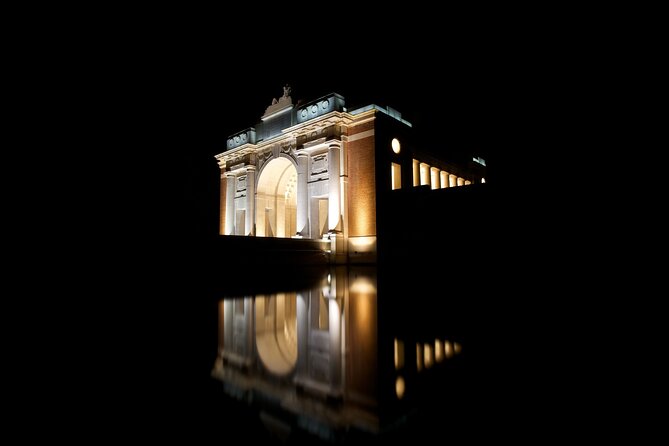
The day ends at Ypres, now officially known by its Dutch name, Ieper. Much of the city was destroyed during the war and rebuilt afterward. Its streets look old, but many buildings date from the rebuilding period after 1921.
The Last Post Ceremony takes place at Menin Gate each evening. The tribute honors Commonwealth soldiers and officers who died or went missing in the fighting. The ceremony has continued daily for more than a century, with interruptions only during wartime conditions.
The format is deliberately plain. Buglers play the Last Post, and the crowd observes the tribute beneath the memorial arch. That simplicity is the strength of the event. After a day filled with explanations, maps, and military detail, the ceremony gives you a quiet place to remember the people behind the numbers.
Construction work has sometimes affected the Menin Gate setting, including scaffolding and vehicles. Check current conditions if the ceremony is the main reason you are booking. Even with temporary work nearby, the event itself remains the closing focus of the day.
Arrive prepared for a crowd. The ceremony is free and open to the public, so you may not have a private viewing area. Stay respectful, keep conversation low, and allow extra time to leave afterward.
Transport, timing, and group size
The meeting point is at Bargeplein on Bargeweg in Bruges. The tour begins at 11:00 a.m. and ends back at the same meeting point after the return from Ypres.
The vehicle is air-conditioned, and the coach has been described as comfortable. However, the advertised vehicle and the actual vehicle have not always matched. Some departures used a large tour bus rather than a minivan, and one account described a group of 27 people despite a smaller stated maximum.
A large group can make it harder to hear commentary outside the vehicle. If your guide is Diederik, Stefan, or another strong speaker, you will still get plenty from the day, but stand close during outdoor explanations and ask questions when the group pauses.
You need moderate physical fitness. Expect to get on and off the vehicle several times, walk around cemeteries and memorial grounds, and spend much of the day moving between stops. Wear shoes suited to uneven outdoor surfaces and dress for changing Belgian weather.
Is the $95.34 price good value?
At $95.34 per person, this is a strong value if you want a broad introduction to Flanders Fields in one day. The price covers transport and a professional multilingual guide, while the route includes sites that would be difficult to connect by public transport in a single day.
The value comes from the guide and the logistics. You are not paying only to enter a museum. You are paying to reach scattered battlefield sites, understand their links, and finish at the Last Post Ceremony without having to plan the route yourself.
Lunch is the main cost question. It is listed as not included, although some departures have included a simple lunch and drink. Ask before booking so you know how much extra to allow.
The tradeoff is depth. You visit many places, but some stops are short. If your main interest is a single cemetery, a particular regiment, or detailed battlefield archaeology, a private guide or multi-day visit would give you more time.
Who should book this tour?
I would choose this tour if you are based in Bruges and want a structured day covering the major First World War sites around Ypres. It suits first-time visitors, families with older children, and anyone who wants historical context without arranging several separate excursions.
It is also a good fit if the Last Post Ceremony matters to you. The schedule is built around reaching Menin Gate at the end, which gives the day a clear purpose.
I would think twice if you dislike long coach journeys, large groups, or repeated cemetery visits. People sensitive to motion sickness should confirm the vehicle type before paying, since a large bus has been used on some departures despite the minivan description.
The tour is also emotionally demanding. You will see burial grounds, trenches, medical bunkers, and memorials throughout the day. That is the point, but it may not be the right outing if you want a light day from Bruges.
Final recommendation
Book it if you want a serious, full-day introduction to Flanders Fields and value an expert guide more than a relaxed pace. The combination of Vladslo, the Trench of Death, Passchendaele, Tyne Cot, Essex Farm, Hill 60, and Menin Gate gives you a broad view of the war and its continuing memory.
Before booking, confirm the vehicle, lunch arrangement, museum opening, and any current work at Menin Gate. If those details suit you, the tour offers a well-planned way to reach difficult sites and ends with one of Belgium’s most moving public acts of remembrance.
FAQ
Where does the Flanders Fields tour from Bruges begin?
It begins at Bargeplein, Bargeweg, 8000 Brugge, Belgium. The listed start time is 11:00 a.m.
Where does the tour end?
The activity ends back at the Bruges meeting point after the return journey from Ypres.
How long does the tour last?
The tour lasts approximately 10 hours and 30 minutes.
What sites are included?
The route includes the German Military Cemetery at Vladslo, the Trench of Death near Diksmuide, Passchendaele, Tyne Cot Commonwealth Cemetery, Hill 60, Essex Farm Cemetery, the Flanders Fields Museum, and the Last Post Ceremony at Menin Gate.
Is lunch included?
The formal tour details list lunch as not included. Some departures have included a simple plowman’s lunch and drink, so confirm the arrangement for your booking.
What type of transport is used?
An air-conditioned vehicle is included. The experience is described as using a minivan, but some departures have operated with a larger tour bus.
Can I cancel for a full refund?
Yes. You can cancel at least 24 hours before the local start time for a full refund. Changes or cancellations made less than 24 hours before departure are not accepted for a refund.
Just added around Bruges
- Private taxi Transfer from Bruges to Amsterdam★ 5.0 · 3 reviews
- Bruges Photo Session By a Pro★ 5.0 · 3 reviews
- Best of Brussels Private Tour from Zeebrugge or Bruges★ 4.0 · 3 reviews
- Private 3-hour walking tour of Bruges with official tour guide★ 4.0 · 3 reviews
- BeerWalk Bruges (French guide)★ 5.0 · 3 reviews
- Brussels: Private & Customizable Day Trip to Bruges★ 5.0 · 3 reviews
- Private: Discover Bruges beers & brewery with chocolate pairing by a young local★ 5.0 · 3 reviews
- Bruges: Ticket Volkskundemuseum (Folk Museum)★ 5.0 · 3 reviews
Bruges Tours, compared.
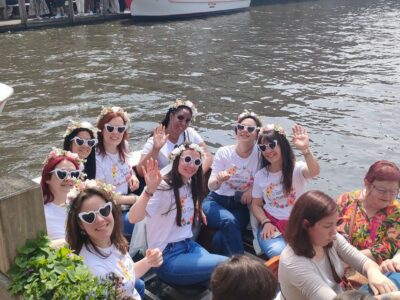
Small Group Boat Cruise and Guided Walking Tour
Read our review →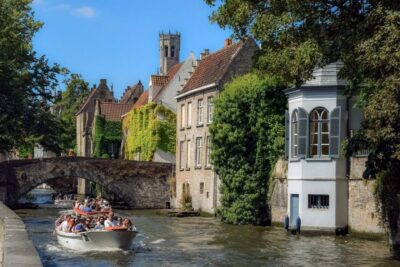
Walking Tour, Canal Boat Trip w/Beer Tasting Option
Read our review →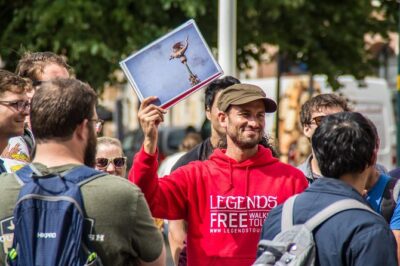
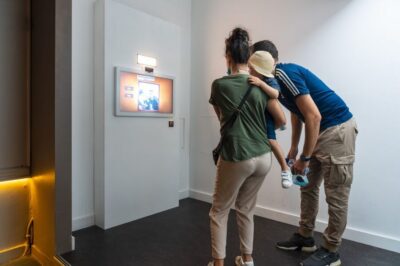
Choco-Story Chocolate Museum Guided Tour w/Tastings
Read our review →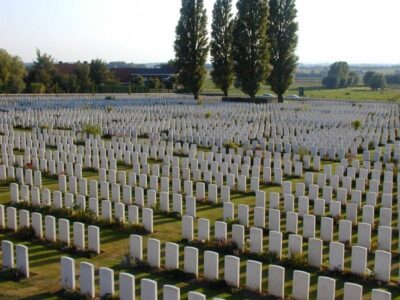
From Bruges: Great War Flanders Fields Minibus Tour w/ Lunch
Read our review →

Belgian Waffle-Making Workshop with Beer Tasting
Read our review →
Browse the lists this tour appears in