
Reviewed · BRUGES TOURS
Australian Battlefields Private Tour in Flanders from Bruges
From a quiet cemetery at Fromelles to the evening Last Post at Menin Gate, this private tour follows the Australian experience across Flanders and northern France. Claude’s personal guidance links the sites, maps and battle stories in a way that a standard sightseeing trip cannot.
I especially like the small-group format, which lets you ask questions and shape the day around your interests. I also like that lunch, hotel pickup, transport and museum admissions are included, so the $545.94 price covers much more than a seat in a van. The main drawback is simple: this is a long, full day, and the subject matter is often sad and heavy.
Key points at a glance
- Fromelles brings the human cost into focus: You visit the museum, the Australian Memorial Park and the cemetery where 250 soldiers were reburied.
- The itinerary follows Australian fighting positions: Messines Ridge, Hill 60, Polygon Wood and Passchendaele show how the battles moved across Flanders.
- Claude is central to the experience: His explanations cover both military events and the ground itself, helping you understand why each position mattered.
- Lunch breaks up the long day: The meal is included, and previous tour arrangements have included the Brothers in Arms restaurant.
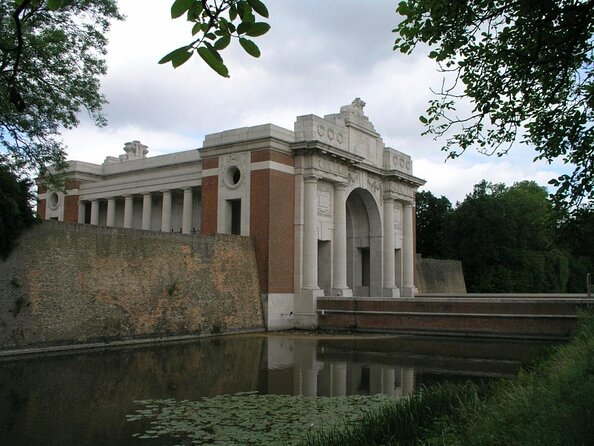
- Menin Gate provides a powerful finish: You attend the Last Post ceremony in Ypres before being returned to your hotel.
- This is best for serious history visitors: The pace is steady, the day lasts about 12 hours, and the focus is firmly on World War I.
Why this Australian battlefield tour works from Bruges
Bruges is a fine base for exploring Belgium’s canals and medieval streets, but it also works well for a day among the World War I sites of Flanders. The battlefields are spread across Belgium and nearby France, so seeing them independently would mean planning several separate drives, cemeteries and museum visits.
Here, your private air-conditioned minivan ties the sites together. Hotel pickup and drop-off are included, and the advertised start is 9 a.m. You spend the day with only your own group, rather than waiting for a large coach to load and unload.
That privacy matters. The experience includes several cemeteries and memorials where you may want to pause, ask a question or simply be quiet. Claude can adjust the discussion to your interests, which is useful if your family has a connection to a particular regiment, battle or cemetery.
The tour has a five-star rating from 15 reviews, with every listed recommendation positive. The strongest praise centers on Claude’s command of the battles and geography, careful driving, the included meal and the emotional power of the Menin Gate ceremony. The sample is not huge, so I would treat that record as encouraging rather than proof that every departure will feel identical.
More Flanders Fields memorial tours:
- From Bruges: Great War Flanders Fields Minibus Tour w/ Lunch
★ 4.9 · 1,257 reviews - Flanders Fields Remembrance Tour from Bruges
★ 4.5 · 207 reviews - From Bruges: Flanders Fields Remembrance Full-Day Trip
★ 4.8 · 65 reviews
Fromelles: beginning with the missing and the buried
The first major stop is the Museum of the Battle of Fromelles. Allow about 45 minutes here. The museum explains the Battle of Fromelles and the later recovery of 250 soldiers who were exhumed and reburied.
This is a strong opening because it moves the war away from dates and troop movements. The story becomes one of identification, burial and remembrance. If you have Australian family history, Fromelles may carry special weight.
You then go to Pheasant Wood Military Cemetery, where those 250 soldiers now rest. The visit lasts about 30 minutes and is free to enter. The cemetery is not simply another stop on a list. It gives a physical place to the recovery story you have just heard.
At Australian Memorial Park, you stand on the German lines and look toward the former no man’s land where Australian troops attacked on 19 July 1916. That viewpoint helps you grasp the distance between opposing positions, though the modern setting cannot recreate the wartime conditions.
The tour continues to VC Corner Australian Cemetery, described as the only cemetery in France reserved exclusively for Australians. You have about half an hour there, followed by Rue Pettilon Military Cemetery, another resting place for Australian soldiers.
These cemetery stops can feel repetitive if you are not interested in military history. For someone who wants to follow Australian service in detail, though, the sequence is useful. You see how the same offensive appears through a museum, battlefield position and burial ground.
Armentières, Ploegsteert and the road toward Messines
Between the formal stops, the drive passes through Armentières, including the location associated with the pub in the song Mlle from Armentières. This is a small detail, but it gives the day a welcome human and cultural pause.
You also pass near the Ploegsteert Memorial and Hill 63. These are drive-by views rather than full listed visits, so you should not expect a long walk or a detailed stop at each one. Their value comes from seeing how the route connects the wider sector before reaching Messines.
The road time is part of the experience. Claude uses the movement between sites to explain the geography, and the geography is crucial here. Flanders battles were not fought on an abstract map. Ridges, woods, roads and village positions affected what soldiers could see and how troops moved.
Messines Ridge and Hill 60: mines beneath the battlefield
At Messines Ridge, you stand where Australian troops attacked in June 1917. The visit takes about 30 minutes. The ridge matters because high ground shaped observation and artillery work, and Claude’s explanations help place the Australian action within the wider battle.
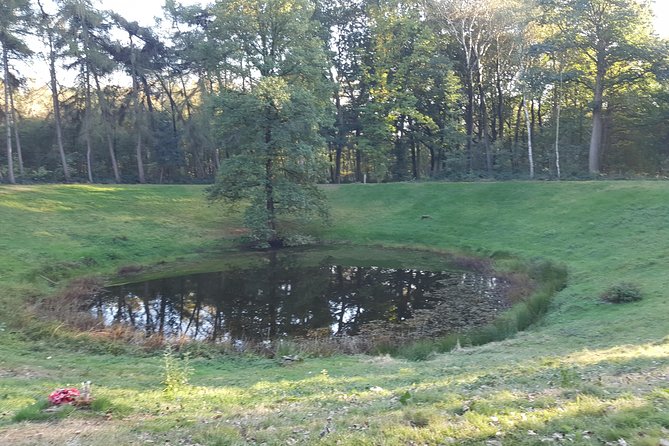
Hill 60 gives you about 45 minutes. You see the Caterpillar Mine Crater and the memorial to the 1st Australian Tunnelling Company. The crater is one of the tour’s most striking physical reminders of underground warfare.
The mine craters make an important point: World War I was not only fought across open fields. Men also worked below the surface, placing explosives under enemy positions. You can look across the ground and consider the scale of the work without needing a large museum display to make the point.
This stop may be especially useful if you are interested in engineering, tunnelling or battlefield archaeology. It is also one of the places where sturdy footwear and sensible outdoor clothing will help, although no special equipment is listed as required.
A few more Bruges half-days to weigh up
- Bruges: Small Group Boat Cruise and Guided Walking Tour
★ 4.8 · 4,102 reviews - Bruges: Walking Tour, Canal Boat Trip w/Beer Tasting Option
★ 4.4 · 2,759 reviews - Historical Walking Tour: Legends of Bruges
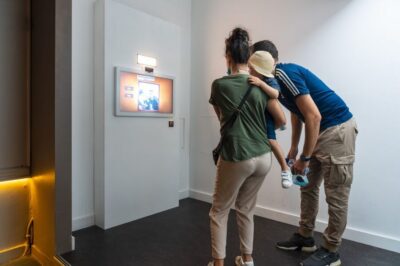
★ 5.0 · 2,541 reviews - Bruges: Choco-Story Chocolate Museum Guided Tour w/Tastings
★ 4.2 · 1,379 reviews
Polygon Wood and the ANZAC connection
At Polygon Wood, you see the memorial to the 5th Australian Division and the New Zealand Memorial. The stop lasts about 30 minutes.
This is also the place where the ANZAC Day dawn service takes place. That detail connects the site to a living tradition of remembrance, not only to the events of 1917. You are not attending the dawn service on this tour, but knowing how the site is used today adds meaning to the memorial visit.
The itinerary includes several Australian locations, but it does not ignore New Zealand’s role. The paired memorials at Polygon Wood give the stop a broader ANZAC context.
The main limitation is time. Thirty minutes is enough to see the memorials and hear an explanation, but not enough for an extended walk through every part of the wood. This tour favors range and connection across the region over a long stay at one site.
Passchendaele Museum: an hour indoors
The Passchendaele Museum is scheduled for one hour and is described as one of the most interesting World War I museums in Belgium. Admission is included.
After several outdoor sites and cemeteries, the museum offers a useful change of pace. You can take in objects and displays that help explain the fighting around Passchendaele, rather than relying only on the ground outside.
The hour should also be welcome if the weather turns cold or wet. One review specifically notes a cold day, while another describes the tour as long but worth every minute. That is a fair warning: Flanders weather can make outdoor stops more demanding, and a museum break helps.
I would not book this day expecting a light sightseeing outing. Even the museum portion asks you to focus on war, loss and difficult conditions. It is rewarding for history buffs, but less suitable if only one person in your group wants a serious military tour.
Tyne Cot: scale, names and silence
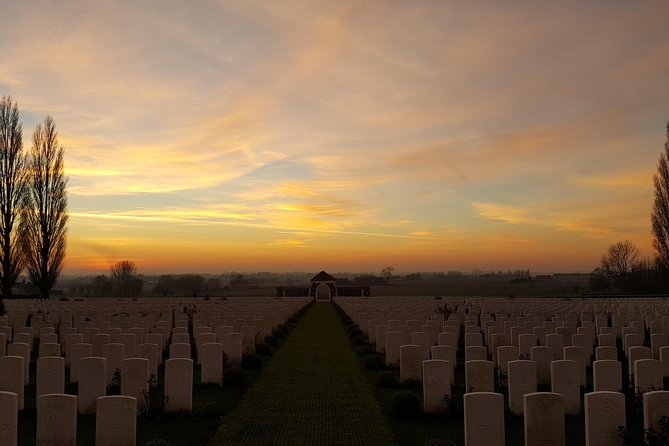
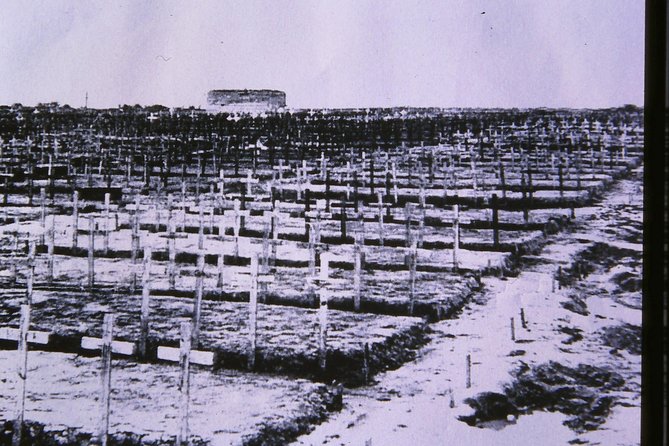
Tyne Cot Cemetery is the largest Commonwealth War Graves Commission cemetery. The memorial bears the names of 35,000 soldiers with no known grave, and you have about 30 minutes here.
That number is difficult to take in. The cemetery gives scale to the earlier personal stories from Fromelles, while the wall of names reminds you how many families never received a confirmed burial place.
You do not need a long lecture to understand why Tyne Cot is an essential stop. The setting, orderly graves and memorial names do much of the work. Claude’s role is to explain the site and connect it to the Australian units and battles already covered.
Half an hour is brief, but appropriate for a focused visit. If you prefer to read every inscription or spend long periods alone, you may find the schedule tight. If you want a clear introduction to the main memorial sites, the timing keeps the day moving.
Ypres Cloth Hall and an hour in town
The tour reaches Ypres, where you have about an hour around the main square. You can see the Cloth Hall, the cathedral and other notable buildings, with some free time in town.
This break adds a needed town element to a day otherwise built around battlefields and cemeteries. It also gives you room to pause before the evening ceremony. The Cloth Hall and cathedral help you see Ypres as a real city, not only as a name from a war map.
The one-hour stop is free time rather than a separate guided city tour. If you want to shop, sit down or take photographs, use the time carefully. Lunch is included earlier in the day, and alcohol is not included, though alcoholic drinks can be purchased.
The exact rhythm of the day depends on driving and the timing of the Last Post, so do not plan an elaborate independent activity in Ypres. The important part is to be in position for the ceremony.
Menin Gate and the Last Post
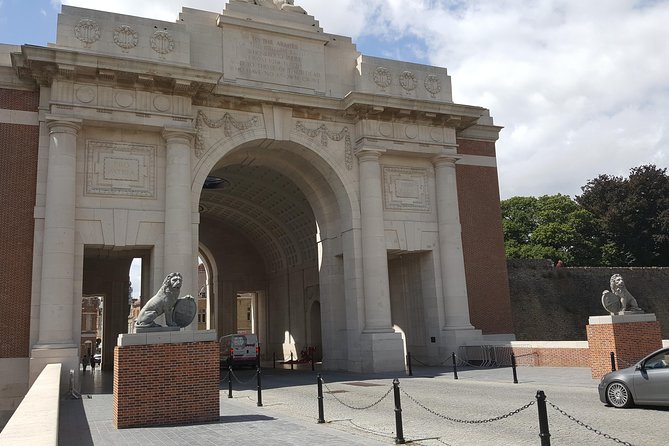
The tour ends beneath Menin Gate for the Last Post ceremony, with about an hour allocated to the stop. Afterward, Claude returns you to your hotel.
This is the emotional finish the rest of the itinerary builds toward. You have spent the day seeing battle positions, cemeteries, memorials and museum displays. At Menin Gate, remembrance becomes a public ceremony in the center of Ypres.
One of the clearest strengths of this tour is that you do not have to arrange your own return after the ceremony. You can give the event your full attention, then follow Claude back to Bruges.
The ceremony can be profoundly moving, but it may also make the day feel heavier than a normal sightseeing trip. That is not a flaw. It is simply part of choosing a tour centered on war remembrance.
What the $545.94 price includes
At $545.94 per person, this is not a budget excursion. It is a private tour, however, and the price includes a driver-guide, hotel pickup and drop-off, private transport, lunch, bottled water, local taxes and listed entrance fees.
The value improves as your group grows, since the experience is designed for your own party and offers group discounts. A minimum of two people is required, so it is not set up as a solo booking.
You are paying for more than transport between monuments. You are paying for a full day of route planning, battlefield interpretation and the ability to ask questions as you go. A self-guided visit could cost less, but you would need to organize the crossings between Belgium and France, identify the sites and build a route that reaches Menin Gate at the right time.
The included lunch also makes the long schedule easier. The meal has been arranged at the Brothers in Arms restaurant on previous departures, and it has been described as both enjoyable and interesting. The supplied information does not specify menu choices, so tell the provider about any needs when booking rather than assuming a particular meal.
Who should book this day?
I would choose this tour if you have Australian military family history, a strong interest in World War I or limited time in Bruges but want to reach the major Flanders sites.
It also suits you if you prefer personal explanation to a recorded guide. Claude is repeatedly praised for his understanding of the battles and geography, as well as safe driving and an easy manner. Those qualities matter on a 12-hour day in a private vehicle.
I would hesitate if you want a relaxed Belgian countryside outing, a short tour or a broad introduction to Belgium. The day is tightly packed and emotionally serious. You will visit many cemeteries, and several stops involve standing outdoors while listening and looking across former battle positions.
Wear comfortable shoes and prepare for changing weather. The tour provides bottled water and an air-conditioned minivan, but the schedule still involves outdoor visits at memorials, cemeteries and battlefield sites.
Should you book the Australian Battlefields Private Tour?
Book it if you want a focused Australian World War I experience with a guide who can connect Fromelles, Messines, Hill 60, Polygon Wood, Passchendaele, Tyne Cot and Ypres into one story.
The strongest reason to choose it is the combination of private transport and serious battlefield explanation. The strongest reason to pause is the price and the demanding length. For two or more people who value military history, the included lunch, admissions, hotel service and tailored attention make the cost easier to justify.
If Menin Gate and Australian service in Flanders are priorities, this is a well-shaped day. If you only have a passing interest in the war, choose a lighter excursion instead.
FAQ
Where does the Australian battlefields tour begin?
The tour begins in Bruges, with hotel pickup offered. The listed start time is 9 a.m.
How long does the experience last?
The tour lasts approximately 12 hours, including the battlefield visits, museum stops, time in Ypres and the Last Post ceremony.
Is this a private tour?
Yes. Only your group participates, and the tour is operated as a private activity.
How many people are required to book?
A minimum of two people per booking is required.
Is lunch included?
Yes. Lunch is included in the tour price. Alcoholic drinks are not included, but they are available to purchase.
Are museum entrance fees included?
Yes. Admission is included for the Museum of the Battle of Fromelles and the Passchendaele Museum. The other listed cemetery and memorial visits are free.
Does the tour visit Menin Gate?
Yes. You attend the Last Post ceremony beneath Menin Gate in Ypres, then receive transport back to your hotel.
Which Australian World War I sites are visited?
The route includes Fromelles, Pheasant Wood Military Cemetery, Australian Memorial Park, VC Corner Australian Cemetery, Rue Pettilon Military Cemetery, Messines Ridge, Hill 60, Polygon Wood, Passchendaele Museum and Tyne Cot Cemetery.
Is hotel transportation provided?
Yes. Hotel pickup and drop-off are included, along with private transportation in an air-conditioned minivan.
Can the tour be cancelled?
You can cancel up to 24 hours before the experience start time for a full refund. Cancellations or changes made less than 24 hours before the start time are not accepted for a refund.
Just added around Bruges
- Best of Brussels Private Tour from Zeebrugge or Bruges★ 4.0 · 3 reviews
- Private taxi Transfer from Bruges to Amsterdam★ 5.0 · 3 reviews
- Bruges Photo Session By a Pro★ 5.0 · 3 reviews
- Private 3-hour walking tour of Bruges with official tour guide★ 4.0 · 3 reviews
- BeerWalk Bruges (French guide)★ 5.0 · 3 reviews
- Brussels: Private & Customizable Day Trip to Bruges★ 5.0 · 3 reviews
- Private: Discover Bruges beers & brewery with chocolate pairing by a young local★ 5.0 · 3 reviews
- Bruges: Ticket Volkskundemuseum (Folk Museum)★ 5.0 · 3 reviews
Bruges Tours, compared.
Small Group Boat Cruise and Guided Walking Tour
Read our review →
Walking Tour, Canal Boat Trip w/Beer Tasting Option
Read our review →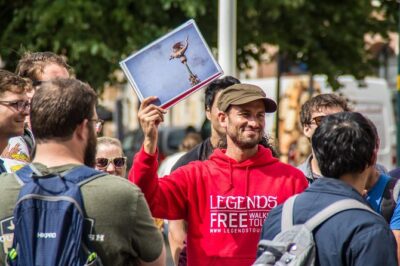
Choco-Story Chocolate Museum Guided Tour w/Tastings
Read our review →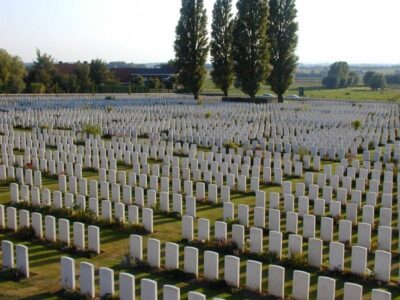
From Bruges: Great War Flanders Fields Minibus Tour w/ Lunch
Read our review →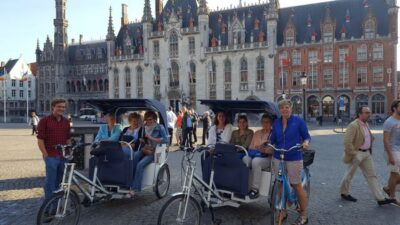

Belgian Waffle-Making Workshop with Beer Tasting
Read our review →
Browse the lists this tour appears in