
Reviewed · BRUGES TOURS
Frietmuseum Entrance Ticket
Bruges has museums for art, lace, chocolate, and history. It also has one devoted to the humble potato. The Frietmuseum follows the potato from Peru, where it originated more than 10,000 years ago, to Belgium’s famous fries. The final stop is a medieval cellar where you can buy a serving for yourself.
I like the unusual subject and the setting inside the historic Saaihalle, one of Bruges’ prettiest old buildings. I also like that the visit is easy to fit into a sightseeing day: the museum takes about 40 minutes to an hour, and the English audioguide helps you move through the displays at your own pace.
The main thing to know is that this is a self-guided museum with a lot of reading. Some displays are playful and child-friendly, while others may feel basic to adults. The fries are not included with admission, so budget separately if the cellar tasting is part of your plan.
Key points to know before you go
- Potatoes come first: The ground floor explains the potato’s origins in Peru and its journey toward becoming a world food.
- Fries take center stage upstairs: The first floor focuses on the history of fries and how they became linked with Belgium.
- The medieval cellar is the payoff: You can buy and eat fries at the end, but food and drinks cost extra.
- The building adds character: The museum occupies the historic Saaihalle, an attractive setting in central Bruges.
- English support is provided: Audioguides are included, making the self-guided format easier to follow.
- Plan on about an hour: It is a compact stop, best used between larger Bruges sights or on a rainy afternoon.
Why a museum about fries works in Bruges
Belgian fries are more than a snack grabbed between sightseeing stops. They are part of the country’s everyday food culture, and the Frietmuseum gives you a chance to look at that tradition before eating it.
The subject is deliberately narrow. You will not find a large collection of priceless art or grand historical objects. Instead, the museum builds a story around one ingredient and one dish. That makes it a light, accessible break from Bruges’ churches, paintings, and medieval architecture.
I find the most interesting part is the change in scale. The museum begins with a crop from South America, then moves through the potato’s spread and the development of fries, before ending with a practical question: how do you serve and eat them properly?
This approach is especially useful if you are curious about food culture. You get context for something you might otherwise treat as a quick lunch. It also gives children a simple story to follow, since the museum connects a familiar food to geography, history, and local habits.
Still, you should set your expectations correctly. The Frietmuseum is not a hands-on cooking class, and it is not a guided tasting tour. The museum is mainly self-guided, with displays and reading material spread across several floors.
A few more Bruges half-days to weigh up
- Bruges: Small Group Boat Cruise and Guided Walking Tour
★ 4.8 · 4,102 reviews - Bruges: Walking Tour, Canal Boat Trip w/Beer Tasting Option
★ 4.4 · 2,759 reviews - Historical Walking Tour: Legends of Bruges
★ 5.0 · 2,541 reviews
The Saaihalle gives the visit an old Bruges setting
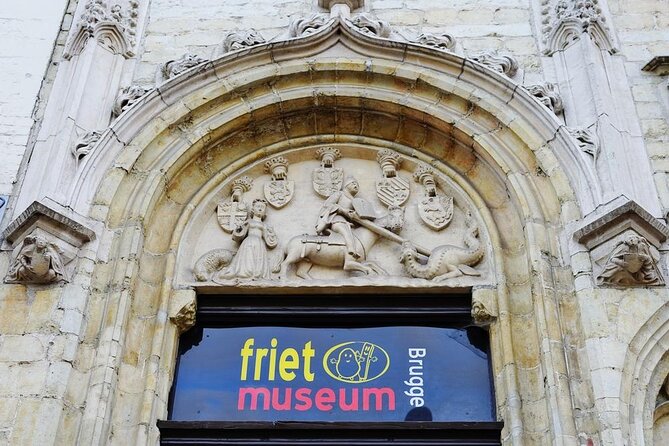
The museum is housed in the Saaihalle, a historic building known as one of the prettiest in Bruges. That matters because the building gives the experience a sense of place that a modern food exhibit would lack.
You move through an old urban structure rather than a purpose-built visitor center. The museum’s three levels create a natural progression, with the potato story on the ground floor, the fries story above it, and the food stop below.
The building is part of the appeal, but older architecture can also mean stairs and a less straightforward layout. The supplied information does not specify detailed accessibility arrangements, so you should check directly if you have particular mobility needs.
The museum is near public transportation, and it is open every day from 10 a.m. to 5 p.m. The last tickets are sold at 4:15 p.m. I would not arrive near closing, since the self-guided format requires enough time to read and move through the floors.
Ground floor: from Peru to the potato on your plate
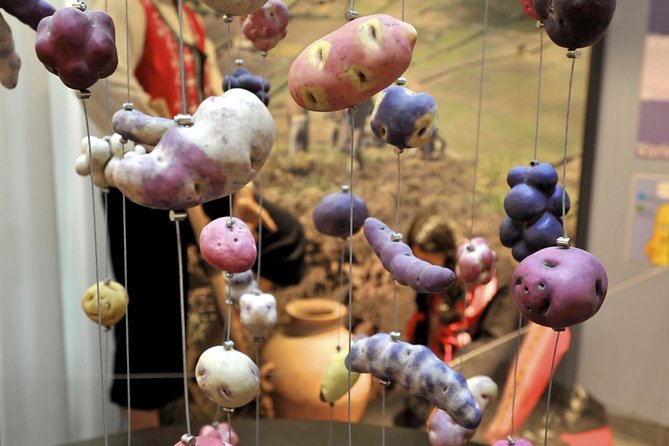
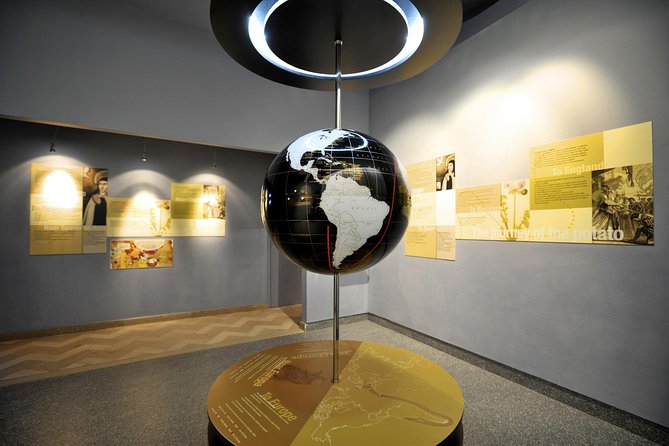
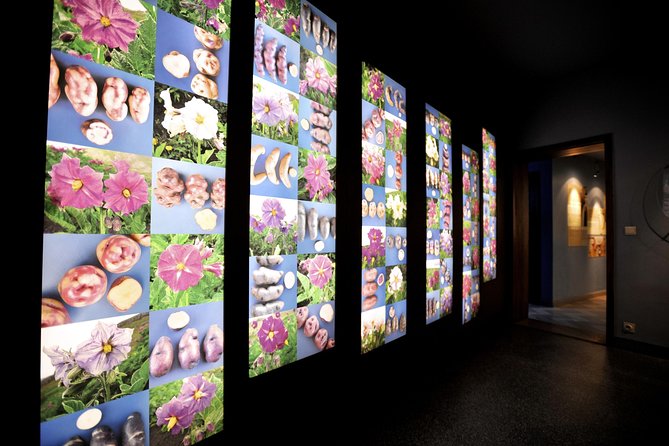
Your visit begins with the potato. The museum explains that this crop originated in Peru more than 10,000 years ago, then sets up the story of how it became a central food in Europe and beyond.
This first section gives the fries story useful context. Before you think about cutting, cooking, or serving potatoes, you see that the ingredient has a much longer journey behind it.
The material is educational rather than dramatic. If you enjoy reading about food origins, you may find this section more satisfying than expected. If you came mainly for a quick snack, it may feel like a slow start.
That difference is important. The Frietmuseum works best when you give the subject a little attention. It is not simply a decorative stop before lunch. The museum wants you to understand the ingredient first, then follow it toward the Belgian specialty.
The English audioguide is included with admission. Since the visit is self-guided, the audioguide gives you an alternative to relying only on written panels. English-language support is a practical advantage for international visitors, especially when several floors contain information to take in.
First floor: how fries became Belgian
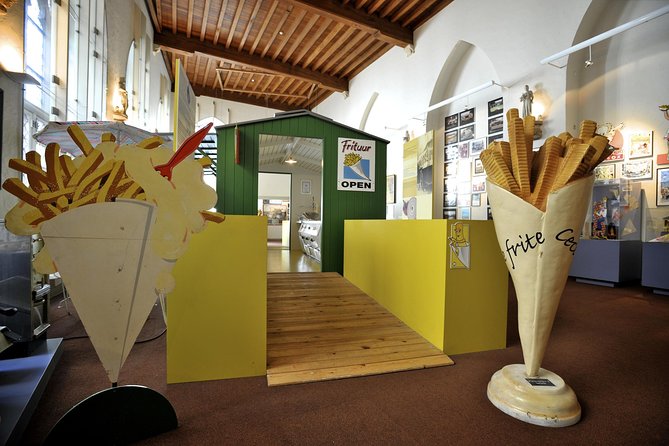
The first floor turns from the potato itself to the history of fries. Here you learn how fries came to Belgium and why they became such an important national culinary specialty.
This is the section most people are probably waiting for. It connects the museum’s opening story to the food you can order later in the cellar. The point is not just that Belgium sells fries, but that the dish has a particular place in Belgian identity.
The museum also gives tips on eating fries like a local. That practical angle helps keep the visit from becoming a purely historical display. You can leave with a better idea of how to approach the dish, then test those ideas downstairs.
Expect a fair amount of reading. One of the central limitations of the museum is that the self-guided route depends heavily on written information. Some visitors will appreciate being able to set their own pace. Others may find the amount of text tiring, especially if they are hoping for interactive displays throughout.
The presentation is designed to suit different ages. Some exhibits are playful and child-focused, while the historical material is more serious. Families may appreciate that mix, though adults looking for sophisticated museum design could find parts of it fairly simple.
Same city, a completely different way to spend a day:
- Bruges: Choco-Story Chocolate Museum Guided Tour w/Tastings
★ 4.2 · 1,379 reviews - From Bruges: Great War Flanders Fields Minibus Tour w/ Lunch
★ 4.9 · 1,257 reviews - Bruges: Guided Rickshaw Tour
★ 4.9 · 1,199 reviews - Round-Trip Shuttle Service from Zeebrugge to Bruges
★ 4.0 · 1,143 reviews
The medieval cellar: buy the fries at the end
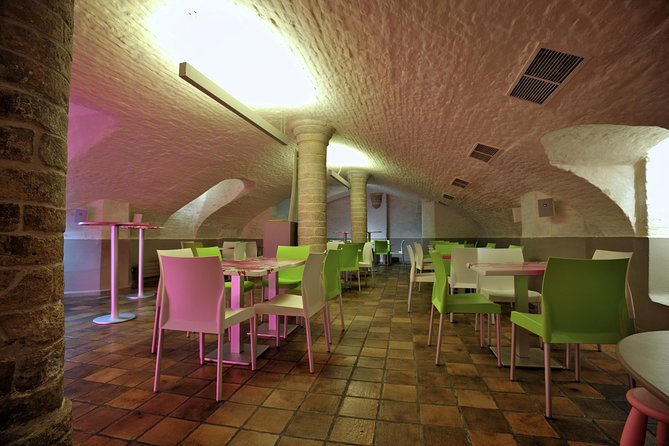
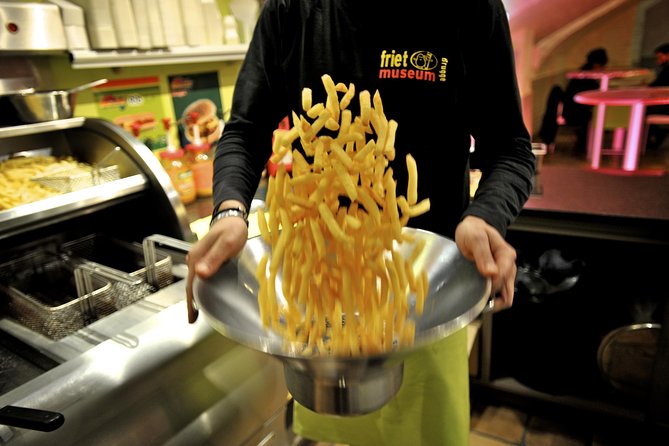
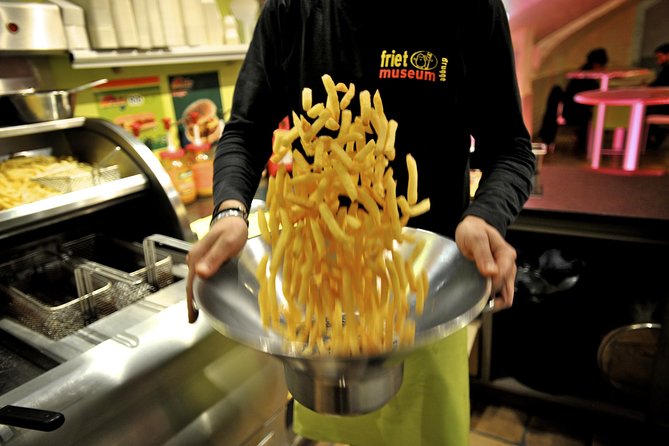
The museum’s basement contains medieval cellars where fries are available to purchase. This is the edible finish to the visit, but it is important to understand the pricing: admission includes the museum and audioguides, not food or drinks.
That distinction has caused some disappointment for people expecting a tasting to be part of the ticket. If you want to sample the fries, plan to pay separately at the cellar. Think of it as an optional food stop rather than an included museum feature.
The cellar is a good place to end because it turns the museum’s subject into lunch or a snack. You have just followed the potato’s story, learned about fries in Belgium, and received tips on eating them. Now you can try a serving while the information is still fresh.
The fries are widely regarded as a strong part of the experience, and the food stop is one of the clearest reasons to visit even if the displays are not your main interest. If you are already planning to eat fries in Bruges, adding the museum beforehand gives that meal a little more meaning.
You should also be realistic about the timing. The museum itself can take 40 minutes to an hour, but eating in the cellar will add time. If you have a tight schedule for a canal tour or another timed attraction, do not assume the entire visit will fit into exactly 40 minutes.
How much value do you get for $14.44?
At about $14.44 per person, the ticket is not a bargain-basement attraction. The value depends on how much you enjoy food culture, museum reading, and the chance to finish with fries.
For a family, the ticket can work as a short, weather-proof activity with a clear theme. Children can follow the potato-to-fries story, and the lighter displays may hold their attention better than a traditional art museum. The cellar gives the visit a reward at the end, although the food costs extra.
For adults, the value is more conditional. If you want a polished, interactive museum with many rare objects, this may feel thin for the price. If you like unusual museums and want to understand a Belgian food tradition, the ticket is easier to justify.
The one-hour format helps. You are not committing half a day or losing an entire afternoon. I would compare the price with the cost of another short attraction in Bruges and ask whether the subject appeals to you. If it does, the combination of history, setting, and optional food makes the ticket reasonable. If you are indifferent to fries, the museum may not offer enough variety.
The average booking lead time is about 13 days. That suggests some advance planning, but the museum is also open daily, so you may be able to fit it around the rest of your Bruges schedule. Confirmation is provided at booking, and the activity has a maximum group size of 15 people, though the visit itself remains self-guided.
Who will enjoy this most?
I would recommend the Frietmuseum to several kinds of visitors:
- Food-focused visitors who want more than a quick meal and enjoy learning where a dish comes from.
- Families with children looking for a short indoor activity with simple, playful displays.
- Rainy-day sightseers who need a compact museum stop in central Bruges.
- Repeat visitors to Bruges who have already seen the major churches and art museums.
- Curious first-time visitors who enjoy odd, highly specific museums.
It is less suited to you if you dislike reading, expect a live guide, or want a tasting included in the ticket. The museum does not appear to offer a structured cooking demonstration or a full meal as part of admission.
The maximum group size of 15 may make entry feel more manageable than a large tour, but do not confuse that with a guided group experience. You use the audioguide and move through the museum independently.
Planning the visit around Bruges
The daily opening hours make the museum fairly easy to place in a Bruges itinerary. It opens at 10 a.m. and closes at 5 p.m., with last tickets at 4:15 p.m. I would aim for late morning or midafternoon, leaving enough time for the cellar afterward.
A rainy morning is a particularly sensible use of the museum. It gives you an indoor activity without demanding a major time commitment, and you can come out ready for lunch.
If you are visiting with children, allow more than the shortest advertised time. Children may move quickly through the reading, but the cellar meal and stops for photos can stretch the visit. If you are reading the panels closely and using the audioguide, an hour is a more comfortable estimate.
The museum is near public transportation. The information provided does not name a specific tram or bus stop, so check a current local map before setting out. Since the attraction is in Bruges, it also fits naturally into a day spent exploring the historic center.
Keep the cancellation terms in mind when booking: you can cancel for a full refund up to 24 hours before the scheduled start time. Changes or cancellations made within 24 hours are not accepted for a refund, based on local time.
What the experience gets right
The strongest feature is the clear path from ingredient to finished food. You are not asked to absorb unrelated material. Each floor contributes to the same question: how did the potato become Belgian fries?
The setting is another strength. A historic building makes the visit feel connected to Bruges rather than interchangeable with a food museum in any city.
The English audioguide is useful because the museum is self-guided and text-heavy. It lets you choose how much information you want without needing to follow a scheduled group.
The fries at the end also matter. They are not included, but having food available on site keeps the experience practical. You can finish with a snack instead of leaving hungry and searching for another place immediately.
Finally, the museum fills a useful gap in a Bruges itinerary. Many of the city’s best-known sights require more time, more concentration, or better weather. This one gives you a short indoor stop with a distinctly Belgian theme.
Where you may feel let down
The museum’s narrow subject is both its charm and its weakness. A whole museum about fries is a fun idea, but it has limits. If the displays do not hold your attention, there is no second topic to carry you through.
The amount of reading can also slow the experience. The audioguide helps, but this is still not an attraction built entirely around hands-on activity. Adults may find some displays aimed more at children than at serious food historians.
The separate cost of the fries is another point to plan for. The ticket gets you into the museum, but the cellar purchase is extra. I would not book this expecting an included tasting.
There has also been at least one reported booking problem in which a prepaid reservation was not immediately recognized at the entrance, leading to confusion about payment. This appears to have involved the connection between booking systems rather than the museum’s usual process. Bring your confirmation details and allow a little patience at entry, especially if your reservation is not found right away.
Should you book the Frietmuseum?
Book it if you like unusual museums, want a short rainy-day activity, or plan to make Belgian fries part of your Bruges experience. The visit offers a clear food story, an attractive historic setting, English audioguides, and the option to finish with fries in medieval cellars.
Skip it if you want a major museum, a live guide, or a tasting included in the ticket. At $14.44, the attraction works best when you value the theme itself rather than expecting a large collection.
My practical choice would be to visit when the weather is poor or when you have a spare hour near the historic center. Read as much as interests you, use the audioguide, and keep money aside for the fries. That combination gives you the experience at its best: part food lesson, part quirky Bruges stop, and part snack break.
FAQ
Where is the Frietmuseum located?
The Frietmuseum is in Bruges, Belgium, inside the historic Saaihalle building.
How long does a visit take?
Allow approximately 40 minutes to one hour for the museum visit. Extra time is useful if you plan to buy and eat fries in the cellar.
What are the museum’s opening hours?
The Frietmuseum is open every day from 10 a.m. to 5 p.m. The last tickets are sold at 4:15 p.m.
Is an audioguide included?
Yes. Audioguides are included with admission, and the experience is offered in English.
Are fries included in the admission price?
No. Food and drinks are not included. Fries are available to purchase separately in the medieval cellars.
What does the museum explain?
The ground floor covers the potato’s origins in Peru more than 10,000 years ago. The first floor explains the history of fries and how they came to Belgium.
Can children visit the museum?
Yes. Children must be accompanied by an adult. Most visitors can participate, and some displays are designed to appeal to children.
Is the museum near public transportation?
Yes. The Frietmuseum is near public transportation.
Can I cancel my booking for a refund?
Yes. You can cancel at least 24 hours before the scheduled start time for a full refund. Cancellations or changes made less than 24 hours before the start time are not accepted for a refund.
Just added around Bruges
- Private taxi Transfer from Bruges to Amsterdam★ 5.0 · 3 reviews
- Bruges Photo Session By a Pro★ 5.0 · 3 reviews
- Best of Brussels Private Tour from Zeebrugge or Bruges★ 4.0 · 3 reviews
- Private 3-hour walking tour of Bruges with official tour guide★ 4.0 · 3 reviews
- BeerWalk Bruges (French guide)★ 5.0 · 3 reviews
- Brussels: Private & Customizable Day Trip to Bruges★ 5.0 · 3 reviews
- Private: Discover Bruges beers & brewery with chocolate pairing by a young local★ 5.0 · 3 reviews
- Bruges: Ticket Volkskundemuseum (Folk Museum)★ 5.0 · 3 reviews
Bruges Tours, compared.

Small Group Boat Cruise and Guided Walking Tour
Read our review →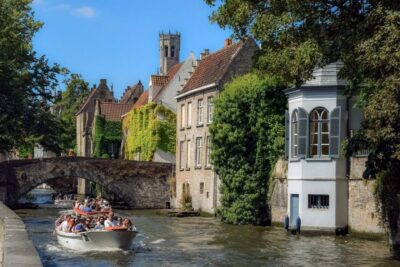
Walking Tour, Canal Boat Trip w/Beer Tasting Option
Read our review →
Choco-Story Chocolate Museum Guided Tour w/Tastings
Read our review →
From Bruges: Great War Flanders Fields Minibus Tour w/ Lunch
Read our review →
Belgian Waffle-Making Workshop with Beer Tasting
Read our review →
Browse the lists this tour appears in