
Reviewed · BRUGES TOURS
Bruges: Ticket Gruuthusemuseum
The best reason to visit the Gruuthusemuseum is not one single object. It is the way the palace brings Bruges’ past into focus, room by room, through manuscripts, lace, sculpture, porcelain, stained glass, and grand wall hangings. The late 15th-century oratory is the star, linking the former palace to the Church of Our Lady.
I especially like two things here. First, you get a clear sense of how Louis van Gruuthuse shaped his world around status, faith, art, and curiosity. Second, the balcony view gives you a fresh angle on Bruges, including the famous bridge and the Church of Our Lady. The main drawback is practical: this old building has many stairs and changes in floor level, so it is not suitable for people with mobility impairments.
Key points to know before you go
- The 15th-century oratory links palace and church: This is the museum’s most unusual architectural feature.
- The balcony delivers the visual payoff: Look toward the famous bridge and the Church of Our Lady.
- Louis van Gruuthuse shapes the story: His motto, There’s more in you, captures the palace’s spirit of ambition and curiosity.
- The collection covers five centuries: Expect manuscripts, lace, sculpture, porcelain, stained glass, and historic furnishings.
- A $17 ticket can fill a useful part of your Bruges day: You receive one day of museum access without committing to a guided schedule.
- Plan around stairs: The historic layout creates access limits for visitors with mobility impairments.
Why Gruuthuse Palace makes sense in Bruges
Bruges can sometimes feel like a beautiful stage set. You walk beside canals, cross old bridges, and admire decorated façades, but it is not always easy to see how people lived behind those façades. The Gruuthusemuseum helps solve that problem.
This is a city palace tied to Louis, or Lodewijk, van Gruuthuse. His motto, There’s more in you, gives the visit a useful theme. Bruges was not simply a place of merchants and churches. It was also a city of wealthy households, religious devotion, artistic taste, international goods, and careful displays of rank.
I like that the museum tells this story through objects rather than long explanations alone. A manuscript suggests learning and private devotion. Fine lace points to patient craft. Chinese porcelain hints at far-reaching trade and the desire to own unusual things. A wooden sculpture can feel personal and direct, while stained glass changes the mood of an entire room.
You should not expect a fast collection of famous masterpieces with a guide rushing you from one label to the next. This is a self-guided museum visit. Your ticket is valid for one day, so you can take your time and decide how closely you want to look.
A few more Bruges half-days to weigh up
- Bruges: Small Group Boat Cruise and Guided Walking Tour
★ 4.8 · 4,102 reviews - Bruges: Walking Tour, Canal Boat Trip w/Beer Tasting Option
★ 4.4 · 2,759 reviews - Historical Walking Tour: Legends of Bruges
★ 5.0 · 2,541 reviews
Inside the palace, objects tell Bruges’ story
The museum’s appeal comes from variety. The collection includes majestic wall hangings, stained-glass windows, wooden sculptures, lace, Burgundian manuscripts, and Chinese porcelain. That range keeps the visit from becoming visually flat.
The wall hangings help you picture rooms before modern decoration made interiors more uniform. They were useful, decorative, and expensive. When you see them alongside furniture and other household objects, the palace feels less like an empty shell and more like a place designed to impress.
The stained glass adds another layer. It is not just decoration placed behind glass cases. It shows how color, light, and symbols could shape a room. Depending on the daylight, the effect can change as you move through the building.
The wooden sculptures are worth slowing down for. They offer a direct connection to the religious life of Bruges, but they also show the skill involved in carving expressive figures from a hard material. Look closely at faces, clothing, and gestures rather than treating them as background decoration.
The lace collection is another strong part of the visit. Bruges is closely associated with lace, and here you can consider the labor behind a finished piece. Fine lace can look delicate from a distance, but its patterns demand close attention. This is one place where you benefit from moving slowly.
The Burgundian manuscripts bring you into the world of books made for wealthy owners. Their decoration reflects money, time, and learning. You might find that these objects say as much about the owner’s identity as about the religious or literary material inside them.
Chinese porcelain rounds out the collection with a reminder that Bruges was connected to goods from beyond northern Europe. The point is not simply that an exotic object reached the city. It is that people in Bruges valued such objects enough to display and preserve them.
The oratory and its view into the Church of Our Lady
The most memorable architectural moment comes at the authentic late 15th-century oratory. This small space links the palace with the Onze-Lieve-Vrouwekerk, or Church of Our Lady.
That connection matters. It shows how private wealth and public religious life could sit almost side by side. The oratory allowed the palace and church to connect in a way that was practical, symbolic, and highly visible.
The view toward the church’s Gothic chancel is the kind of detail that makes the admission feel worthwhile. You are not simply looking at a reconstructed room or a church from the street. You are seeing the relationship between two historic buildings from a very particular position.
I would save this section for a quiet moment. The museum has plenty of objects competing for attention, but the oratory works best when you pause and look through the opening toward the church. It is an architectural view, not just a photo stop.
You may also want to visit the Church of Our Lady separately if you have time. The museum ticket includes entrance to the Gruuthusemuseum, not a general list of every nearby attraction. The oratory gives you a special connection and view, but you should not assume it replaces a full visit to the church.
The balcony is the museum’s big visual reward
After the palace interiors and church connection, the balcony gives you a chance to look outward. From here, you can see some of Bruges’ most recognizable spots, including the famous bridge and the Museum of the Church of Our Lady.
This view is valuable because Bruges can be confusing at street level. Narrow lanes, canals, roofs, towers, and church buildings often overlap. From the balcony, the city’s shape becomes easier to read. You can connect the buildings you have passed with the historic center around you.
The balcony also gives you a different kind of museum experience. Instead of looking at an object from the past, you look at the city itself as a surviving historic setting. The view helps explain why this location mattered and why a wealthy family would want its home here.
Bring your camera, but remember that flash photography is not allowed. A flash can harm delicate objects and disturb the atmosphere in small rooms. At the balcony, take a little time to identify the bridge and the Church of Our Lady rather than grabbing one quick picture and moving on.
The view was the most praised feature in the available feedback, along with the way the museum explains Bruges’ history. That matches the experience’s strongest quality: the museum gives you both close-up detail indoors and a wide view outside.
Same city, a completely different way to spend a day:
- Bruges: Choco-Story Chocolate Museum Guided Tour w/Tastings
★ 4.2 · 1,379 reviews - From Bruges: Great War Flanders Fields Minibus Tour w/ Lunch
★ 4.9 · 1,257 reviews - Bruges: Guided Rickshaw Tour
★ 4.9 · 1,199 reviews - Round-Trip Shuttle Service from Zeebrugge to Bruges
★ 4.0 · 1,143 reviews
How long should you allow?
The ticket is valid for one day, but the supplied information does not set a fixed visit duration. That is useful if you are building a flexible day in Bruges. You can visit at your own pace and fit the museum around other plans.
I would treat it as a substantial stop rather than a quick glance through a few rooms. The number of different collections means you can spend longer with the pieces that interest you and move faster through sections that do not.
The building’s stairs and level changes also affect your pace. Even if you have no mobility difficulty, an old palace does not offer the smooth, simple flow of a modern museum. Give yourself time to adjust as you move between rooms.
If your Bruges schedule is tight, focus on three things: the palace collection, the oratory, and the balcony. Those sections give you the clearest sense of the experience. If you have more time, slow down for the manuscripts, lace, sculpture, and porcelain.
Is the $17 price good value?
At $17 per person, the ticket is reasonably priced if you want more than outdoor views of Bruges. You are paying for entry to a historic city palace, a broad collection, the oratory connection, and access to the balcony.
The value is strongest for visitors who enjoy places that explain a city through everyday luxury, religious objects, household decoration, and architecture. You do not need to be an art specialist. The objects work as clues, and the building gives the clues a setting.
The value is weaker if you only want a panoramic viewpoint. The balcony is a highlight, but it is part of a museum visit, not a separate observation deck. You should be ready to spend time indoors with historic objects.
The ticket also offers flexibility. You can reserve now and pay later, and cancellation is free up to 24 hours before the visit for a full refund. These terms matter if your Bruges plans are still shifting, though you should check current availability and starting times when booking.
Children under 13 can obtain a free ticket at the box office. For children, the museum may work best as a short, focused visit built around the balcony, oratory, and unusual objects such as porcelain and decorated manuscripts.
Who will enjoy this museum most?
I would recommend the Gruuthusemuseum to you if you like historic houses, church architecture, decorative arts, or the story of how wealthy people lived. It also suits anyone who wants a break from walking the streets without leaving the center of Bruges’ historic character.
The museum is particularly useful for first-time visitors who want context. Bruges’ beauty is easy to admire, but the palace helps you understand the people, tastes, and beliefs behind that beauty.
It may be less satisfying if you prefer a guided tour with a named expert explaining every room. No guide name is provided for this experience, and the ticket is for museum entrance rather than a guided walk. You will need to read, observe, and set your own pace.
Accessibility is the key limitation. The museum is less suitable for people with physical disabilities because of its many stairs and level differences. Pets are not allowed, although assistance dogs are permitted. Large bags and luggage are also not allowed, so avoid arriving with heavy items.
Bring a passport or ID card for children, especially if you plan to use the child ticket arrangement at the box office. Flash photography is prohibited.
Should you book the Gruuthusemuseum?
Book it if you want to connect Bruges’ postcard views with the people and objects that shaped the city. The oratory and balcony give the visit two memorable moments, while the palace collection fills in the story between them.
I would make this a strong choice for an art-minded visitor, a first-time Bruges visitor, or anyone who wants a thoughtful indoor stop during a day of sightseeing. At $17, it offers enough variety to justify the price, especially if you take your time.
Skip it if your visit is focused only on canals and street views, or if stairs and uneven levels would make the building uncomfortable. For everyone else, the museum gives Bruges something its streets cannot: a look inside the city’s private world, followed by a view back out across the place that made that world possible.
FAQ
What does the Gruuthusemuseum ticket include?
The ticket includes entrance to the Gruuthusemuseum.
How long is the ticket valid?
The ticket is valid for one day. Check availability for the available starting times.
How much does admission cost?
The listed price is $17 per person.
Can I cancel the booking?
Yes. You can cancel up to 24 hours in advance for a full refund.
Can I reserve now and pay later?
Yes. The reserve now and pay later option lets you book without paying immediately.
Are children under 13 admitted free?
Children under 13 can obtain a free ticket at the museum box office.
Can I bring luggage or a large bag?
No. Luggage and large bags are not allowed inside.
Is the museum suitable for people with mobility impairments?
No. The historic building has many stairs and level differences, so it is less suitable for people with physical disabilities.
Just added around Bruges
- Private taxi Transfer from Bruges to Amsterdam★ 5.0 · 3 reviews
- Bruges Photo Session By a Pro★ 5.0 · 3 reviews
- Best of Brussels Private Tour from Zeebrugge or Bruges★ 4.0 · 3 reviews
- Private 3-hour walking tour of Bruges with official tour guide★ 4.0 · 3 reviews
- BeerWalk Bruges (French guide)★ 5.0 · 3 reviews
- Brussels: Private & Customizable Day Trip to Bruges★ 5.0 · 3 reviews
- Private: Discover Bruges beers & brewery with chocolate pairing by a young local★ 5.0 · 3 reviews
- Bruges: Ticket Volkskundemuseum (Folk Museum)★ 5.0 · 3 reviews
Bruges Tours, compared.
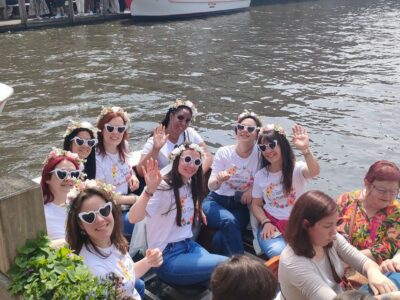
Small Group Boat Cruise and Guided Walking Tour
Read our review →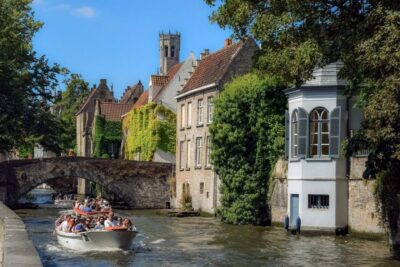
Walking Tour, Canal Boat Trip w/Beer Tasting Option
Read our review →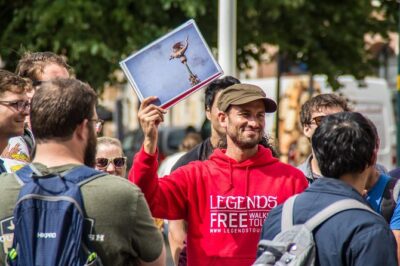
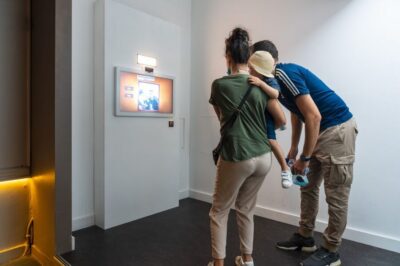
Choco-Story Chocolate Museum Guided Tour w/Tastings
Read our review →
From Bruges: Great War Flanders Fields Minibus Tour w/ Lunch
Read our review →

Belgian Waffle-Making Workshop with Beer Tasting
Read our review →
Browse the lists this tour appears in