
Reviewed · BRUGES TOURS
Bruges: Ticket Groeningemuseum (Groeninge Museum)
The Groeningemuseum gives you a compact way to understand Bruges through art. Its greatest draw is the group of Flemish Primitive paintings, including works linked to Jan van Eyck and Hans Memling, but the museum continues into Belgian modern art with Magritte, Delvaux, and post-war painters. I like the clear six-century sweep and the useful QR codes, which help you look beyond a painting’s title. I also like the seats placed for quiet study.
The main drawback is timing. The museum closes at 17:00, so a late afternoon visit can feel rushed. The booking setup may also require attention to the selected time, and one visitor found the fixed appointment inconvenient. Check the details before you set out.
Key points
- Six centuries in one visit: Follow Bruges and Belgian art from the late Middle Ages through the 20th century.
- Flemish Primitive masterpieces: See works associated with Jan van Eyck, Hans Memling, and Hieronymus Bosch.
- Strong modern section: Look for René Magritte, Paul Delvaux, Georges Van Tongerloo, and Marcel Broodthaers.
- Helpful ways to look closer: Use the audio guide and QR codes, then take your time on the museum seating.
- Plan before 17:00: The early closing time matters if you want to read labels and study the major paintings.
- Good value at $17: The ticket covers the museum entrance for one day, with free admission at the box office for children under 13.
Why the Groeningemuseum matters in Bruges
Bruges is often introduced through canals, medieval streets, and ornate buildings. The Groeningemuseum adds the missing piece: it shows why this city became so important in European painting, especially in the late 15th and early 16th centuries.
The museum’s collection is built around artists from the Low Countries. Many worked in Bruges or nearby centers when oil painting was becoming more detailed, more natural, and more emotionally direct. This is the world of the Flemish Primitives, a name used for painters whose careful surfaces, sharp textures, and layered symbolism changed European art.
I like this setting because the museum is not only a parade of famous names. It lets you see how local artistic traditions changed over time. Medieval religious paintings lead to history scenes, portraits, flower pieces, large canvases, modern experiments, and post-war abstraction.
The building has a fairly simple appearance rather than the grand scale of a major national museum. That can be an advantage. You are less likely to feel swallowed by an enormous collection, and you can give real attention to the works that interest you.
More Museums in Bruges
- Bruges: Choco-Story Chocolate Museum Guided Tour w/Tastings
★ 4.2 · 1,379 reviews - Choco-Story: The Chocolate Museum in Bruges
★ 4.0 · 544 reviews - Bruges: Chocolate Making Workshop and Chocolate Museum Entry
★ 4.6 · 395 reviews
Starting with Van Eyck, Memling, and Bosch
The strongest reason to book this ticket is the chance to spend time with the Flemish Primitive collection. Jan van Eyck, Hans Memling, and Hieronymus Bosch represent very different sides of northern European painting, yet they belong to the same broad story of close observation, religious thought, and ambitious craftsmanship.
Van Eyck is the name many people come to see. His work rewards patience. Instead of standing back for a quick glance, move closer where permitted and study the small details: surfaces, faces, fabrics, and the way light is handled. The appeal is not just that the pictures are old. It is the sense that every part has been considered.
Memling offers another view of Bruges’ artistic peak. His paintings are known for their calm, polished appearance and careful portrait work. I suggest you compare his handling of people with Van Eyck’s. That simple exercise makes the collection easier to remember and helps you see that the Flemish Primitives were not one single style.
Bosch brings a stranger, more imaginative mood. His work can be packed with unusual figures and moral warnings, so it deserves more than a passing look. If you are visiting with someone who thinks old religious art will be dull, Bosch may change their mind quickly.
The museum does not require you to arrive as an art expert. A good approach is to choose a few works and give them several minutes each. You will get more from three carefully studied paintings than from racing through every room.
From devotional paintings to grand canvases
The collection widens after the early masterpieces. You will find historical items, flower paintings, and monumental canvases by Jacob van Oost. These later works help explain how Bruges artists adapted to new tastes and subjects.
Jacob van Oost is useful for showing the scale of the change. The smaller, intensely detailed paintings of the earlier period are joined by larger compositions designed to make a strong visual impact. Look at how the figures are arranged, how the eye is guided across the canvas, and how the use of color differs from the older works.
The flower pieces provide a pleasant change of pace. They are not simply decorative filler. Still-life painting can reveal what artists and patrons valued, from botanical detail to signs of wealth and seasonal beauty. After the seriousness of religious and historical scenes, these works give your eyes a quieter subject.
The historical paintings also make the collection feel less narrowly medieval. They connect Bruges to the wider European habit of using art to tell stories from religion, politics, and the past. You might not love every large canvas, but the variety keeps the visit from becoming one-note.
Seating is an important practical detail here. A French visitor specifically appreciated the chairs that let you take time with the art and read comfortably. I agree with that approach. Use the seats rather than treating them as emergency furniture. A short pause can help you notice details that disappear when you keep walking.
Bruges neoclassical art from the 18th and 19th centuries
The museum also follows Bruges artists into the neoclassical period. Joseph-Benoît Suvée and Jean Bernard Duvivier began their careers in Bruges and later gained international recognition for history paintings and refined portraits.
This section may be less familiar than the Flemish Primitive rooms, which makes it valuable. Famous names can dominate a museum visit, but the neoclassical works show Bruges as a place with an artistic life beyond its medieval high point.
History painting often asks you to read the scene. Who is important? What event is being shown? Why are the figures posed that way? Portraits call for a different kind of attention, especially in the treatment of clothing, expression, and status.
If you enjoy seeing how art reflects changing taste, give this period proper time. The polished finish and controlled compositions can feel very different from Bosch’s strange energy or Van Eyck’s close detail. That contrast is one of the museum’s strengths.
The collection also helps correct a common mistake: thinking Bruges stopped being creatively important after the age of the Flemish Primitives. The later galleries show a city and region still connected to international art.
Same city, a completely different way to spend a day:
- Bruges: Small Group Boat Cruise and Guided Walking Tour
★ 4.8 · 4,102 reviews - Bruges: Walking Tour, Canal Boat Trip w/Beer Tasting Option
★ 4.4 · 2,759 reviews - Historical Walking Tour: Legends of Bruges
★ 5.0 · 2,541 reviews - From Bruges: Great War Flanders Fields Minibus Tour w/ Lunch
★ 4.9 · 1,257 reviews
Edmond van Hove, Khnopff, and Flemish expressionism
The 19th and early 20th century rooms bring another shift. Here you may encounter Edmond van Hove, Ferdinand Khnopff, and Emile Claus, followed by Flemish expressionists such as Constant Permeke, Gustave De Smet, Frits Van de Woestyne, and James Ensor’s fellow modernists in the Belgian tradition.
This is where I recommend slowing down again. Expressionist works often do not aim for the same smooth illusion as older paintings. Shapes may feel heavier, colors more forceful, and faces or bodies less idealized. If you expect every painting to look polished in the Van Eyck manner, the change may surprise you.
That difference is exactly the point. The museum lets you watch artists break from earlier rules. You can compare the controlled portrait with the more personal or distorted modern image. You can also see how Belgian artists responded to broader European changes without losing their own regional character.
The name Khnopff signals a more inward, symbolic mood, while Emile Claus is associated with a lighter, more atmospheric approach. The expressionists then bring a stronger physical presence. You do not need to memorize every artist. Pick one painting from each approach and ask what changed in the way the artist wants you to look.
This section is especially useful for people who have already seen Bruges’ medieval center and want a fuller picture of Belgium. It gives the city a modern voice.
Magritte, Delvaux, and art after 1945
The final part of the collection reaches into modern and post-war art. René Magritte and Paul Delvaux bring two very recognizable Belgian styles, while Georges Van Tongerloo adds a more abstract direction.
Magritte is the obvious draw for many people. His art plays with ordinary objects, language, dreams, and expectation. Seeing his work in the same museum as the Flemish Primitives creates an interesting link: both demand close attention, but Magritte makes you question what you think you are seeing.
Delvaux offers a different mood, often strange and dreamlike in another way. Van Tongerloo’s work shifts attention away from recognizable people and places toward structure and form. This makes the later galleries a useful test of your own taste. You are not expected to admire every work equally.
The museum also houses the complete editions of Marcel Broodthaers’ printed works. That is an important feature for anyone interested in artists’ books, printed matter, and the way modern art can challenge the usual idea of a painting.
The post-war works of Raoul De Keyser and Roger Raveel continue the story. Their presence means the collection does not stop at the familiar names of early modern Belgium. It reaches into later artistic questions and shows that the museum is still interested in how art changes.
Audio guide, QR codes, and a comfortable pace
You can use an audio guide during your visit, and one French visitor described the system as effective. QR codes also provide extra documentation for selected works. These tools matter because the museum covers such a long span of time. Without some context, you may see a series of attractive paintings without understanding why the collection moves from one style to the next.
I would not try to listen to or read everything. Choose the works that catch your attention, then use the audio guide or QR code to add context. This keeps the visit personal rather than turning it into a test.
The seating is another quiet advantage. You can sit while reading, compare details, or simply rest your feet. That makes the museum easier to enjoy than a place where every stop must be brief.
There is no named personal guide included with this ticket. You are booking entry to the museum, with the audio and digital material available as aids. If you want a fully guided tour led by a person, this is not described as that kind of experience.
The museum also presents temporary exhibitions, focused displays, and research projects. These change over time, so the exact visit can vary. If a temporary exhibition is important to you, check the current program before booking.
Is $17 a fair price for one day?
At $17 per person, the ticket is a fair buy if you care about art and plan to give the museum enough time. You are paying for access to a collection that covers six centuries and includes major names from both early Flemish painting and modern Belgian art.
The value is strongest when you visit with a plan. Arrive early enough to see the Flemish Primitive works without rushing, then continue through the later galleries. A quick walk through the museum still gives you a taste, but it does not make full use of the ticket.
Children under 13 can obtain a free ticket at the box office. Remember to bring a passport or ID card for children, as this is listed among the items required for the visit.
The ticket is valid for one day. It does not describe a multi-day museum pass or a guided program. Check the available starting times when booking, and keep the 17:00 closing time in mind. A morning or early afternoon visit is the safer choice.
Free cancellation is available up to 24 hours in advance, and you can reserve now and pay later. Those terms help if your Bruges plans are still shifting, but they do not remove the need to check the appointment details. One person abandoned the visit after finding the fixed meeting arrangement inconvenient, so read the booking instructions carefully.
What to know before you enter
The museum is wheelchair accessible. Large bags and luggage are not allowed, so do not arrive with your main suitcase or an oversized day bag. Assistance dogs are allowed, but other pets are not.
Flash photography is prohibited. That is easy to follow and protects the paintings, but check any other photography rules at the museum itself before taking pictures.
The attraction is listed as a one-day activity rather than a fixed-length tour. You can choose how long to stay within the available opening period. Since the collection includes major early works, later Belgian art, and changing exhibitions, I would avoid placing it at the end of a crowded sightseeing day.
A sensible visit has three stages:
- Start with the Flemish Primitive paintings and give the major works your best attention.
- Continue through the neoclassical, 19th century, and expressionist rooms to see the change in style.
- Finish with Magritte, Delvaux, Van Tongerloo, Broodthaers, De Keyser, and Raveel, using the QR codes or audio guide for the works you want to understand better.
That order follows the museum’s broad historical story, though the exact display may change with exhibitions.
Who should book the Groeningemuseum?
I would recommend this ticket to you if you want more than a quick photo stop in Bruges. It suits people who enjoy painting, anyone curious about Flemish art, and visitors who want a quieter cultural hour or two away from the city streets.
It is also a good choice for mixed groups. One person can focus on Van Eyck, another on Magritte, and someone else can simply enjoy the flower pieces or large canvases. The QR codes, audio guide, and seating make it easier for each person to set their own pace.
You may want to skip it if your Bruges visit is extremely short, if you dislike art museums, or if you cannot arrive before the 17:00 closing time. The collection is not designed for a rushed final stop.
Should you book it?
Book the Groeningemuseum if you want to connect medieval Bruges with modern Belgium in one focused museum visit. At $17, the ticket offers good value, especially for the Flemish Primitive masterpieces and the later works by Magritte, Delvaux, and other Belgian artists.
Go early, use the seats, and do not try to consume every label. If you give the museum a calm stretch of time, it rewards you with a clear view of how Bruges’ art changed across six centuries.
FAQ
How long is the Groeningemuseum ticket valid?
The ticket is valid for one day. You can check availability for the available starting times when booking.
What does the ticket include?
It includes entrance to the Groeningemuseum.
How much does admission cost?
The listed price is $17 per person.
Can children under 13 enter for free?
Yes. Children under 13 can obtain a free ticket at the box office. Bring a passport or ID card for children.
Is the museum wheelchair accessible?
Yes, the Groeningemuseum is wheelchair accessible.
Can I cancel the booking?
Yes. You can cancel up to 24 hours in advance for a full refund. You can also reserve now and pay later.
Just added around Bruges
- Private taxi Transfer from Bruges to Amsterdam★ 5.0 · 3 reviews
- Bruges Photo Session By a Pro★ 5.0 · 3 reviews
- Best of Brussels Private Tour from Zeebrugge or Bruges★ 4.0 · 3 reviews
- Private 3-hour walking tour of Bruges with official tour guide★ 4.0 · 3 reviews
- BeerWalk Bruges (French guide)★ 5.0 · 3 reviews
- Brussels: Private & Customizable Day Trip to Bruges★ 5.0 · 3 reviews
- Private: Discover Bruges beers & brewery with chocolate pairing by a young local★ 5.0 · 3 reviews
- Bruges: Ticket Volkskundemuseum (Folk Museum)★ 5.0 · 3 reviews
Bruges Tours, compared.

Small Group Boat Cruise and Guided Walking Tour
Read our review →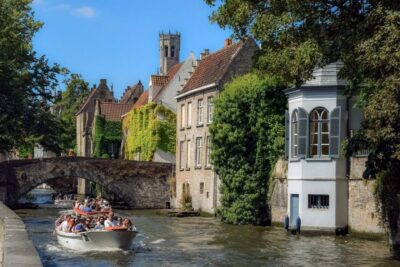
Walking Tour, Canal Boat Trip w/Beer Tasting Option
Read our review →
Choco-Story Chocolate Museum Guided Tour w/Tastings
Read our review →
From Bruges: Great War Flanders Fields Minibus Tour w/ Lunch
Read our review →

Belgian Waffle-Making Workshop with Beer Tasting
Read our review →
Browse the lists this tour appears in