
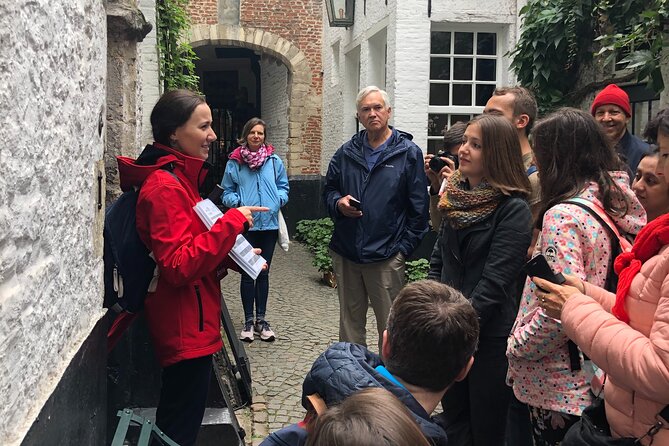
Reviewed · ANTWERP TOURS
Private Historical Tour: Legends of Antwerp
Antwerp’s best stories are tucked into its old stones: a giant at the river castle, severed hands on city souvenirs, a painter’s Baroque playground, and a tiny lane that feels lifted from the Middle Ages. This private walking tour connects those details into a lively two-hour introduction, beginning at Grote Markt and ending beside the Cathedral of Our Lady.
I like the private format, which lets your guide adjust the pace for your group, and I like the focus on legends rather than dry dates. Guides such as Beren, Luc D, Joske, Flip, and Pearson have each been singled out for making the city’s past easy to follow. The main drawback is simple: you cover a lot on foot, often over cobblestones, and the price of $105.82 per person is easier to justify for a small group than for one or two people.
Key points before you book
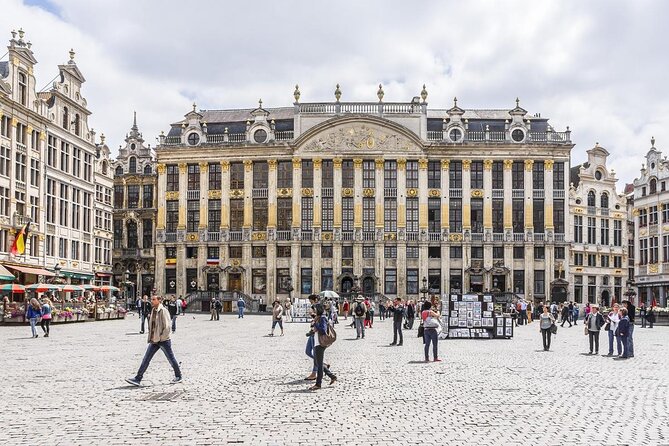
- Antwerp’s hand legend gets center stage: Learn why hands became the city’s symbol and how the giant story fits in.
- A private guide sets the pace: Your group alone takes part, with room for questions and adjustments.
- The route links major old-town sights: Grote Markt, Het Steen, Vleeshuis, Carolus Borromeus Church, Vlaeykensgang, the cathedral, and Plantin-Moretus all fit into the walk.
- Rubens appears in the streets as well as the museums: You pass the Rubens House and hear about the painter’s life and work in Antwerp.
- The tour is story-led, not admission-led: The listed stops are viewed from outside, so plan separate museum visits if you want to go indoors.
- It suits history-minded walkers: You need to be comfortable walking for about two hours on old city paving.
Why Antwerp’s legends make a useful introduction
Antwerp can feel confusing on a first visit. Its grand square, riverfront castle, cathedral, shopping streets, museums, and quiet medieval lanes do not all tell the same story at first glance.
This tour gives you a thread to follow. You begin with the city’s identity, move through its medieval and Golden Age past, then finish with art, printing, religion, and trade. I like that order because it helps you see Antwerp as more than a collection of handsome buildings.
The tour also tackles the questions that make a place memorable. Why is Antwerp linked with giants? Why do hands appear on signs and souvenirs? How did the city become one of Europe’s richest centers in the 16th century, and what caused its later decline?
Those questions are more useful than a string of construction dates. They give you small stories to carry through the rest of your stay. The guide’s job is to connect the symbols and buildings to the city’s changing fortunes.
Because the activity is private, you are not sharing the walk with a large group. That matters in narrow spots such as Vlaeykensgang, where a guide can pause, explain, and let your group look around without trying to keep up with a crowd. It also means the guide can change the pace, a detail that proved especially useful for one private group whose guide adjusted the walk to suit them.
More History Tours in Antwerp
- Historical Walking Tour: Legends of Antwerp
★ 5.0 · 1,837 reviews - Antwerp: Historical Walking Tour in the Old City
★ 4.8 · 373 reviews - Private tour: Highlights & History of Antwerp
★ 5.0 · 299 reviews
Grote Markt: start with giants and city power
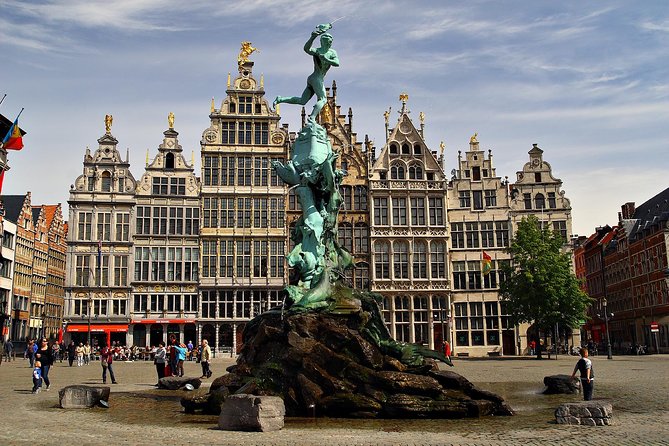
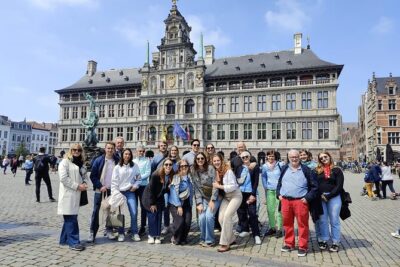
The tour begins in Grote Markt, Antwerp’s grand central square. This is the right place to get your bearings, since the square brings together the city’s civic pride, old wealth, and legends in one view.
Allow about 15 minutes here. Your guide introduces Antwerp’s origins, its Golden Age, and the reasons for its decline. The story of the city’s wealth is especially important. Antwerp’s success in the 16th century was tied to trade and commerce, and the square gives you a natural setting for understanding how a port city became a major European center.
The guide also explains the city’s famous hand symbol and the legend of the giant. These are not throwaway details. Once you know the story behind the hands, you will recognize the symbol around Antwerp instead of seeing it as a random logo.
The square is open and easy to reach, and no admission ticket is needed. It can also be a good place to ask your guide what deserves a return visit later, since the tour moves at a brisk pace and does not include lengthy stops inside attractions.
Het Steen and the riverfront past
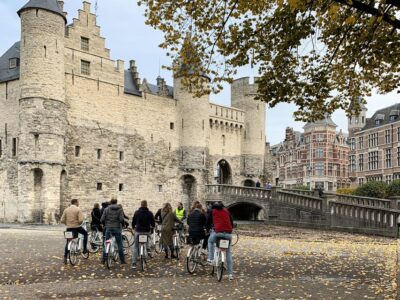
From Grote Markt, the route continues to Het Steen, known in English as the Stone Castle. The stop lasts about 10 minutes and introduces you to the oldest building in the city.
Het Steen has served several functions over the centuries, and its link with a famed giant adds another layer to the city’s folklore. The guide explains how the building’s role changed over time rather than treating it as a single frozen medieval monument.
This is a short stop, so expect an explanation and an exterior look rather than a full castle visit. That distinction matters. The tour is designed to show you the setting and tell the story, not to provide museum admission at each location.
For a first visit, this brief pause is valuable because it ties Antwerp’s legends to its physical setting near the water. You begin to see the city as a place shaped by trade, defense, storytelling, and movement along the river.
Vleeshuis and Antwerp’s guild traditions

The next stop is Museum Vleeshuis, the old Butcher’s Hall. The tour allows around five minutes here, making it one of the quickest pauses on the route.
Vleeshuis was the city’s oldest guild house, and its past was not genteel. The guide touches on the building’s long and often bloody connection with the butchers’ trade. That gives you a glimpse of how medieval urban life worked, when craft guilds controlled trades and public buildings often had a practical purpose.
This is a good example of the tour’s compact style. You get context for the building, but you will not have time for a full museum visit. If medieval trades, guilds, or the museum’s collections interest you, mark Vleeshuis for a separate visit.
I find these short stops useful when a guide makes the point clearly. They keep the walk moving and prevent the tour from becoming a series of long lectures. The tradeoff is that visitors who want detailed museum interpretation will need more time later.
More history walks around Antwerp:
- Historical Walking Tour in Antwerp Old City
★ 5.0 · 277 reviews - Antwerp: Private 3-Hour Historical Sightseeing Walking Tour
★ 4.8 · 70 reviews - TukTuk tour through historic Antwerp of 1.5 hours
★ 5.0 · 36 reviews - Antwerp: Private Historical Highlights Walking Tour
★ 4.9 · 36 reviews
Carolus Borromeus Church and Rubens’s Antwerp
The route then reaches Carolus Borromeus Church, one of Antwerp’s notable Baroque buildings. Plan on about 10 minutes here.
The church is linked with Peter Paul Rubens, Antwerp’s most famous painter. The guide explains that it was once a place where Rubens worked and played a role in the city’s artistic life. That connection helps you understand why Antwerp is so strongly associated with Baroque art.
The stop also gives you a change of architectural mood. Grote Markt and Het Steen carry medieval and civic associations, while Carolus Borromeus brings in the grandeur of the later Catholic and artistic city. You are not just walking through old streets. You are watching Antwerp’s priorities change from defense and trade to religion, art, and display.
The tour then passes the Farmers Tower and Meir shopping street on the way to the Rubens House. The route does not list an indoor visit to the Rubens House, so you should expect to see the setting and hear about Rubens’s life and work rather than tour the house as part of the two-hour activity.
That is still useful if you are deciding how to spend the rest of your day. The guide gives you the background needed to appreciate a separate Rubens museum visit, should you choose one.
Vlaeykensgang: a small lane with a medieval feel
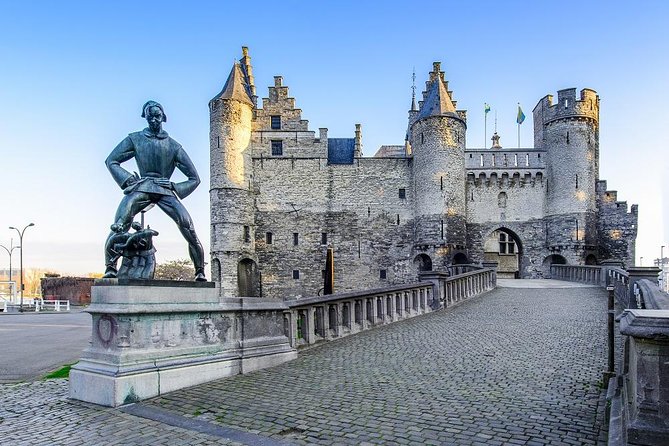
Vlaeykensgang is one of the most atmospheric moments on the route. The tour takes about 10 minutes to pass through Antwerp’s smallest street, offering a sharp contrast with the open square and broad shopping street.
Here, the appeal is scale. The narrow passage makes the medieval city feel close and personal. You get a sense of how different Antwerp would have been before wide roads, modern shops, and large public spaces reshaped daily movement.
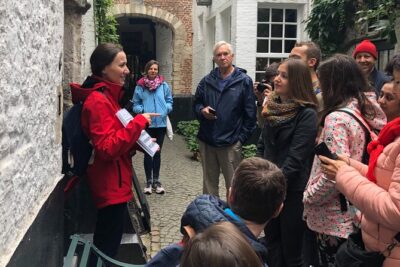
This is also where the private format earns its keep. A narrow lane is easier to appreciate when you can stop with your own group and listen without blocking a large organized party. Your guide can also answer quick questions about what you are seeing.
The paving deserves attention. One guide specifically noted that you should be comfortable walking on cobblestones. Wear shoes with a firm sole, keep your pace steady, and do not expect a smooth, flat stroll from start to finish.
The Cathedral of Our Lady and the final legends
The tour ends at the Cathedral of Our Lady, with about 15 minutes devoted to its history and old legends. This is a strong finish because the cathedral gathers several themes from the walk: faith, civic pride, art, and the city’s long memory.
The cathedral is described as majestic, and you end at Handschoenmarkt, about 50 meters from the main square. That makes the finish convenient for a meal, further sightseeing, or a return to Grote Markt.
The guide’s talk here focuses on the cathedral’s past and legendary stories from long-forgotten times. You should not expect an extended interior tour based on the stated route. Instead, you get a final piece of storytelling in front of one of Antwerp’s defining landmarks.
The location also makes practical sense. If you want to visit the cathedral afterward, you can do so separately. If your group has had enough walking, you are already back in the old center and close to public transportation.
Plantin-Moretus and the city’s printing age
The route also includes a stop outside Museum Plantin-Moretus, after passing through the fashion quarter and fashion district. The stop takes about 10 minutes.
Plantin-Moretus is tied to the birth of industrial printing, an important part of Antwerp’s commercial and intellectual life. This broadens the tour beyond castles, churches, and painters. It shows how books, printed material, and business helped spread ideas and support the city’s influence.
Again, the listed experience provides an exterior stop and explanation rather than museum entry. That is worth remembering when planning your day. If printing, publishing, or the Plantin family interests you, reserve separate time for the museum.
The fashion district adds another modern contrast. Antwerp is not only a medieval city preserved for sightseeing. It has also become known for fashion, and this part of the walk connects the old center with a more current side of the city.
What the private format is really worth
The price is $105.82 per person, and the value depends heavily on your group size. For a larger private group, the cost buys a dedicated guide, a fixed two-hour route, and the ability to ask questions without competing with strangers.
For a couple, the per-person price is harder to defend if you mainly want a quick orientation. You could see several of these landmarks independently from the outside. The added value comes from the stories, the order of the route, and the guide’s ability to explain why each place matters.
The guide quality will naturally vary. Several named guides, including Beren, Luc D, Joske, Flip, and Pearson, have been praised for being personable, flexible, and clear. Beren is particularly associated with detailed explanations of Antwerp, the hand symbol, and the Red Star Line’s history. The Red Star Line is not listed as a scheduled stop, so treat that as a possible conversational bonus rather than part of the promised route.
There is also one caution to keep in mind. One account found the guide too forceful, too fond of asking questions, and not always accurate on every fact, including the Jewish community of Antwerp. That is a useful reminder to ask for clarification if a point sounds uncertain. A private tour gives you the chance to guide the conversation toward the subjects that matter to you.
Timing, meeting point, and walking demands
The tour lasts about two hours and starts at Grote Markt, 2000 Antwerpen. It ends at Handschoenmarkt, beside the Cathedral of Our Lady, around 50 meters from the main square.
The route is close to public transportation, and optional hotel pickup is offered for convenience. Confirm the pickup arrangement when booking if you want to use it, since the stated meeting point remains Grote Markt.
There are several departure choices, which helps you fit the walk around a museum visit or meal. Confirmation is normally provided at booking. If you book within three days of the date, confirmation can take up to 48 hours and depends on availability.
Most people can take part, and service animals are allowed. Still, the practical issue is the surface under your feet. Cobblestones and narrow old lanes are part of the setting, so comfortable walking shoes are a smart choice.
The route has no listed admission fees, but that does not mean the tour takes you inside every building. Treat it as a guided outdoor walk with historical commentary. Add separate admission and time if you want to explore the cathedral, Rubens House, Vleeshuis, or Plantin-Moretus from within.
Who should book Legends of Antwerp?
I would choose this tour if you want a fast but meaningful first look at Antwerp and prefer stories to a museum-style lecture. It is especially well suited to people who enjoy legends, urban history, architecture, Rubens, trade, and the way a city changes over time.
It also works well for families or friends who want to stay together. A private guide can adjust the pace, answer personal questions, and spend more time on the subjects your group actually cares about.
You may want another option if you dislike walking on cobblestones, want extensive interior visits, or prefer a very quiet guide who does not ask many questions. The route covers a lot in two hours, so it is an orientation rather than a full study of Antwerp.
Should you book this Antwerp walking tour?
Book it if you want the city’s major old-town sights tied together by memorable stories. The hand symbol, the giant legend, Het Steen, Rubens, the tiny Vlaeykensgang lane, and Plantin-Moretus give you plenty to look for after the guide has finished.
The strongest reasons to book are the private format, the short two-hour length, and the flexible pace. The main reasons to hesitate are the price for a very small group, the lack of listed interior admissions, and the need to walk comfortably over old paving.
For a history-minded group arriving in Antwerp for the first time, I think it is a sensible way to get oriented. Come ready to walk, ask questions, and treat the tour as the beginning of your Antwerp visit, not the whole thing.
FAQ
Where does the tour begin?
The tour begins at Grote Markt, 2000 Antwerpen, Belgium.
Where does the tour end?
It ends at Handschoenmarkt, in front of or near the Cathedral of Our Lady. The ending point is about 50 meters from the main square.
How long does the tour last?
The walking tour lasts approximately two hours.
Is the tour private?
Yes. Only your group participates in the activity.
What language is offered?
The tour is offered in English.
Are museum admission tickets included?
The listed inclusion is a tour guide. The route stops at or passes by several museums, but admission tickets are not listed as included.
Can I cancel for a refund?
You can cancel up to 24 hours before the experience start time for a full refund. Cancellations or changes made less than 24 hours before the start time are not accepted for a refund.
Just added around Antwerp
- Guided E-kickscooter tour: The big five of Antwerp★ 5.0 · 3 reviews
- Antwerp: Help the Lost Boy – Self-Guided Mystery Walk★ 4.5 · 3 reviews
- Surprise tour of Antwerp guided by a Local★ 5.0 · 3 reviews
- Antwerp Private Tour From Brussels★ 4.7 · 3 reviews
- Discover Antwerp while playing! Escape game – The alchemist★ 4.5 · 4 reviews
- Discover Antwerp with this Outside Escape city game tour!★ 5.0 · 4 reviews
- Children’s escape game in the city of Antwerp – Peter Pan★ 4.0 · 4 reviews
- Landed On Time 60 min. Max 1 Person★ 4.0 · 5 reviews
Antwerp Tours, compared.

Guided Bike Tour: 2 Hours Highlights of Antwerp
Read our review →

Browse the lists this tour appears in