
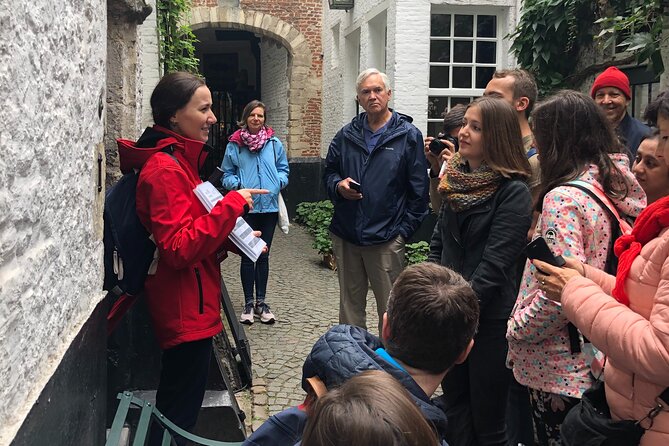
Reviewed · ANTWERP TOURS
Historical Walking Tour: Legends of Antwerp
Antwerp’s best stories are packed into a compact old-town walk: a giant’s severed hand in the Brabo Fountain, Rubens’s grand Baroque world, a secret medieval alley, and a little dog-and-boy statue that draws admirers from far beyond Belgium. This tour gives you that framework before you start exploring on your own.
I like the excellent first-day orientation and the way the route joins major sights with odd corners you could easily miss. I also like the guides’ personal style. Arie, Luc, Beren, Gaston, Marc, and others are praised for clear storytelling, humor, and practical local advice. The main drawback is the group size, which can reach 35 people. On a hot day or a noisy street, hearing every word may take effort.
Key points to know before booking
- Grote Markt to the Cathedral: The route links Antwerp’s main old-town sights without wasting time on long transfers.
- Legends with real context: You hear the stories behind Brabo, Nello and Patrasche, Rubens, printing, fashion, and Antwerp’s trading past.
- Several interiors may be included: Carolus Borromeus Church, Handelsbeurs, and parts of Museum Plantin-Moretus can be visited during opening hours.
- The price is unusually low: It is listed at $3.62 per group of up to six, with the tour described in guest feedback as tip based.
- Expect a walking and standing tour: Wear comfortable shoes, and take heat, rain, crowds, and group audio into account.
- A useful finish: The guide ends near the Cathedral of Our Lady with suggestions for the rest of your Antwerp stay.
Why this is a smart first look at Antwerp
Antwerp can feel easy at first. The old center is compact, the streets are walkable, and the main squares are close together. Yet the city’s story is not simple. It moves from medieval trade and religious power to the 16th-century commercial boom, Rubens’s art, Flemish literature, printing, fashion, and modern tourism.
That is where a guided walk earns its keep. Instead of seeing a handsome square as just a place for photographs, you learn what happened there and why the buildings look the way they do. The route also helps you decide where to spend more time later.
The tour lasts about two hours. Most of the listed stops take between five and ten minutes, with fifteen minutes at the Cathedral. The rest of the time goes to walking, gathering the group, and moving through the streets. You cover a useful section of the historic center without turning the morning into a forced march.
The route begins at Grote Markt and finishes at Handschoenmarkt, in front of the Cathedral of Our Lady. That makes it practical for a first morning in Antwerp. You get your bearings, learn the basic story of the city, and end close to major sights you may want to visit independently.
More History Tours in Antwerp
- Antwerp: Historical Walking Tour in the Old City
★ 4.8 · 373 reviews - Private tour: Highlights & History of Antwerp
★ 5.0 · 299 reviews - Historical Walking Tour in Antwerp Old City
★ 5.0 · 277 reviews
Grote Markt and the story of Antwerp’s giant
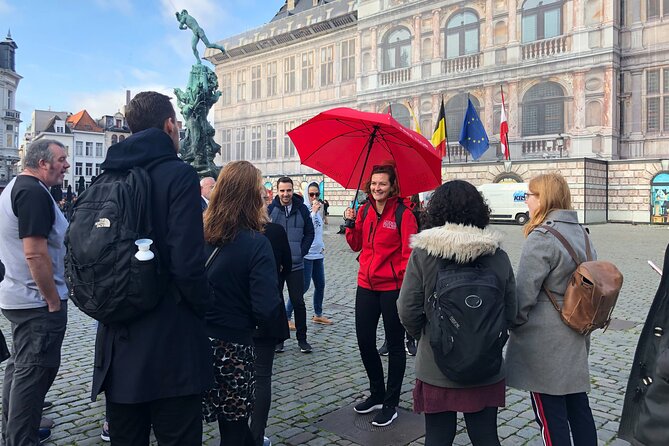
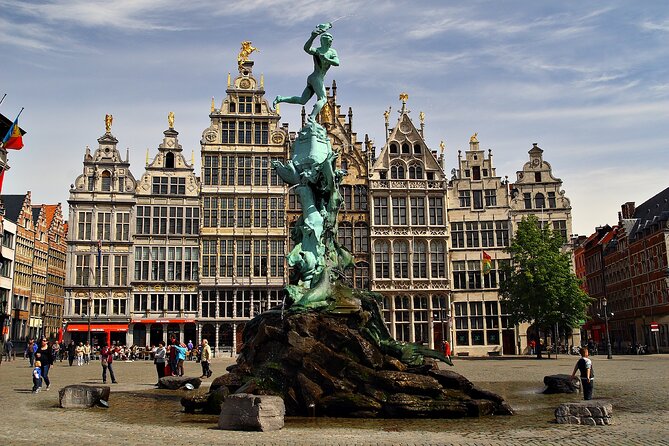
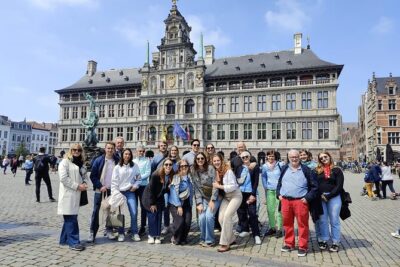
Grote Markt is the right place to begin. This is the old city’s main square, framed by ornate medieval guild houses and Antwerp’s City Hall. The Brabo Fountain sits at its center, and its statue gives the guide an immediate way into Antwerp’s legends.
The Brabo tale involves a giant who controlled access to the river and demanded payment from passing boats. Brabo’s answer, involving the giant’s hand, explains the city’s name in popular legend. It is a memorable story, even if you keep one eyebrow raised at the historical details.
Give yourself a moment to look above street level. The guild houses, stepped rooflines, and decorative details are easy to miss when the square is busy. The guide’s job here is less about delivering a list of dates and more about showing you where to look.
This is also the meeting point, so it should be easy to identify. Stay close to the guide as the group moves out. Grote Markt can be crowded, and a group of up to 35 people does not stay compact by accident.
Hendrik Conscience Square and a quieter side of the old town
The short stop at Hendrik Conscience Statue introduces a different Antwerp. The square is linked to Hendrik Conscience, a major Flemish writer, and it has an atmospheric, formal character.
Here you see an impressive Baroque church and the old city library. The stop is brief, but it adds an intellectual and architectural layer to the walk. Antwerp is not only merchants, painters, and grand churches. Its language and literary identity matter too.
I appreciate this kind of pause because it keeps the tour from becoming a parade of only famous monuments. You get a sense of how the city remembers writers and learning, not just trade and art.
Carolus Borromeus Church and Rubens’s Baroque Antwerp
Carolus Borromeus Church is one of the tour’s major visual stops. This 17th-century Baroque church is closely tied to Peter Paul Rubens, whose work influenced its paintings, interior decoration, and facade.
The church is included during opening hours, but that qualification matters. Church schedules can change, and a walking tour cannot guarantee an interior visit at every time of day. If entering the church is important to you, check the opening situation when you book and keep your expectations flexible.
If the doors are open, the stop becomes more than a quick exterior explanation. You can connect Rubens’s artistic role with the power and display of the Baroque period. Even if the tour does not give you a full museum-style visit, it points you toward the details worth seeing.
This stop also shows why a guide helps. A large church can look impressive without telling you how the decoration, patronage, religion, and art fit together. A clear explanation makes the building easier to read.
More Walking Tours in Antwerp
- Antwerp: City Highlights Walking Tour
★ 4.7 · 816 reviews - Evening Walking Tour: The Dark Side of Antwerp
★ 5.0 · 193 reviews - Antwerp: Private Walking Tour with a Local
★ 4.2 · 183 reviews - Walking Tour: Highlights of Antwerp
★ 5.0 · 98 reviews
Handelsbeurs and Antwerp’s Golden Age
The Handelsbeurs, or Bourse of Antwerp, shifts the story from churches to commerce. The tour presents it as the world’s first Wall Street and uses the building to explain Antwerp’s role as an international trading center in the 16th century.
The phrase is catchy, but the useful part is the context. Antwerp’s importance came from its position, its port, its markets, and its connections with merchants from across Europe. This was a city where goods, money, information, and risk met in one place.
A visit inside is included during opening hours. As with the church, access depends on when the building is open. If you can enter, the architecture helps you understand why a financial exchange needed a setting of such scale and ceremony.
This is one of the places where the tour gives you a better reading of the city. You are not simply seeing an old building. You are seeing the machinery of Antwerp’s early international economy.
Rubenshuis and the man behind the paintings
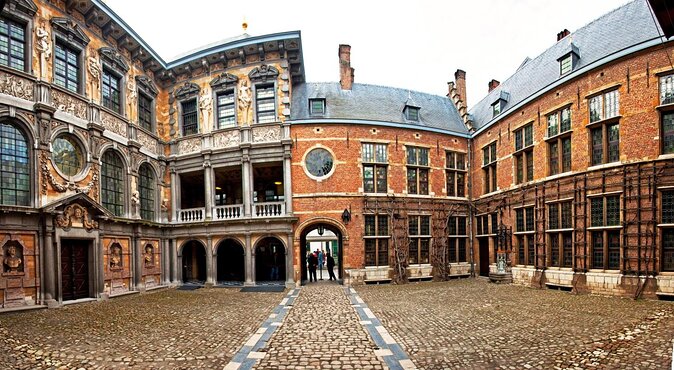
The Rubens House was Peter Paul Rubens’s home and workshop. The guide uses the stop to tell you about his life and the practical secrets behind his success.
That distinction is important. Rubens was not simply a gifted painter working alone in a quiet studio. His home and workshop point toward a larger operation, with assistants, commissions, clients, and a carefully managed public image. The tour gives you the outline, then you can decide if you want to pay for a fuller visit.
Admission to Rubenshuis is not included. Treat this stop as an introduction rather than a museum visit. If you are a serious Rubens fan, allow extra time in Antwerp and plan a separate admission.
Even for people who do not usually build a trip around art, the stop works well because Rubens is so tied to Antwerp’s identity. You understand why the city keeps returning to him.
Antwerp’s fashion quarter and MoMu
The walk then reaches MoMu, the Fashion Museum Antwerp, and passes through the designers’ quarter. This section gives the city a modern turn.
Antwerp’s fashion reputation did not come from the old guild houses or Baroque churches. The guide explains why the city became a major fashion center and points you toward places for designer shopping. That practical advice can be more useful than a long list of boutiques, especially if you have only a short stay.
The museum itself is not included in the tour. You pass through the area and get the local framework, then you can return if the subject catches your interest.
This is a good reminder that the tour is not meant to cover only medieval Antwerp. It connects the old center to the city’s current creative identity. I would pay attention here if you want a break from churches and paintings.
Museum Plantin-Moretus and the power of the printed word
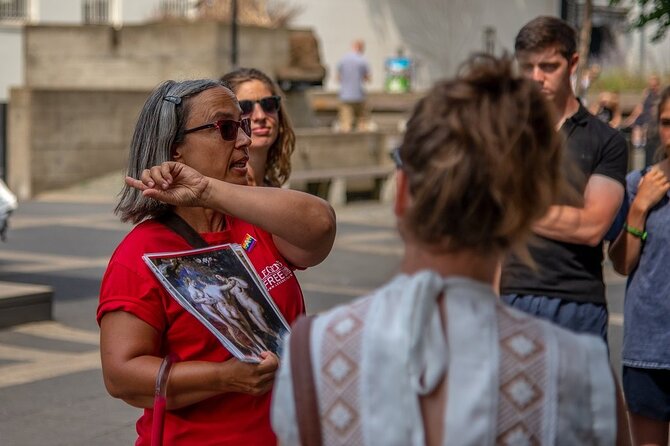
Museum Plantin-Moretus is one of the most distinctive stops. It preserves the story of books and printing, and it was the first museum to receive UNESCO World Heritage status.
The guide explains how printing shaped Antwerp’s reach and influence. That makes this stop a useful companion to the Handelsbeurs. Trade moved goods and money, while printing moved ideas, news, religion, and scholarship.
A visit to the historical garden is usually included during opening hours. The museum itself is an attraction you may want to return to, since a ten-minute stop cannot cover its full collection or working history.
The garden is especially valuable in the middle of a walking route. It gives you a change of pace, and it shows how an old urban property could combine work, residence, and private space. Check the opening hours if the interior or garden is a priority.
Vlaeykensgang, Antwerp’s medieval lane
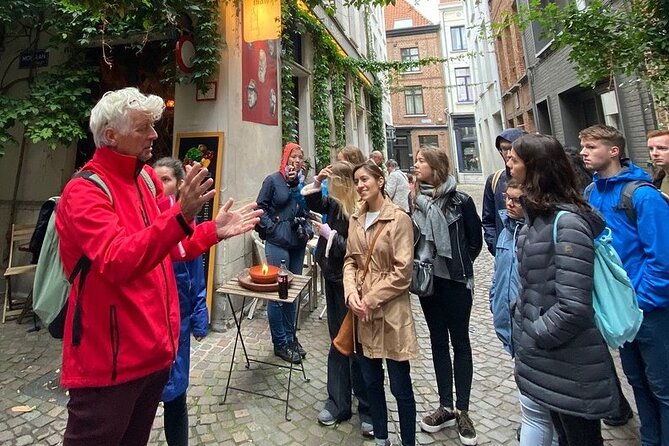
Vlaeykensgang is the kind of place that justifies taking a guided walk instead of following a standard city map. It is a well-preserved medieval alley, tucked away and not easy to find on your own.
The guide leads you through the narrow passage and uses it to evoke medieval Antwerp. The lane is also one of the city’s most photographed spots, so expect other people with the same idea, particularly at popular times.
The value here is the contrast. Grote Markt is grand and public. Vlaeykensgang is intimate and tucked away. You move from civic display to a small urban passage where the city’s older scale is easier to imagine.
Keep your camera ready, but listen first. The alley is attractive enough to distract you, and its story is the reason it belongs on the route.
Nello and Patrasche, a Belgian story with an international audience
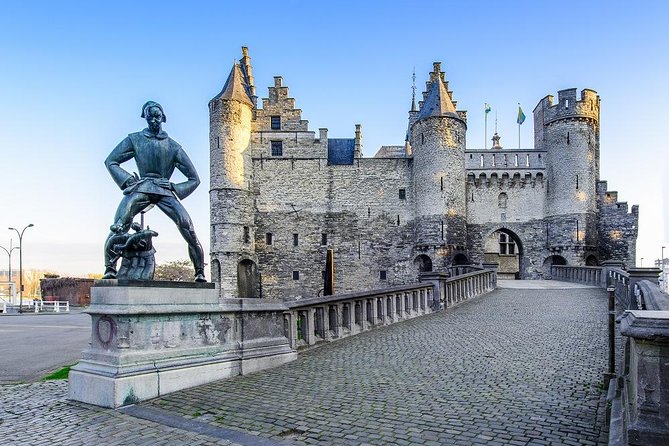
The Nello and Patrasche Statue is a small stop with an outsized following. It recalls the boy Nello and his dog Patrasche from A Dog of Flanders, a story especially familiar to many visitors from Asia.
The interesting twist is that many local people are not familiar with the tale. The guide explains why this modest statue has become an important point for international visitors to Antwerp.
This is a good example of how legends shape a city’s tourism in unexpected ways. The statue is not the largest monument on the route, but it carries a strong emotional story and connects Antwerp with readers and viewers far beyond Belgium.
Because the stop lasts only about five minutes, you will not get a full literary discussion. You will get enough background to understand why the statue matters and why people seek it out.
The Cathedral of Our Lady and useful advice for the rest of your stay
The tour ends at the Cathedral of Our Lady, one of Antwerp’s defining landmarks. The guide covers its construction, history, and a few curious facts before offering suggestions for the rest of your visit.
This is a strong finish. After two hours, you are standing beside a major sight with a better sense of how it fits into the city. You can then choose to visit the Cathedral, return to a museum, follow up on fashion shopping, or explore food and evening options.
The recommendation portion is worth using. Ask about the places that match your interests, since the guide can point you toward museums, neighborhoods, shops, and other things to do. The tour is most useful when you treat it as the start of your Antwerp plans, not the whole plan.
Guides, group size, and the walking experience
The strongest part of this tour is the human guide. Arie is praised for passion and clear explanations. Luc is noted for calm delivery, good gestures, and a voice that carries well. Beren is described as funny and adept at handling crowds, while Gaston is praised for pacing and family-friendly explanations.
Marc’s chronological approach suits anyone who likes a clear historical sequence. Marleen is attentive to questions and time, and guides such as Frans, Sergio, Flip, and Birke are also singled out for warmth, humor, and local perspective.
That variety means your experience will depend partly on the person leading your group. The consistent theme is enthusiasm for Antwerp and a willingness to answer questions. Some guides may also have connections that open up views of places not always available to the public, though you should not count on that as a guaranteed feature.
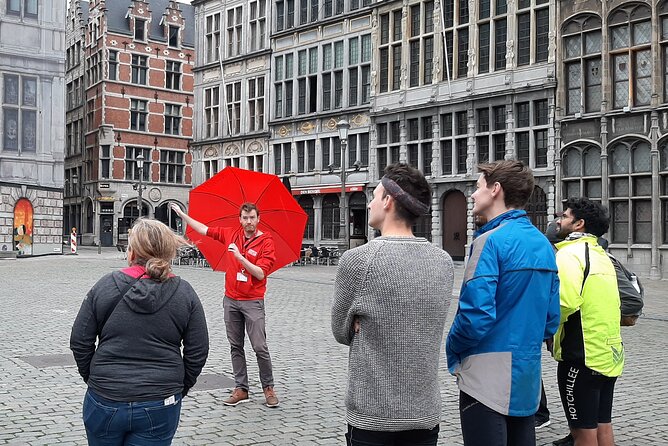
The maximum group size is 35. Many people find that manageable, but it is not a private walk. On crowded streets, stay within sight of the guide. On a hot day, bring water and expect some standing in the sun.
One important practical issue is sound. A large group near traffic or street noise can make it hard to hear, and no microphone or headset system is listed. Guides with strong voices, including Luc, may be easier to follow, but your position in the group still matters. Move closer when the guide stops, and do not hesitate to ask for a repeat.
Most people can take part, and service animals are allowed. Public transportation is nearby. Comfortable shoes are essential, since the tour is on foot and includes standing at ten stops.
Is $3.62 good value?
At $3.62 per group of up to six, the listed price is remarkably low. It can make sense for a couple, family, or small group that wants a guided introduction without committing to an expensive private tour.
The low price comes with an important condition: guest feedback describes the format as tip based. Think of the booking fee as access to the walk, not the full measure of what the guide’s work is worth. If you enjoy the experience, plan to tip according to your budget and the quality of the tour.
The value is strongest if you use the walk to plan the rest of your day. You may discover that Rubenshuis, the Cathedral, or Museum Plantin-Moretus deserves more time. The tour helps you choose rather than paying for entry to every major sight at once.
Admission is not included for Rubenshuis or MoMu. Carolus Borromeus Church and Handelsbeurs may be visited during opening hours, while the Plantin-Moretus historical garden is usually included when open. The word usually is worth noting. Opening schedules can affect the route.
Who should book this Antwerp walk?
I would choose this tour for a first visit, a short stay, or a day when you want the old center explained before you explore it alone. It suits history fans, art lovers, families, and anyone who likes city legends with practical advice attached.
It is also a good fit if you are deciding between Antwerp’s museums. The route gives you a taste of Rubens, printing, fashion, churches, commerce, and local literature without charging admission to each one.
I would think twice if you dislike group tours, standing, or walking in warm weather. The two-hour length is moderate, but the stop-and-listen format can feel tiring, especially in direct sun. You may also struggle to hear in a group of 35.
Cancellation is free up to 24 hours before the start time for a full refund. Changes or cancellations inside that window are not refunded, and the operator may offer another date or a full refund if the minimum number of participants is not reached.
Should you book Legends of Antwerp?
Yes, if you want a low-cost, story-led introduction to Antwerp’s old center. The route is well chosen, the finish near the Cathedral is useful, and the best guides turn dates and buildings into memorable stories.
Book it early in your stay, then use the final recommendations to plan your museums and meals. Choose comfortable shoes, arrive ready to listen in a group, and keep your expectations realistic about interior access. For a small fee and two hours, this is a strong way to get oriented, especially when the guide is one of the lively local storytellers such as Arie, Luc, Beren, or Gaston.
FAQ
Where does the tour start?
The tour starts at Grote Markt, 2000 Antwerpen, Belgium.
Where does the tour finish?
It finishes at Handschoenmarkt, 2000 Antwerpen, in front of the Cathedral of Our Lady.
How long does the walking tour last?
The tour lasts approximately two hours.
What language is offered?
The tour is offered in English.
How much does the tour cost?
The listed price is $3.62 per group of up to six people. Guest feedback describes the format as tip based.
Is museum admission included?
Admission to Rubenshuis and MoMu is not included. Carolus Borromeus Church and Handelsbeurs may be visited during opening hours, and the historical garden at Museum Plantin-Moretus is usually included during opening hours.
How large can the group be?
The maximum group size is 35 people.
What should I wear?
Bring comfortable walking shoes. The tour involves walking and standing at several stops.
Can I cancel for a refund?
You can cancel at least 24 hours before the start time for a full refund. Cancellations or changes made less than 24 hours before the start time are not refunded.
Just added around Antwerp
- Guided E-kickscooter tour: The big five of Antwerp★ 5.0 · 3 reviews
- Antwerp: Help the Lost Boy – Self-Guided Mystery Walk★ 4.5 · 3 reviews
- Surprise tour of Antwerp guided by a Local★ 5.0 · 3 reviews
- Antwerp Private Tour From Brussels★ 4.7 · 3 reviews
- Discover Antwerp while playing! Escape game – The alchemist★ 4.5 · 4 reviews
- Discover Antwerp with this Outside Escape city game tour!★ 5.0 · 4 reviews
- Children’s escape game in the city of Antwerp – Peter Pan★ 4.0 · 4 reviews
- Landed On Time 60 min. Max 1 Person★ 4.0 · 5 reviews
Antwerp Tours, compared.

Guided Bike Tour: 2 Hours Highlights of Antwerp
Read our review →

Browse the lists this tour appears in